
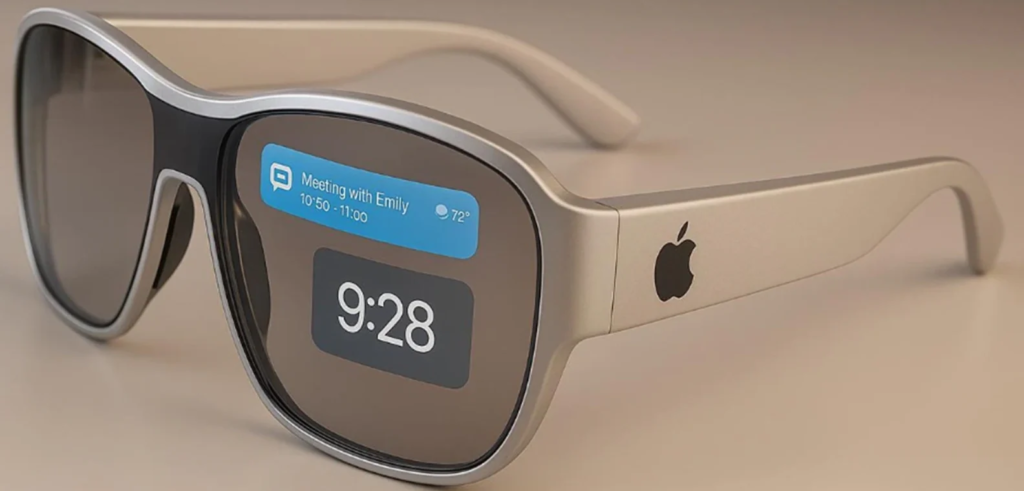
Smart glasses are no longer a strange gadget from a movie. For a long time, tech companies tried to build futuristic eyewear, but most early attempts were clunky, heavy, and awkward to wear in public.
That changed when Meta released its smart glasses in partnership with Ray-Ban. Suddenly, everyday people started wearing smart frames to concerts, family gatherings, and morning runs without looking out of place.
Now, the biggest tech company on the planet is moving in. Apple is preparing to join Samsung and Meta in a high-stakes battle for your face.
At WhatsBuzzn, we keep a close eye on the trends shaping how we communicate, work, and create. In our technology and AI section, we track the shift toward wearable technology. The upcoming clash between Apple, Meta, and Samsung could change how we interact with the digital world every day.
Here is a breakdown of what is happening, why Apple is making this move, and what it means for everyday users.
The $0 Secret To Launching Your Entire Online Empire
Why pay hundreds every month for separate software? Build funnels, send emails, and make sales with Systeme.io completely free.
Get Started For $0Free Forever • No Credit Card Needed • Beginner-Friendly
Meta Took the Early Lead (And Why That Matters)
When Meta launched its updated Ray-Ban smart glasses, many tech observers were surprised by their success. Early attempts at smart glasses, such as Google Glass, fell short because they looked strange and raised privacy concerns. Meta took a completely different path.
Instead of cramming a tiny computer screen in front of your eye, Meta focused on three basic things:
- Good design
- Great sound
- Simple video recording
The Ray-Ban Meta frames look like standard sunglasses. You can listen to podcasts, take phone calls, record high-definition video clips, and ask Meta AI questions about what you are looking at in real time.
According to reports on The Verge, sales for these frames passed initial expectations. Meta proved that people want wearable smart devices as long as they feel light and look natural. By entering the market early, Meta built a loyal user base and learned how people use voice-based AI in daily life.
Key takeaway: Meta showed that smart glasses do not need complex visual screens to be useful. Simple audio, a decent camera, and helpful AI are enough to capture people’s attention.
Samsung’s Bold Move into Smart Eyewear
Samsung was never going to let Meta dominate this new space alone. The South Korean tech giant confirmed it is working on its own smart eyewear system in close partnership with Google and Qualcomm.
This partnership combines three distinct strengths:
- Qualcomm provides powerful microprocessors made for slim devices.
- Google provides software and artificial intelligence powered by Gemini.
- Samsung brings hardware engineering and world-class manufacturing.
Industry updates from Bloomberg indicate that Samsung aims to create an open platform that connects smart glasses directly to Galaxy smartphones and Android devices. Samsung understands that millions of Android users want a native option that pairs effortlessly with their existing phones and smartwatches.
By leaning on Google’s AI technology, Samsung hopes to offer real-time language translation, smart navigation, and context-aware search capabilities right out of the box.
Apple’s Entrance: Why Apple is Joining the AI Glasses Race
Apple released the Vision Pro headset to showcase spatial computing, but that device was built for sitting down in a room. It was heavy, expensive, and not something anyone would wear while walking down the street.
Apple recognized the difference between a heavy head-mounted display and everyday eyewear. Reports indicate that Apple is shifting internal resources to focus on lightweight smart glasses that you can wear anywhere.
Apple is expected to follow a smart, stepped approach:
- Phase One: Launch lightweight audio-and-camera glasses that connect directly to the iPhone.
- Phase Two: Add subtle micro-displays for lightweight notifications and visual directions.
- Phase Three: Release full augmented reality (AR) glasses once battery and display tech mature.
Apple’s biggest advantage is its existing network of devices. With over a billion active iPhone users worldwide, Apple can offer integrations that Meta and Samsung simply cannot replicate.
What Will Apple Smart Glasses Actually Do?
If Apple releases a pair of smart glasses, what will using them feel like? Here is what to expect based on Apple’s current software direction.
Hands-Free Audio and Siri Upgrades
Instead of popping in AirPods, Apple smart glasses will use directional speakers built right into the frame arms. Sound is directed into your ears without blocking out the surrounding environment. Siri, upgraded with Apple Intelligence, will listen to your voice commands and give quick spoken responses.
Send, Spend & Hold Money Worldwide Without Hidden Fees
Transfer money internationally at the real exchange rate and hold 40+ currencies in one account.
Open a Wise AccountMid-market rate • Fast transfers • 40+ currencies
Camera Intelligence
Just like Meta’s glasses, Apple’s frames will include compact camera lenses. Apple Intelligence will process what the camera sees:
- Point your face toward a historic building, and Siri tells you its history.
- Look at a paper event flyer, and Siri creates a event on your calendar automatically.
- Look at a foreign sign, and get an immediate translation spoken in your ear.
Seamless Device Switching
Apple products work together smoothly. Your glasses will pair with your iPhone, Apple Watch, and Mac instantly. If you walk down a street using Apple Maps, your glasses can give quiet audio cues so you never need to look down at your phone screen.
Health and Fitness Features
Apple focuses heavily on personal wellness. Future smart glasses could include motion sensors to monitor your posture, track head movement during workouts, and alert you if you are experiencing eye strain from staring at screens too long.
Apple vs. Samsung vs. Meta: The Big Breakdown
Each of these three tech giants approaches smart glasses with a different strength.
Meta: Social First and Fast Innovation
Meta wants to keep you connected to its social platforms. Their frames make it easy to stream live video directly to Instagram or Facebook. Meta’s main strength is its partnership with major eyewear brands, giving them trendy styles that people already like to wear.
Samsung: Open Ecosystem and Google AI
Samsung builds for flexibility. By partnering with Google, Samsung smart glasses will tap into Google Search, Google Maps, and Gemini AI. This combination makes Samsung’s offering attractive to professionals and Android power users who want maximum compatibility.
Apple: Premium Build and Ecosystem Integration
Apple builds premium hardware with deep software integration. Apple users value privacy, clean user interfaces, and long-term device support. Apple smart glasses will likely feature high-end materials, custom processors, and strict privacy protections that process camera data locally on your device rather than uploading everything to the cloud.
The Tech Behind AI Smart Glasses (Explained Simply)
Fitting a computer into a pair of regular glasses is a huge engineering task. Tech companies face three primary hurdles when building smart glasses:
- Battery Size: Normal glasses weigh around 30 to 40 grams. If smart glasses weigh more than 70 grams, they feel heavy on your nose. Engineers must use tiny, hyper-efficient batteries that last all day without adding extra weight.
- Heat Management: Microprocessors generate heat when they process video and AI tasks. Because the frames sit directly against your skin, the chip must run cool without using internal fans.
- Audio Direction: Tiny speakers must send clear audio straight into your ear canal without letting nearby people hear your phone calls or music.
Privacy, Pricing, and Daily Wear
As smart glasses grow more common, they raise fair questions about privacy and price.
Public Privacy
When people wear glasses with built-in cameras, public privacy becomes a topic of discussion. People want to know if they are being recorded without permission. To address this, Meta, Samsung, and Apple use bright LED indicator lights that turn on whenever the camera is active. Tampering with or covering the light automatically disables the camera.
The $0 Secret To Launching Your Entire Online Empire
Why pay hundreds every month for separate software? Build funnels, send emails, and make sales with Systeme.io completely free.
Get Started For $0Free Forever • No Credit Card Needed • Beginner-Friendly
Pricing Expectations
- Meta Ray-Ban: Starts around $299.
- Samsung: Expected to launch in the $299 to $349 range to stay competitive.
- Apple: Likely to land in the $399 to $499 range, reflecting its premium positioning and custom hardware.
Prescription Lenses
For smart glasses to succeed, they must work for people who need vision correction. Meta already offers prescription lenses through optical partners. Both Samsung and Apple plan to support prescription options, allowing users to replace their regular optical glasses with smart frames entirely.
What This Means for Content Creators
Smart glasses are transforming content creation. Recording hands-free, point-of-view (POV) video allows creators to capture moments naturally without holding a phone or mounting a camera on their body.
If you create videos or explore channels like YouTube automation, hands-free recording simplifies content gathering. Creators can record cooking tutorials, outdoor vlogs, travel guides, and behind-the-scenes footage effortlessly. Eyewear cameras capture what you see, offering viewers a genuine, first-person perspective.
Frequently Asked Questions (FAQs)
When will Apple officially launch its smart glasses?
Apple is actively working on its smart glasses strategy, with early audio-and-camera models expected in the near future, followed by advanced display models in later years.
Will Apple smart glasses work without an iPhone?
While basic functions like offline camera capture or music playback may work on their own, you will need an iPhone to unlock complete features, Siri controls, and Apple Intelligence functions.
Are smart glasses safe for your eyes?
Yes. Smart audio and camera glasses use safe wireless tech similar to Bluetooth earbuds. Models with visual displays use low-power micro-projectors designed for comfortable viewing without straining your eyes.
Can I get smart glasses with prescription lenses?
Yes. Tech companies partner with major lens makers to offer prescription options so you can wear smart glasses all day as your primary eyewear.
Will smart glasses replace smartphones completely?
Not immediately. Smart glasses are designed to handle quick tasks hands-free so you look at your phone less often. As display technology improves, smart glasses may take over more tasks currently done on mobile screens.
The Road Ahead
The battle between Apple, Meta, and Samsung marks the start of a major shift in personal technology. Smart glasses are moving from a niche experiment to an everyday tool. Meta proved the concept works, Samsung is building an open Android alternative, and Apple is bringing its design focus and ecosystem strength to the table.
We would love to hear your thoughts on this tech race. Got questions or feedback for our editorial team? Head over to our contact page and let us know what you think.
For more daily updates on viral tech, internet culture, and trending topics, stay connected with us on social media:
Join the conversation on X (Twitter)
Follow us on Instagram
Like our page on Facebook
