
About 300 miles off the coast of Oregon, under 5,000 feet of dark Pacific water, sits an active underwater volcano called Axial Seamount. It is one of the most remote and hostile places on the planet. The water pressure is intense enough to crush ordinary equipment, and scorching fluids boil beneath the oceanic crust.
A team of engineers recently pointed a deep-sea robotic drilling rig directly into that volcano.
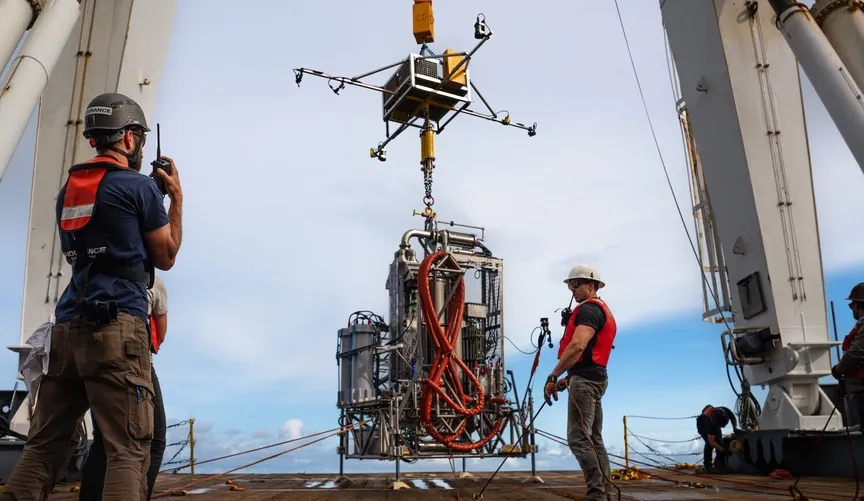
They lowered a three-ton device into the pitch-black water, drilled into the seafloor, tapped into 500-degree heat, and pulled usable electrical power out of the bottom of the ocean.
The machine produced net-positive electricity for only 8.7 seconds. That might sound like a blink of an eye, but in the world of energy engineering, it is a massive milestone. It represents the first time anyone has drilled an offshore geothermal well and successfully generated net electricity directly on the seabed.
The company behind the test is an American clean-tech startup called Endurance Energy. Their little ocean test rig, named Adélie, proved that we do not have to limit clean energy to dry land. Earth’s biggest furnace is sitting beneath our oceans, and humanity now possesses the tools to plug into it.
The $0 Secret To Launching Your Entire Online Empire
Why pay hundreds every month for separate software? Build funnels, send emails, and make sales with Systeme.io completely free.
Get Started For $0Free Forever • No Credit Card Needed • Beginner-Friendly
The Wild Seafloor Mission at Axial Seamount
Pulling off this experiment was an enormous logistical gamble. The crew traveled roughly 300 miles out into the open Pacific Ocean, dealing with rolling ten-foot waves on the surface while operating robotic equipment nearly a mile underwater.
Axial Seamount is an active underwater volcano that sits right along the Juan de Fuca Ridge. Because tectonic plates are pulling apart there, magma rises relatively close to the ocean floor. Super-heated mineral fluids bubble up through natural vents called hydrothermal chimneys.
Endurance Energy sent down an automated subsea lander equipped with a specialized drill. Operating at a depth of 1,500 meters, the robotic drill bored two test holes into the basalt rock of the caldera floor.
The engineers did not just poke a hole in the dirt. They cased and cemented the second borehole, installed an automated control valve on top, and finished a complete 52-foot-deep geothermal well right on the seabed.
Once the valve opened, hydrothermal fluids rushed upward at a blistering 260°C (500°F).
Next came the main event. The team lowered Adélie, a compact, subsea power plant built to turn thermal fluid into spinning mechanical power and electricity. After connecting to a nearby high-temperature vent flowing at 281°C (538°F), the turbine inside the unit spun up to an astonishing 26,000 revolutions per minute.
For 8.7 seconds, the plant generated more power than it consumed, hitting a peak net output of 16.5 kilowatts and averaging about 2 kilowatts of net electricity.
According to official test details published by Endurance Energy, the operation ended when a battery safety trip shut the system down. Minutes later, during an attempt to restart, a power cable hooked to the refrigerant pump gave out.
The run was brief, but the technical barrier was broken.
Who Is Andrew Redd and What Is Endurance Energy?
The startup behind this project was founded in early 2025 by Andrew Redd, a former SpaceX propulsion engineer.
While working in aerospace, Redd saw top-tier engineers tackling rocket reusability and planetary exploration. He realized that the exact same level of rapid engineering design, heavy robotics, and risk tolerance was needed to solve the clean energy puzzle on Earth.
Redd set up Endurance Energy with a simple motto: “Make it exist, then make it good.”
Instead of spending ten years running computer simulations in a university lab, the company built real hardware, loaded it onto a research vessel, and sank it to the bottom of the Pacific to see what would break.
Investors took notice quickly. Endurance has already raised over $63 million in private funding, including a major $54 million Series A round backed by Founders Fund and other venture firms.
When clean-energy analysts at Canary Media reported on the milestone, experts acknowledged that while drilling the deep ocean is technically demanding, it offers an audacious workaround to the bottlenecks that hold back land-based green power.
Send, Spend & Hold Money Worldwide Without Hidden Fees
Transfer money internationally at the real exchange rate and hold 40+ currencies in one account.
Open a Wise AccountMid-market rate • Fast transfers • 40+ currencies
Why Nine Seconds of Electricity Is Such a Big Deal
You might wonder why anyone is celebrating less than nine seconds of electricity. Two kilowatts for nine seconds cannot even brew a full pot of coffee.
The value here is proof of concept. In cutting-edge hardware engineering, going from zero to one is always the hardest step.
Redd compares the short test to Robert Goddard’s historic test of the world’s first liquid-fueled rocket in 1926. Goddard’s rocket flew for only two and a half seconds and reached a modest height of 41 feet. Yet that short, fiery hop proved liquid rocketry was physically viable. It laid the technological foundation that took humans to the Moon four decades later.
Adélie’s 8.7-second run did the same thing for deep-sea geothermal power.
Before this dive, skeptics argued that high ocean pressure would crush electrical turbines, that mineral scaling would instantly clog small boreholes, or that remote command of complex thermal valves at 5,000 feet was impractical.
The Adélie test knocked those doubts down one by one. The machine drilled the hole, sealed the casing, flowed the heat, spun the turbine, and sent live performance diagnostics back to engineers sitting on dry land in Seattle.
How Did Engineers Control a Power Plant on the Ocean Floor?
One of the coolest parts of this mission was how the engineers steered the machinery.
Nobody was turning wrenches underwater. The entire system was operated remotely from an office in Seattle using an underwater fiber-optic and electrical network known as the Regional Cabled Array.
The array is an ambitious deep-sea scientific observatory funded by the US National Science Foundation and operated by the University of Washington. It spans hundreds of miles across the Pacific seabed, feeding live instrument data, high-definition video, and high-voltage power straight to land.
Endurance Energy plugged their Adélie platform directly into this underwater grid.
The $0 Secret To Launching Your Entire Online Empire
Why pay hundreds every month for separate software? Build funnels, send emails, and make sales with Systeme.io completely free.
Get Started For $0Free Forever • No Credit Card Needed • Beginner-Friendly
Sitting hundreds of miles away in Washington state, operators opened and closed subsea valves, adjusted coolant flow, tracked turbine speeds, and balanced electrical loads in real time.
Drilling down into volcanic rock beneath thousands of feet of ocean water using joystick controls from a land-based office sounds like science fiction. Now, it is an established operational playbook.
Why Look for Geothermal Energy Under the Ocean?
Traditional geothermal power on land has been around for over a century. Countries like Iceland, New Zealand, and Kenya get massive chunks of their electricity from underground steam.
If geothermal works on dry land, why bother packing heavy machinery onto ships and dropping it into corrosive saltwater?
There are several major reasons why the seafloor is the ultimate geothermal goldmine:
1. The Earth’s Crust Is Extremely Thin
On land, the continental crust is thick, often ranging between 20 to 45 miles deep. Reaching temperatures hot enough to generate commercial electricity usually means drilling miles into rock, which is slow and costly.
Under the ocean basins, the oceanic crust is far thinner, typically just 3 to 6 miles deep. Along volcanic ridges and spreading zones, magma pools sit close beneath the seabed. That means engineers can reach 500°F rock by drilling just dozens or hundreds of feet into the seabed, rather than thousands of feet into continental rock.
2. An Infinite, Free Cooling Reservoir
Every thermal power plant works on temperature difference. You need intense heat on one side to boil a working fluid, and cold temperatures on the other side to condense that fluid back into liquid so the cycle can repeat.
On land, geothermal plants need huge cooling towers, massive air radiators, or rivers of fresh water. At the bottom of the deep ocean, the ambient water hovering around the machinery sits near freezing, around 2°C to 4°C (35°F to 39°F). The ocean acts as a massive cooling sink, boosting the thermodynamic efficiency of the generator.
3. No Land Use Battles or Permitting Delays
Building an energy plant on land often triggers years of zoning fights, neighborhood protests, environmental lawsuits, and property-rights negotiations.
The open ocean does not have suburban subdivisions or private property deeds. In international waters or offshore economic zones, permitting pathways can move faster, provided proper environmental safety rules are followed.
The Desperate Hunt for Always-On Clean Power
This breakthrough arrives right as the global energy landscape hits an unprecedented crossroads.
For the past decade, solar panels and wind turbines led the clean energy boom. They are cheap, fast to build, and produce zero carbon emissions during operation. But they have a major limitation: weather dependency. The sun sets, wind speeds fluctuate, and giant battery storage systems remain expensive.
Meanwhile, our need for constant, unblinking electricity is skyrocketing.
The primary driver is the rapid buildout of modern artificial intelligence, high-performance computing, and cloud server farms. Data centers consume massive amounts of continuous power, 24 hours a day, 7 days a week.
This growing demand is causing friction on public power grids. Across the United States, utility companies are struggling to keep up with server demands. In major tech hubs, why big investors are worried about the growing pushback against AI data centers has become a central financial debate.
Local communities are worried about rising residential utility bills and strained grids. In states like Texas, where tech companies once found open arms, local leaders and regulators are questioning whether massive computing facilities are taking more power than the grid can spare. You can see this tension clearly in how Texas Republicans turn against massive data centers.
The challenge is not limited to North America. Nations worldwide are investing billions to secure dependable energy grids capable of handling advanced tech infrastructure. South Korea, for example, recently announced huge spending packages to build out clean infrastructure, showing how South Korea plans to power the global AI revolution.
Tech giants cannot run mission-critical computing clusters on intermittent power alone. They need baseload power that runs day and night without burning fossil fuels. If offshore geothermal can scale up, it could deliver clean baseload power straight to coastal population centers and waterfront data centers.
The Brutal Engineering Challenges Ahead
Proving a concept works for nine seconds is exciting, but turning deep-sea volcanic energy into a reliable business is a tough hill to climb. The deep ocean is one of the most unforgiving working environments known to human engineering.
Crushing Pressure and Saltwater Corrosion
Saltwater ruins mechanical systems. It corrodes metal casings, degrades rubber seals, and shorts out delicate electrical connections.
At a depth of 5,000 feet, pressure exceeds 2,200 pounds per square inch. At that pressure, a hairline fracture or minor seal flaw causes rapid failure. Keeping high-voltage electrical generators dry and functional under deep-sea conditions is an ongoing battle.
Mineral Clogging
Hydrothermal fluids are not clean, pure tap water. They are packed with dissolved silica, sulfur, copper, iron, and heavy minerals leached from subterranean rock.
When these fluids enter a mechanical turbine and begin to cool, dissolved minerals precipitate out as solid rock. If minerals cake inside the pipes or coat the turbine blades, the entire machine locks up. Endurance Energy noted that mineral management remains one of the primary issues they must solve in their next-generation prototypes.
Deep-Sea Power Transmission
Generating electricity a mile under water is only half the battle. You still have to get that power to someone who can turn on a light switch.
Subsea high-voltage direct current (HVDC) power cables are expensive. They cost millions of dollars per mile to build, insulate, and lay across the seabed. If a commercial plant sits 100 miles offshore, the electrical transmission cable alone could cost more than the power plant itself.
Next Stop: Bringing Clean Power to the Kingdom of Tonga
Endurance Energy is not planning to stay parked off the coast of Oregon. The company is already turning its attention toward real-world island communities.
Their first commercial pilot is slated for development in the Pacific island nation of the Kingdom of Tonga, targeting initial power generation by 2027.
Tonga, like many remote island nations, currently relies heavily on imported diesel fuel to run its electrical grid. Burning diesel shipped on tankers across thousands of miles of ocean is expensive, noisy, and polluting. High fuel prices place a constant economic burden on local households and small businesses.
Yet Tonga sits directly on top of the Pacific “Ring of Fire,” surrounded by active volcanic fault lines and shallow subsea geothermal heat sources.
Endurance plans to install a 2-megawatt subsea geothermal power plant offshore and run an electrical cable directly into Tonga’s main power grid. If successful, that single installation could provide steady, 24/7 baseline electricity, cutting the island’s reliance on imported fuel.
For small island nations dealing with economic and environmental pressures, local clean power is a lifeline. Rising seas and volatile global energy markets have pushed several Pacific nations to take radical measures to safeguard their futures. You can see how island states are coping by reading about how Nauru is selling citizenship to save its island.
If subsea geothermal systems work in Tonga, they could provide a repeatable clean-energy blueprint for coastal cities, archipelagos, and remote communities worldwide.
Does Drilling Underwater Volcanos Harm Ocean Ecosystems?
Any time heavy industrial equipment is lowered into the sea, environmental questions follow immediately.
Hydrothermal vents host rare, alien-like biological communities. Without sunlight, these ecosystems rely on chemosynthesis. Bacteria feed on sulfur compounds flowing from vents, sustaining giant tubeworms, deep-sea snails, white crabs, and unique deep-water fish.
Scientists and environmental watchdogs worry that industrial drilling could disrupt these sensitive marine habitats or pollute pristine waters with heavy drilling muds.
Endurance Energy took proactive steps to measure and reduce environmental disruption during the Axial Seamount test.
Instead of using petroleum-based or chemical-heavy drilling muds common in offshore oil extraction, the team drilled its 2-inch well using filtered seawater.
They also placed their drill site away from active biological vent chimneys. Throughout the expedition, the company ran an independent environmental monitoring program. Subsea cameras tracked surrounding marine life, while external sensors measured water chemistry, sound levels, and seismic activity.
Outside research teams from university institutes verified that the loudest sound generated during the deployment was simply the surface ship’s diesel propulsion engine. The monitoring data showed no measurable damage to the surrounding seafloor community, no unusual seismic spikes, and no disruption to the natural hydrothermal flow.
Keeping human activity safe for marine ecology will be critical as these systems scale. After all, the health of global oceans is already under stress from climate shifts, as shown in reporting on how two huge oceans have stopped talking to each other due to warming.
Ensuring clean energy generation leaves the seafloor intact will be an ongoing priority for regulators and marine biologists alike.
Frequently Asked Questions
What did the geothermal startup Endurance Energy accomplish?
Endurance Energy deployed a robotic drilling and power-generation system called Adélie to Axial Seamount, an underwater volcano 5,000 feet beneath the Pacific Ocean. The team drilled a 52-foot geothermal well into the oceanic crust and generated net-positive electricity for 8.7 seconds, reaching a peak net output of 16.5 kilowatts.
Why did the power plant only run for nine seconds?
The run was short because the test unit was an early experimental prototype built to push operational boundaries. The system shut down when a safety circuit tripped due to a battery overcurrent. During a subsequent reboot attempt, a power supply cable connected to the refrigerant pump failed, ending the dive.
How is subsea geothermal different from land geothermal?
On land, companies must drill deep through dense continental crust to locate commercial temperatures. On the seafloor, especially near tectonic rifts and underwater volcanoes, the Earth’s crust is thinner and magma sits closer to the surface. The surrounding cold ocean also provides an efficient, natural cooling system for the power cycle.
Can subsea geothermal power provide continuous electricity?
Yes. Unlike solar panels or wind turbines, geothermal energy is a steady baseload source. Underground volcanic heat flows continuously regardless of weather conditions, night or day, providing steady power around the clock.
Is deep-sea drilling safe for marine wildlife?
During the Axial Seamount test, the startup avoided active biological chimneys, drilled using plain filtered seawater rather than toxic industrial drilling chemicals, and used subsea cameras and acoustic sensors to monitor local sea life. Independent laboratory tests showed no disruption to nearby vent communities.
When will deep-sea geothermal power hit commercial grids?
Endurance Energy plans to test an updated prototype system, followed by a 2-megawatt commercial demonstration project in the Kingdom of Tonga targeted for 2027. If that project succeeds, broader commercial rollout could begin later this decade.
The Ocean Floor May Hold Our Clean Energy Future
The mission at Axial Seamount marks a real shift in how we think about natural resources. For decades, offshore drilling meant hunting for petroleum reservoirs deep below the mud.
Now, engineers are testing ways to tap natural heat from underwater volcanoes to power clean electricity grids on land.
There are plenty of hurdles left to solve. The team still has to build machinery that can survive salty, high-pressure ocean conditions for years without breaking down. They must ensure mineral deposits do not choke internal valves, and they must figure out the economics of laying long-distance underwater power cables.
Yet the core engineering hurdle has been cleared. In the cold depths of the Pacific, a small machine tapped into the heat of an active volcano and pushed clean electricity outward.
Humanity has only scratched the surface of what the ocean floor can do. If engineers can turn nine seconds of subsea power into nine months and nine years of continuous baseload electricity, our clean-energy future will look radically different.
