
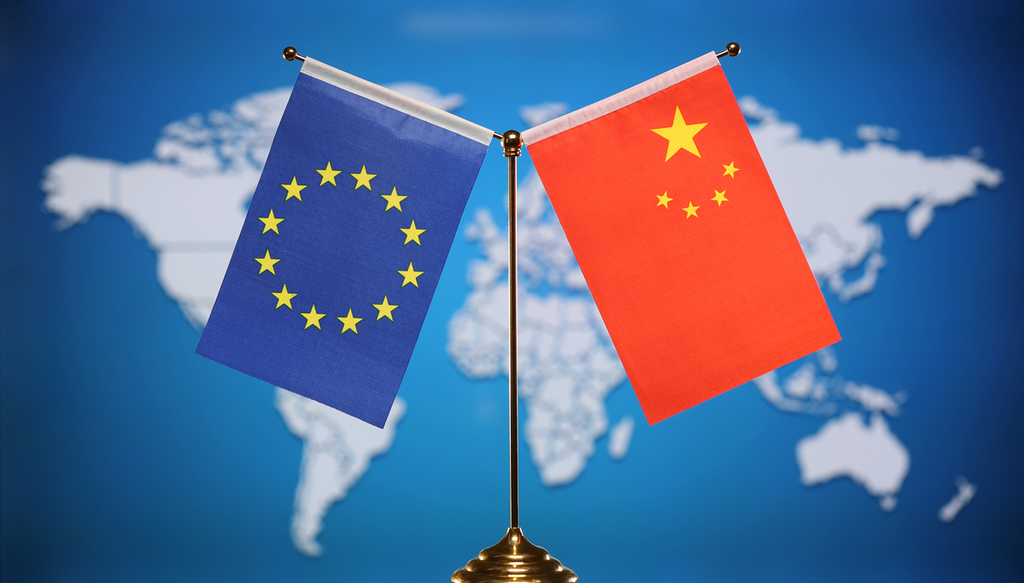
The European Union and China have reached a historic agreement that puts a firm ceiling on Chinese hybrid vehicle imports. After months of tense closed-door negotiations in Beijing and Brussels, European trade regulators confirmed a binding annual quota limiting Chinese-made plug-in hybrid electric vehicles (PHEVs) to 350,000 units per year.
The move marks an extraordinary turning point in international automotive trade. Before this pact was hammered out, Chinese carmakers were on track to ship roughly 800,000 electrified cars into European ports this year alone. Under the newly minted terms, Chinese hybrid imports into the 27-nation bloc will drop by more than half, shrinking China’s hybrid market share in Europe from around 6% down to roughly 3%.
Any Chinese hybrid arriving at European docks once the annual quota has been reached will be held back at customs until the following calendar year. In exchange for accepting the strict import limits, Chinese negotiators secured important concessions, including reduced European tariffs on selected automotive replacement parts and lowered Chinese duties on European consumer goods such as footwear, olive oil, and dairy products.
This new deal changes how international trade friction is handled. Instead of simply slapping higher tax penalties on rival goods, Europe is now using hard quantity caps under World Trade Organization guidelines to reshape its industrial landscape.
Why Hybrids Became the Center of the Storm
To understand why this agreement matters so much, you have to look at what happened over the past two years. In late 2024, the European Commission wrapped up an intensive anti-subsidy investigation into Chinese battery electric vehicles (BEVs). European officials claimed that heavy state support allowed Chinese manufacturers to undercut homegrown European cars on price. As a result, the EU introduced hefty countervailing duties—running up to 35.3% on top of standard 10% import duties—against pure electric cars built in China.
The $0 Secret To Launching Your Entire Online Empire
Why pay hundreds every month for separate software? Build funnels, send emails, and make sales with Systeme.io completely free.
Get Started For $0Free Forever • No Credit Card Needed • Beginner-Friendly
Chinese automakers did not simply pack up their bags and give up on the European continent. Instead, they spotted a massive opening in the rulebook: plug-in hybrids.
Because the high anti-subsidy tariffs were tailored specifically for 100% battery-electric cars, hybrid vehicles were subject only to standard baseline import duties. Brands like BYD, Geely, SAIC, and Chery immediately shifted their European marketing and export strategies toward hybrid models that combine traditional petrol engines with rechargeable battery packs.
The results were explosive. Customs data showed that Chinese hybrid exports to the EU tripled during the first half of the year, generating more than 6.7 billion euros in trade value. According to independent automotive research from firms like Dataforce, Chinese-made plug-in hybrids quickly captured top spots on European sales charts. Models such as the BYD Song PLUS DM-i, the Yuan UP DM-i, and Chery’s Explore 06 C-DM began outselling established European models across key markets in Germany, France, and Italy.
European automakers raised the alarm. Executive teams at companies like Volkswagen, Stellantis, and Renault warned that Chinese plug-in hybrids offered longer electric driving ranges and modern digital dashboards at prices European factories could not match. With European buyers hesitating to purchase high-priced full EVs due to patchy charging infrastructure, hybrids became the sweet spot for budget-minded families. European leaders felt compelled to act before local factories were left behind.
The Terms of the Accord: How the Quota Actually Works
The agreement rests on a safeguard mechanism that establishes a clear dividing line between cars shipped across the ocean and cars built inside European borders.
The 350,000 Annual Cap
The core mechanism is a hard annual ceiling of 350,000 hybrid vehicles imported directly from factories located inside China.
The European Commission confirmed that this quota applies strictly on a calendar-year basis. European customs authorities will track vehicle identification numbers as car carriers dock at major shipping hubs such as Antwerp, Rotterdam, and Zeebrugge. Once the total import tally hits 350,000 units, all further shipments of Chinese-built hybrid models will be blocked at the dock until the next annual cycle begins.
The Location Rule: Where the Car Is Built Matters Most
The most critical nuance of this agreement is that it regulates origin, not brand ownership.
If a Chinese manufacturer produces a vehicle inside the European Union, that car does not count toward the 350,000 import ceiling. A BYD hybrid built at its newly developing manufacturing complex in Szeged, Hungary, or a Chery vehicle rolling off assembly lines in Barcelona, Spain, will be treated as a European-made vehicle.
However, the rule cuts both ways. If a European legacy brand chooses to manufacture a hybrid vehicle inside China and ship it back home to sell to European drivers, that car will count against the 350,000 vehicle cap. This means European automakers who hoped to cut production costs by outsourcing assembly to Chinese factories are caught in the exact same net.
China’s Reciprocal Concessions
Trade agreements are never one-sided negotiations. To get Beijing to accept an import limit that slices its anticipated hybrid export volume in half, Brussels offered several important trade off-ramps:
- China will enjoy reduced import friction on specialized automotive components and parts shipped into Europe.
- European luxury and agricultural exporters will benefit from reduced Chinese import duties on everyday consumer exports, including footwear, high-end olive oil, and specialty foods.
- Both sides agreed to set up a joint trade monitoring committee to avoid sudden surprise bans or escalations over the next four years.
Trade friction has created headaches across the globe, whether dealing with European disputes or watching how what the US-Canada tariff war will really cost you affects household wallets in North America. By settling on a quota rather than an all-out trade blockade, both sides avoided a full-scale commercial breakdown.
How Chinese Automakers Are Responding
The reaction across the Chinese automotive sector has been immediate, splitting the industry into two distinct camps: established giants with international cash reserves and newer start-ups trying to find their footing.
The Big Players Double Down on European Soil
Well-capitalized Chinese manufacturers anticipated that trade barriers would eventually close the export window. Companies like BYD, Chery, and Geely had already begun securing factory sites across the European continent.
BYD is currently constructing a multibillion-euro production plant in Hungary and exploring secondary assembly hubs in southern Europe. Chery formed a joint venture to build vehicles at a former automotive site in Catalonia, Spain. Geely already controls established European operations through its ownership of Volvo Cars, Polestar, and its joint ventures with Lotus and Smart.
Send, Spend & Hold Money Worldwide Without Hidden Fees
Transfer money internationally at the real exchange rate and hold 40+ currencies in one account.
Open a Wise AccountMid-market rate • Fast transfers • 40+ currencies
For these automotive powerhouses, the 350,000 import cap is merely a speed bump. While it slows down direct container shipments from Shanghai and Shenzhen, it accelerates their transition into becoming local European employers. By assembling cars on European ground, using local labor and sourcing regional parts, these companies can bypass the import quota completely while building goodwill with local municipal governments.
The Squeeze on New Entrants
The scenario looks far more challenging for emerging Chinese electric brands. Companies like Li Auto, Xiaomi’s automotive division, and newer boutique electric car builders were hoping to use hybrid powertrains as an affordable stepping stone to enter the European market.
Building an automobile factory in Europe requires billions in upfront capital, years of regulatory approvals, and extensive negotiations with European labor unions. Smaller or newer Chinese brands do not possess that kind of cash or local network. With the total national import quota capped at 350,000 units, the Chinese government and domestic industry trade groups will likely allocate the lion’s share of export allowances to the biggest players. Smaller brands risk getting locked out of European showrooms before they even get a chance to build customer trust.
Beijing’s trade maneuvers are expanding across multiple regions, much like how China challenges established power in new global markets. In Europe, Chinese industrial policy is adapting rapidly to regulatory pressure.
What This Agreement Means for European Car Companies
For legacy European automakers like Volkswagen, Stellantis (maker of Peugeot, Fiat, and Opel), BMW, and Renault, this agreement buys precious time.
Over the past three years, European executives have openly worried that their domestic market was being swept away by lower-priced overseas competition. European automakers face high energy bills, strict labor protections, and costly environmental compliance standards that make it difficult to build compact, affordable cars profitably.
By capping imported Chinese hybrids at 350,000 cars annually, Brussels has placed a temporary safety net under domestic assembly lines:
- European carmakers have room to launch their own new plug-in hybrid models without being instantly undercut on price by an unlimited wave of imported inventory.
- Factory jobs in traditional automotive strongholds like Germany, France, northern Italy, and Slovakia gain short-term security.
- European manufacturers get a window of three to four years to revamp their hybrid battery supply chains and reduce their manufacturing costs.
Yet, automotive analysts caution that this breathing room is temporary. When BYD and Chery finish constructing their factories inside the EU, they will be building vehicles with European labor right next door to Volkswagen and Stellantis plants. If European brands fail to lower their retail prices and improve their onboard software during this grace period, they will face the exact same competitive pressure from Chinese brands operating inside their own backyard.
This dynamic mirrors international supply chain shakeups everywhere, similar to the reasons why Canada turned toward Europe during overseas trade standoffs. When traditional trade routes hit political friction, companies and nations scramble to rewrite their industrial blueprints.
The Real Impact on Everyday Drivers and Car Shoppers
When trade bureaucrats and car executives negotiate in distant boardrooms, everyday drivers are the ones who feel the outcome when they walk onto a car dealership lot.
The $0 Secret To Launching Your Entire Online Empire
Why pay hundreds every month for separate software? Build funnels, send emails, and make sales with Systeme.io completely free.
Get Started For $0Free Forever • No Credit Card Needed • Beginner-Friendly
Here is how this agreement will directly affect people looking to buy a new car:
1. Hybrid Prices Will Likely Stay Firmer
One major reason car prices stabilized in several European countries over the past eighteen months was the presence of affordable Chinese hybrid models. Dealerships selling Chinese brands were offering fully equipped hybrid family SUVs for several thousand euros less than equivalent domestic models.
With total Chinese imports cut by more than half, supply will tighten. When supply drops while demand remains strong, dealerships have little incentive to offer massive discounts or cash-back incentives. Anyone hoping to snag an imported Chinese hybrid at a clearance price will find fewer available units on dealer lots.
2. Waiting Lists Could Grow
Because the 350,000-vehicle limit applies to the whole European Union, popular Chinese hybrid models may sell out their annual quota months before the year ends. Drivers who order a vehicle in September or October might find that their car cannot be cleared through customs until January of the following year.
3. More Variety in High-End Trims
To make the most profit out of a limited number of import slots, Chinese automakers will likely prioritize shipping their highest-priced, fully loaded hybrid trims rather than entry-level budget models. Carmakers make higher profit margins on luxury editions featuring leather seats, panoramic glass roofs, and premium sound systems. Buyers looking for no-frills, rock-bottom budget hybrids will likely find fewer choices.
4. Acceleration of Local European Models
On a positive note for buyers who prefer supporting local manufacturing, this deal pushes Chinese brands to make significant investments inside Europe. Within the next two to three years, buyers can expect to test-drive cars designed specifically for European road sizes and suspension preferences, assembled in modern factories located across Central and Southern Europe.
Industrial health dictates economic stability worldwide, as seen when factory production shifts influence national economic health. When car plants open locally, they bring employment and regional spending with them.
Global Repercussions: The New Age of Managed Trade
The EU-China hybrid agreement illustrates how global commerce is changing. The era of wide-open, frictionless free trade in automobiles is rapidly being replaced by managed trade agreements, quotas, and strategic industrial safeguards.
Countries everywhere are erecting trade defenses to safeguard their domestic green energy and automotive sectors:
- The United States and Canada have implemented severe 100% tariffs on imported Chinese electric vehicles, effectively shutting Chinese passenger cars out of the North American market entirely.
- Canada expanded its own protective policies after tariff clashes, detailed in how new tariff measures altered cross-border trade.
- Emerging economies across Southeast Asia and Latin America are introducing strict local-assembly requirements, demanding that foreign brands build local parts factories before they are granted tax incentives.
By opting for a negotiated import quota rather than an outright tariff wall, the European Union chose a pragmatic middle ground. European officials avoided provoking a retaliatory trade confrontation with their second-largest trading partner, protected their luxury agricultural exporters, and provided domestic carmakers with a cushion—all while keeping the door open for Chinese investment in European factories.
Frequently Asked Questions (FAQs)
What exactly is the EU-China hybrid vehicle agreement?
It is a formal trade arrangement between the European Union and China that limits the number of Chinese-made plug-in hybrid electric vehicles (PHEVs) imported into the EU to 350,000 units per year.
Why did the European Union target hybrid vehicles instead of just electric cars?
The EU had previously placed high anti-subsidy duties on pure electric cars from China. In response, Chinese automakers rapidly increased shipments of plug-in hybrids, which were not covered by those specific duties. Hybrid imports tripled in the first half of the year, prompting European regulators to step in with import limits.
Does the 350,000-car quota apply to Chinese cars built inside Europe?
No. The quota only applies to vehicles imported directly from China. If a Chinese carmaker builds or assembles a vehicle inside a European Union member country—such as BYD in Hungary or Chery in Spain—that car is classified as European-made and does not count toward the 350,000 limit.
Will this agreement make hybrid cars more expensive in Europe?
In the short term, yes, prices could rise slightly or discounts may decrease. Because fewer imported Chinese hybrids will be available, dealerships will face less price competition, which may keep vehicle prices firmer across the entire market.
When does the import quota take effect?
The safeguard mechanism takes effect heading into the upcoming trade cycle, with European customs agencies monitoring dock arrivals starting this winter.
Can European carmakers build vehicles in China and ship them to Europe?
Yes, but those vehicles will count against the 350,000 annual import ceiling. The quota applies based on the location of manufacturing, not the home country of the car brand.
What happens if more than 350,000 hybrid cars arrive at European ports in a single year?
Any vehicles arriving after the 350,000 threshold has been reached will be held in customs storage at the docks and cannot be delivered to dealerships or registered by drivers until the next calendar year begins.
The trade agreement between the European Union and China shows how quickly the automotive industry is transforming. While European regulators have succeeded in preventing an overwhelming flood of vehicle imports, the long-term competition for drivers’ loyalty is only getting started. As Chinese automakers build new assembly plants right on European soil, the contest will move from shipping containers to local showroom floors. For drivers, staying informed on international trade moves is the best way to understand where vehicle prices, warranty coverage, and new green technologies are headed next.
