
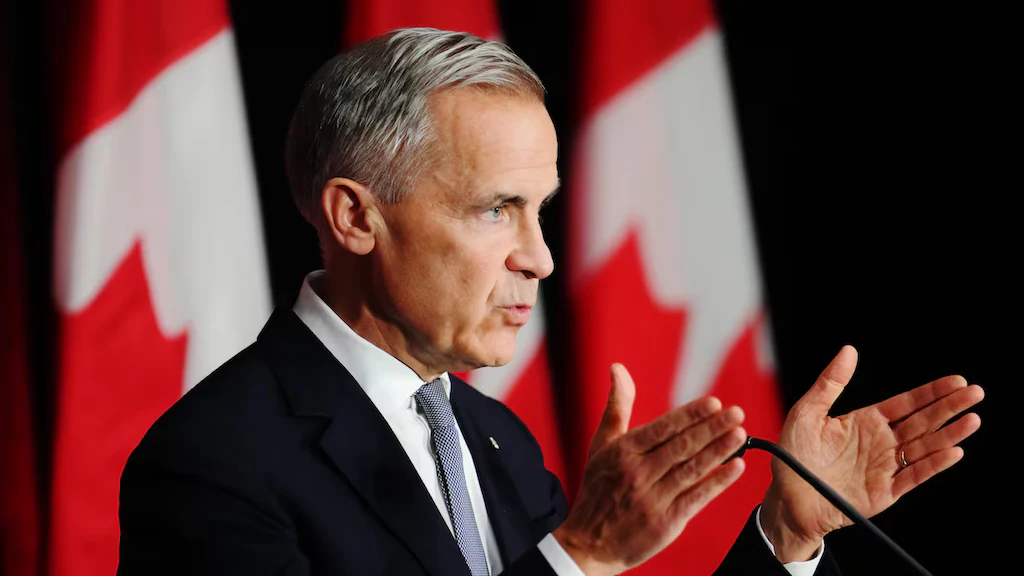
Leaders from Canada and the European Union met in Montreal to reshape their transatlantic alliance. Facing global shifts in trade, technology, and security, European Commission President Ursula von der Leyen, European Council President António Costa, and Canadian Prime Minister Mark Carney unveiled the ambitious “Alliance for the Future”.
The high-stakes gathering produced major commitments spanning everything from artificial intelligence and critical mineral mining to joint defense projects and wildfire response. Behind closed doors and at the podiums, both sides made it clear that their economic and geopolitical destinies are aligning more closely than ever before.
Here is an in-depth breakdown of the eight biggest takeaways from the summit and what they mean for everyday citizens and businesses on both sides of the Atlantic.
1. Canada Is Chasing an Unprecedented ‘Associate’ Relationship with the EU
The biggest buzz in the summit halls centered around Canada’s evolving status with the European bloc. Prime Minister Mark Carney and EU leaders floated the idea of Canada becoming an “associate member”—a move aimed at cementing ties while working within international legal constraints.
European Union treaties explicitly state that full membership is reserved exclusively for European nations. To bridge that gap, Ursula von der Leyen summarized the strategy as “an association without accession”. While European Council President António Costa described the approach as an “ever-closer association” to accommodate European member-state dynamics, the direction of travel remains clear: both parties want the deepest administrative, economic, and strategic alignment ever offered to a non-European nation.
The $0 Secret To Launching Your Entire Online Empire
Why pay hundreds every month for separate software? Build funnels, send emails, and make sales with Systeme.io completely free.
Get Started For $0Free Forever • No Credit Card Needed • Beginner-Friendly
The framework rests on three distinct pillars:
- Policy alignment: Seamless consultation on major geopolitical, climate, energy, and AI issues before laws are drafted.
- Institutional programs: Expanded access for Canada to key European initiatives, including defense schemes and academic exchanges.
- Shared governance: Structured links connecting parliaments, courts, and transatlantic business bodies.
A formal roadmap is scheduled for early 2027, setting up regular cabinet-level consultations to turn this broad framework into legal reality.
2. A Landmark Digital Trade Agreement Is Officially Sealed
One of the most concrete deliverables from the meetings was the conclusion of negotiations for a brand-new Canada-EU Digital Trade Agreement (DTA). Built to update and complement the existing Comprehensive Economic and Trade Agreement (CETA), this new treaty creates modern rules for cross-border e-commerce, digital products, and enterprise cloud solutions.
For software developers, e-commerce retailers, and international service providers, the DTA removes costly digital barriers. It addresses key friction points by promoting data flows while respecting consumer privacy, cutting red tape on electronic signatures, and eliminating arbitrary customs duties on digital transactions.
The agreement also establishes joint standards for consumer rights and online safety, ensuring digital business between Canada and European markets can thrive on a transparent, predictable footing.
3. Canadian Tech Gets Instant Access to European Supercomputers
In an era defined by artificial intelligence, compute capacity is the new currency. During the summit, leaders finalized deals granting Canadian researchers and tech firms direct access to the European High-Performance Computing Joint Undertaking (EuroHPC) network.
Mark Carney highlighted the practical impact of this access, pointing out that processing complex datasets will now take a single afternoon instead of six months.
By pooling research tools, transatlantic startups and research teams can:
- Train cutting-edge AI models without facing hardware bottlenecks.
- Accelerate biotech research and rapid pharmaceutical design.
- Collaborate on quantum computing, next-generation microchips, and digital identity platforms.
This computational boost positions both jurisdictions to compete more effectively with global tech superpowers in Silicon Valley and Asia.
4. The European Investment Bank Opens Its Vaults for Canadian Mines
Securing steady supplies of critical raw materials—such as lithium, nickel, cobalt, and rare earths—is essential for the green energy transition and advanced manufacturing. To secure these pipelines, the European Investment Bank (EIB) signed an official framework agreement with Ottawa to invest directly in Canadian mining and processing operations.
This treaty allows the EIB to finance large-scale extraction and refining projects across Canada. For European industry, it ensures a secure, environmentally responsible supply chain that bypasses vulnerable global choke points. For Canadian mineral developers, it unlocks billions in low-cost capital to scale production facilities and build out regional clean infrastructure.
5. Defense Cooperation Solidified with Boots on the Ground and Industrial Pacts
Geopolitical unrest in Eastern Europe and broader global security tensions took center stage in Montreal. Building on its status as the only non-European partner in the EU’s SAFE defense procurement program, Canada announced direct industrial defense partnerships with European partners.
Among the first commercial deals is a contract worth over 44 million Canadian dollars for Montreal-based protective equipment manufacturer Galvion to supply advanced tactical helmets to armed forces in Latvia. Leaders underscored their shared commitment to supporting Ukraine, coordinating military logistics, and increasing joint intelligence sharing.
Both sides also established stronger working arrangements between the Canada Border Services Agency (CBSA) and Frontex, the European Union’s border and coast guard agency, to tackle cross-border crime and coordinate emergency responses.
6. A Transatlantic Fleet of 50 Water Bombers Is Coming by 2030
As extreme weather events become more frequent and destructive, environmental security has become a core mutual priority. In one of the most practical headlines from the summit, Canada and the EU unveiled a joint initiative to build and deploy 50 specialized water-bombing aircraft.
Send, Spend & Hold Money Worldwide Without Hidden Fees
Transfer money internationally at the real exchange rate and hold 40+ currencies in one account.
Open a Wise AccountMid-market rate • Fast transfers • 40+ currencies
Under the plan, scheduled for deployment by 2030, Canada is committing up to 2.5 billion Canadian dollars in production and manufacturing financing. The resulting aircraft will form a shared disaster-response fleet capable of mobilizing quickly across North America and Southern Europe during peak wildfire seasons.
Both sides are also linking their AI-driven satellite systems, using the EU’s Destination Earth project to map wildfire risks, predict fire patterns, and optimize emergency crew deployments in real time.
7. Direct Space Integration: Canada Begins Talks to Join Galileo
Beyond terrestrial operations, the summit pushed transatlantic ties into orbit. Canadian officials and the European Commission signed an administrative agreement connecting the Canadian Space Agency (CSA) to Europe’s secure space connectivity networks.
Canada confirmed it has officially opened negotiations to join Galileo, the EU’s global satellite navigation system. Working alongside Galileo and EGNOS offers Canada access to redundant, high-precision positioning data independent of other global constellations.
Discussions also covered:
- Integration with Europe’s upcoming IRIS² sovereign satellite constellation.
- Preliminary studies for a direct, high-capacity transatlantic subsea data cable to connect Canadian and European networks directly.
- Joint environmental observation missions to track melting Arctic sea ice and Arctic shipping corridors.
8. Seamless Daily Life: Cross-Border Payments and Youth Mobility
The agreements made in Montreal also include practical benefits designed for ordinary citizens, young professionals, and everyday bank account holders.
First, regulators are coordinating to connect instant payment infrastructures between European banking systems and Canadian institutions. The goal is to make sending money between the regions as fast, cheap, and simple as sending a domestic wire transfer, cutting the high fees and slow clearing times traditionally charged by correspondent banks.
Second, leaders promised an overhaul of youth mobility agreements. The expansion will streamline working-holiday permits, simplify inter-university transfers through broader Erasmus+ participation, and provide clear legal pathways for early-career tech professionals, researchers, and creators looking to live and work abroad.
Frequently Asked Questions
What was the EU-Canada Summit?
The EU-Canada Summit is a regular bilateral leadership meeting between top officials of the Canadian federal government and the executive leadership of the European Union. The Montreal event brought together Prime Minister Mark Carney, European Commission President Ursula von der Leyen, and European Council President António Costa to deepen trade, digital, and defense ties.
Can Canada actually become a full member of the European Union?
No. Under Article 49 of the Treaty on European Union, full membership is strictly limited to European countries. Instead of seeking full entry, both parties are developing a new model of “associate membership” or “ever-closer association” that offers the deepest attainable policy, research, and economic alignment without violating legal treaties.
The $0 Secret To Launching Your Entire Online Empire
Why pay hundreds every month for separate software? Build funnels, send emails, and make sales with Systeme.io completely free.
Get Started For $0Free Forever • No Credit Card Needed • Beginner-Friendly
How does this affect everyday consumers and small businesses?
The newly concluded Digital Trade Agreement simplifies e-commerce and lowers digital compliance barriers for businesses selling across borders. Furthermore, everyday citizens will benefit from faster and cheaper international money transfers, expanded working-holiday opportunities, and stronger mutual online consumer safety regulations.
When will these summit agreements take effect?
Implementation timelines vary across each sector. While the framework for EIB investments and defense supply contracts is operational immediately, technical integration for satellite projects and the delivery of the 50-plane firefighting fleet will roll out progressively through 2030.
The Montreal summit signals a decisive shift toward stronger transatlantic solidarity. As trade dynamics change and international alliances evolve, Canada and the European Union have decided to bet heavily on each other. Through joint digital treaties, unified emergency responses, and shared scientific computing, this newly minted Alliance for the Future sets a firm direction for the years ahead.
