
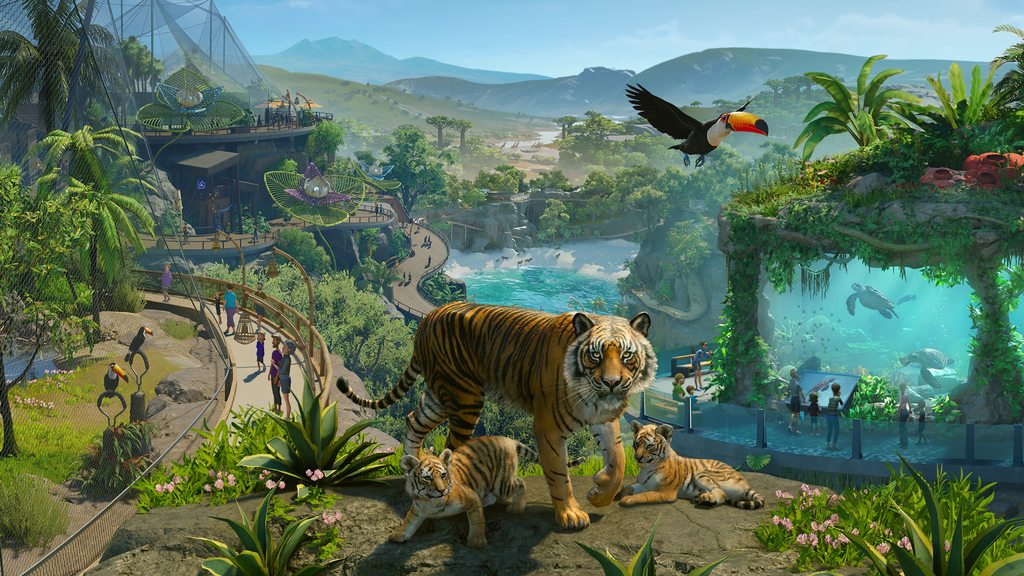
Frontier Developments has officially launched Planet Zoo 2, and simulation fans around the world are rushing to download it. Seven years after the original game took over the park management genre, this follow-up arrives with long-awaited additions, major system overhauls, and animals that look more realistic than ever before.
The original title set a very high bar for creativity and animal welfare. Yet, anyone who spent hundreds of hours placing individual rocks or wrestling with curved walking paths knew the formula had plenty of room to grow.
Planet Zoo 2 does not just add more animals to unlock. It introduces fully functional aquariums, walk-through aviaries with real bird flight, massive off-site wildlife reserves, and a brand-new network system that links your zoos across the globe.
Here is the complete breakdown of every new feature, gameplay shift, and technical update waiting for you in the game.
Release Date and Available Platforms
Planet Zoo 2 released on October 13, 2026.
The $0 Secret To Launching Your Entire Online Empire
Why pay hundreds every month for separate software? Build funnels, send emails, and make sales with Systeme.io completely free.
Get Started For $0Free Forever • No Credit Card Needed • Beginner-Friendly
Unlike its predecessor, which spent years on computer monitors before finally getting console ports, this sequel launched everywhere at the same time. You can pick up the game right now on PC through Steam and the Epic Games Store, as well as on PlayStation 5 and Xbox Series X|S.
Frontier Developments decided to skip older consoles like the PlayStation 4 and Xbox One entirely. By building exclusively for current-generation hardware, the team was able to push animal artificial intelligence, crowd simulation, and visual detail much further without being held back by older tech.
Console players will also be happy to hear that controller layouts were designed from day one alongside keyboard and mouse inputs. Radial menus, quick-snap grid toggles, and controller-friendly camera movement make building complex enclosures much smoother on a gamepad than it used to be.
The Biggest Additions: Aquariums and Aviaries
The two most requested features in the history of the franchise are finally here: fully aquatic exhibits and open-air aviaries.
Deep Dive: Custom Aquariums
In the first game, semi-aquatic animals like hippos, polar bears, and penguins could swim, but you could never build actual aquariums for fish and marine life. Planet Zoo 2 changes that completely.
You can now design deep underwater tanks using custom acrylic glass walls. These habitats host genuine ocean dwellers, including Blacktip Reef Sharks, Great Hammerheads, Hawksbill Sea Turtles, Manta Rays, and schools of vibrant reef fish.
Managing water habitats introduces realistic mechanical responsibilities. You cannot just dump water into a glass pit and call it a day. You have to balance salinity, water purity, and water temperature.
Freshwater tanks and saltwater tanks require entirely separate filtration systems. If your filtration lines fail, the water turns cloudy, algae blooms take over, and your marine animals quickly become stressed.
Zookeepers have also learned how to swim. Specially trained scuba keepers now dive straight into the tanks to clean viewing glass, inspect underwater feeding stations, and monitor the health of your creatures.
Guests can view these habitats from regular walkways or by walking through curved underwater glass tunnels that run directly through the middle of the tank.
Taking Flight: Aviaries and Flying Birds
Birds were previously limited to small, static exhibit boxes or simple walking species like ostriches and flamingos. In Planet Zoo 2, birds take to the sky with true three-dimensional flight mechanics.
Building an aviary works similarly to building standard enclosures, but you now have complete control over the roof. You place support pillars, set up tension cables, and stretch dynamic mesh netting across any shape you want. You can make tall geodesic domes, sweeping canopies that sit over river canyons, or simple tented enclosures.
Inside the aviary, birds do not just loop through canned animations. Species like the Toco Toucan, Great Hornbill, Secretarybird, and White-Tailed Sea Eagle actively read the environment. They fly between branches, swoop down to grab food from specialized elevated feeders, and perch on custom wooden posts you place throughout the habitat.
You can also drop guest pathways right into the middle of the aviary. Double airlock doors prevent your birds from escaping while allowing guests to walk directly beneath flying flocks, boosting education scores and donation rates.
Beyond the Zoo: Wildlife Reserves and Rewilding
One of the freshest design directions in Planet Zoo 2 is that your work no longer ends at the park turnstiles.
Send, Spend & Hold Money Worldwide Without Hidden Fees
Transfer money internationally at the real exchange rate and hold 40+ currencies in one account.
Open a Wise AccountMid-market rate • Fast transfers • 40+ currencies
In previous games, releasing an animal into the wild meant clicking a button, watching a short notification pop up, and pocketing some Conservation Credits. You never got to see where the animal went or what impact your efforts had on the planet.
Planet Zoo 2 introduces Wildlife Reserves. These are massive, standalone wilderness maps located across various continents, such as the Swedish tundra, the African savannah, and the dense jungles of Sumatra.
Instead of building visitor paths, gift shops, and hot dog stands, your job in a reserve is restoration and ecological balance. You use new nature paintbrushes to establish native plant canopies, manage freshwater streams, and remove invasive weeds that choke out local wildlife.
Once your zoo successfully breeds healthy, genetically diverse animals, you can transfer them directly into your reserves.
You can hop into a safari vehicle or take control of a camera drone to track your former zoo animals as they adapt to their natural environments. Watching a family of big cats you raised from cubs thrive together out in the open wilderness makes the conservation loop feel deeply rewarding.
The Planet Hub: Building an Interconnected Global Network
Managing a zoo can sometimes feel like playing inside an isolated bubble. Frontier Developments addressed this by introducing the Planet Hub.
The Planet Hub acts as your central command center across career, sandbox, and franchise modes. Rather than starting completely fresh every time you build a new zoo in a different part of the world, your parks can now help one another.
Through the hub, you can:
- Transfer captive-bred animals between your different facilities without putting them up for general sale.
- Share veterinary and conservation research across your entire company.
- Route excess funds from your high-earning tourist parks into underfunded wildlife preserves.
- Track global breeding initiatives to help save critically endangered species from extinction.
This network system ties zoo construction, research, breeding, and wild habitat protection into one continuous cycle.
Smarter Animals, Living AI, and Seasonal Challenges
Watching the animals is the heart of the game, and the artificial intelligence running behind the scenes has received a significant upgrade.
The $0 Secret To Launching Your Entire Online Empire
Why pay hundreds every month for separate software? Build funnels, send emails, and make sales with Systeme.io completely free.
Get Started For $0Free Forever • No Credit Card Needed • Beginner-Friendly
Herding and Natural Behaviors
Animals in Planet Zoo 2 behave much more like their real-life counterparts. Social animals naturally form herds, move across pastures together, and follow alpha leaders.
Herbivores will actively graze on real grasses and shrubs planted inside their habitats instead of solely relying on wooden feeding troughs. Predators stalk through tall foliage, watch potential prey in neighboring habitats, and react realistically to sudden noises or loud crowds.
Frontier also updated animal welfare. In the past, keeping animal meters green was mostly a matter of putting down enough food, water, and shelter.
Now, there is a distinct status known as “Thriving”. Getting an animal to thrive requires matching exact environmental conditions, social structures, and mental enrichment. Animals that thrive live longer, produce healthier offspring, and draw far more guest donations to your park.
Seasons and Weather Dynamics
Weather is no longer just a visual trick that makes rain appear on your screen. Planet Zoo 2 includes full seasonal transitions.
As autumn turns into winter, temperatures drop, ponds freeze over, and deciduous trees shed their leaves. If you keep tropical animals in cooler regions, you must prepare by installing heated shelters, water heaters, and indoor viewing pavilions.
All that heating puts extra strain on your power generators, meaning blackouts can quickly become life-or-death situations if your power infrastructure is not well maintained.
Spring brings breeding season for many species, encouraging players to organize habitats and separate juveniles before social tensions flare up.
Overhauled Building Tools and Quality of Life Improvements
If you played the original Planet Zoo, you probably remember spending hours fighting the path tool. Trying to link two plazas together or create an elevated bridge without weird glitches was a constant headache.
Frontier listened to community feedback and redesigned many of these creative tools from scratch.
A Modern Pathing System
The path tool in Planet Zoo 2 is vastly improved. You can now draw open plazas naturally without needing complex workarounds.
Paths automatically adapt to terrain changes, align cleanly with exhibit barriers, and snap together without creating awkward gaps. Creating curb-free walkways, natural dirt trails, and elevated wooden board walks takes minutes instead of hours.
Terrain and Nature Brushes
Placing thousands of plants by hand to cover a rocky hill used to be an exhausting chore. The new nature brushes let you paint cohesive ecosystems onto the map with a few strokes.
You can select a biome palette—such as Mediterranean scrub, temperate forest, or tropical rainforest—and paint trees, bushes, flowers, and ground cover all at once. The brush automatically varies the scale, rotation, and density of the plants, giving you natural foliage instantly. You can even build your own custom brush combinations to reuse across your park.
Scaling and Flexi-Colour
Every construction piece now supports flexible scaling and coloring. If a rock is slightly too small for a cave entrance, you can stretch it directly rather than stacking several rocks together.
Almost every wall piece, roof tile, and decorative prop can have its colors swapped through a full color wheel, giving creators endless design freedom.
Game Modes: How You Can Play
Planet Zoo 2 caters to many different play styles by offering three distinct main modes.
Career Mode
The campaign puts you in the shoes of a rising park director working for the Fauna and Ecosystems Network. The story tasks you with traveling across different continents to rescue failing facilities, rebuild historic parks, and construct massive reserves.
The narrative touches on realistic conservation issues. You will have to uncover the shady practices of a multi-million-dollar corporation that pretends to be eco-friendly while quietly endangering natural habitats behind the scenes.
Objectives range from fixing debt-ridden zoos in rainy climates to creating mountain refuges for rare wildlife.
Franchise Mode
Franchise mode remains the premier experience for players who love long-term progression and economic strategy.
You establish your own global brand of parks, trade bred animals with other real players on the shared online market, and take part in weekly community conservation challenges. Balancing budgets, staff salaries, marketing campaigns, and guest happiness keeps the management side exciting.
Sandbox Mode
If you just want to build without worrying about bank balances or unhappy guests, Sandbox mode gives you total freedom.
You can toggle animal death, disable power requirements, give yourself unlimited funds, and design the wild animal sanctuary you have always imagined. With cross-platform sharing through the Frontier Workshop, you can download community blueprints and parks directly to your computer or console.
Animal Roster Highlights
Planet Zoo 2 launched with an expansive roster covering land, sea, and air.
Here are some of the most notable species available right out of the box:
- Terrestrial Giants: African Savannah Elephant, Reticulated Giraffe, Western Lowland Gorilla, Plains Zebra, and Sumatran Tiger.
- Birds of Prey and Aviary Residents: Secretarybird, Toco Toucan, White-Tailed Sea Eagle, Great Hornbill, Shoebill, and Long-Eared Owl.
- Marine and Aquatic Wildlife: Blacktip Reef Shark, Hawksbill Sea Turtle, Ocean Sunfish, Indo-Pacific Leopard Shark, Ocellated Eagle Ray, and Red Lionfish.
- Deluxe Edition Exclusives: If you pick up the Deluxe Edition, you also unlock the Golden Eagle, Golden Lion Tamarin, Great Hammerhead Shark, Longfin Batfish, Blue and Gold Fusilier, and the Axolotl.
To view the complete studio portfolio and browse other simulation titles, you can visit the Frontier Developments Official Site.
PC System Requirements
Because the game features upgraded lighting, detailed animal fur, advanced water shaders, and complex guest physics, your PC will need solid hardware to run it smoothly.
Minimum System Requirements
- Operating System: Windows 10 or 11 (64-bit)
- Processor: Intel Core i7-8700K or AMD Ryzen 5 3600
- Memory: 16 GB RAM
- Graphics: NVIDIA GeForce RTX 2060 (6 GB), AMD Radeon RX 5600 XT (6 GB), or Intel Arc A750 (8 GB)
- Storage: 40 GB available space (Solid State Drive recommended)
Recommended System Requirements
- Operating System: Windows 11 (64-bit)
- Processor: Intel Core i7-10700K or AMD Ryzen 7 5800X
- Memory: 16 GB RAM
- Graphics: NVIDIA GeForce RTX 3070 (8 GB), AMD Radeon RX 6700 XT (12 GB), or Intel Arc A770 (16 GB)
- Storage: 40 GB available space (Solid State Drive required)
Installing the game on a fast SSD is strongly recommended. Loading detailed custom habitats and switching between different locations in the Planet Hub is noticeably faster on modern solid-state drives.
Helpful Tips for Beginners and Returning Players
Stepping into Planet Zoo 2 can feel a bit overwhelming because there are so many menus and options to explore. These straightforward tips will keep your park running smoothly from day one:
- Start small with your first habitat: It can be tempting to drop an elephant enclosure right near the main gate, but large animals cost huge sums of money to feed and house. Begin with hardy, smaller animals like meerkats, tortoises, or common birds to build a steady stream of guest ticket revenue.
- Cluster your staff facilities: Keep your staff rooms, keeper huts, and trade centers grouped together behind your exhibits. Use employee-only paths to ensure keepers do not spend half their workdays walking back and forth to prepare food.
- Double-check your water lines: Before placing marine life into an aquarium, make sure the water filtration unit matches the species. Putting saltwater fish into a freshwater pump system will make your animals sick almost immediately.
- Use nature brushes to boost beauty scores: Rather than dropping individual bushes around your fences, run the biome brush across bare patches. Guests appreciate well-decorated walkways, and it takes only seconds to paint realistic greenery.
- Keep an eye on seasonal weather: Check your park’s climate before winter hits. Place heat lamps in covered shelters so your sensitive animals stay warm and your welfare ratings remain high.
Frequently Asked Questions
Is Planet Zoo 2 multiplayer?
Planet Zoo 2 is built primarily as a single-player simulation game. You cannot manage the exact same zoo at the same time with a friend on your screen. However, it features extensive online elements, including global animal trading in Franchise Mode and cross-platform sharing of custom park blueprints via the Frontier Workshop.
Can I transfer my save files and blueprints from Planet Zoo 1?
Because the engine, animal skeletons, and path tools were rebuilt from the ground up, full parks from the first game cannot be loaded directly into Planet Zoo 2. Certain basic scenery piece blueprints may be adapted over time by community creators, but your animal saves and career progress start fresh.
Are fully aquatic animals difficult to manage?
Aquatic habitats add an extra layer of management because you must maintain water filtration and salinity. However, the game gives you clear warnings whenever a water pump needs maintenance or when salinity levels drift out of the safe zone. As long as you hire trained dive keepers and build dedicated generator rooms, keeping your fish healthy is straightforward.
How do aviaries differ from standard enclosures?
Standard enclosures only track horizontal ground space and barrier fencing. Aviaries require complete 3D containment, meaning you must construct an enclosed mesh roof using the support tool. The game calculates total cubic flying volume so that birds have plenty of air space to spread their wings.
Will there be post-launch expansions and DLC packs?
Frontier Developments has a long history of supporting its simulation titles with free updates and themed downloadable content packs over many years. While the launch roster is massive, players can expect future animal packs, scenery themes, and regional biomes to roll out down the road.
Ready to Build Your Dream Park?
Planet Zoo 2 delivers the deep simulation, stunning creature animation, and creative freedom that fans have spent years waiting for. Between soaring birds, majestic sea life, and expansive wildlife reserves, this sequel feels like a true generational step forward for the genre.
