
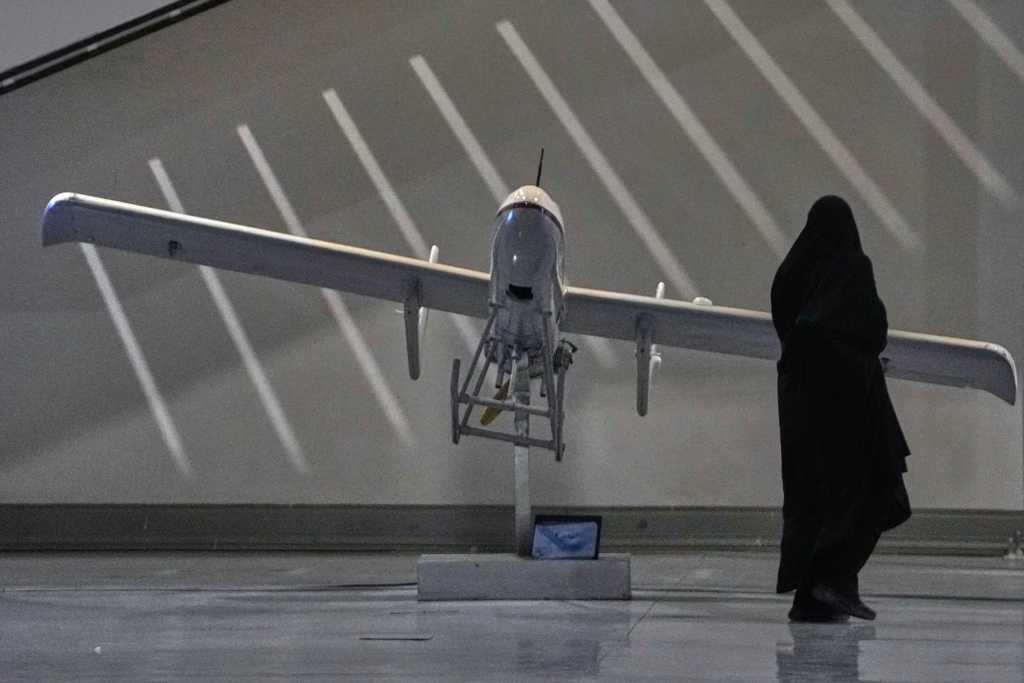
Air raid sirens and emergency phone alerts woke residents across Bahrain before dawn on Sunday, November 15, 2026, ending nearly two months of relative calm in the Persian Gulf. Iran launched a wave of six attack drones toward the small island nation, targeting an American military radar facility for the second time in just three days.
For people living in Bahrain—and anyone watching global oil prices or military tensions—this sudden flare-up is a sobering reminder that the nine-month conflict between Washington and Tehran is far from over. While Bahraini and American air defenses shot down the incoming drones before they could cause damage, the message from Tehran was loud and clear.
Here is a simple, straightforward breakdown of what happened over the weekend, why Iran is aiming at Bahrain, and how this affects the rest of the world.
What Happened in the Latest Iranian Drone Attack on Bahrain?
In the early hours of Sunday morning, November 15, 2026, Iran’s Islamic Revolutionary Guard Corps (IRGC) fired six drones across the Persian Gulf toward Bahrain. According to Iranian state media, the target was a U.S. air defense radar system stationed at Al-Riffa Air Base, located south of the capital city of Manama.
Bahrain’s military quickly confirmed that its air defense systems detected and destroyed several incoming aerial threats before they could reach their targets. U.S. Ambassador to Bahrain Stephanie Hallett also backed up that report, confirming that the drones were intercepted with zero injuries and no damage on the ground.
The $0 Secret To Launching Your Entire Online Empire
Why pay hundreds every month for separate software? Build funnels, send emails, and make sales with Systeme.io completely free.
Get Started For $0Free Forever • No Credit Card Needed • Beginner-Friendly
Even though the defenses worked, the scare rattled neighborhoods across the island. Public warning sirens blared across cities, and residents received urgent alerts on their phones telling them to stay indoors and take cover.
Two Strikes in Three Days After a Two-Month Lull
What makes Sunday’s attack so alarming is that it followed another strike just 48 hours earlier. On Friday, November 13, the IRGC launched two drones at a U.S. early-warning radar site in Bahrain. American forces intercepted those drones as well, leaving no casualties behind.
Before Friday’s incident, Bahrain had not seen a major direct attack from Iran since September. Earlier in 2026, when full-scale fighting broke out in late February, the kingdom was hit repeatedly—including strikes near the U.S. Navy’s Fifth Fleet headquarters in Manama and residential high-rises. After weeks of quieter skies, many locals hoped the worst was finally behind them.
Instead, two strikes in three days show that Tehran is willing to pull Gulf neighbors back into the line of fire whenever tensions with Washington spike. You can read more about the timeline of the weekend’s interceptions in coverage from The Guardian and updates from Radio Free Europe/Radio Liberty.
Why Is Iran Targeting U.S. Radar Systems in Bahrain?
If you are wondering why Iran keeps aiming specifically at radar dishes instead of runways or barracks, military analysts say the reason comes down to strategy.
Bahrain is small—roughly the size of New York City—but it plays a massive role in American military operations across the Middle East. It hosts the headquarters of the U.S. Naval Forces Central Command and the Fifth Fleet, which patrol the Persian Gulf, the Red Sea, and the surrounding shipping lanes.
According to defense researchers at the Institute for the Study of War, radar systems act as the eyes and ears of air defense networks. By trying to knock out early-warning radars at places like Al-Riffa Air Base, Iran is attempting to blind U.S. forces so they have less time to spot incoming missiles, drones, or threats to commercial ships.
How This Fits Into the Wider 2026 U.S.–Iran Conflict
To understand why drones were flying over Bahrain this weekend, it helps to look at the bigger picture of what has been happening between the United States and Iran throughout 2026.
The current conflict began back on February 28, 2026, when the United States launched major military strikes aimed at stopping Iran’s nuclear program and weakening its leadership. Since then, the region has been trapped in a cycle of heavy strikes, brief pauses, and sudden flare-ups. Just months ago, readers were asking is the Iran war really over after mixed signals from Washington, only for fighting to flare up again.
Tit-for-Tat Escalation Across the Persian Gulf
Iranian officials described both the Friday and Sunday drone launches as direct payback for recent American airstrikes on Iranian coastal infrastructure. Specifically, Tehran pointed to a U.S. strike on a telecommunications tower in Iran’s southern Hormozgan Province, which sits right across the water from the Gulf Arab states.
This pattern of strike and counter-strike has defined the entire year. Earlier in the conflict, the U.S. and Iran exchanged military strikes after a month-long lull, proving that quiet periods often serve as a reset button rather than a real peace deal. Whenever Washington hits a target inside Iran, Tehran looks for nearby American assets in the Gulf to hit back—and Bahrain is one of the closest targets on the map.
At the same time, Gulf conflict escalations following U.S. airstrikes have put countries like Bahrain, Kuwait, Qatar, and Saudi Arabia in a tough spot. They host American troops for security, yet that very presence turns them into magnets for Iranian retaliation whenever Washington and Tehran clash.
What About Peace Talks Between Washington and Tehran?
What makes this weekend’s attacks even more frustrating for diplomats is that behind-the-scenes efforts to stop the fighting have been hanging by a thread.
In recent days, President Donald Trump reportedly told senior advisers that the United States might hold off on new strikes against Iran if Tehran and its allies stopped launching new provocations. However, Trump also made it clear that the U.S. naval blockade on Iranian ports would stay firmly in place, and he has repeatedly stated that Washington is done chasing weak compromises.
On the other side, Iranian Foreign Ministry spokesperson Esmaeil Baghaei stated on Sunday that Iran is “not waiting for anyone” and remains focused on defending its own security. With mediators already pushing Iran into a corner to save U.S. peace talks, every drone launched across the Gulf makes a diplomatic breakthrough harder to imagine. Even back in Washington, frustration over the endless back-and-forth has spilled into Congress, where the U.S. House has voted multiple times to force an end to the Iran war.
Send, Spend & Hold Money Worldwide Without Hidden Fees
Transfer money internationally at the real exchange rate and hold 40+ currencies in one account.
Open a Wise AccountMid-market rate • Fast transfers • 40+ currencies
Oil Tankers, Sea Mines, and the Strait of Hormuz Crisis
The drone strikes on Bahrain were not the only alarming claim coming out of Tehran on Sunday.
At the same time Iran announced its drone operation against Al-Riffa Air Base, the IRGC claimed that three oil supertankers had struck sea mines overnight in the Strait of Hormuz and caught fire. Iranian officials warned that ships passing through the strategic waterway without Tehran’s permission are fair game.
As of Monday morning, neither the U.S. military nor independent maritime trackers had confirmed that any tankers were actually hit or sunk overnight. In fact, the U.S. Navy recently stated that its minesweepers had cleared all known mines from the main shipping lanes. Still, the claim alone was enough to send fresh jitters through global energy markets, as detailed in live updates from CBS News.
Why a Narrow Strip of Water Controls Your Gas Bill
If you live thousands of miles away from Bahrain, you might wonder why a few drones and unverified mine claims in the Persian Gulf matter to your daily budget. The answer is simple: geography and oil.
Roughly one-fifth of the world’s petroleum passes through the Strait of Hormuz, a narrow channel separating Iran from Oman and the United Arab Emirates. Whenever the U.S. and Iran trade air attacks in the Strait of Hormuz, shipping companies immediately hike insurance rates or pause deliveries altogether.
We have already seen what happens when tankers get caught in the crossfire—like when Oman had to rescue 25 sailors after a tanker exploded in the Hormuz chokepoint. Even when no ships are sunk, the mere threat of sea mines pushes crude oil prices higher. Earlier in 2026, global oil prices exploded to their highest levels since April on similar headlines, while Big Oil pocketed $130 billion during the Iran conflict as everyday commuters paid more at the pump.
Until Washington and Tehran agree on what it will take to reopen the Strait of Hormuz safely, every military headline out of Bahrain will keep energy traders on edge.
Regional Reactions: Gulf Neighbors Rally Behind Bahrain
Across the Middle East, Arab governments wasted no time condemning Iran’s latest strikes on Bahrain.
Bahrain’s Ministry of Foreign Affairs released a strongly worded statement calling the drone attacks a blatant violation of its sovereignty and international law. Officials in Manama rejected Iran’s argument that hitting American radar sites on Bahraini soil is justified retaliation. Instead, Bahrain emphasized that it refuses to let its territory be used as a battleground for other nations to settle scores.
Crucially, Bahrain reminded Tehran of its right to self-defense under Article 51 of the United Nations Charter and pointed to the Gulf Cooperation Council (GCC) Joint Defense Agreement. Under that pact, an armed attack on one GCC member—which includes Bahrain, Saudi Arabia, Kuwait, Qatar, Oman, and the United Arab Emirates—is treated as an attack on all of them. You can read the full diplomatic reaction in reporting from the Qatar News Agency.
The $0 Secret To Launching Your Entire Online Empire
Why pay hundreds every month for separate software? Build funnels, send emails, and make sales with Systeme.io completely free.
Get Started For $0Free Forever • No Credit Card Needed • Beginner-Friendly
Neighboring capitals quickly echoed Manama’s warning:
- Saudi Arabia: Riyadh’s foreign ministry expressed “full solidarity” with Bahrain and called for an immediate stop to Iranian attacks on regional countries, warning that such actions violate good neighborliness.
- Qatar, Jordan, and Egypt: All three nations issued official statements condemning the strikes and warning that continued escalation threatens stability across the entire Arab world.
Yemen and Saudi Arabia Feel the Spillover
Sunday’s violence was not limited to Bahrain’s skies. At nearly the same time, Iran-backed Houthi fighters in Yemen launched fresh missile and drone attacks across the region.
Saudi Arabia’s military confirmed that its air defenses intercepted two Houthi ballistic missiles aimed toward Riyadh, along with three drones targeting the kingdom’s oil-rich Eastern Province. Meanwhile, inside Yemen itself, a Houthi missile strike near the interim capital of Aden killed several people and wounded others, forcing government forces to pull back from coastal positions to defend the city.
Together, the coordinated pressure from Iran in the north and the Houthis in the south shows how fast a localized clash can spread across multiple borders at once.
What Everyday Residents in Bahrain Are Experiencing
Behind all the military briefings and geopolitical analysis are roughly 1.5 million ordinary people living in Bahrain—citizens, families, and foreign workers who just want to go to work, send their kids to school, and sleep through the night without air raid sirens.
Since February 2026, life on the island has swung between tense emergencies and fragile calm. During the worst waves of strikes earlier this year, falling debris from intercepted drones damaged apartment towers in Manama and Muharraq, forced schools to shift online temporarily, and led families to keep emergency go-bags packed near their front doors.
Over the last two months, restaurants had filled back up, weekend traffic had returned to normal, and people had started breathing easier. When the warning alerts went off again on Friday and Sunday morning, the mood shifted instantly from relief back to frustration. As one local resident told reporters on Sunday, people genuinely hoped that chapter was over and would not come back.
For anyone living in or traveling to the Gulf right now, practical awareness matters more than panic:
- Keep official alerts enabled: Bahrain’s Civil Defence sends instant mobile notifications and siren warnings whenever aerial threats are detected, giving residents crucial minutes to move away from windows.
- Verify news before sharing: During drone interceptions, loud booms in the sky are usually defensive missiles destroying incoming targets mid-air—not direct hits on neighborhoods. Relying on verified ministry updates prevents unnecessary fear.
- Check flight schedules early: Regional airspace alerts can occasionally cause brief rerouting or delays at Gulf airports, so travelers should confirm flight statuses before heading to the terminal.
Frequently Asked Questions About the Iran-Bahrain Attacks
Why did Iran attack Bahrain in November 2026?
Iran launched drone attacks on Bahrain on November 13 and November 15, 2026, in retaliation for recent U.S. airstrikes on Iranian coastal infrastructure, including a telecommunications tower in Hormozgan Province. Because Bahrain hosts the U.S. Navy’s Fifth Fleet headquarters and American air defense facilities, Tehran frequently targets U.S. military sites on the island when responding to Washington.
Did any Iranian drones hit their targets in Bahrain?
No. According to both the Bahrain Defense Force and U.S. Ambassador Stephanie Hallett, air defense systems intercepted and destroyed all incoming drones before they reached their intended targets, resulting in zero casualties and no reported ground damage.
What target was Iran aiming at during the Sunday strike?
Iran’s Islamic Revolutionary Guard Corps stated that its six drones were aimed at a U.S. air defense radar facility at Al-Riffa Air Base, located south of Bahrain’s capital city of Manama.
How long had Bahrain been peaceful before these new strikes?
Before the November 13 drone incident, Bahrain had gone roughly two months—since September 2026—without registering a major direct Iranian aerial attack, even though the broader U.S.–Iran conflict has been ongoing since late February 2026.
Will these attacks cause gas and oil prices to rise?
They could create short-term price spikes. Alongside the Bahrain drone strikes, Iran claimed that sea mines hit oil tankers in the Strait of Hormuz. Even when claims are unverified, threats to shipping in that waterway typically push crude oil prices higher and raise fuel costs worldwide.
Where Things Stand Right Now
Bahrain’s air defenses passed a major test over the weekend, proving they can stop coordinated drone swarms before anyone gets hurt. Still, air defenses are a shield, not a permanent solution.
As long as Washington maintains its naval blockade on Iran and Tehran continues answering U.S. strikes by aiming drones at Gulf neighbors, countries like Bahrain will remain caught in the middle. The next few days will show whether both sides step back from the brink or whether November marks the start of another dangerous chapter in the Gulf.
