
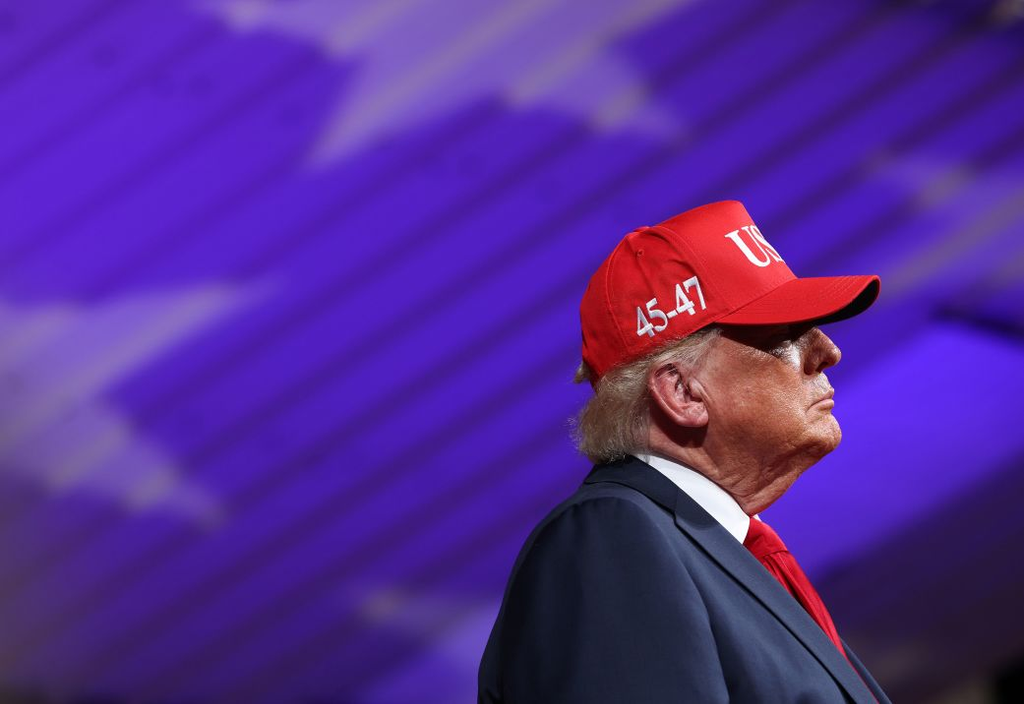
The Republican Party woke up to a political nightmare, and the finger-pointing started before the final votes were even tallied. In one of the most stunning midterm election upsets in modern American history, Democrats swept through traditional conservative strongholds, seizing full control of both the Senate and the House of Representatives.
The losses were swift, deep, and devastating. For two years, the GOP held unified power in Washington. Now, that power has completely evaporated, leaving Capitol Hill in a state of absolute shock.
Instead of rallying together to nurse their wounds, Republican lawmakers, strategists, and conservative donors are doing something that felt unthinkable just a few months ago. They are openly turning on Donald Trump.
Private text chains between party leaders have spilled into public view. Lawmakers who once walked on eggshells around the former president are now giving unfiltered interviews to major news outlets. Behind closed doors and in front of television cameras, the consensus is building fast: Trump’s handpicked candidates, economic policies, and endless personal vendettas cost them the election.
The midterm collapse was not just a narrow defeat. It was a complete repudiation that has redrawn the American political map and left the Republican Party facing a brutal civil war over its future direction.
The $0 Secret To Launching Your Entire Online Empire
Why pay hundreds every month for separate software? Build funnels, send emails, and make sales with Systeme.io completely free.
Get Started For $0Free Forever • No Credit Card Needed • Beginner-Friendly
How the Red Wall Collapsed Across America
Going into Election Day, national forecasters predicted a tight race. The Senate map was widely viewed as favorable for Republicans, who held a 53-seat majority and believed they could easily defend their ground.
Instead, Democrats pulled off an electoral sweep that shattered decades of political precedent. As detailed in the post-election analysis of how the red wall just collapsed, Democratic challengers stormed through states that Republicans had treated as safe fortresses for generations.
In the Senate, Democrats picked up seven crucial seats on Election Night:
- Texas: In what was easily the biggest shocker of the night, Democrat Colin Allred defeated Trump-backed Texas Attorney General Ken Paxton, ending a decades-long Democratic losing streak in Texas statewide races.
- North Carolina: Former Governor Roy Cooper flipped the open Senate seat vacated after Trump fought with retiring incumbent Thom Tillis, giving Democrats their first Senate victory in the Tar Heel State since 2008.
- Kansas: Voters elected their first Democratic senator since 1932, a breathtaking outcome in one of the most solidly red states in the nation.
- Maine: Longtime Republican incumbent Susan Collins was unseated, entirely wiping out the GOP’s Senate presence in New England.
- Iowa, Ohio, and South Carolina: Democratic candidates surged in rural and suburban counties alike, flipping seats that national strategists had barely thought were in play.
Over in the House of Representatives, the story was just as grim for the GOP. Democrats flipped dozens of competitive districts across Pennsylvania, New Jersey, New York, Texas, and Wisconsin. House Minority Leader Hakeem Jeffries is now positioned to take the Speaker’s gavel with a working majority projected to exceed 250 seats, giving Democrats their largest House majority in nearly two decades.
Why Republicans Are Blaming Donald Trump
The anger rippling through the Republican ranks is not subtle. GOP aides, party donors, and members of Congress are pointing directly to the White House and Mar-a-Lago, arguing that the election was lost because Trump insisted on making the campaign about himself rather than the everyday struggles of working families.
Reports from newsrooms like Punchbowl News and PBS NewsHour revealed that several Republican lawmakers felt betrayed by party leadership. One House Republican bluntly admitted that leadership was far too obsessed with bluster and internet drama rather than doing the basic work of governing.
Party insiders point to several distinct missteps that sealed their fate.
1. The Primary Revenge Tour
Rather than protecting vulnerable incumbents who knew how to win tough general elections, Trump spent much of the past year picking fights with members of his own party. In North Carolina, his public attacks forced Sen. Thom Tillis into retirement. In Texas, he threw his weight behind Ken Paxton despite deep divisions within the state party.
When high-stakes general elections arrived, moderate voters and independents rejected these hardline picks. As one senior GOP aide told reporters, Republicans started with an incredible Senate map, and Trump completely hijacked it.
2. Distractions Over Real Solutions
While everyday Americans were worrying about rent, grocery bills, and energy prices, headlines from Washington were dominated by unconventional executive actions. Lawmakers complained that voters were exhausted by announcements like renaming Lake Ontario to Lake America, pushing to rename the Department of Defense back to the Department of War, and proposing massive triumphal arches.
These moves delighted Trump’s most devoted supporters, but swing voters in purple suburbs viewed them as evidence that Washington had lost touch with basic reality. Months before the election, warning signs were flashing as Senate Republicans panicked as controversies stacked up, but party leaders failed to change course.
3. Alienating the Suburbs and Independent Voters
Suburban voters who lean conservative on taxes decided they had had enough of the chaos. Moderate women, college-educated voters, and independent men broke heavily for Democrats across the board. The warning signs were visible throughout the summer, when reports highlighted why Republicans were panicking about Donald Trump ahead of the election cycle. When voting day arrived, those fears became reality.
The Economic Squeeze: Tariffs, Gas Prices, and Voter Backlash
Elections almost always come down to the pocketbook, and this midterm was no exception. Working-class families showed up at the ballot box with real economic frustration, and exit polling showed that voters overwhelmingly held the governing party responsible.
High Grocery and Consumer Costs
Aggressive trade fights backfired heavily in swing districts. Sweeping tariffs on Canadian agriculture, timber, and everyday consumer products triggered retaliatory measures that hit American manufacturers and farmers hard. As swing-state factories struggled with rising material costs, trade wars hit Republican midterm campaigns directly.
Voters were told that tariffs would protect domestic industry. Instead, many families saw higher price tags on basic supermarket items and construction materials. That economic frustration made it nearly impossible for Republican candidates in industrial districts to defend their records.
Send, Spend & Hold Money Worldwide Without Hidden Fees
Transfer money internationally at the real exchange rate and hold 40+ currencies in one account.
Open a Wise AccountMid-market rate • Fast transfers • 40+ currencies
The Impact of Middle East Military Action
Foreign policy also became an unexpected kitchen-table issue. Extended military exchanges and rising tensions in the Middle East rattled global markets, driving up the cost of crude oil.
Families filling up their gas tanks saw prices climb steadily throughout the autumn months. When gas prices spiked as conflict escalated, voters blamed the administration for worsening inflation rather than stabilizing the global economy. For millions of households living paycheck to paycheck, the pain at the pump proved to be the final straw.
Cracks in the Coalition: How Diverse Voting Blocs Shifted
For years, the Republican Party celebrated gains among demographic groups that traditionally backed Democrats. In 2024, significant shifts among working-class voters, young men, and Hispanic voters helped power the GOP back into the White House.
In this midterm, however, that fragile coalition fell apart.
The Return of Latino Voters to Democrats
One of the most consequential shifts occurred in heavily Hispanic areas of Texas, Florida, Nevada, and Arizona. Harsh immigration enforcement proposals, threats to birthright citizenship, and aggressive rhetoric pushed key portions of the electorate back toward Democrats.
Data showed a clear transition from a red ripple to a blue rebound among Latino voters. In South Texas, where Republicans had made historic strides, turnout surged for Democratic challengers who campaigned on healthcare, education, and job stability.
Pushback on Voting Rules
Controversial legal battles also backfired. Attempts to enact last-minute changes to mail-in voting rules and aggressively challenge voter rolls sparked massive public pushback.
When the Supreme Court rejected last-minute mail-in voting curbs, voting rights groups rallied their communities to show up in person. Instead of depressing turnout, the legal battles motivated millions of occasional voters to cast their ballots early.
Capitol Hill in Revolt: Lawmakers Demand Big Changes
The political fallout on Capitol Hill is already producing immediate consequences. Lawmakers who spent two years defending the administration are now scrambling to protect their own political survival ahead of the 2028 election cycle.
The public criticism extends directly into Trump’s Cabinet choices. Defense Secretary Pete Hegseth has become a primary lightning rod for Republican anger. Deep frustration over military appointments sparked a Senate GOP revolt against Pete Hegseth.
The $0 Secret To Launching Your Entire Online Empire
Why pay hundreds every month for separate software? Build funnels, send emails, and make sales with Systeme.io completely free.
Get Started For $0Free Forever • No Credit Card Needed • Beginner-Friendly
Conservative firebrands in the House have taken things even further. Kentucky Representative Thomas Massie issued an ultimatum to fire Hegseth, warning that Republican lawmakers would not hesitate to cooperate with Democrats on oversight investigations if controversial officials remain in place.
Late-night shows and pop culture outlets wasted no time capitalizing on the political chaos. Monologues across late-night television took aim at the unfolding chaos, highlighted by Jimmy Kimmel’s brutal roast of the midterm shocker.
Prominent GOP donors have begun expressing open buyer’s remorse. Wealthy contributors who poured tens of millions into conservative super PACs are actively holding conference calls to discuss redirecting future funds toward candidates who can appeal to moderate voters. Several prominent donors have told reporters on background that as far as they are concerned, Trump’s status as a political lame duck began the minute the polls closed.
The Blame Game Inside the Trump Camp
While Republican lawmakers point their fingers at the White House, Trump and his closest advisers are firing right back.
Speaking to conservative commentators and posting on social media, Trump argued that the losses had nothing to do with him or his policies. Instead, he claimed that the candidates themselves were simply not strong enough to win. In an interview with The New York Times, Trump insisted that if his own name had appeared on the ballot, Republicans would have won the election in a landslide.
Trump outside advisor Alex Bruesewitz echoed that argument on X, writing that most Republican candidates this cycle were uninspiring, lazy, and ineffective communicators.
Yet that defense is failing to calm the fury inside Capitol Hill offices. Lawmakers point out that Trump personally endorsed these candidates, campaigned with them at crowded rallies, and insisted that the party fall in line behind them during primary season. To abandon them the moment they lose strikes many inside the party as disingenuous.
Even so, Trump was quick to remind television audiences that he still holds the presidential veto pen. He hinted that he might be willing to cut deals with Democratic leaders like Chuck Schumer and Hakeem Jeffries on infrastructure and domestic spending, setting up a potential split where the White House cuts deals with the opposition while congressional Republicans are left on the sidelines.
What Divided Government Means for the Next Two Years
With Democrats now holding the keys to both chambers of Congress, the entire power dynamic in Washington has changed overnight. The final two years of Trump’s term will look completely different from the first two.
Complete Oversight and Subpoena Power
During the past two years, Republican committee chairs blocked Democratic efforts to investigate the executive branch. Now, Democratic committee chairs will wield full subpoena authority.
Expect immediate, high-profile investigations into:
- Executive branch spending and tariff exemptions.
- Decisions regarding foreign policy and military strikes.
- Controversial firings and political appointments across federal agencies.
- Commercial transactions and conflicts of interest involving administration allies.
A Total Freeze on Judicial and Executive Appointments
The Senate holds the exclusive constitutional power to confirm federal judges, ambassadors, and Cabinet secretaries. With Democrats holding the Senate majority, the conveyor belt of conservative judicial appointments has effectively stopped.
If a vacancy opens on the Supreme Court or a major federal appeals bench, the White House will be forced to negotiate a consensus pick or watch the seat remain vacant until the 2028 presidential inauguration. Any future Cabinet nominations will face grueling confirmation hearings and likely rejections.
High-Stakes Budget Battles
All federal spending bills must originate in the House of Representatives. Under Speaker Hakeem Jeffries, Democrats will hold absolute control over government funding bills.
This sets up massive fiscal showdowns. If the White House refuses to compromise on spending priorities, the threat of government shutdowns will loom over Washington at every budget deadline.
Frequently Asked Questions (FAQs)
Why did Republicans lose control of Congress in the 2026 midterms?
Republicans lost both chambers because of a combination of voter fatigue over high living costs, persistent fuel prices, disruptive international trade wars, and candidate selection problems. Trump’s handpicked candidates struggled to win over suburban and independent voters in key battleground states.
Which Senate seats did Democrats flip in the 2026 midterms?
Democrats flipped seven seats on Election Night, scoring major upsets in Texas, North Carolina, Kansas, Maine, Iowa, Ohio, and South Carolina.
What does Democratic control of both chambers mean for Donald Trump?
Democratic control gives the opposition party full control of the legislative agenda, the federal budget, and committee investigations. It also gives the Senate the power to block judicial appointments and Cabinet nominees, drastically limiting the administration’s ability to act without bipartisan compromise.
Are Republicans really abandoning Donald Trump after this loss?
Yes. Multiple lawmakers, congressional aides, and major financial donors have publicly and privately voiced deep frustration with Trump’s leadership. Conservative leaders are openly questioning whether the party should move on before the 2028 presidential campaign.
Can Donald Trump still pass laws without Congress?
No. The president cannot pass federal legislation without congressional approval. While Trump can still issue executive orders, those orders can be challenged in federal court, defunded by Congress, or overturned by future administrations.
The midterm shellacking has delivered an unmistakable message from the American electorate: voters want stability, economic relief, and real solutions over political combat. As Republicans begin the painful process of deciding what their party stands for in a post-defeat landscape, the blame game on Capitol Hill is only getting louder.
Whether party leaders choose to stick with the populist playbook or rebuild a traditional conservative coalition will define American politics for years to come.
