
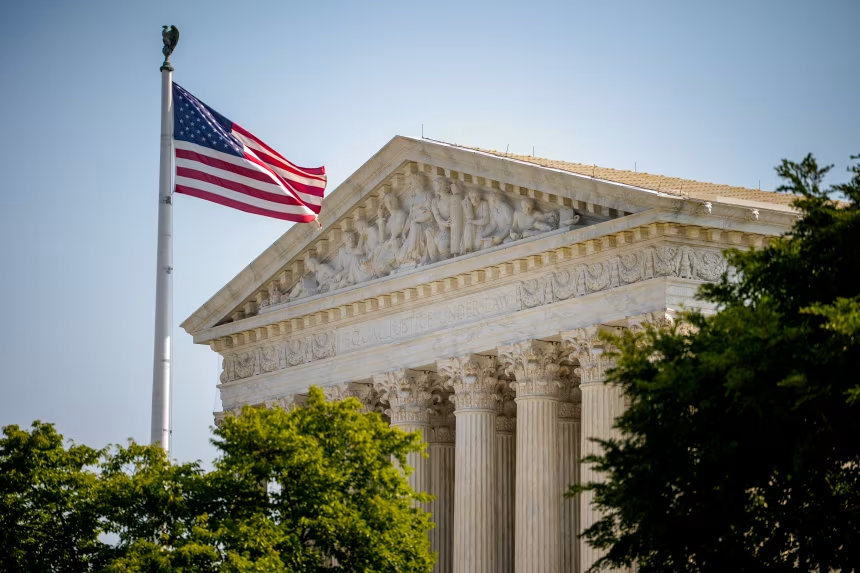
The U.S. Supreme Court made a major ruling that directly impacts how millions of Americans will cast their ballots in the upcoming midterm elections. The high court rejected an emergency request from President Donald Trump’s administration to enforce new rules on mail-in voting. The decision means state election rules will remain as they are for this voting season.
Voting is already underway in several parts of the country. Changing the rules now would cause massive confusion for both voters and local election workers. The justices decided to keep lower court orders in place, blocking the White House from forcing new postal requirements right before Election Day.
Understanding election rules can feel overwhelming, especially when legal battles happen so fast. This guide breaks down what the Supreme Court decided, why the case started in the first place, and what it means for your vote this November.
The Core Decision: What the Supreme Court Said
The Supreme Court issued a short, unsigned order keeping an injunction active against the administration’s mail ballot plan. Lower court judges had previously ruled that the Postal Service could not suddenly change how it handles election mail so close to an election. The Supreme Court agreed to let those lower court orders stand while the full legal battle continues.
A central reason for the decision comes down to timing. Justice Brett Kavanaugh wrote a concurring opinion explaining that applying brand-new rules right now would be arbitrary and capricious. He noted that state and local authorities simply do not have enough time to change their systems before people cast their votes.
Build Funnels, Email Lists & Sell Online With One Free Tool
Create funnels, send emails, and sell online using Systeme.io without paying for multiple tools.
Create Free AccountFree forever • No credit card • Beginner-friendly
Not all justices saw eye to eye on the decision. Conservative Justices Samuel Alito and Clarence Thomas dissented, arguing that the federal government and the Postal Service have wide authority over post office operations. However, the majority of the court voted to stop the new rules for the 2026 midterms.
To read more about the court documents and original filings, you can view official updates from major news outlets like The Associated Press.
What Was Trump’s Proposed Mail-In Voting Plan?
The legal fight traces back to an executive order signed by President Trump in March. The order directed the United States Postal Service (USPS) to implement mandatory changes for any mail carrying election ballots.
Under the proposed rules, states would have been required to follow strict federal guidelines:
- States had to upload lists of eligible voters to a centralized federal database created by the Postal Service.
- Envelopes used for mail ballots had to feature specific standardized barcodes.
- The Postal Service could refuse to deliver ballots in any state that failed to share voter lists or follow envelope standards.
The White House argued that these steps were necessary to increase election security and combat voter fraud. Trump has repeatedly expressed skepticism about mail-in ballots, claiming they leave room for non-citizens to vote or for improper votes to be counted.
However, election experts and voting rights attorneys pointed out that the administration provided no evidence in court showing widespread mail-in voter fraud. Audits across multiple election cycles have consistently shown that mail-in voting fraud is extremely rare.
Why States and Voting Rights Groups Fought Back
Shortly after the Postal Service finalized its plan, 23 states, Washington D.C., and non-profit groups like the League of Women Voters filed lawsuits to stop it. They argued that the U.S. Constitution gives state governments—not the federal Postal Service—the authority to run elections.
Timing was the biggest immediate concern raised by election officials. States like Alabama, North Carolina, and Wisconsin had already started mailing ballots to voters before the ruling came down. If the high court allowed the new rules to take effect immediately, millions of ballots already sent out might not have been delivered or processed.
A federal whistleblower report also surfaced during the legal process. The report warned that the proposed USPS online portal was not fully functional. Technical errors in the system could have caused whole batches of legitimate ballots to be rejected automatically due to simple barcode glitches.
Two separate federal judges—Judge Indira Talwani in Boston and Judge Carl Nichols in Washington D.C.—issued injunctions stopping the plan. Both judges determined that the executive branch overstepped its legal powers. The Supreme Court’s action leaves those injunctions active.
You can read detailed coverage of state-level responses on regional news outlets like CalMatters.
How This Impacts Voters Across the Country
Nearly one-third of all American voters cast their votes by mail during federal elections. For many people, voting by mail is not just a preference; it is the only practical way to participate.
The ruling brings relief to several specific groups of voters:
- Military personnel overseas: Service members stationed abroad rely heavily on mail ballots to participate in U.S. elections.
- Voters in all-mail states: States like Oregon, Washington, Colorado, Utah, and California send ballots by mail to all registered voters. A sudden rule change would have thrown their entire voting infrastructure into chaos.
- Elderly and disabled voters: People who face mobility challenges often depend on mail voting to cast their ballots safely from home.
- Rural voters: Residents in remote areas without easy access to local polling places rely on reliable mail delivery to make their voices heard.
Because the Supreme Court preserved the status quo, you can follow your state’s standard mail-in voting procedures without worrying about sudden changes to your envelope or delivery method.
The Intersection of Technology, Elections, and Modern Media
Modern elections rely heavily on digital systems, automated mail sorting, and real-time news reporting. Changes to complex operational systems take months—sometimes years—to roll out safely. Trying to update mail software software overnight risks system failures, much like launching unproven software before it is ready.
Managing digital platforms efficiently requires careful testing and proper automation tools. If you are interested in how automation and technology shape modern online workflows, check out our insights on YouTube automation to see how content creators streamline technical processes.
Similarly, as technology continues to evolve, understanding artificial intelligence and digital security becomes crucial for everyday life. Read more about tech developments in our technology and AI section to stay updated on how tools are reshaping industries.
What Happens Next for Voting Laws?
It is important to remember that the Supreme Court’s ruling is focused on the midterms. The justices did not issue a final ruling on whether the federal government could implement similar postal rules in the future.
The lawsuit will now return to lower federal courts for full trials. Judges will examine the legal arguments in detail to determine if the Postal Service has the statutory authority to set ballot rules for future elections, such as the 2028 presidential race.
For now, local election officials across the country are focused entirely on running smooth midterm elections. State Secretaries of State have assured voters that mail-in ballots will be handled, tracked, and counted securely under existing state laws.
Frequently Asked Questions (FAQs)
Did the Supreme Court permanently ban Trump’s mail voting changes?
No. The Supreme Court blocked the rules specifically for the midterm elections. The broader legal fight over whether the Postal Service can implement these rules in future elections will continue in lower courts.
Can I still vote by mail in the midterm elections?
Yes. You can vote by mail following your state’s existing guidelines and deadlines. The decision ensures that no new federal postal restrictions will interfere with ballot delivery for this election cycle.
Why did Justice Kavanaugh side against the administration?
Justice Kavanaugh agreed that changing mail rules while voting is already underway would cause widespread disruption for state officials and voters. He called applying the rule right now “arbitrary and capricious,” though he left open the possibility that the Postal Service might have the legal power to do so in the future.
Which states had already started sending out mail ballots?
States such as Alabama, North Carolina, and Wisconsin had already begun sending mail-in ballots to voters before the Supreme Court issued its decision.
Is mail-in voting safe from voter fraud?
Yes. Multiple studies, government audits, and court filings confirm that mail-in voting fraud is extremely rare in the United States. States use signature verification, trackable bar codes, and secure drop boxes to ensure ballot safety.
Final Thoughts
The Supreme Court ruling brings clear rules and certainty for voters heading into the midterms. Election officials can continue doing their jobs without pivoting to an unproven postal tracking system at the last minute. Whether you choose to vote by mail or in person, your state’s established process remains active and ready.
To learn more about our publication and our mission to keep you informed on breaking news and culture, visit our About Us page. Have a question, suggestion, or feedback for our editorial team? Reach out directly through our Contact page.
Build Funnels, Email Lists & Sell Online With One Free Tool
Create funnels, send emails, and sell online using Systeme.io without paying for multiple tools.
Create Free AccountFree forever • No credit card • Beginner-friendly
Stay connected with us across social media for daily updates and trending stories:
- Follow us on Instagram
- Connect with us on Facebook
- Join the conversation on X (Twitter)
