
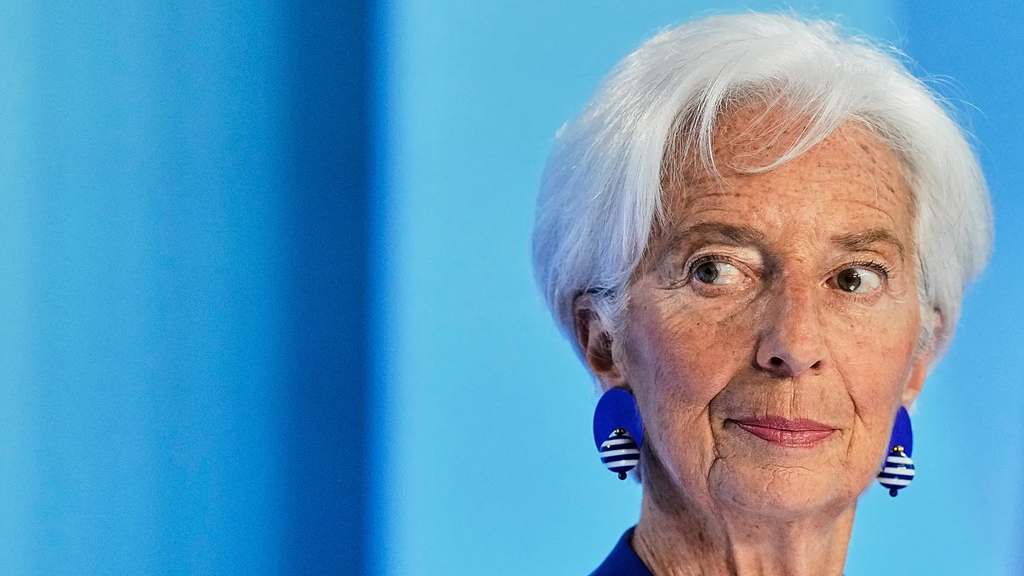
Christine Lagarde has dropped a massive financial bombshell on the global economy. The President of the European Central Bank has officially announced that she will resign from her post on February 7, 2027. That date falls nearly nine full months before her non-renewable eight-year term was scheduled to finish at the end of October 2027.
The shock announcement caught international markets completely off guard. As the leader of the central banking institution for the 20 nations that use the euro currency, Lagarde controls interest rates, guides monetary policy, and oversees the financial stability of hundreds of millions of people. When the chief of the world’s second-most influential central bank steps down before the job is finished, every bank, investor, and household budget feels the shockwave.
Here is a full breakdown of what just happened in Frankfurt, why Lagarde says she refuses to stay silent any longer, who might replace her, and what this sudden leadership vacuum means for your personal finances.
The Big Announcement: Why Lagarde Is Quitting Early
Lagarde made the unexpected disclosure directly following an ECB governing council meeting in Frankfurt, Germany. During that session, policymakers decided to keep the ECB benchmark deposit interest rate steady at 2.5 percent. While economic analysts were busy parsing the interest rate figures, Lagarde dropped the real headline of the day.
She confirmed that she will step down on February 7, 2027. In her official remarks, Lagarde did not point to failing health or behind-the-scenes scandals as the cause of her early departure. Instead, she pointed directly to something far more unusual for a central banker: her desire to speak her mind freely.
The $0 Secret To Launching Your Entire Online Empire
Why pay hundreds every month for separate software? Build funnels, send emails, and make sales with Systeme.io completely free.
Get Started For $0Free Forever • No Credit Card Needed • Beginner-Friendly
Central bank governors are legally bound by strict rules of political neutrality. They are expected to limit their public commentary to dry economic metrics like consumer price indices, inflation targets, lending rates, and balance sheet math. They are strictly warned against getting dragged into geopolitical fights, domestic election arguments, or polarizing international disputes.
Lagarde made it crystal clear that this mandatory silence has become impossible for her to tolerate.
“I want to have the freedom of speech, the freedom of expression, and the freedom to engage on matters that are not monetary policy matters,” Lagarde stated during her press conference. She added bluntly: “We have an obligation of neutrality, we comment on the situation with the focus on monetary policy. There are things that I can say, whether people will listen or not is another story. But I feel that I should say those things, and I cannot do so in my current position.”
She went even further, admitting that global instability and political polarization have made silence intolerable: “I don’t think that I can remain neutral.”
Why “Freedom of Speech” Is Shaking the Financial Establishment
To understand why Lagarde’s statement is causing such an uproar, you have to look at what central bankers actually do.
For decades, the golden rule of central banking has been absolute political discretion. Whether you look at the Federal Reserve in the United States, the Bank of England, or the ECB, market stability relies heavily on predictability. Investors do not want central bankers dropping hot political opinions or picking sides in international trade wars. Any stray word from a central bank president can erase billions of dollars from stock exchanges or send sovereign bond rates soaring within minutes.
Lagarde specifically expressed growing alarm over the rise of political disinformation, election interference, and the distortion of economic facts across Western democracies. She explained that having spent decades in senior global leadership, she feels an urgent obligation to speak out on the dangerous directions world politics is heading.
By leaving the ECB nine months early, she frees herself from the institutional straitjacket of monetary neutrality. Once she officially hands over the keys to the Frankfurt tower in February 2027, she will be completely free to write, speak, campaign, and consult on international policy without needing permission from European finance ministers.
A Historic Career: From Law Partner to Global Financial Powerhouse
Christine Lagarde is not an ordinary central banker, and she never was.
Unlike previous ECB leaders such as Mario Draghi or Jean-Claude Trichet, Lagarde did not spend her early career working inside academic economics departments or trading desks. She began her professional journey as a high-powered corporate lawyer, eventually becoming the first female chairperson of the global law firm Baker McKenzie.
Her political breakthrough came in her home country of France. In 2007, French President Nicolas Sarkozy appointed her Minister of Economy, Finance, and Industry. She became the first woman to hold that post in any G8 country, guiding the French economy through the darkest days of the 2008 global financial crisis.
From there, her international ascent moved at lightning speed:
- Managing Director of the International Monetary Fund (2011–2019): After Dominique Strauss-Kahn resigned in disgrace, Lagarde took over the IMF. She led the Washington-based fund through the height of the European debt crisis, negotiating emergency bailout packages for Greece, Ireland, Portugal, and Cyprus. Her tenure cemented her reputation as a master diplomat capable of bringing feuding world leaders into a room and forcing a deal. Her legacy at the fund still shapes modern discussions about why the IMF warns that the global economy is running on borrowed time.
- President of the European Central Bank (2019–Present): In November 2019, Lagarde broke another glass ceiling by becoming the first female president of the ECB. Only months into her eight-year mandate, the COVID-19 pandemic shut down global commerce, forcing her team to launch massive stimulus programs to save the euro currency from collapsing.
Lagarde’s background as a political negotiator rather than a textbook economist has always set her apart. When major economic crises strike, economic theory often takes a back seat to raw political willpower. That strength, however, also made her confinement to narrow interest rate press briefings increasingly frustrating for her.
The Messy Economic Reality She Leaves Behind
Lagarde’s planned departure in early 2027 does not come during a peaceful, easy time for Europe. In fact, she is stepping down right as the continent faces an extraordinary storm of economic headwinds.
1. Sticky Inflation and Unstable Energy Costs
While post-pandemic inflation has fallen from double-digit peaks back down toward the ECB target of 2 percent, consumer prices remain stubbornly unpredictable. Ongoing tensions in the Middle East and threats to shipping lanes continue to push fuel and freight costs higher. European consumers are still struggling under grocery prices that shot up over the past four years and never came back down.
Send, Spend & Hold Money Worldwide Without Hidden Fees
Transfer money internationally at the real exchange rate and hold 40+ currencies in one account.
Open a Wise AccountMid-market rate • Fast transfers • 40+ currencies
2. Deep Government Debt and Bond Market Chaos
Lagarde spent the last few years raising interest rates from sub-zero territory up to historic highs to crush inflation, before cautiously lowering rates to 2.5 percent. However, higher interest rates make it far more expensive for governments to borrow money.
Countries like France and Italy are now buckling under massive public deficits. Bond markets are demanding much higher interest payments to lend money to Paris, creating deep political crises inside the French parliament. The mounting strain has led financial observers to examine why Europe’s bond market crisis and French debt strains are ringing alarm bells across the world. When major European countries face fiscal turmoil, the ECB finds itself caught in the middle of severe political infighting.
3. Escalating Global Trade Conflicts
Europe is caught in an intensifying crossfire between the world’s biggest superpowers. With the United States pushing higher tariffs and revamping trade policies, European exporters face steep hurdles. European carmakers, chemical plants, and heavy machinery manufacturers are losing ground to cheaper overseas competitors. As transatlantic tensions rise, allied nations are scrambling to protect their own industries, an issue seen clearly as Canada turns to Europe for trade alliances. Lagarde understands that the European single market must act decisively, but she cannot advocate for aggressive economic policies while running the central bank.
Who Will Replace Christine Lagarde? The Race for the Euro’s Top Job
Because Lagarde announced her departure date well in advance, the backroom race to succeed her has started immediately.
Filling the top job at the European Central Bank is not like hiring a regular corporate CEO. It requires unanimous or heavy consensus among the 27 European Union member states. The appointment involves high-stakes political horse-trading, where national leaders balance geographical influence, economic philosophy, and political alliances.
French President Emmanuel Macron reacted quickly to the news, thanking Lagarde for her historic service while emphasizing that the transition must be organized smoothly in coordination with European partners.
The top names already circulating in Frankfurt and Brussels include:
Pablo Hernández de Cos
The former Governor of the Bank of Spain and current head of the Bank for International Settlements (BIS) is widely considered the early favorite. De Cos earned massive respect across Europe for his balanced, calm approach to banking supervision and monetary policy. He is seen as a compromise candidate who appeals to both fiscal conservatives in Northern Europe and debt-burdened countries in the South.
Klaas Knot
The President of the Dutch Central Bank (De Nederlandsche Bank) represents the conservative, inflation-hawkish wing of the ECB. If northern countries like Germany and the Netherlands demand a leader focused strictly on price stability and spending discipline, Knot will be near the front of the pack.
Isabel Schnabel
An influential member of the ECB Executive Board and respected German economist, Schnabel is known for her clear communication and deep analytical grasp of financial markets. Choosing her would satisfy Germany’s long-standing desire to see one of its own top economists lead the central bank.
The $0 Secret To Launching Your Entire Online Empire
Why pay hundreds every month for separate software? Build funnels, send emails, and make sales with Systeme.io completely free.
Get Started For $0Free Forever • No Credit Card Needed • Beginner-Friendly
François Villeroy de Galhau
The Governor of the Bank of France is another seasoned veteran. However, because Lagarde herself is French, European leaders may resist giving the top job to another French official back-to-back, making his path politically tricky.
The contest will also overlap with leadership changes at other major institutions. Just as investors keep a sharp eye on how monetary policy changes and inflation outlooks shift across the Atlantic, the leadership transition in Europe will dominate market discussions throughout the coming months.
How Christine Lagarde’s Resignation Impacts Everyday People
You might think that central bank politics in Frankfurt only matters to hedge funds and billionaire currency traders. That is a mistake.
The actions of the ECB touch every single corner of everyday financial life, even if you live thousands of miles away from Europe. Here is how this leadership shakeup filters down to regular wallets:
The Value of the Euro and Travel Costs
Uncertainty at the helm of a central bank creates volatility for its currency. When traders are unsure who will lead the ECB or how aggressive that leader will be on interest rates, the euro fluctuates sharply against the US dollar, the British pound, and other world currencies. If the euro weakens during the transition, traveling to Europe becomes cheaper for tourists, but imports of critical goods like oil and electronics become more expensive for European consumers.
Interest Rates, Mortgages, and Loans
Central banks set the base borrowing rates for commercial banks. If the person who replaces Lagarde is a strict inflation hawk, they might keep interest rates higher for longer. That means higher monthly payments on mortgages, steeper interest on credit cards, and tougher terms for small businesses looking to expand. If the successor prefers lower rates to support growth, borrowing costs could slide down, giving borrowers breathing room but potentially allowing inflation to resurface.
Global Bond Yields and Investment Portfolios
When large European governments like France face borrowing challenges, bond yields jump. Higher bond yields mean governments must spend more taxpayer money paying interest to wealthy bondholders rather than funding schools, hospitals, or infrastructure. These rate spikes ripple across global bond markets, affecting pension funds, retirement accounts, and savings bonds everywhere.
What You Should Do to Protect Your Money
Major leadership transitions at world-class central banks remind us that the global economy can change course with very little warning. Watching leaders step aside marks the end of an era in financial leadership, making it critical to take smart, sensible steps with your own personal cash:
- Avoid High-Interest Consumer Debt: With borrowing costs remaining unpredictable, holding high-interest credit card debt or personal loans is dangerous. Prioritize paying off floating-rate debts before interest rate fluctuations catch you off guard.
- Build a Reliable Cash Buffer: Put three to six months of essential living expenses into a safe, high-yield savings account. Liquid cash protects you from sudden economic turbulence, job market disruptions, or family emergencies.
- Diversify Your Assets Across Regions and Currencies: Do not keep all your eggs in one geographic basket. Spreading your investments across broad international index funds, solid domestic equities, and secure fixed-income instruments shields your savings from political turmoil in any single country.
- Lock In Fixed Borrowing Rates When Affordable: If you are planning to finance a home or refinance major business equipment, consider fixed-rate loans. Trying to time when central banks will cut interest rates is a guessing game that even top Wall Street analysts lose.
Frequently Asked Questions (FAQs)
When will Christine Lagarde officially step down from the European Central Bank?
Christine Lagarde will resign on February 7, 2027. Her official eight-year term was originally scheduled to end on October 31, 2027, meaning she is leaving her post almost nine months early.
Why is Christine Lagarde resigning early?
Lagarde stated that she wants the freedom to speak her mind and participate in public discussions on major international issues without being constrained by the strict political neutrality required of the ECB President. She expressed deep concern over global political polarization and misinformation, declaring that she cannot remain neutral on critical world matters.
Who is the European Central Bank President?
The current President of the European Central Bank is Christine Lagarde, who has led the institution since November 2019. She previously served as the Managing Director of the International Monetary Fund and as the Minister of Economy, Finance, and Industry for France.
Who is expected to replace Christine Lagarde at the ECB?
Top candidates to succeed Lagarde include Pablo Hernández de Cos (head of the Bank for International Settlements and former Bank of Spain chief), Klaas Knot (President of the Dutch Central Bank), and Isabel Schnabel (member of the ECB Executive Board). The final decision will be negotiated and decided by European Union government leaders.
Will Christine Lagarde’s early resignation affect interest rates?
In the immediate short term, the ECB is sticking to its established monetary policy path, having kept its benchmark deposit rate steady at 2.5 percent. However, the appointment of a new ECB president in early 2027 could shift future interest rate policy depending on whether the incoming leader favors tight inflation control or aggressive economic stimulus.
Where is the European Central Bank located?
The European Central Bank is headquartered in Frankfurt, Germany. It serves as the primary monetary authority for all European Union member states that have adopted the euro as their official currency.
Christine Lagarde’s decision to walk away from the ECB nine months early marks the end of an era for European monetary policy. As one of the most prominent female leaders in modern global history, her refusal to stay silent in an unstable world proves that even the highest offices in finance cannot remain isolated from today’s geopolitical battles. Over the next year, watching who takes the reins of the euro currency will be one of the most important financial stories on the planet.
