
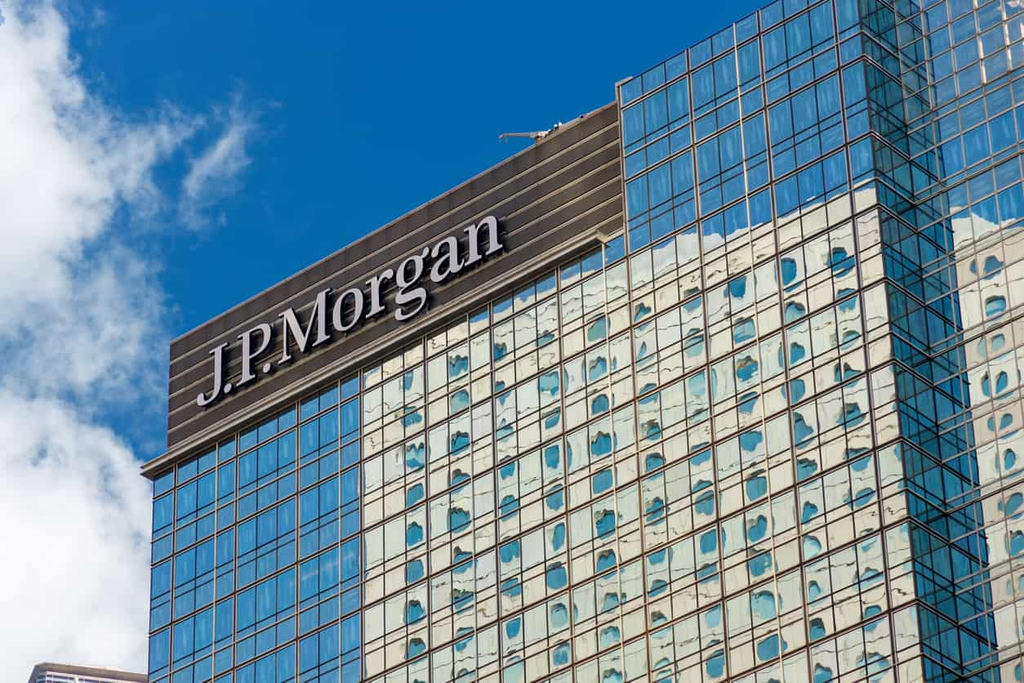
The biggest bank in the United States, J.P. Morgan, has officially made its move to launch a full merchant bank in Nigeria. For a long time, foreign corporations were cautious, keeping their distance due to fluctuating currency rates and tricky operating environments. But the Wall Street giant has put down a massive ₦50 billion deposit with the Central Bank of Nigeria (CBN), secured an Approval-in-Principle, and is now waiting for its final operating licence.
Speaking at the 32nd Nigerian Economic Summit in Abuja, Dapo Olagunju, the Managing Director of J.P. Morgan for West Africa, explained the real motivations behind this sudden expansion. According to the bank, aggressive economic reforms and improved regulatory oversight from the CBN made the timing right. The planned move signals that international heavyweights are looking at Nigeria with renewed interest.
Here is everything you need to know about why J.P. Morgan is expanding, what a merchant banking licence actually means, and how this shift affects everyday business in the country.
The Big Motive: Why J.P. Morgan Is Making Its Move Right Now
The decision to set up a merchant bank did not happen overnight. For decades, J.P. Morgan maintained a quiet representative presence in Lagos. A representative office only helps with liaison duties, gathering market intelligence, and connecting local clients to foreign offices. It cannot hold deposits or issue commercial loans inside the country.
The bank is moving from observation to direct participation. Olagunju pointed out that the scale of structural adjustments over the last three to four years gave them the green light. The unification of foreign exchange windows, shifts in monetary policy, and tighter oversight from financial authorities signaled that the market was maturing.
The $0 Secret To Launching Your Entire Online Empire
Why pay hundreds every month for separate software? Build funnels, send emails, and make sales with Systeme.io completely free.
Get Started For $0Free Forever • No Credit Card Needed • Beginner-Friendly
Global banks evaluate risk before spending capital. When a Wall Street powerhouse deposits ₦50 billion to secure an operational footprint, it sends a clear signal to global investors. The leadership at J.P. Morgan noted that the ongoing policy shifts have created a financial climate strong enough to warrant long-term institutional backing.
To see how global capital flows are shifting across the country, check out our report on why foreign investment in Nigeria just surged 148%.
What Does a Merchant Bank Actually Do?
Many people hear that an American bank is setting up in Lagos and immediately wonder if they can walk into a local branch to open a savings account or pick up an ATM card.
The short answer is no. J.P. Morgan is setting up a merchant bank, which is completely different from a commercial retail bank.
Understanding the difference helps explain the bank’s true agenda:
- Merchant Banks: These institutions focus strictly on wholesale banking. They cater to multinational corporations, large domestic conglomerates, financial institutions, and government agencies. They handle massive corporate loans, structure international bond issues, manage mergers and acquisitions, and facilitate cross-border trade finance. They do not accept small retail deposits from individuals.
- Commercial Retail Banks: These are the local everyday banks you use to deposit salary, transfer money on a mobile app, or take out a small personal overdraft.
Instead of chasing individual branch networks across all 36 states, J.P. Morgan is building a corporate bridge. Their goal is to finance massive infrastructure projects, handle mega mergers, and provide international treasury services for major firms operating across West Africa.
Connecting Wall Street to Abuja: The Bigger Geopolitical Picture
This planned entry is not happening in a vacuum. Trade relationships between Nigeria and the United States have evolved significantly over the past two years, with bilateral discussions focusing heavily on infrastructure, energy security, and critical mineral resources.
Whenever large government-to-government bilateral pacts or private multinational ventures are signed, they require massive financing. Billions of dollars in machinery imports, debt financing, and escrow management must pass through institutions that both sides trust implicitly.
J.P. Morgan holds immense trust within the American financial system. Having an operational merchant bank on the ground in Lagos makes it vastly easier for American energy firms, mining consortiums, and technology giants to move capital directly into local ventures without facing unnecessary cross-border friction.
This move mirrors broader industrial changes across the region. As seen when Dangote Refinery secured a $2.5 billion equity investment, mega-scale projects rely heavily on international capital markets to thrive. A local J.P. Morgan office allows these transactions to be coordinated right on Nigerian soil.
The Central Bank’s Tough Rules: How Banking Regulations Sealed the Deal
Another critical reason cited by J.P. Morgan executives is the quality of banking regulations currently enforced by the Central Bank of Nigeria (CBN).
International banks operate under strict compliance rules. They cannot enter markets where auditing standards are weak or where regulatory frameworks shift without warning. Over recent years, the CBN has pushed local lenders toward stricter capital requirements and modern corporate governance standards.
The banking sector’s ongoing recapitalization drive has forced institutions to clean up balance sheets and increase transparency. When regulators run a tight ship, international players feel safer committing funds.
J.P. Morgan’s leadership specifically praised the CBN’s regulatory clarity during the summit in Abuja. Knowing that local banking oversight matches international standards gave the bank’s risk committees in New York the confidence to approve the expansion.
You can read more about how major financial institutions are adapting to local capital shifts in our breakdown of the real reason big banks paid huge dividends after massive profits.
Send, Spend & Hold Money Worldwide Without Hidden Fees
Transfer money internationally at the real exchange rate and hold 40+ currencies in one account.
Open a Wise AccountMid-market rate • Fast transfers • 40+ currencies
The Licensing Race: When Will Operations Actually Begin?
Putting down the mandatory ₦50 billion capital deposit is a massive hurdle, but it is not the final step.
The process of launching a licensed bank involves multiple regulatory stages:
- Approval-in-Principle (AIP): J.P. Morgan has successfully secured this preliminary approval. It signals that the CBN has reviewed their business model, ownership structure, and initial capital deposit, giving them permission to build out infrastructure.
- Operational Infrastructure Setup: The bank must set up physical offices, establish local cybersecurity protocols, hire key executives, and integrate with the national clearing system.
- Final Banking Licence: Once the CBN inspects the setup and ensures full compliance with local banking laws, a final licence is granted. Only after this step can the bank legally open its doors for business.
The bank is targeting its final licence approval between late 2026 and early 2027. While this timeline depends entirely on regulatory reviews, groundwork is already moving at full speed.
What This Means for Domestic Banks and Everyday Nigerians
Even though you will not be swiping a J.P. Morgan debit card at your local supermarket, this expansion still affects everyday economic conditions in important ways.
1. Increased Foreign Exchange Liquidity
One of the most persistent economic challenges has been foreign exchange volatility. When major Wall Street firms set up merchant banking operations, they bring deep international liquidity. They make it easier for global investment funds to trade Nigerian assets, helping stabilize the flow of foreign currency in and out of the country.
2. Cheaper International Capital for Local Businesses
Large local companies often struggle to secure affordable long-term loans for heavy industrial machinery or factory expansions. With J.P. Morgan operating directly in Lagos, viable domestic enterprises gain an open door to international debt markets, syndicated loans, and foreign bond investors.
3. Raising the Game for Local Merchant Banks
Competition drives improvement. Established domestic merchant banks will now be competing against one of the most sophisticated financial institutions in world history. This competition pushes the entire sector to improve transaction speeds, lower corporate advisory fees, and adopt world-class risk assessment technology.
4. A Vote of Confidence That Attracts Other Players
Capital follows capital. When institutional investors see an American banking giant committing capital to Lagos, it eases hesitation for other multinational companies. It changes the narrative from one of uncertainty to one of calculated opportunity.
To get a clearer view of how economic data impacts regular living standards, take a look at our analysis of Nigeria’s GDP growth and what it means for your wallet.
Frequently Asked Questions (FAQs)
Can regular individuals open personal accounts with J.P. Morgan in Nigeria?
No. J.P. Morgan is establishing a merchant bank, not a commercial retail bank. Its services will be restricted to large corporations, institutional investors, financial institutions, and government bodies.
The $0 Secret To Launching Your Entire Online Empire
Why pay hundreds every month for separate software? Build funnels, send emails, and make sales with Systeme.io completely free.
Get Started For $0Free Forever • No Credit Card Needed • Beginner-Friendly
How much money did J.P. Morgan deposit to start the bank?
The bank deposited ₦50 billion with the Central Bank of Nigeria to satisfy statutory capital requirements for establishing a merchant bank.
Has J.P. Morgan already started operating as a merchant bank?
Not yet. The bank has received Approval-in-Principle from the CBN. It must complete statutory preparations and secure its final operating licence before it can begin merchant banking activities, which is expected by late 2026 or early 2027.
Why didn’t J.P. Morgan set up a merchant bank years ago?
While J.P. Morgan has operated a representative liaison office in Lagos for decades, its executives stated that recent economic reforms, foreign exchange policy adjustments, and stronger central bank regulations made the operating environment attractive enough for full merchant expansion now.
Will J.P. Morgan compete with local retail banks like Access, Zenith, or GTBank?
No. Because it lacks a retail banking licence, J.P. Morgan will not compete for individual customer deposits, small business checking accounts, or retail consumer loans. It will primarily compete with specialized investment banks and wholesale merchant institutions.
The planned expansion of J.P. Morgan into Nigeria’s merchant banking space marks an important milestone for the country’s corporate finance sector. While navigating market volatility and currency adjustments remains an ongoing journey, the arrival of America’s premier financial institution proves that institutional appetite for Nigeria’s long-term commercial potential is far from gone. As the regulatory review reaches its final stretch, the business community will be watching closely to see how this Wall Street powerhouse transforms wholesale financing across the region.
