
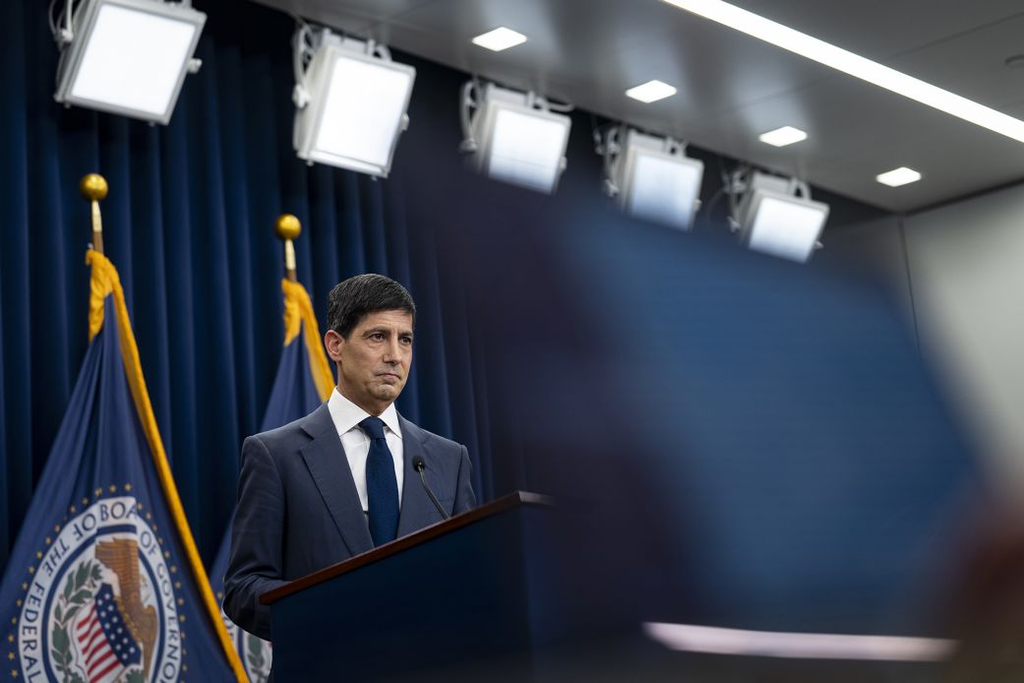
Federal Reserve Chair Kevin Warsh took the stage at the annual Jackson Hole economic conference in Wyoming with a clear message for the nation. Inflation is still running too high, and interest rates may need to go up again to fix it.
While price increases have slowed down a bit from earlier spikes this year, the central bank chief warned that the underlying trend has not improved enough yet.
If you have been feeling the squeeze at the grocery store or when paying your monthly bills, you are not alone. Prices for everyday items remain elevated across the country.
Warsh made it clear that bringing those prices under control is the central bank’s primary job, even if it means keeping borrowing costs high for longer than people hoped.
This announcement has sent ripples through Wall Street, real estate markets, and household budgets. Understanding what the Federal Reserve is doing, why inflation is sticking around, and how these decisions affect your everyday finances is essential.
The $0 Secret To Launching Your Entire Online Empire
Why pay hundreds every month for separate software? Build funnels, send emails, and make sales with Systeme.io completely free.
Get Started For $0Free Forever • No Credit Card Needed • Beginner-Friendly
What Kevin Warsh Said at Jackson Hole
The speech at Jackson Hole was one of the most anticipated economic events of the year. Investors, business owners, and everyday consumers were waiting to hear how the central bank plans to handle the economy for the rest of 2026.
Warsh replaced former Chair Jerome Powell back in May, and this address offered the clearest look yet at his economic strategy. He pointed out that while recent summer numbers showed mild cooling, those short-term drops do not prove that long-term inflation is truly solved.
The central bank sets a target for annual inflation at 2 percent. Current official data from the Federal Reserve shows inflation sitting closer to 3.7 percent, which is nearly double that goal. Warsh emphasized that unless price growth moves toward that target at a steady speed, the Fed will be forced to act by raising rates.
Moving Away from Forward Guidance
One major shift under Warsh’s leadership is how the Fed communicates with the public. In past years, previous chairs used to give detailed promises about what rates would do months in advance, a strategy known as forward guidance.
Warsh explained that he wants to move away from giving exact predictions about future meetings. He believes predicting future moves locks the Fed into a corner when unexpected economic shifts happen.
Instead, the central bank will make decisions meeting by meeting based strictly on incoming economic data. This means markets and consumers should prepare for more sudden policy adjustments rather than predictable, scheduled changes.
A Focus on Underlying Price Trends
It is easy to get caught up in month-to-month price changes, but the Fed looks at deeper patterns across the entire economy. Warsh noted that over half of all goods and services tracked by the government are still seeing price increases above 3 percent.
Before the recent economic shifts of the last few years, only about one-third of items saw price jumps of that size. This broad spread of rising costs across different categories shows that inflation is not just a problem in one or two industries.
When broad categories like food, shelter, transportation, and health care all remain expensive at the same time, consumers feel a constant strain on their monthly paychecks.
Why Inflation Is Still Stubbornly High
To understand why rate hikes are back on the table, it helps to look at what is driving price increases across the country. Inflation is rarely caused by just one factor; it is usually a mix of supply disruptions, high consumer demand, and government spending.
Over the past year, several unique pressures have combined to keep prices from returning to normal levels.
High Energy Costs and Supply Chains
Energy costs play a massive role in the price of almost everything you buy. When crude oil or natural gas prices rise, transporting goods from factories to grocery store shelves becomes much more expensive.
Companies usually pass those higher shipping costs directly to consumers by raising retail prices. Recent geopolitical tensions and global energy disruptions have kept fuel prices fluctuating, making it harder for overall inflation to drop consistently.
When gas stations raise their prices, every industry that relies on trucks, trains, or cargo ships feels the pinch almost immediately.
Massive Tech and AI Spending
Another major factor pushing financial markets and borrowing costs higher is the massive investment going into modern technology. Major tech corporations are spending hundreds of billions of dollars to build massive data centers and modern computer hardware.
Send, Spend & Hold Money Worldwide Without Hidden Fees
Transfer money internationally at the real exchange rate and hold 40+ currencies in one account.
Open a Wise AccountMid-market rate • Fast transfers • 40+ currencies
To finance these mega-projects, companies are borrowing huge sums of money from global credit markets. This huge demand for borrowing has pushed long-term interest rates higher across the entire economic system.
If you are interested in how modern technology shapes productivity and business trends, exploring updates on technology and AI updates can give you a better view of how these mega-projects impact global markets.
Government Debt and Heavy Spending
The overall size of government borrowing also plays a key role in keeping interest rates high. Total U.S. national debt recently crossed major historical milestones, forcing the government to issue more bonds to pay its bills.
When there are massive amounts of government bonds on the market, investors demand higher interest yields before buying them. Official statements from the U.S. Department of the Treasury highlight how these yields influence broader credit conditions.
When the government spends heavily while credit is tight, it creates an environment where overall inflation is slow to cool off.
What Higher Interest Rates Mean for Your Wallet
Interest rates sound like an abstract topic for bankers, but they affect your everyday life in very concrete ways. When the central bank signals that interest rates might rise, borrowing money gets more expensive for almost everyone.
From credit card bills to home mortgages, here is how a higher rate environment impacts your household budget.
Credit Card Debt Gets More Expensive
Most credit cards carry variable interest rates that are tied directly to the Fed’s benchmark rate. When the Fed raises rates, credit card companies usually raise their Annual Percentage Rates (APRs) within one or two billing cycles.
If you carry a balance on your credit cards from month to month, higher APRs mean more of your payment goes toward interest charges rather than paying down your balance.
For anyone holding credit card debt, high rates mean it takes significantly longer to become debt-free unless you aggressively pay down the principal balance.
The $0 Secret To Launching Your Entire Online Empire
Why pay hundreds every month for separate software? Build funnels, send emails, and make sales with Systeme.io completely free.
Get Started For $0Free Forever • No Credit Card Needed • Beginner-Friendly
Mortgages and the Housing Market
The housing market is one of the first areas to react when borrowing costs rise. Mortgage rates move closely with long-term bond yields, which have been trending upward in response to high inflation.
Higher mortgage rates mean higher monthly payments for anyone trying to purchase a home. This often forces prospective buyers to adjust their expectations or pause their house search entirely.
For current homeowners with fixed-rate mortgages, your monthly payment remains safe. However, if you plan to move, refinance, or take out a home equity line of credit, higher rates will make those options far more costly.
Auto Loans and Personal Loans
Buying a car or taking out a personal loan also becomes more expensive when rates remain high. Lenders adjust their loan terms to match the overall cost of money in the financial system.
Higher auto loan rates lead to larger monthly car payments or force buyers to stretch their loan terms over longer periods, which results in paying thousands more in total interest over time.
Checking loan terms carefully and shopping around among credit unions and online lenders can help minimize the impact of elevated rates.
Higher Returns on Savings Accounts
While higher interest rates make borrowing painful, they offer a silver lining for people who save money. High-yield savings accounts and certificates of deposit (CDs) pay much better returns when rates are high.
If your savings are sitting in a traditional bank account earning virtually zero interest, moving those funds to a high-yield account allows you to earn a decent return with minimal risk.
This extra interest can help offset some of the erosion that inflation causes on your cash reserves over time.
The Tension Between Washington and Wall Street
The debate over interest rates is not happening in a vacuum. There is intense political and economic debate surrounding how the Federal Reserve handles the economy.
President Donald Trump has repeatedly voiced his desire for lower interest rates to boost economic growth and lower borrowing costs for consumers. However, Fed Chair Kevin Warsh has maintained that the central bank must remain independent and focused on fighting inflation first.
Independent Monetary Policy
The Federal Reserve was intentionally designed by Congress to operate independently of political pressure. Its dual mandate is simple: keep unemployment low while maintaining stable prices.
When inflation is high, the Fed often has to raise rates even if politicians prefer lower rates to stimulate business activity. This independence allows the Fed to make decisions that protect the long-term value of money, even when those decisions are unpopular in the short term.
The Reaction on Wall Street
Stock markets often react nervously when central bankers talk about raising rates. Higher interest rates make corporate borrowing more expensive, which can lower profit margins for major businesses.
Investors also compare the potential return of stocks to the safer, higher returns available from government bonds. When bond yields are high, some investors shift money out of risky stocks and into fixed-income investments.
This constant tug-of-war between stock growth and bond yields creates daily volatility in global stock markets whenever Fed officials speak.
How Business and Online Entrepreneurship Fit In
During times of high inflation and tight credit, traditional jobs and traditional investments can feel uncertain. That is why many people look for alternative ways to build income streams online.
Creating digital content, running digital businesses, or exploring automated online media can provide extra financial security when prices are rising faster than regular wages.
Building Digital Income Streams
Digital business models often have low startup costs compared to brick-and-mortar stores. You do not need expensive commercial real estate or massive inventory loans to launch a digital project.
For example, many creators build automated video channels or digital media outlets that generate advertising revenue on autopilot. If you want to see how creators use smart strategies to build scalable video channels without high overhead, check out guides on YouTube automation.
Developing scalable digital skills gives you flexibility and control over your income regardless of broader economic downturns.
Adapting to Changing Consumer Habits
When interest rates are high and inflation bites, consumer spending habits change. People cut back on luxury items and spend more carefully on essentials, digital entertainment, and self-improvement tools.
Businesses that adapt quickly by offering affordable, high-value digital solutions tend to thrive even when the overall economy slows down.
Staying flexible and constantly updating your skills is one of the best ways to protect your income in any financial environment.
Smart Strategies to Protect Your Money Right Now
You cannot control Federal Reserve policies or global inflation trends, but you can control how you manage your personal budget and savings. Taking proactive steps today can shield your household from the negative impact of high interest rates.
Pay Down High-Interest Debt First
If you hold credit card balances or high-interest personal loans, eliminating those balances should be your top priority. Pay off the accounts with the highest APRs first while making minimum payments on the rest.
Refinancing credit card debt into a lower-rate balance transfer card or personal consolidation loan can save you hundreds of dollars in interest charges if you act quickly.
Build an Emergency Cash Buffer
Uncertain economic times highlight the importance of having liquid savings ready for unexpected expenses. Aim to accumulate three to six months of basic living expenses in a high-yield savings account.
Having cash set aside prevents you from having to rely on expensive credit cards or high-interest loans if an unexpected repair or job transition occurs.
Audit Your Monthly Spending
Take an hour to review your bank and credit card statements from the past three months. Identify unused subscription services, unnecessary dining expenses, or recurring fees that you can cut immediately.
Redirecting those saved dollars into your emergency fund or debt payoff plan builds a stronger cushion against rising everyday prices.
Focus on Skill Development and Network Building
Your personal earning power is your most valuable financial asset. Investing time into building useful skills, learning modern digital tools, and building strong business relationships pays dividends regardless of economic conditions.
If you want to read more about our background and vision for keeping readers informed on business and media trends, feel free to check out our about page. You can also get in touch with our editorial team directly through our contact page.
Staying connected with active digital communities is another great way to keep up with financial news and career opportunities. You can follow along with our daily updates and community discussions on Instagram, check our posts on Facebook, and join the conversation on X (Twitter).
Frequently Asked Questions
Why does the Fed raise interest rates to lower inflation?
When the Fed raises interest rates, borrowing money becomes more expensive for businesses and consumers. This slows down overall spending and borrowing across the economy. Lower demand for goods and services helps cool off rapid price increases over time.
Will interest rates go up at the next Fed meeting?
Fed Chair Kevin Warsh stated that future decisions will depend strictly on economic data rather than fixed promises. While a rate hike is not guaranteed at the very next meeting, the Fed has made it clear that hikes remain possible if inflation does not drop toward the 2 percent target.
How does high inflation affect everyday savings?
Inflation reduces the purchasing power of your cash over time because goods and services cost more. However, when interest rates are high, high-yield savings accounts pay better returns, which helps protect your money against inflation losses. Tracking official cost of living reports on the U.S. Bureau of Labor Statistics can help you track these shifts.
What is the difference between CPI and PCE inflation?
The Consumer Price Index (CPI) measures out-of-pocket spending by urban consumers across a fixed basket of goods. The Personal Consumption Expenditures (PCE) price index, which is the Fed’s preferred measure, adjusts for how consumers swap out expensive items for cheaper alternatives when prices change.
Should I buy a home while interest rates are high?
Buying a home depends on your personal budget and housing needs. While high interest rates increase monthly payments, they can also lead to less competition among buyers and slower price growth. Many buyers purchase when ready and look to refinance later if rates fall.
Looking Ahead at the Economic Road
Managing your finances through a period of high inflation and rising interest rates requires patience and steady planning. While economic headlines can feel overwhelming, focusing on what you can control makes all the difference.
By reducing expensive debt, maintaining an emergency savings fund, and exploring new income streams, you can keep your financial foundation strong. The economic picture will continue to evolve as new monthly data comes in, but staying informed ensures you are ready for whatever comes next.
