
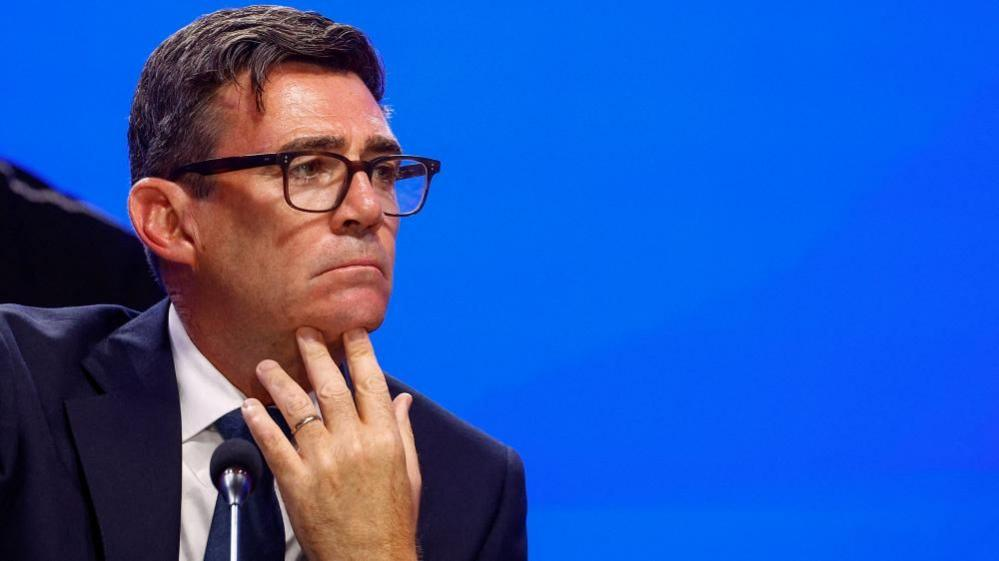
British politics just experienced a massive shockwave. British Prime Minister Andy Burnham has opened the door to reconsidering freedom of movement with the European Union, and Deputy Prime Minister Angela Rayner has stepped forward to publicly back him.
Speaking in a landmark interview with The Sunday Times, Burnham stated that Britain must have an honest, evidence-based national conversation about re-evaluating free movement rules as the government prepares for high-stakes bilateral talks in Europe. Just hours later, Rayner appeared on the BBC Sunday with Laura Kuenssberg programme and insisted that nothing is off the table as Britain builds its upcoming 10-year strategy with Brussels.
For years, senior political figures treated the end of free movement as an untouchable red line. Challenging it was viewed as political suicide. Now, the two most powerful figures inside the Labour government have placed the issue right back in the center of British public life.
The move has sparked instant fury across the political spectrum, from opposition benches to Labour heartlands. With a crucial UK-EU summit scheduled for Brussels on November 20, the debate over Britain’s post-Brexit future has erupted once again.
The Spark: What Andy Burnham Actually Said
The controversy began when Burnham made comments that broke away from years of cautious Labour messaging on Europe. Instead of repeating old talking points about keeping Brexit settled forever, Burnham argued that the country needs to take a fresh, clear look at the facts on the ground.
The $0 Secret To Launching Your Entire Online Empire
Why pay hundreds every month for separate software? Build funnels, send emails, and make sales with Systeme.io completely free.
Get Started For $0Free Forever • No Credit Card Needed • Beginner-Friendly
Burnham pointed out that the reality of immigration after leaving the EU did not match what voters were promised during the 2016 referendum. He highlighted that while the old system of European free movement had real challenges, it functioned very differently from the migration patterns Britain experiences today.
Under the original European system, migration was largely a revolving door. People arrived to work in specific industries, fill temporary labor gaps, or study, and many eventually returned to their home countries. Burnham argued that since ending that setup, Britain has ended up with a system that creates entirely different pressures, without delivering the control people expected.
He made it clear that avoiding the topic out of political fear solves nothing. By proposing that free movement should no longer be treated as an automatic taboo, Burnham signaled that his administration wants practical economic solutions rather than ideological rigidness.
This stance represents a major shift from previous years. When Burnham first took over Downing Street, critics wondered how he would manage the European question. As covered in our look at how Kemi Badenoch shaped her strategy against Burnham, the opposition has long anticipated that Labour would eventually soften its borders policy. That prediction has now landed squarely on the front pages.
Angela Rayner Steps In: “Nothing Off the Table”
If Downing Street hoped the Prime Minister’s remarks would quietly pass as casual musings, Angela Rayner ensured they became the headline story of the week.
Appearing live on Sunday morning television, the Housing Secretary and Deputy Prime Minister faced tough questions about whether the government is trying to rerun the 2016 referendum. Rayner pushed back firmly, rejecting the claim that Labour wants to turn the clock back to the past, while defending the need to examine every possible policy option.
Rayner explained that it has been a decade since the UK voted to leave the European Union. Britain cannot live in the past, but moving forward requires an open look at trade-offs. In international negotiations, ruling out options before you even sit down at the bargaining table weakens your hand.
Rayner stated that any major long-term shifts in Britain’s international relationship would need to be put directly to the British people at a general election. She stressed that having an open conversation is not the same as immediately writing old EU laws back into the statute book.
Her media appearance set off alarm bells across Westminster. While Rayner insisted that the current manifesto remains in place for this parliamentary term, her refusal to rule out free movement confirmed that Labour is thinking seriously about what comes next.
What Was Free Movement, in Plain English?
To understand why this issue creates such intense emotion, it helps to strip away the political jargon and look at what free movement actually did.
Between 1992 and Britain’s formal exit from the EU, free movement was one of the four foundational freedoms of the European single market, alongside the free movement of goods, services, and capital.
Here is how it worked in daily life:
- For British citizens: Any UK passport holder could pack a bag, move to any of the 27 EU member countries, look for work, start a business, study at local tuition rates, or retire without needing a complicated visa.
- For EU citizens: Citizens from countries like France, Poland, Spain, and Germany had the exact same rights to move to the UK to live, study, or work.
- For businesses: Employers could hire staff from across a combined market of over 500 million people without paying thousands of pounds in visa sponsorship fees or waiting months for government paperwork to clear.
When the UK voted for Brexit, ending this mutual arrangement was central to the Leave campaign’s promise to take back control of national borders. The argument was simple: Britain should decide who enters the country based on domestic skills needs rather than treaty obligations.
Following Brexit, the UK introduced a points-based immigration system, treating EU citizens the same as applicants from anywhere else in the world. As outlined in our breakdown of the UK Electronic Travel Authorisation rules, international travel and border controls became strictly enforced, ending decades of open travel between Britain and its closest neighbors.
The Great Irony: What Actually Happened to UK Migration After Brexit?
The main justification for ending free movement was reducing the number of people moving to Britain. Yet, the official data tells an entirely different story.
Send, Spend & Hold Money Worldwide Without Hidden Fees
Transfer money internationally at the real exchange rate and hold 40+ currencies in one account.
Open a Wise AccountMid-market rate • Fast transfers • 40+ currencies
Before the 2016 Brexit referendum, net migration into the United Kingdom hovered around 330,000 people per year. Opponents of the EU argued that this figure was far too high and placed unfair strain on housing, schools, and hospitals.
After Brexit took full effect and the government implemented its points-based system, net migration did not drop. Instead, it skyrocketed to historic highs, reaching approximately 900,000.
Ending European free movement cut off the supply of seasonal and temporary workers from nearby countries. British businesses, care homes, and the National Health Service still faced severe worker shortages. To prevent essential services from grinding to a halt, previous governments issued hundreds of thousands of work visas to applicants from outside Europe.
Unlike seasonal European workers who frequently travelled back and forth between their home nations and the UK, workers arriving on long-term visas from other parts of the world moved on permanent tracks, frequently bringing family dependents.
This reality has completely reshaped the debate. As reported in our coverage on foreign worker rights and employer rules, managing modern migration systems has proven far more complex than simply turning off European borders.
Burnham touched on this exact paradox. By pointing out that the post-Brexit system generated higher overall numbers than free movement ever did, he forced Westminster to confront whether the 2016 border strategy achieved its intended goal.
The Upcoming Brussels Summit: Why Now?
The timing of this debate is not accidental. Downing Street is finalizing its strategy for a major bilateral summit with European leaders in Brussels on November 20.
Relations between the UK and the European Union have gradually shifted from hostile separation to cautious cooperation. Both sides recognize that geopolitical instability, global trade friction, and international security require closer collaboration.
British negotiators are preparing to discuss several priority areas:
- Security and Defense: Establishing a formal security pact to coordinate responses to foreign aggression and protect critical infrastructure, an area intensified by revelations about external interference in past British democratic votes.
- Trade and Agrifood Standards: Easing the crippling veterinary checks and border friction that have hurt British food exporters since 2021.
- Energy and Climate Security: Re-linking energy grids and carbon trading systems to bring down household bills, mirroring recent shifts in net zero policy and energy priorities.
- Youth Mobility: Developing a targeted scheme that allows young people under 30 to travel, live, and work abroad for limited periods without full residency rights.
European leaders have repeatedly warned London that Britain cannot cherry-pick the benefits of the single market without accepting its responsibilities. Brussels has long maintained that trade access and people movement are linked.
The $0 Secret To Launching Your Entire Online Empire
Why pay hundreds every month for separate software? Build funnels, send emails, and make sales with Systeme.io completely free.
Get Started For $0Free Forever • No Credit Card Needed • Beginner-Friendly
By signaling an openness to discuss free movement, Burnham and Rayner are showing European officials that Britain is serious about negotiating in good faith. Even if a full return to pre-Brexit rules remains impossible, signaling flexibility gives British negotiators significantly more leverage in Brussels.
Political Firestorm: How Westminster Reacted
Predictably, the reaction across the British political landscape was immediate and intense.
Reform UK Calls It a Betrayal
Nigel Farage, leader of Reform UK, wasted no time attacking the government. Farage described Burnham’s comments as a total betrayal of Brexit Britain and accused the Prime Minister of deceiving voters who supported him in northern working-class seats.
Farage dismissed Burnham’s argument that European immigration was easier to manage than current arrivals, calling the idea completely dishonest. Robert Jenrick, Reform UK’s Treasury spokesperson, joined the offensive on national television, labeling any proposal to restore free movement as completely mad.
Reform UK has built significant momentum by campaigning against high migration numbers. Despite recent challenges detailed in our reporting on Nigel Farage’s shifting public approval ratings, the party views any softening of Brexit borders as a massive electoral opportunity to win over traditional working-class voters.
The Conservative Opposition Reacts
The Conservative Party, currently led by Kemi Badenoch, attacked Labour for what they termed backroom betrayal. Conservative spokespeople claimed that the Labour government has planned all along to reverse Brexit step by step without asking permission from voters.
Badenoch has consistently argued that Labour lacks the resolve to enforce strong border security. This criticism aligns with her broader attacks on the government, such as her warnings that Labour’s economic plans rely on unrealistic budget assumptions. The Tories intend to use this debate to unite their base and paint Labour as untrustworthy on national sovereignty.
The Labour Red Wall Anxiety
Inside Labour’s own ranks, the mood is nervous. While pro-European backbenchers and Scottish MPs welcomed the Prime Minister’s honesty, MPs representing former industrial heartlands in northern England and the Midlands are alarmed.
Many of these Red Wall constituencies voted heavily for Leave in 2016. Local lawmakers fear that reopening conversations about European migration will provide opposition candidates with potent attack lines ahead of upcoming local elections.
Several backbench MPs privately warned Downing Street that working-class voters do not want theoretical debates about trade-offs; they want promises of border control honored.
The Liberal Democrats Back Reciprocal Rights
In contrast, the Liberal Democrats welcomed the development. Daisy Cooper, the party’s deputy leader, publicly defended the concept of free movement, reminding the public that reciprocal agreements benefit British citizens just as much as foreign nationals.
Cooper pointed out that free movement is a two-way street. If British businesses have labor shortages, workers can fill vacancies quickly. If jobs are scarce, people simply do not come. More importantly, she stressed that restoring mobility reduces overhead costs for British exporters and opens life-changing opportunities for young Britons wanting to work or study across the European continent.
What Does This Mean for Everyday People and Small Businesses?
Beyond the political drama inside Westminster, the debate over free movement carries major real-world consequences for ordinary households and independent businesses.
British Travelers and Expats
Since leaving the EU, traveling to Europe has become significantly more burdensome for UK citizens. Passport checks take longer, British travelers are limited to spending no more than 90 days out of every 180 days in the Schengen zone, and retiring to popular destinations like Spain or France requires meeting high financial thresholds and securing complex visas.
If a new reciprocal mobility arrangement were agreed upon, it could ease these strict time limits, eliminate costly visa paperwork, and restore the freedom to retire or take temporary contracts across Europe without bureaucratic headaches.
Small Businesses and the Hospitality Sector
Small businesses have felt the sharp end of post-Brexit labor rules. While giant corporations can afford thousands of pounds in sponsorship licensing fees and legal costs to bring in foreign specialists, local restaurants, construction firms, agriculture farms, and independent care homes cannot.
Restoring flexible mobility with European neighbors would immediately ease acute staffing shortages that have forced many hospitality and seasonal businesses to cut operating hours or shut down altogether.
Students and Young Professionals
Young people have arguably lost the most under Brexit border rules. British students were cut off from the Erasmus+ exchange programme, which previously allowed tens of thousands of young people to study abroad at affordable rates.
Similarly, working a ski season in the Alps, spending a summer bartending in Greece, or interning at a tech startup in Berlin became nearly impossible for non-wealthy Britons due to visa restrictions. Reopening mobility talks gives young people a realistic chance to regain those lost opportunities.
Frequently Asked Questions (FAQs)
Did Andy Burnham say the UK will rejoin the European Union?
No. Burnham did not call for the UK to rejoin the European Union as a full member. His comments focused specifically on opening a realistic, evidence-based debate regarding reciprocal free movement and practical economic cooperation ahead of bilateral negotiations in Brussels.
Is free movement returning immediately?
No. Both Prime Minister Andy Burnham and Deputy Prime Minister Angela Rayner confirmed that no immediate legal changes will occur during this parliamentary session. Any formal proposal to restore free movement or fundamentally alter the UK’s border relationship with the EU would need to be presented to voters at a future general election.
Why is Angela Rayner defending the Prime Minister’s remarks?
Rayner stressed that entering high-level international negotiations while taking key topics off the table beforehand weakens the country’s bargaining power. She argued that Britain needs an honest conversation about trade-offs to secure the strongest possible economic and security agreements with European partners.
How did immigration numbers change after Brexit?
Despite promises that ending EU free movement would significantly lower immigration, net migration to the UK rose from approximately 330,000 before the 2016 vote to record highs of roughly 900,000 under the points-based immigration system. The reduction in European workers led to an increase in long-term work and student visas from non-EU nations.
How are opposition parties reacting to the news?
Reform UK and the Conservative Party strongly condemned the statements. Reform UK leader Nigel Farage called the idea a betrayal of Brexit voters, while Conservatives claimed Labour is attempting to dismantle Brexit protections. Meanwhile, the Liberal Democrats voiced support for restoring reciprocal mobility rights.
The Road Ahead for Britain and Europe
The debate over free movement is no longer a fringe conversation confined to academic conferences or nostalgic pro-Europe rallies. By speaking out publicly, Andy Burnham and Angela Rayner have brought Britain’s biggest unresolved political question right back to the center of national debate.
Whether this move represents a calculated testing of public sentiment or a pragmatic prelude to the November 20 summit in Brussels, one thing is certain: the conversation surrounding Britain’s post-Brexit relationship with Europe is evolving rapidly.
The political costs of raising the issue are immense, particularly with opposition parties eager to capitalize on working-class discontent. But with domestic economic growth sluggish, public services stretched, and migration numbers higher than ever, the government appears ready to challenge long-standing assumptions.
Britain stands at a pivotal crossroad. The coming months will reveal whether the British public is ready to embrace a pragmatic reset with Europe or whether the battle lines of Brexit remain as deeply entrenched as ever.
