
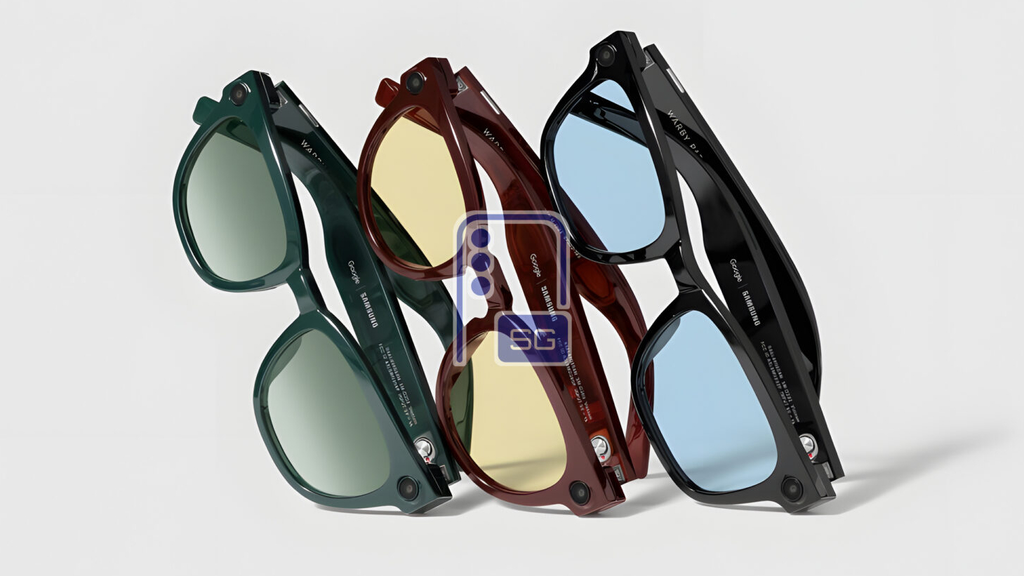
Samsung is officially stepping onto your face, and the company is doing it with hardware so light you might forget you have it on.
After months of whisper campaigns, supply chain leaks, and tech rumors, details on Samsung’s first smart eyewear have broken wide open. According to industry reports first highlighted by CNET, the South Korean tech giant is ready to launch its new wearable, often referred to as the Galaxy Glasses, this November.
The biggest surprise is not just the AI brain inside them. It is the scale. At just 41 grams, these frames undercut the market-leading Ray-Ban Meta glasses. They look like real, fashionable frames from high-end boutiques, not a clunky piece of military hardware strapped over your nose.
Smart glasses have spent years stuck in an awkward middle ground. They were either too heavy, battery-starved, or so visibly weird that wearing them in public earned you sideways glances. Samsung is aiming to erase that stigma completely.
Here is everything you need to know about Samsung’s upcoming wearable, how it works, what it looks like, and why it might completely reshape everyday tech.
The $0 Secret To Launching Your Entire Online Empire
Why pay hundreds every month for separate software? Build funnels, send emails, and make sales with Systeme.io completely free.
Get Started For $0Free Forever • No Credit Card Needed • Beginner-Friendly
The Big Reveal: What Are Samsung Galaxy Glasses?
For the past couple of years, smart glasses have mostly been a one-horse race. Meta took an early lead by sticking cameras and speakers inside classic Ray-Ban frames, proving that regular people will buy smart glasses if they look normal.
Samsung watched that playbook carefully, took notes, and decided to build its own answer.
Partnering closely with Google and Qualcomm, Samsung designed a lightweight frame that packs artificial intelligence, audio playback, cameras, and phone connectivity directly into everyday eyewear. The project runs on Google’s Android XR software foundation and leans heavily on Google Gemini AI to handle voice commands and real-time assistance.
The device is built to be an audio-first, AI-driven daily assistant. It does not try to beam full-color holograms or giant video game screens across your field of view. Instead, it acts as a subtle pair of eyes and ears that helps you move through your day without constantly staring down at your smartphone.
Industry reports suggest that Samsung is planning to officially roll out the hardware in November, with direct retail availability across the United States. It marks Samsung’s biggest new consumer hardware category launch since the debut of its foldable phones.
Weighing In at 41 Grams: Why Superlight Design Changes Everything
When it comes to anything sitting on the bridge of your nose, weight is the only specification that truly matters.
A standard pair of non-smart acetate prescription glasses usually weighs between 25 and 35 grams. In comparison, early tech headsets weighed several hundred grams, and even modern audio frames often push past 50 grams once prescription lenses are added.
Meta’s standard Ray-Ban smart glasses tip the scales at roughly 43 grams for their lightest build, with larger models weighing even more. Samsung managed to shave the baseline down to just 41 grams with standard clear lenses.
Two grams might not sound like a huge difference on paper. When something rests on your nose cartilage for seven or eight hours straight, every single gram dictates whether you feel a headache coming on by lunchtime.
Samsung achieved this lightweight build by distributing the internal components evenly across the frame. Instead of jamming a heavy battery and motherboard right over the nose pads, the weight is balanced through the temples and behind the ears.
This balance keeps the glasses from sliding down your face when you sweat, walk briskly, or look down at your desk. It turns a tech gadget into something you can comfortably wear during an eight-hour shift.
Designer Looks: Gentle Monster and Warby Parker Join Forces
Samsung understood one critical lesson before building this device: tech companies cannot design fashionable eyewear alone.
If glasses do not look good on a variety of face shapes, people will not wear them, no matter how powerful the processor is. To avoid building another ugly gadget, Samsung teamed up with two major names in fashion optics: Gentle Monster and Warby Parker.
Gentle Monster, the South Korean luxury eyewear label famous for bold, architectural silhouettes and global street-style popularity, is bringing six distinct frame shapes to the lineup. Their options cover a wide range of tastes:
- Classic square frames for sharp, structured jawlines
- Softer, rounded shapes for everyday casual wear
- Bolder oversized square frames for modern statement styles
- Dramatic cat-eye silhouettes designed for sleek fashion fits
- Slim oval frames inspired by minimalist street trends
- Traditional regular oval cuts that suit almost any face shape
Gentle Monster is also offering a wide palette of lens tints, ranging from clear blue-light blockers and soft grays to pale lilac, light blue, burgundy, warm brown, and cream.
Send, Spend & Hold Money Worldwide Without Hidden Fees
Transfer money internationally at the real exchange rate and hold 40+ currencies in one account.
Open a Wise AccountMid-market rate • Fast transfers • 40+ currencies
Warby Parker brings three of its most popular, timeless American silhouettes to the collaboration:
- The Alden, an easy-wearing rectangular shape
- The Wren, a soft keyhole-bridge frame that fits narrow to medium faces
- The Reid, a bolder classic frame that looks sharp in formal settings
Warby Parker’s collection focuses on earthy, everyday tones like deep Pine green, reddish-brown Saddle tortoise, and a minimalist Jet Black.
By launching with nine total frame styles across two distinct eyewear brands, Samsung instantly offers more personal styling choices than any other smart glasses maker on the market.
Under the Hood: Hardware Specs and Camera Power
Building something this compact requires serious micro-engineering. Samsung turned to Qualcomm to supply the silicon that drives the entire system.
The glasses run on the Qualcomm Snapdragon AR1 Gen 1, an ultra-low-power chipset designed specifically for audio and camera smart glasses. This chip processes camera input, handles microphone noise cancellation, and manages device connectivity without generating excess heat along the frame arms.
Mounted cleanly into the outer corner of the frame is a 12-megapixel camera sensor. That matches the resolution found on modern flagship smartphone front cameras.
The camera lets you capture first-person point-of-view photos and 1080p video clips without taking your phone out of your pocket. If you are walking your dog, cooking dinner, or holding bags on the subway, you simply tap the frame arm or speak a command to record what you see.
Audio is handled through open-ear directional speakers tucked directly into the temple stems right above your ears. These micro-speakers project sound downward into your ear canal while minimizing sound leakage, so people standing in an elevator next to you do not hear your private phone calls.
A multi-microphone array sits around the nose bridge and frame corners. It uses beamforming technology to isolate your voice from background wind, street traffic, and indoor chatter, making voice dictation remarkably accurate.
Google Gemini AI and Android XR: How the Software Works
Hardware is only half the story. The real engine behind Samsung’s smart glasses is Google Gemini, deeply integrated through the new Android XR platform.
The $0 Secret To Launching Your Entire Online Empire
Why pay hundreds every month for separate software? Build funnels, send emails, and make sales with Systeme.io completely free.
Get Started For $0Free Forever • No Credit Card Needed • Beginner-Friendly
Because these glasses have no digital display screen, your primary way of interacting with them is your voice. Gemini acts as an ambient assistant that sees what you see and hears what you hear.
Here is what you can actually do with them during a normal day:
Instant Voice Messaging and Calls
You can dictate text messages while walking down the street. When a friend texts you, the glasses can read the message softly into your ear. You speak your reply naturally, and Gemini transcribes and sends it without you ever touching your phone.
Real-Time Language Translation
If you are traveling in another country or speaking with someone who speaks another language, the built-in microphones listen to the conversation and whisper the translated English words straight into your ears in real time.
Visual Search and Object Recognition
Because the glasses have a camera linked directly to Gemini, you can ask questions about the world around you. You can look at a strange building and ask what year it was built, stare at a restaurant menu written in French and ask for recommendations, or look at an error code on an appliance and get a quick explanation.
Turn-by-Turn Audio Navigation
Instead of walking through an unfamiliar city with your phone held out in front of your chest, the glasses give you subtle audio cues. You hear simple directional prompts like “turn right at the next crosswalk,” letting you keep your head up and your eyes on the road.
Music, Podcasts, and Ambient Sound
You can stream Spotify playlists, listen to podcast episodes, or catch up on sports talk while keeping your ears completely open to the outside world. It offers a much safer way to listen to audio while jogging or cycling in busy traffic compared to noise-canceling earbuds.
The Screenless Decision: Why Audio-First Beats Visual Displays
Some people might wonder why Samsung did not put a tiny heads-up screen or transparent glass display inside these frames.
The short answer comes down to physics and social comfort.
Putting transparent micro-OLED displays, waveguides, and prism glass into spectacles adds huge amounts of bulk, weight, and battery drain. It forces frames to have thick, unnatural rims and chunky temples that scream gadget from fifty feet away.
Display-based smart glasses also face a major software challenge: floating digital windows right in front of your eyes can be distracting, tiring, and disorienting when you are walking down stairs or driving a car.
By keeping the Galaxy Glasses screenless, Samsung achieved three critical goals:
- The glasses weigh just 41 grams, matching standard designer eyewear.
- The frames look completely normal from any angle.
- The battery does not die in sixty minutes of heavy screen rendering.
Audio-first computing lets technology sit quietly in the background. It steps in when you need an answer or a quick translation, then gets out of the way so you can pay attention to the physical world around you.
Battery Life: Can 9 Hours Last Through a Real Day?
Leaked specifications point to an estimated battery life of up to nine hours on a single charge under mixed usage.
Nine hours is a solid achievement for a device weighing 41 grams, but it is important to understand what mixed usage means in the real world:
- Listening to background podcasts or phone calls continuously will drain the battery faster, roughly within four to five hours of continuous audio streaming.
- Standby listening, where the glasses sit ready for voice prompts, notifications, and periodic photos, easily stretches across the full eight or nine-hour workday.
- Recording long strings of continuous high-definition video uses the most power and causes the fastest battery drop.
To make charging simple, Samsung is expected to bundle the glasses with a dedicated charging case, similar to an oversized sunglass case with a built-in battery pack.
Whenever you take the glasses off and drop them inside the case, the internal contacts top off the frame’s battery automatically. For travelers and office workers, tossing the case into a bag ensures the glasses stay powered for multiple days before the case itself needs a wall plug.
Ecosystem Requirements: What Phone Do You Need?
To get the full suite of smart features, you will need to be invested in the Samsung Galaxy hardware ecosystem.
Reports indicate that exclusive Galaxy features require a Samsung smartphone running One UI 9 or newer. This includes recent flagship models:
- Samsung Galaxy S series phones
- Samsung Galaxy Z Fold models
- Samsung Galaxy Z Flip foldables
If you wear a Samsung Galaxy Watch, the glasses will also sync with watches running Wear OS 7 or later. This connection lets you control audio playback, silence incoming notifications, or check battery levels directly from your wrist without pulling your phone from your pocket.
Basic audio streaming and standard Bluetooth phone calls will likely work on any standard smartphone, including other Android devices. Advanced Gemini visual recognition, fast system pairing, and deeply integrated voice controls will be locked to modern Galaxy smartphones.
If you carry an iPhone, these glasses will probably have limited appeal. While Apple users can pair basic Bluetooth audio glasses, you will miss out on the deep software magic that makes the device worth buying.
Samsung Galaxy Glasses vs. Meta Ray-Ban: The Head-to-Head Showdown
The comparison everyone will be making this holiday season is between Samsung and Meta.
Meta has owned the smart glasses conversation for two years through its partnership with Luxottica. Here is how Samsung’s new challenger stacks up against the reigning champion.
Weight and Comfort
Samsung holds the edge here. At 41 grams, Samsung’s base frame is noticeably lighter than Meta’s Ray-Ban Wayfarer frames. If you have a sensitive nose bridge or wear glasses from morning until bedtime, those saved grams make a genuine difference.
Frame Diversity and Style
Meta relies on iconic Ray-Ban classics like the Wayfarer, Skyler, and Headliner. Those are legendary silhouettes, but they lean heavily on vintage rock-and-roll styling.
Samsung’s dual partnership with Gentle Monster and Warby Parker offers a much wider stylistic range. You can pick ultra-modern East Asian street aesthetics from Gentle Monster or clean, intellectual everyday American looks from Warby Parker.
Artificial Intelligence
This is the real battleground. Meta uses its proprietary Meta AI, which is snappy for basic queries and social media posting.
Samsung runs on Google Gemini, which brings Google’s massive knowledge graph, real-time Google Maps data, and superior voice search accuracy. For people who rely on Google Workspace, Calendar, and Maps, Gemini offers practical utility that Meta cannot easily match.
Phone Ecosystems
Meta’s smart glasses are platform-neutral. They work smoothly across both iOS and Android via the Meta View companion app.
Samsung’s glasses are designed primarily to supercharge the Galaxy smartphone lineup. If you already carry a Galaxy S24 or Z Fold, Samsung’s glasses offer a tighter, more seamless operating system experience.
Privacy, Etiquette, and the Public Eye
Every time a tech company puts a camera on someone’s face, privacy concerns return to the headlines.
People naturally feel cautious around wearable lenses. Nobody wants to be recorded without their knowledge while sitting at a coffee shop, eating lunch, or working out at the gym.
Samsung addresses this by including an external capture LED indicator light built into the front frame edge.
Whenever the camera records a video or snaps a picture, this light illuminates clearly to signal to anyone nearby that recording is active. If someone attempts to tamper with or cover the LED light with tape or paint, the camera software refuses to activate.
Even with hardware safety features, wearing smart glasses comes with social responsibilities. You have to be thoughtful about where and when you use them:
- Turn off capture features in private spaces like locker rooms, doctors’ offices, and bathrooms.
- Take the glasses off or set them on the table during intimate personal conversations so friends know you are fully present.
- Be upfront with people if you are using AI tools to translate or record a meeting.
Public comfort with smart glasses is much higher now than it was during the ill-fated Google Glass era a decade ago, mostly because modern frames look like regular eyewear. Basic courtesy remains essential.
Price and Availability Expectations
Samsung has not officially announced retail pricing, but industry analysts expect the company to target a competitive price bracket.
Meta’s Ray-Ban glasses start around $299 for basic clear or tinted lenses, climbing higher if you opt for polarized or prescription glass. Samsung will likely price its base models close to the $299 to $349 range to go directly after Meta’s market share.
Sales are scheduled to begin this November in the United States. Buyers will be able to order frames directly through three primary retail channels:
- The official Warby Parker online store and retail locations
- The Gentle Monster online boutique
- Samsung Experience Stores across major metropolitan cities
Prescription lens fulfillment is expected to be handled directly through Warby Parker’s established optical labs, allowing customers to use standard vision insurance benefits when ordering custom corrective lenses.
Frequently Asked Questions
Can I put prescription lenses into Samsung smart glasses?
Yes. Thanks to the partnership with Warby Parker, customers can order frames fitted with custom single-vision or progressive prescription lenses directly through optical labs.
Do Samsung smart glasses have a digital screen inside the lens?
No. The glasses use an audio-first design without heads-up displays or visual prisms. You interact with the device through microphones, open-ear speakers, touch gestures on the temples, and voice commands powered by Google Gemini.
How much do the Samsung smart glasses weigh?
The base frames weigh approximately 41 grams with standard lenses, making them lighter than the base Ray-Ban Meta smart glasses.
Will these glasses work with an Apple iPhone?
You will likely be able to connect them via basic Bluetooth for phone calls and music playback, but core features like Google Gemini AI integration, Android XR tools, and Galaxy Watch syncing require a supported Android phone running One UI 9.
Are the glasses waterproof?
While full IP water resistance ratings have not been finalized, the frames are designed to withstand light rain showers and workout sweat. They are not built for swimming or total submersion in water.
How do you charge the Samsung smart glasses?
The glasses charge through contact pins inside a protective carrying case, similar to wireless earbud charging cases.
Can the camera record continuously for hours?
No. To protect battery life and prevent overheating, point-of-view video recording is limited to short clips, typically ranging between thirty seconds and three minutes per take.
Samsung entering the smart glasses arena proves that wearable AI is moving past experimental novelties into genuine consumer everyday gear. By focusing on ultralight comfort, partnering with legitimate fashion eyewear designers, and leveraging Google’s AI strength, Samsung has built a wearable that people might actually want to wear in public.
November will show whether the hardware lives up to the leaks, but one thing is clear: the race to replace your smartphone screen with everyday eyewear is officially on.
