
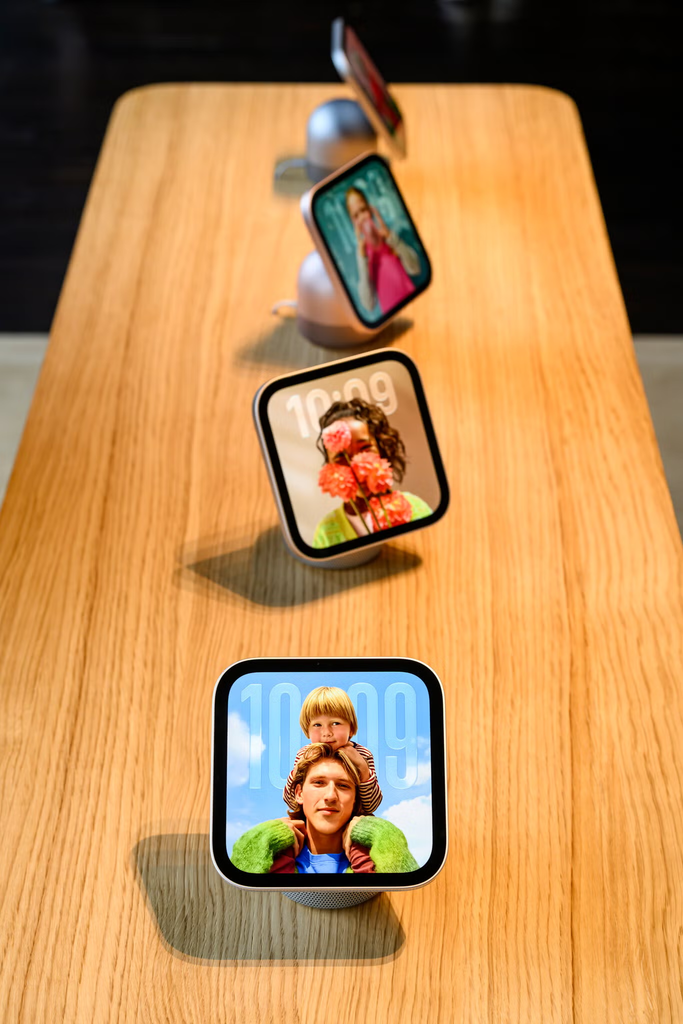
Apple has officially broken its silence on the smart home screen. For years, tech watchers and everyday users wondered why Apple left the countertop display market wide open for Amazon and Google to conquer. Now, the waiting game is finished. The company just revealed HomeView, an all-new dedicated home tablet with a starting price of $299.
The announcement caught plenty of people off guard, mostly because Apple rarely enters a mature product category at a genuinely competitive price. When you look at the price tags on modern Apple gear, you normally brace yourself for four digits. Instead, HomeView arrives at a number designed to put real pressure on existing kitchen screens and smart speakers.
Pre-orders are officially open right now, and the device lands on store shelves on November 13. It is not an iPad with a stand glued to the back, nor is it merely a HomePod with a small digital clock. It represents an entirely fresh product line built from the ground up around shared living spaces, family routines, and smart home automation.
Here is the complete breakdown of what the Apple HomeView brings to the table, how it works, what it costs, and why it might completely reshape how your household stays organized.
What Exactly Is the Apple HomeView?
HomeView is a dedicated 7-inch smart display designed to live permanently in your house. It runs a custom interface powered by the blazing fast A18 chip, which is the exact same family of silicon that drives Apple’s top-tier phones.
The $0 Secret To Launching Your Entire Online Empire
Why pay hundreds every month for separate software? Build funnels, send emails, and make sales with Systeme.io completely free.
Get Started For $0Free Forever • No Credit Card Needed • Beginner-Friendly
Instead of demanding personal sign-ins every five minutes or expecting you to treat it like a private computer, HomeView acts as a communal dashboard. It sits quietly on your counter or mounts directly flush to your wall, waiting for anyone in the house to speak to it, glance at it, or tap the screen.
Apple designed two separate models right out of the gate, and surprisingly, both cost the exact same $299:
- The Countertop Model: This version rests on an angled acoustic speaker base. It looks natural sitting next to your coffee machine, on a kitchen island, or on a hallway console table.
- The Wall-Mounted Model: This version trades the heavy speaker stand for a slim, flush wall mount. It connects cleanly to in-wall power or a discreet cable, turning any entryway or living room wall into a digital command center.
The screen itself is a 7-inch square Liquid Retina display. The square aspect ratio was chosen deliberately. Traditional widescreen rectangles look like entertainment monitors, but a square panel feels more like an interactive digital frame, a wall-hung calendar, or an appliance control board.
You can pick up the countertop model in four distinct finishes: silver, starlight, rose pink, and space gray. The wall-mounted version keeps things simple and discreet with space gray and silver options that blend neatly with common interior wall paint.
The Smart Display Gap Apple Finally Decided to Fill
For nearly a decade, if you wanted a visual screen for quick timers, grocery lists, and door cameras, you had to pick between an Amazon Echo Show or a Google Nest Hub. Apple loyalists were left trying to build DIY setups using old iPads stuck into third-party magnetic stands.
Those DIY iPad solutions were never quite right. iPads are personal devices. They scream with notifications meant for one person, their battery management is not designed for 24/7 wall power, and switching accounts between parents and kids is a headache. Rumors have swirled for months that something bigger was cooking in Cupertino, especially after leaks pointed out that Apple’s secret HomePad project was scheduled to change the home landscape.
With HomeView, Apple delivers the dedicated hardware the community kept requesting. It also answers the heat Apple has been taking across the budget hardware segment, where Amazon’s aggressive tablet pricing previously challenged Apple’s reach. At $299, HomeView lands squarely in impulse-buy territory for households already invested in Apple gear.
The Brains: Siri AI and Apple Intelligence
Hardware is only half the story here. The real soul of HomeView is Apple Intelligence, paired with a brand-new generation of Siri AI.
Older smart displays often feel frustrating because voice assistants frequently misunderstand context. You ask a question, and they read you a three-paragraph web search result you did not ask for. HomeView takes advantage of local on-device machine learning to make interactions feel like talking to a real human assistant.
Facial Recognition That Adapts to Whoever Looks at It
The front of the HomeView features a wide-angle camera system that supports multi-user facial recognition for up to six household members.
When you walk into the kitchen in the morning and look at the screen, HomeView recognizes your face. It immediately shifts the display to your personal calendar, your commute alerts, your unread Messages from family members, and your specific reminders.
When your partner walks up two minutes later, the screen fluidly switches to show their schedule, their reminders, and their preferred news briefs. If a guest walks by whom the system does not recognize, HomeView keeps private data hidden and only displays generic household widgets like the weather forecast, shared timers, and ambient artwork.
Getting the Most Out of Siri AI in the Kitchen
Siri on HomeView can handle multi-step voice requests without tripping over itself. You can say, “Show me my dinner recipe, set a simmer timer for twenty minutes, and dim the dining room lights to fifty percent,” all in a single natural sentence.
Because it ties directly into modern software upgrades, learning how to get the most out of Apple Intelligence with Siri makes running your daily routine much smoother. You do not have to memorize rigid robotic voice commands anymore. You can speak casually, just like you would to someone standing right next to you.
If you are setting up new gear across the house, make sure you know how to enable Apple Intelligence on compatible devices so your phones, tablets, and HomeView can communicate without a hitch.
Send, Spend & Hold Money Worldwide Without Hidden Fees
Transfer money internationally at the real exchange rate and hold 40+ currencies in one account.
Open a Wise AccountMid-market rate • Fast transfers • 40+ currencies
Room-Filling Sound That Punches Above Its Weight
One major flaw of budget smart displays has always been thin, tinny audio. Companies often treat the speakers on smart screens as an afterthought, giving you audio quality that sounds like an old transistor radio.
Apple took the opposite route. Drawing from the acoustic engineering behind the HomePod, the HomeView countertop base packs a serious audio punch:
- Two custom full-range drivers housed inside the display enclosure deliver clear dialogue, crisp vocal podcasts, and wide Spatial Audio separation.
- A down-firing woofer placed in the countertop base provides deep, punchy low-end bass that you can actually feel on the counter.
- Two force-cancelling passive radiators prevent mechanical vibration, meaning the screen will never rattle or buzz against your countertop even when bass-heavy tracks are blasting.
- Real-time computational audio monitors the surrounding room acoustics using built-in sensor arrays, automatically adjusting treble, midrange, and bass so music sounds balanced at any volume level.
The wall-mounted version does not have the bulky base, but Apple tuned its dual internal drivers with specific acoustic profiles designed for flat wall surfaces, preventing muddy sound reflections.
You can also link HomeView with your other speakers for synchronized multiroom audio. If you already own a HomePod or have the latest Apple TV 4K setup in your living room, HomeView syncs with them over AirPlay instantly.
Even better, the Handoff feature makes audio transitions effortless. If you are listening to a podcast on your iPhone while walking through the front door, just tap your phone near the top of the HomeView display, and your audio continues playing on the room speakers without missing a single second.
The Ultimate Smart Home Command Center
HomeView is designed to be the central steering wheel for every smart gadget in your house.
For years, controlling smart lights or security locks through Apple’s Home app required fishing your phone out of your pocket or wearing your Apple Watch around the house. HomeView puts a permanent touch panel within arm’s reach of everyone in the family, including young kids, grandparents, and house sitters who do not have an iPhone.
Matter and Thread Support Built Right In
You do not need to worry about being locked exclusively into expensive accessories. HomeView works natively as a Thread border router and supports Matter, the universal smart home standard.
That means you can connect smart light bulbs, motorized window shades, plugs, and door sensors from dozens of different brands without needing third-party hardware bridges cluttering your router.
Next-Level Home Security and Camera Integration
HomeView works hand-in-hand with HomeKit Secure Video. When a compatible doorbell or exterior security camera detects movement, a live video feed can pop up directly on the screen.
The $0 Secret To Launching Your Entire Online Empire
Why pay hundreds every month for separate software? Build funnels, send emails, and make sales with Systeme.io completely free.
Get Started For $0Free Forever • No Credit Card Needed • Beginner-Friendly
Thanks to an iCloud+ subscription and the onboard A18 processor, HomeView handles smart recognition locally. It can tell you whether the visitor at the door is the mail delivery carrier dropping off a package, a neighborhood cat wandering across the porch, or a family member returning from school.
Apple is also expanding this ecosystem quickly through major manufacturing partnerships. Recent developments revealed how Apple teamed up with LG to expand smart home hardware, leading directly into the new Apple Home Collection of smart thermostats, video doorbells, and keyless locks.
Audio Safety Alerts
HomeView keeps an ear out for emergencies even when the screen is dark. The device includes built-in sound recognition calibrated to identify standard smoke alarms and carbon monoxide detectors.
If an alarm goes off while you are away running errands, HomeView immediately sends an emergency notification directly to your iPhone and Apple Watch, letting you take quick action before damage spreads.
Privacy: The Defining Factor Against Rivals
Smart displays have historically suffered from a major trust problem. Many people feel uneasy placing an internet-connected camera and an always-listening microphone in their private living quarters or kitchen spaces.
Amazon and Google rely heavily on cloud processing and advertising algorithms, which frequently makes privacy-conscious buyers hesitant. Apple has built its primary marketing advantage around this exact hesitation.
HomeView keeps your personal data strictly on the machine:
- Facial identification profiles are processed entirely on-device using the Secure Enclave. Your face scans are never uploaded to remote cloud servers.
- Video recordings analyzed by HomeKit Secure Video are end-to-end encrypted before anything touches iCloud storage. Not even Apple engineers have the digital keys to view your video feeds.
- When Siri AI processes personal requests, such as pulling details from your private text threads or family calendar, that information stays confined to your local hardware.
For anyone who has wondered what makes Apple’s AI privacy model distinct from other AI assistants, HomeView provides a clear demonstration. It is built to give you helpful answers without mining your private living room habits for behavioral ad targeting.
Should You Buy HomeView or Just Get an iPad?
Because HomeView costs $299, it lands right around the entry price of an entry-level iPad on sale. Naturally, many people are asking: why buy a stationary home tablet when you could buy an iPad that you can carry around anywhere?
The answer comes down to what the device is built to do best.
When HomeView Makes Sense
- Shared Living Spaces: You want a central screen that every family member, roommate, or guest can interact with freely without messing with private accounts or app logins.
- Smart Home Control: You have smart lights, locks, cameras, and thermostats that you want to manage from one always-on wall or counter display.
- High-End Kitchen Audio: You want a great music and podcast player with punchy bass that can easily hear your voice over the sound of sizzling pans and boiling water.
- Hands-Free Cooking: You need hands-free timers, unit conversions, and interactive video recipes while your hands are covered in flour or cooking oil.
When an iPad Is the Better Choice
- Personal Entertainment: You want to play graphic-heavy mobile games, read books in bed, or watch movies on airplanes.
- Productivity on the Go: You need to draft emails, sketch with the Apple Pencil, edit documents, or take school notes. For budget-conscious students or commuters, checking out the best budget-friendly Apple devices for everyday use is a far smarter allocation of funds.
- Portability: You need a gadget that runs on battery power and slips into a backpack. HomeView requires constant wall power and is meant to stay in one place.
HomeView is an appliance for your house; an iPad is an individual personal computer for your bag.
Official Details from Apple Newsroom
According to Apple’s official media announcement, HomeView launches across several major markets including the United States, the United Kingdom, Canada, Australia, Singapore, New Zealand, and South Africa on November 13, 2026.
Full technical documentation and order details are available directly through the Apple Newsroom HomeView Announcement.
Frequently Asked Questions
Can HomeView run standard iPad apps from the App Store?
No. HomeView does not run standard iPadOS. It operates on a dedicated home platform optimized for full-screen widgets, smart home controls, FaceTime, Apple Music, and streaming video apps. While select third-party developers can build home-centric widgets and media experiences, you cannot download standard iPad games or general tablet apps.
Does HomeView have a built-in battery for portable use?
No. HomeView is designed as a stationary household appliance. Both the countertop stand model and the wall-mount model require a constant connection to wall power to keep their microphones, sensors, and smart displays operational around the clock.
Can you completely turn off the camera and microphones?
Yes. Apple includes digital and system toggles that allow you to disable the camera and mute the microphone array whenever you want complete visual and audio privacy in your living area.
Do you need an iPhone to set up and use HomeView?
Yes, initial configuration requires an iPhone running the latest operating system update to link the device to your Apple account and home Wi-Fi network. Once set up, however, anyone in the house can interact with the device through touch or voice.
How many different family members can HomeView recognize?
HomeView can store facial profiles for up to six household members. It automatically displays personalized calendars, reminders, and messages based on which family member is standing in front of the screen.
Can you use HomeView as a digital photo frame when idle?
Yes. When HomeView is not actively showing recipes, timers, or smart controls, you can set it to cycle through your favorite shared iCloud Photo albums with dynamic clock widgets and local weather overlays.
Is Apple HomeView Worth the Hype?
The $299 price tag marks a welcome shift in Apple’s product strategy. Instead of pitching a luxury gadget that only early adopters can afford, Apple created a practical, handsome, and genuinely helpful centerpiece for everyday homes.
By bringing together high-quality room audio, responsive smart home controls, fast facial recognition, and local privacy-first processing, HomeView fills a gap that Apple users have endured for years. It turns fragmented smart gadgets into an organized, unified system that anyone under your roof can understand at a glance.
If your kitchen counter has been missing a dependable digital hub, or if you are tired of yelling across the house to control smart lights from your phone, HomeView looks like one of the easiest recommendations of the year.
