
A routine medical flight meant to save a life turned into a nightmare late Friday night when a specialized air ambulance vanished over the cold waters off the coast of Massachusetts. Six people were on board the small jet as it flew through the dark sky toward Boston. What was supposed to be a safe journey turned into a frantic emergency call, a sudden drop in altitude, and a massive rescue mission across the ocean.
By Sunday evening, rescue teams made the painful announcement everyone was dreading. Search crews found pieces of wreckage floating in the water miles away from land. With no sign of survivors, authorities suspended the search effort. All six people on board are now presumed dead.
This tragic accident has left families grieving in two different countries and raised serious questions about what went wrong inside the cockpit during those final, terrifying minutes.
The Journey That Turned Into A Nightmare
The flight began at L.F. Wade International Airport in Bermuda. Latitude Air Ambulance, a trusted Canadian company based in Ontario that provides medical evacuation flights across the globe, sent one of its twin-engine Gulfstream G100 jets to pick up a patient. The goal was straightforward: fly the patient and a family member to Boston, Massachusetts, where specialized medical care was waiting at Logan International Airport.
On board were six people. Four were dedicated Canadian crew members, including two experienced pilots and medical personnel trained to keep patients stable in the air. The other two were the Bermudian patient and a loved one traveling alongside them as a family escort.
The $0 Secret To Launching Your Entire Online Empire
Why pay hundreds every month for separate software? Build funnels, send emails, and make sales with Systeme.io completely free.
Get Started For $0Free Forever • No Credit Card Needed • Beginner-Friendly
The plane took off around 11:40 PM under the callsign Heartbeat 104. For the first part of the flight over the Atlantic Ocean, everything seemed completely normal. The aircraft climbed to its cruising altitude of around 24,000 feet, gliding smoothly through the night sky toward the American coastline.
Sudden Silence In The Sky: What Went Wrong?
Just after 1:00 AM, as the jet approached the coast of New England, total disaster struck. Flight tracking data and radio recordings reveal a chaotic and terrifying sequence of events high above the clouds.
Air traffic controllers in the United States suddenly lost normal contact with the aircraft. Communication began breaking down, with heavy static and missing words. Emergency dispatchers on the ground were alerted that a plane was heading toward the coast with serious electrical issues.
In recorded radio transmissions, an air traffic controller can be heard trying desperately to confirm what was happening inside the cockpit. The controller asked the pilot directly if they were coming in blind due to instrument failure. The pilot’s response was muffled and barely audible through the radio static, but the strain in the voice was clear. Moments later, the pilot managed to declare an emergency.
Shortly after that final transmission, the plane’s radar signal vanished completely. Data recorded by tracking services showed that the Gulfstream G100 suffered a rapid drop in altitude, plunging thousands of feet in a matter of moments before fading from air traffic screens entirely.
The Massive Search Mission Off Nantucket
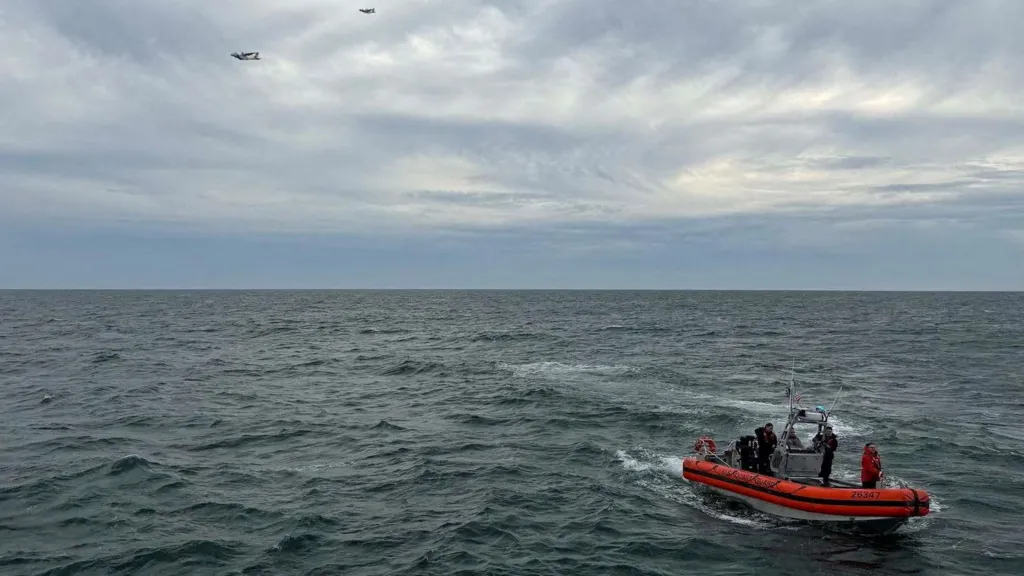
As soon as radar contact was lost, emergency teams sprang into action. The United States Coast Guard launched a large-scale search and rescue operation centered around the waters near Nantucket, a famous island off the coast of Massachusetts.
Because the plane vanished in the middle of the night over open ocean, search crews faced difficult conditions. Multiple agencies joined forces to sweep the vast area of water, including:
- HC-144 Ocean Sentry and HC-130 Hercules airplanes from Coast Guard Air Station Cape Cod.
- MH-60 Jayhawk rescue helicopters flying low over the waves.
- Motor Lifeboats from Coast Guard Station Brant Point navigating rough surface waters.
- The Coast Guard Cutter William Sparling, a fast-response vessel based in Boston.
- Specialized rescue aircraft and HH-60 helicopters from the New York Air National Guard’s 106th Rescue Wing.
For nearly two days, ships and planes searched continuously across hundreds of square miles of ocean, hoping against hope to find a life raft or survivors in the water.
A Heartbreaking Discovery In Deep Water
The search came to a grim turning point on Sunday when Coast Guard search aircraft spotted a field of floating debris. The debris was located approximately 20 miles south of Nantucket, floating above water that ranges from 80 to 90 feet deep.
After analyzing the debris field, search commanders confirmed that the wreckage belonged to the missing Heartbeat 104 medical jet. Despite exhaustive efforts by land, air, and sea, no survivors were found.
On Sunday evening, Rear Admiral Matthew Lake, commander of the Coast Guard’s Northeast District, made the difficult official announcement that search operations were being called off. He explained that suspending a search is one of the hardest choices a commander ever has to make, offering deep condolences to the families grieving this sudden loss.
Shortly after the Coast Guard announcement, Latitude Air Ambulance released a statement accepting the devastating reality. The company confirmed that all four members of their flight team, along with the patient and the patient’s relative, were presumed dead.
Understanding Flight Emergencies And Technical Failures
When a modern airplane experiences a severe electrical failure, it creates an incredibly high-stress situation for the flight crew. Electrical systems power critical cockpit screens, radio systems, navigation instruments, and flight controls. Losing those tools while flying over the dark ocean at night makes navigating back to land nearly impossible without backup instruments.
While aviation remains one of the safest modes of travel in the world, sudden technical glitches can create terrifying scenarios. We have seen how unexpected system errors can disrupt air travel, such as when major UK air traffic control system failures left thousands of travelers stranded across major airports. In the air, however, a complete loss of power leaves pilots with almost no time to react.
When pilots report that they are flying blind, it usually means their primary flight displays have gone dark or their navigation systems are no longer giving accurate readouts. In zero-visibility conditions over water at night, maintaining the plane’s attitude without visual landmarks or operational gauges is one of the most dangerous challenges any aviator can face.
Send, Spend & Hold Money Worldwide Without Hidden Fees
Transfer money internationally at the real exchange rate and hold 40+ currencies in one account.
Open a Wise AccountMid-market rate • Fast transfers • 40+ currencies
What Happens Next? The Investigation Begins
Now that the search and rescue phase has officially ended, the focus shifts to recovery and investigation. Air safety agencies from both the United States and Canada are stepping in to determine exactly why this tragedy happened.
The United States National Transportation Safety Board (NTSB) will lead the primary investigation, working closely alongside the Transportation Safety Board of Canada (TSB) and aviation officials from Bermuda.
Investigating a crash in deep ocean waters requires specialized equipment. Here are the key steps investigators will take over the coming weeks:
- Mapping the debris field on the ocean floor to understand how the aircraft hit the water.
- Using specialized underwater equipment to recover heavy parts of the airframe, engines, and tail section.
- Locating and recovering the Flight Data Recorder and Cockpit Voice Recorder (the black boxes), which store crucial telemetry and audio from the final moments.
- Reviewing maintenance records, pilot training logs, and weather conditions present along the flight path.
- Testing recovered electrical components to check for wiring short circuits, generator failures, or fire damage.
Finding answers is critical not only for giving closure to the families who lost loved ones, but also for ensuring that medical evacuation flights across the globe remain as safe as possible.
Staying Prepared For Emergency Situations
Tragic aviation news reminds us how quickly unexpected events can happen when traveling near or far. Whether flying for medical emergencies or personal trips, understanding travel logistics and keeping track of key resources can help keep you grounded during stressful situations.
Many frequent travelers make sure their devices are equipped with essential tools before taking off. Reviewing a helpful guide on essential travel apps you need to install can make staying connected and organized much easier whenever you are on the move.
For those managing complex travel plans or dealing with international border rules, keeping up to date with changing policies is equally important. Reading through detailed resources like the complete guide to Canadian PR pathways provides useful clarity for families moving between borders or planning long-term stays abroad.
Frequently Asked Questions (FAQs)
What caused the medical plane to go missing off the US coast?
Preliminary reports and radio transmissions indicate that the aircraft suffered a severe electrical failure while approaching the Massachusetts coastline. This caused a loss of radar, radio communication, and navigation instruments before the plane rapidly lost altitude over the ocean.
Who was on board the Latitude Air Ambulance flight?
There were six people on board the aircraft: four Canadian crew members (including two pilots and medical staff) working for Latitude Air Ambulance, one patient being transported for medical care, and one family escort accompanying the patient.
Where was the flight traveling from and where was it headed?
The flight, operating as Heartbeat 104, departed from L.F. Wade International Airport in Bermuda and was scheduled to land at Logan International Airport in Boston, Massachusetts.
The $0 Secret To Launching Your Entire Online Empire
Why pay hundreds every month for separate software? Build funnels, send emails, and make sales with Systeme.io completely free.
Get Started For $0Free Forever • No Credit Card Needed • Beginner-Friendly
Where was the wreckage of the plane found?
US Coast Guard search crews located a floating debris field approximately 20 miles south of Nantucket, an island off the coast of Massachusetts, in waters around 80 to 90 feet deep.
Who is leading the official crash investigation?
The National Transportation Safety Board (NTSB) in the United States is leading the official investigation, with support and cooperation from the Transportation Safety Board of Canada (TSB) and Bermudian aviation authorities.
This tragic event serves as a solemn reminder of the bravery and dedication of medical flight crews who fly into the night to transport patients in need. As investigators work to pull the wreckage from the Atlantic floor, our thoughts remain with the families, friends, and colleagues of the six individuals who lost their lives.
To learn more about our mission to bring you clear, honest, and engaging news on trending events worldwide, visit our About Us page. If you have questions, feedback, or news tips to share with our team, feel free to reach out directly through our Contact Us page.
You can also follow our community and join the conversation across our official social media channels:
- Follow our updates on Instagram.
- Connect with us on Facebook.
- Get real-time news alerts on X (formerly Twitter).
