
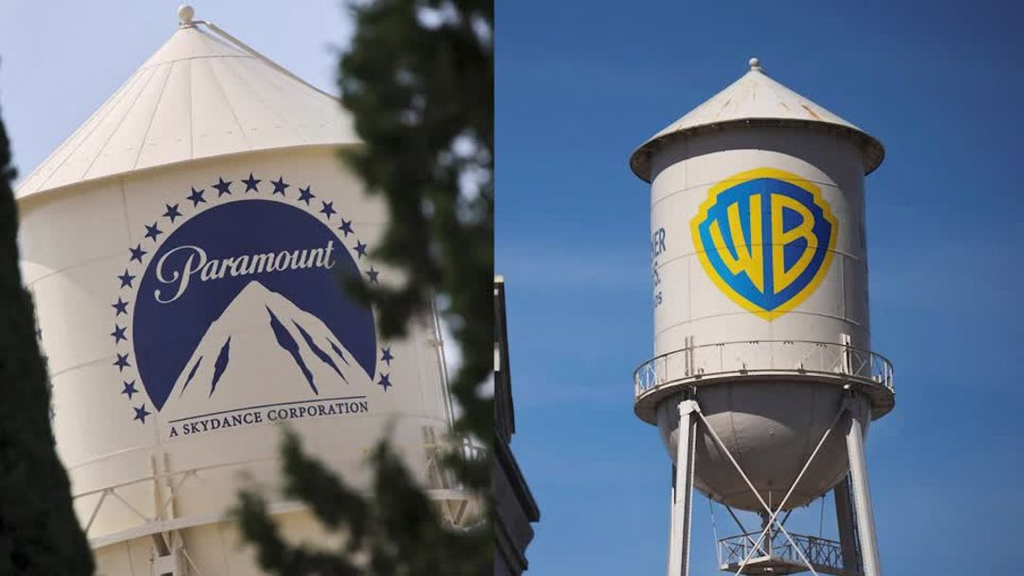
The biggest media deal of the decade is officially inching closer to reality, but the path ahead looks bumpier than ever. Paramount Global and Warner Bros. Discovery are speeding toward a massive $111 billion merger, a move designed to create a giant entertainment powerhouse capable of going toe-to-toe with Big Tech. Yet, behind the headline-grabbing numbers lies a story filled with massive debt, intense government scrutiny, and deep uncertainty about the future of movies and television.
This potential takeover comes at a time when traditional Hollywood studios are fighting for survival. Legacy media companies are feeling the squeeze from cord-cutting, declining cable revenue, and stiff competition from digital streaming platforms. By combining forces, Paramount and Warner Bros. hope to pool their massive film catalogs, television networks, and streaming assets to build an empire that can survive in a digital-first world.
However, closing a deal on paper is only half the battle. Industry analysts, union leaders, and lawmakers are raising serious concerns about what this mega-merger actually means for creators, studio workers, and everyday viewers. From a mountain of corporate debt to fears of mass layoffs and canceled projects, the road ahead for this new entertainment titan is fraught with danger.
How Paramount and Warner Bros. Reached an $111 Billion Deal
To understand how two of Hollywood’s most historic rivals ended up at the negotiating table, you have to look at the financial pressure building across the entertainment industry over the past few years. Both studios have spent decades shaping pop culture, producing iconic franchises, classic television shows, and box-office blockbusters. But the rapid shift toward online streaming completely upended the traditional studio business model.
Paramount and Warner Bros. Discovery have both faced severe financial headwinds recently. Warner Bros. Discovery, itself the product of a previous multi-billion-dollar merger, has been carrying heavy debt while trying to make its Max streaming platform profitable. Meanwhile, Paramount Global has struggled with declining cable networks like MTV and Nickelodeon while spending heavily to build out Paramount+.
The $0 Secret To Launching Your Entire Online Empire
Why pay hundreds every month for separate software? Build funnels, send emails, and make sales with Systeme.io completely free.
Get Started For $0Free Forever • No Credit Card Needed • Beginner-Friendly
Faced with rising competition from deep-pocketed tech giants like Netflix, Apple, and Amazon, the two legacy studios realized that staying independent might no longer be viable. Negotiations behind closed doors eventually led to a historic agreement to form a single mega-studio. According to reports on Hollywood’s biggest merger ever, the deal aims to combine two of cinema’s most famous film studios under one corporate roof.
Yet the sheer cost of taking over Warner Bros. has forced Paramount to take massive financial risks. Reports indicate that Paramount borrowed another 7.5 billion dollars just to keep the transaction moving forward. Taking on such staggering amounts of new debt in a high-interest economic environment has left many market observers wondering if the combined company is taking on more weight than it can safely carry.
The Heavy Burden of Corporate Debt
The single biggest dark cloud hanging over this $111 billion takeover is debt. Mergers of this size are almost always financed using heavily borrowed money. When corporate interest rates were near zero, giant loans were easy to manage. Today, borrowing billions of dollars comes with massive annual interest payments that swallow up free cash flow.
When you combine the existing debt loads of both companies with the fresh loans needed to finance the acquisition, the new entity will be staring down a terrifying balance sheet. That cash pressure creates an immediate problem: instead of spending money on making great movies, developing original TV series, or taking creative risks, the new company will be forced to direct its excess cash flow toward paying off lenders.
This financial reality often leads to severe cost-cutting measures. To satisfy Wall Street investors and debt rating agencies, corporate executives typically look for immediate synergies—a polite corporate term that usually means shutting down division offices, canceling risky film projects, and laying off thousands of employees across creative and administrative departments.
For a media company dependent on top-tier talent and creative risk-taking, operating under a heavy debt load can be paralyzing. If advertising revenue drops or box-office ticket sales slump for a couple of quarters, a company burdened by debt can quickly find itself in financial jeopardy.
Regulatory Hurdles and Government Scrutiny
Even if executives from both companies agree on every detail of the merger, government regulators still have the final say. Antitrust authorities in both the United States and the European Union are looking at corporate consolidation with far greater scrutiny than they did a decade ago.
The Federal Trade Commission and the U.S. Department of Justice are tasked with ensuring that corporate mergers do not harm competition or lead to higher prices for consumers. A combined Paramount-Warner Bros. company would control a vast percentage of movie production, television syndication, cable channels, and streaming content. Regulators will be looking closely at whether this gives the new company unfair bargaining power over cable providers, theater owners, and digital distributors.
There are also significant political pressures at the state level. In California, where entertainment represents a major pillar of the local economy, political leaders and state regulators are monitoring the deal closely. Recent developments surrounding California and Paramount show how state officials and television networks are clashing over the economic impact of major studio transitions.
Antitrust lawsuits or demands for structural divestitures could stall the closing process for months or even years. If regulators demand that the studios sell off key assets—such as major cable networks or film production lots—before approving the deal, the entire financial justification for the takeover could fall apart.
Backlash From Hollywood Creators and Guilds
Beyond regulators and Wall Street analysts, the people who actually make the movies are deeply concerned. Hollywood unions, including the Writers Guild of America, the Screen Actors Guild, and directors’ organizations, view corporate consolidation as a direct threat to their members’ livelihoods.
Fewer major studios mean fewer buyers for movie scripts, television pitches, and independent concepts. When three or four corporate giants control almost all production greenlights, writers and filmmakers lose leverage during contract negotiations. This lack of competition can lead to lower compensation, shorter series orders, and fewer opportunities for new, diverse voices to break into the industry.
Prominent Hollywood figures have openly criticized the ongoing trend of mega-mergers. At major industry events, actors and filmmakers have used their platforms to speak out about how corporate consolidation is hurting lower-level industry workers and reducing creative freedom. For example, during a recent award ceremony, Sally Field spoke out on Hollywood mergers, highlighting how corporate decisions impact the working artists who form the backbone of the entertainment community.
There is also genuine concern among fans and creators about what happens to beloved film franchises during a major studio integration. Warner Bros. controls iconic properties like the DC Universe and Harry Potter, while Paramount holds Star Trek, Transformers, and Mission: Impossible. When mega-studios merge, executives often pause active development pipelines to re-evaluate budgets and focus exclusively on guaranteed hits.
This restructuring can lead to delayed sequels and canceled projects. Fans eager for updates on massive comic book adaptations like The Batman Part II update or nostalgic franchise revivals like Warner Bros. news on Gremlins 3 know all too well how studio corporate changes can throw major productions off course.
Send, Spend & Hold Money Worldwide Without Hidden Fees
Transfer money internationally at the real exchange rate and hold 40+ currencies in one account.
Open a Wise AccountMid-market rate • Fast transfers • 40+ currencies
The Streaming War Challenge: Combining Max and Paramount+
One of the central promises of the $111 billion deal is creating a powerhouse streaming platform that can challenge market leaders like Netflix. Currently, Warner Bros. Discovery operates Max, while Paramount Global runs Paramount+. Both platforms offer extensive libraries, but both face stiff competition and high subscriber acquisition costs.
Merging two massive streaming services into a single platform sounds logical on paper, but executing it in practice is extremely complex. Engineering teams have to combine user data, search algorithms, billing systems, and device apps without frustrating millions of existing subscribers.
Furthermore, streaming platforms across the industry are already struggling with subscriber fatigue. Consumers are increasingly selective about how many monthly subscription fees they pay. In response to rising costs, major media platforms have been steadily raising prices. We have already seen major shifts across the digital landscape, such as Apple TV price increases and Disney and Hulu price hikes, as tech and media giants try to extract more revenue from each subscriber.
If a combined Max-Paramount+ service charges a higher monthly fee to cover its massive content library and debt obligations, it risks driving cost-conscious subscribers toward cheaper alternatives or ad-supported tiers. If subscribers cancel faster than new ones sign up, the combined streaming strategy could fail to deliver the profits executives are counting on.
At the same time, Big Tech companies with deep balance sheets are continuing to expand their entertainment footprint. As seen with Apple’s entertainment strategy, tech companies can afford to invest heavily in prestige film and TV projects without relying solely on immediate box-office or subscription profits. Traditional studios, burdened by heavy debt, find it increasingly difficult to compete with tech giants that view media content as just one piece of a broader subscription ecosystem.
Impact on Movie Theaters and the Global Box Office
The health of movie theaters depends on a steady stream of wide-release films throughout the calendar year. Theater owners rely on major studio blockbusters to fill seats, sell concessions, and keep multiplexes profitable.
When two major studios combine, the total number of theatrical movie releases almost always drops. Instead of Paramount and Warner Bros. releasing a combined total of 30 to 40 movies per year in theaters, a merged studio might scale back to 15 or 20 high-budget tentpoles. Executives rationalizing their slates prefer to concentrate marketing budgets on guaranteed blockbusters rather than taking chances on mid-budget dramas, comedies, or original concepts.
A reduction in theatrical releases hurts independent theater owners, who need constant foot traffic to survive. While massive record-breakers like Spider-Man box office records or event cinema hits like Christopher Nolan’s IMAX releases prove that audiences will turn out in droves for major cinematic events, a healthy theater industry cannot survive on event movies alone. Multiplexes need a continuous stream of weekly releases to keep their doors open.
If the merged entity decides to bypass theaters for certain titles to boost its streaming subscriber numbers, movie theaters will face an even steeper uphill battle. Fewer theatrical releases mean less revenue for theaters, which could lead to screen closures and fewer choices for moviegoers worldwide.
The Cost of Synergies: What Happens to Studio Staff?
Behind every corporate mega-merger lies a human cost that rarely makes it into pitch decks presented to shareholders. Whenever two massive corporate structures merge, there is extensive overlap in corporate departments, marketing teams, distribution divisions, and administrative staff.
The $0 Secret To Launching Your Entire Online Empire
Why pay hundreds every month for separate software? Build funnels, send emails, and make sales with Systeme.io completely free.
Get Started For $0Free Forever • No Credit Card Needed • Beginner-Friendly
To hit target cost savings, executives rely on aggressive job cuts. When large media companies merge, thousands of workers—ranging from marketing managers and distribution specialists to visual effects coordinators and office support staff—face the prospect of sudden layoffs.
This uncertainty creates low morale across studio lots. Production crews and creative teams often find projects put on hold while management restructures departments and reallocates resources. During long integration periods, talented creators and executives often leave for competing studios or independent production companies, draining the studio of creative talent right when it needs it most.
Frequently Asked Questions
Why are Paramount and Warner Bros. merging?
Paramount and Warner Bros. are working toward a merger to create a larger entertainment company capable of competing against digital streaming giants and tech companies like Netflix, Apple, and Amazon. Combining their massive movie libraries, TV channels, and streaming platforms allows them to scale up operations and cut redundant corporate expenses.
Will Paramount+ and Max combine into one single streaming app?
While no official rollout timeline has been announced for a combined platform, executives intend to merge the content libraries of Max and Paramount+. The ultimate goal would likely be a single streaming platform or a discounted bundle that gives subscribers access to both libraries under one subscription fee.
How will this deal affect upcoming movies and TV shows?
In the short term, ongoing productions will likely continue as scheduled. However, during the integration period, executives typically re-examine project slates. Some in-development projects, mid-budget films, or unscripted series may be delayed, retooled, or canceled to focus resources on major blockbuster franchises.
Will streaming subscription prices go up because of this merger?
It is very likely. As media companies struggle to make streaming profitable and pay off merger-related debt, subscription price increases have become standard across the industry. Combining two major streaming catalogs into one service usually comes with a higher monthly price tag.
Is the Paramount and Warner Bros. deal fully finalized?
No. While the companies are inching closer to closing the deal, the merger still must undergo thorough regulatory reviews from antitrust agencies in the U.S. and internationally. Regulators can demand structural changes, require asset sales, or attempt to block the deal in court if they determine it harms market competition.
Looking Ahead at Hollywood’s Changing Landscape
The $111 billion deal between Paramount and Warner Bros. marks one of the most significant shifts in entertainment history. While combining two legendary studios creates an undeniable content powerhouse, the immense debt burden, regulatory scrutiny, creative pushback, and streaming challenges show that the combined entity is far from out of the woods.
As Hollywood continues to transform, staying informed about industry shifts, media news, and global trends is more important than ever. To learn more about our mission to bring you clear, engaging stories on the topics that matter, visit our About Us page or get in touch with our team through our Contact Page.
You can also follow our official social channels on Instagram, Facebook, and Twitter/X to catch breaking updates, trending stories, and in-depth coverage as this historic Hollywood story unfolds.
