
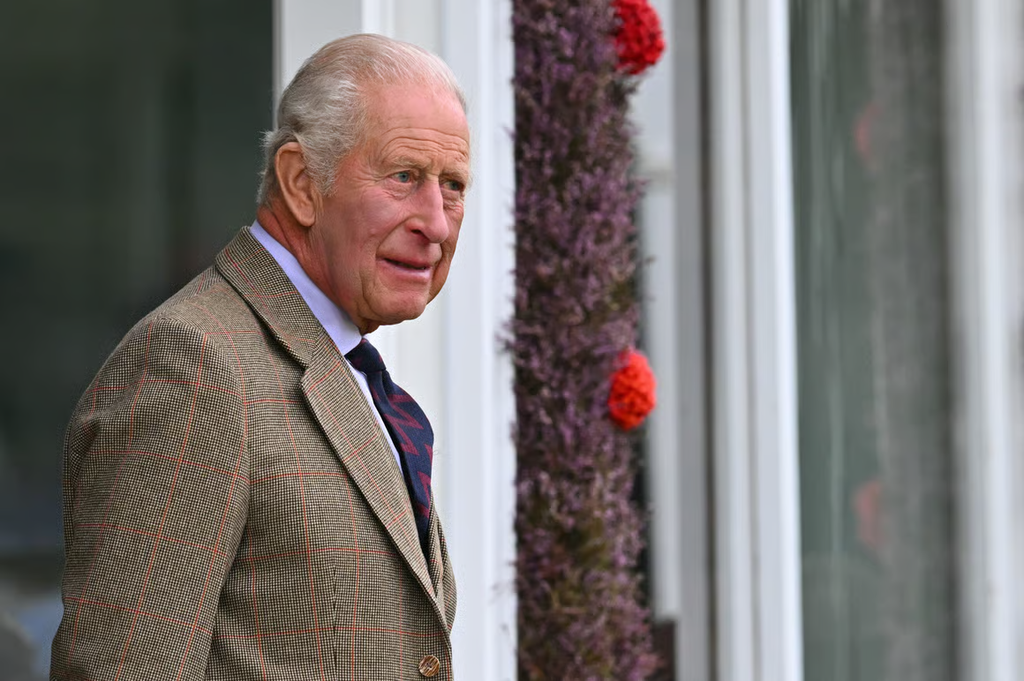
A stunning royal clash has erupted, and Buckingham Palace is refusing to stay completely silent. Princess Diana’s brother, Earl Charles Spencer, has made an explosive claim about a heated conversation he had with the monarch shortly after Diana’s tragic death in 1997. According to Spencer, the then-Prince Charles angrily declared that the world would soon forget Princess Diana. In response, King Charles has taken the rare step of issuing an official statement, subtly pushing back against his former brother-in-law’s claims and raising questions about how deep grief can alter a person’s memory over time.
This unexpected exchange has reopened painful memories from one of the most emotional moments in modern history. The clash centers on the days leading up to Princess Diana’s funeral, a time when millions of people around the globe were mourning the loss of the beloved royal. With Earl Spencer releasing a new memoir detailing his personal memories, the public is once again looking back at the complicated relationship between King Charles, Princess Diana, and the Spencer family.
The Bombshell Allegation That Shook the Royal Family
The drama began when excerpts from Earl Charles Spencer’s upcoming memoir, titled Swan Song: Diana, My Sister, were serialized in major news outlets including the Daily Mail. In the book, Spencer recounts his personal experiences during the dark days following his sister’s death in Paris on August 31, 1997.
According to Spencer, a major argument broke out over the phone between him and Prince Charles regarding the arrangements for Diana’s public funeral. The primary point of conflict was whether young Prince William, who was 15 at the time, and Prince Harry, who was just 12, should walk behind their mother’s coffin during the funeral procession through London.
Spencer claims that a senior aide from Buckingham Palace originally informed him that the young princes would walk in the procession. Spencer objected immediately, feeling that forcing two young boys who had just lost their mother to walk behind her coffin in front of a massive public crowd was unnecessary and cruel.
The $0 Secret To Launching Your Entire Online Empire
Why pay hundreds every month for separate software? Build funnels, send emails, and make sales with Systeme.io completely free.
Get Started For $0Free Forever • No Credit Card Needed • Beginner-Friendly
Minutes after expressing his strong disapproval to the aide, Spencer received a phone call from Prince Charles. According to Spencer, Charles was adamant that the boys should participate, pointing out that he had walked in the funeral procession for his great-uncle, Lord Mountbatten, decades earlier.
When Spencer pointed out that Charles was a grown man of 30 when Lord Mountbatten passed away, the conversation quickly turned heated. Spencer alleges that Charles lost his temper and unleashed what Spencer described as pent-up resentment. During this tense moment, Spencer claims Charles hissed down the phone: “Rest assured, we’ll forget her soon enough!”
A Brother’s Mission to Defend Diana’s Legacy
Earl Spencer explained that he decided to share this painful memory to set the record straight ahead of the upcoming 30th anniversary of Diana’s death. He stated that his primary goal in writing the book was to speak on his sister’s behalf and clear up common misconceptions about her life and her relationship with the royal institution.
For decades, Earl Spencer has been a vocal protector of his sister’s memory. His famous eulogy at Diana’s funeral in 1997, where he pledged to protect her sons from the pressures of royal life, remains one of the most talked-about speeches in modern history. This latest revelation from his memoir shows that the tension between the Spencer family and the royal establishment never fully faded away.
Buckingham Palace Responds With a Rare Public Statement
Usually, the British Royal Family adheres strictly to an unwritten rule: never complain, never explain. Royal officials rarely issue direct public responses to personal memoirs or private claims made by family members. However, the severity of Earl Spencer’s claim prompted Buckingham Palace to take action.
A spokesperson for Buckingham Palace released an official statement on behalf of King Charles. The statement acknowledges the emotional weight of Earl Spencer’s grief while gently questioning the accuracy of his memories from that painful week.
The official statement reads: “While we do not comment on books as a matter of principle, His Majesty is mindful that the pain of fraternal grief can cloud reason, affect judgment and colour memory in ways others do not recognise, even many years after such a loss.”
This carefully worded response allows the King to dispute the claim without getting dragged into an ugly public shouting match. By emphasizing how deep personal sorrow can distort memories over time, the Palace offers a firm contradiction while remaining respectful of Spencer’s loss.
Comparisons to Queen Elizabeth II’s Famous Response
Royal observers immediately noticed similarities between King Charles’ current response and the famous statement issued by Queen Elizabeth II in 2021. Following Prince Harry and Meghan Markle’s tell-all interview, the late Queen famously remarked that “some recollections may vary.”
Just like his mother before him, King Charles is using subtle, thoughtful phrasing to protect his reputation while acknowledging the underlying grief and emotion involved. It is a diplomatic approach designed to prevent the dispute from escalating further in the media.
This situation also highlights ongoing royal dynamics, similar to other palace communications where family boundaries and public roles are carefully managed. For context on how the Palace handles family roles, you can read about how King Charles reaffirms non-working status.
Understanding the Dispute Over the Funeral Procession
To fully grasp why this revelation is making international headlines, it helps to look back at the chaotic days following Princess Diana’s death in September 1997. The world was gripped by grief, and millions of people gathered in London to pay their respects.
Behind closed doors, royal officials and Diana’s family were working frantically to arrange a funeral that balanced national mourning with personal privacy. The question of whether Prince William and Prince Harry should walk in the cortege was one of the most sensitive decisions facing the family.
Earl Spencer’s Perspective
From Earl Spencer’s point of view, his primary concern was the well-being of his young nephews. He strongly believed that forcing two grieving children to parade behind their mother’s coffin in front of millions of television viewers across the world was an unnecessary burden.
Spencer wanted to shield William and Harry from the public gaze, allowing them to grieve privately as children rather than public figures. He viewed the requirement as an overly rigid tradition that ignored the boys’ emotional needs.
Send, Spend & Hold Money Worldwide Without Hidden Fees
Transfer money internationally at the real exchange rate and hold 40+ currencies in one account.
Open a Wise AccountMid-market rate • Fast transfers • 40+ currencies
The Royal Family’s Perspective
On the other hand, royal advisors and Prince Charles believed that participating in the procession was a necessary duty that would show strength and unity to a grieving nation. They believed that walking behind the coffin was a traditional mark of respect that would allow the princes to honor their mother publicly.
In later years, both Prince William and Prince Harry spoke publicly about that emotional day. Prince Harry admitted in interviews with news outlets like the BBC that walking behind his mother’s coffin was something no child should be asked to do, while Prince William noted that it was one of the hardest things he had ever done, describing it as a balance between royal duty and personal grief.
Why Memory and Grief Are Center Stage in Royal Feuds
This public clash between King Charles and Earl Spencer brings an important topic into focus: how human beings process trauma and retain memories over long periods. Grief is a powerful emotional force that can shape how people remember conversations and events, especially during high-stress situations.
When a loved one passes away suddenly, emotions run exceptionally high. Disagreements that occur during such moments can leave deep emotional scars. Over time, individuals may remember the same conversation in drastically different ways based on their emotional state at the moment.
Psychologists have long noted that high levels of stress and grief can affect how memories are stored and retrieved. In moments of intense conflict, words spoken in frustration can be magnified, or misinterpretations can become locked in memory as absolute truth.
Because both King Charles and Earl Spencer experienced immense pressure and shock in September 1997, it is easy to see how their memories of that phone call might differ today. What Spencer remembered as a hurtful insult may have been a misunderstood remark spoken under extreme stress, or perhaps a conversation recalled through the lens of nearly thirty years of grief.
The Legacy of Princess Diana That Refuses to Fade
The claim that King Charles believed Princess Diana would be forgotten quickly strikes a strong chord with the public because history has proven the exact opposite. Nearly three decades after her passing, Princess Diana remains one of the most famous, admired, and iconic women in modern history.
Far from being forgotten, Diana’s memory continues to influence global culture, fashion, and charitable work. Her impact on charity work, her open attitude toward mental health, and her devotion to her sons transformed how the public views the monarchy.
Every year, books, documentaries, television series, and news articles continue to explore her life and legacy. People who were not even born when she passed away are familiar with her story. The idea that anyone could have thought she would be quickly forgotten seems almost unthinkable today.
In addition to Diana’s lasting impact in Britain, royal history remains a point of fascination across Europe and the globe. If you are interested in royal events across the continent, you can explore coverage on how royal families gather across Europe.
The $0 Secret To Launching Your Entire Online Empire
Why pay hundreds every month for separate software? Build funnels, send emails, and make sales with Systeme.io completely free.
Get Started For $0Free Forever • No Credit Card Needed • Beginner-Friendly
How Modern Technology and AI Shape How We Consume Royal News
In the digital era, stories like this travel around the world in a matter of seconds. When Earl Spencer’s claims were published, news outlets, social media users, and digital content creators instantly began discussing every detail.
Modern publishing systems and media channels play a huge role in keeping historic stories relevant. Digital creators use automated video systems to quickly inform global audiences about breaking headlines. To discover how automated content systems work behind the scenes, take a look at our guide to YouTube automation.
Artificial intelligence and modern search algorithms also help readers discover historical context, connect related news articles, and analyze public reactions in real time. If you want to stay updated on how smart tools are transforming digital publishing and news delivery, explore our dedicated section on Technology & AI.
Through advanced search platforms and media tools, discussions about Princess Diana, King Charles, and the royal family reach millions of people instantly, proving that public interest in these events remains as strong as ever.
What This Means for King Charles and the Monarchy
This public debate arrives at a sensitive time for King Charles. As monarch, he is continuously managing public perception while guiding the institution through modern challenges and balancing personal health matters with his royal duties.
When claims about past conflicts resurface, they can complicate the monarchy’s efforts to present a modern, unified image. The public response to Earl Spencer’s book shows that the emotional history surrounding Princess Diana still has the power to capture worldwide attention.
However, the Palace’s swift and dignified response demonstrates a clear media strategy. By offering a compassionate statement that addresses the allegation directly without escalating the argument, King Charles has managed to defend his character while showing understanding for Earl Spencer’s grief.
Ultimately, this situation shows that royal history is not static. As figures from that era write their memoirs and share their personal experiences, new perspectives will continue to emerge, giving the public a deeper look at the human emotions behind royal public duty.
Frequently Asked Questions (FAQs)
What did Princess Diana’s brother claim King Charles said?
Earl Charles Spencer claimed that during a heated phone call shortly after Princess Diana’s death in 1997, the then-Prince Charles said, “Rest assured, we’ll forget her soon enough.” Spencer alleged this happened during an argument over whether Prince William and Prince Harry should walk in the funeral procession.
How did Buckingham Palace respond to the claims?
Buckingham Palace issued a rare public statement on behalf of King Charles, stating that while they do not comment on books as a rule, His Majesty is mindful that “the pain of fraternal grief can cloud reason, affect judgment and colour memory in ways others do not recognise.”
What is the title of Earl Spencer’s new book?
Earl Spencer’s upcoming memoir is titled Swan Song: Diana, My Sister. It contains his personal recollections of growing up with Princess Diana and his experiences during the weeks surrounding her tragic death.
Why was there a dispute about Princess Diana’s funeral procession?
Earl Spencer argued that Prince William (15) and Prince Harry (12) were too young to walk behind their mother’s coffin in public. Prince Charles and royal officials believed that participating in the procession was an important royal duty and a tribute to their mother.
Did Prince William and Prince Harry end up walking behind the coffin?
Yes, Prince William and Prince Harry walked behind Princess Diana’s funeral coffin alongside their father Prince Charles, their grandfather Prince Philip, and their uncle Earl Charles Spencer.
Final Thoughts on a Royal Rift That Refuses to Heal
The debate between King Charles and Earl Spencer highlights how deeply personal grief, public duty, and historical memory are intertwined. Decades after the tragic events of 1997, the story of Princess Diana continues to touch hearts and spark meaningful conversations around the world.
As new details and memoirs emerge, reader interest in royal history remains stronger than ever. Keeping up with these stories allows us to understand the complex human experiences behind famous historical headlines.
To stay up to date on all the latest trending news, culture updates, and detailed analysis, make sure to visit our About Page to learn more about our team and mission. If you have questions, feedback, or news tips, feel free to reach out via our Contact Page.
Do not forget to join our growing community on social media! Follow us on Instagram, connect with us on Facebook, and follow our latest updates on X (formerly Twitter).
What do you think about Buckingham Palace’s response to these claims? Share your thoughts with us on social media!
