
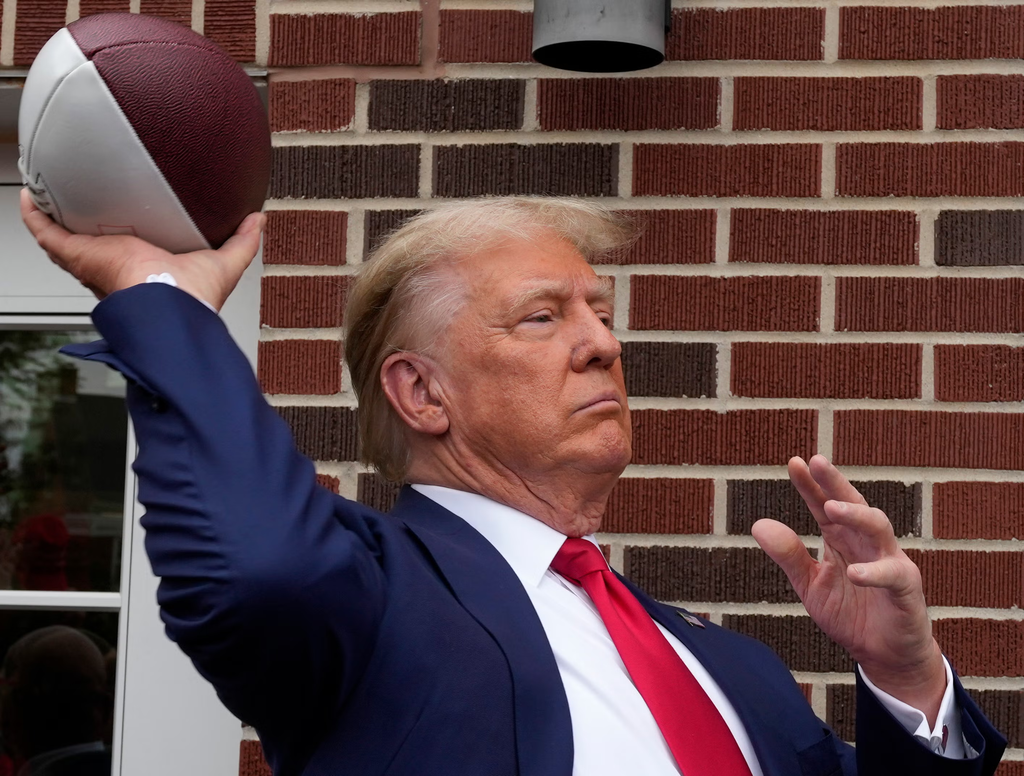
President Donald Trump created major political shockwaves across Europe during a visit to Dublin on September 12, 2026. Speaking to reporters alongside Irish leaders, Trump openly endorsed the idea of a united Ireland. He stated that he would love to see Northern Ireland and the Republic of Ireland join together as one nation.
According to reporting by The Washington Post, his comments mark a dramatic shift away from decades of official United States foreign policy. For almost thirty years, Washington maintained strict neutrality on the sensitive issue of Irish unity, choosing instead to support peaceful democratic processes established by international treaties.
Trump described reunification as a very cool thing and suggested that since it is bound to happen eventually, it might as well happen now. His spontaneous statements immediately drew strong reactions from political leaders in Dublin, Belfast, and London. The remarks sparked intense debates across the political spectrum on both sides of the Atlantic Ocean.
What Happened During Trump’s Visit to Dublin
A Golf Trip Turns Political
Trump arrived in Ireland for a short two-day visit that mixed business with formal diplomacy. His primary reason for traveling to the country was to attend the Irish Open golf tournament held at his resort in Doonbeg, located in county Clare. However, his itinerary also included high-level meetings with top Irish government officials in Dublin.
He met with Irish President Catherine Connolly for bilateral discussions before heading to Farmleigh House, an official state guesthouse in Dublin. There, Trump sat down for a meeting with Irish Prime Minister Micheál Martin. The meeting was designed to focus on trade, tourism, and historical ties between the United States and Ireland.
Build Funnels, Email Lists & Sell Online With One Free Tool
Create funnels, send emails, and sell online using Systeme.io without paying for multiple tools.
Create Free AccountFree forever • No credit card • Beginner-friendly
Instead of staying strictly on routine diplomatic topics, the conversation quickly shifted when reporters asked Trump for his thoughts on Northern Ireland and the debate surrounding Irish unity.
The Off-the-Cuff Remarks
When a reporter asked Trump about his view on Irish reunification, he answered directly without standard diplomatic caution. He told reporters that while he did not want to cause any problems, he would genuinely love to see Ireland unified. He added that a united Ireland would be a great outcome and a fantastic achievement for everyone involved.
Later in the day, during an address to business leaders at the official residence of the United States ambassador to Ireland, Trump acknowledged the immediate reaction to his comments. He admitted to the crowd that questions about Irish unity are tricky because no matter what a politician says, someone will be unhappy. Even so, he doubled down on his initial thoughts, repeating that uniting the island would be a very cool thing.
These unscripted comments surprised political observers worldwide. They recall similar moments where sudden executive commentary altered global political discussions, much like recent headlines involving Trump’s calls for regime change in Iran or ongoing domestic debates over federal rulings on birthright citizenship.
Understanding the Good Friday Agreement and US Diplomacy
A Brief History of the Island’s Division
To understand why Trump’s statements caused such an uproar, it is helpful to look back at the history of Ireland. The island of Ireland was partitioned in 1921. The southern part eventually became an independent republic, known today as the Republic of Ireland. The northern part, known as Northern Ireland, remained part of the United Kingdom.
For decades, Northern Ireland experienced deep political and social divisions. A violent thirty-year period known as the Troubles divided communities into two main groups:
- Nationalists (mostly Catholic): People who want Northern Ireland to leave the United Kingdom and join a united Republic of Ireland.
- Unionists (mostly Protestant): People who want Northern Ireland to remain part of the United Kingdom.
Thousands of people lost their lives during this period of intense political violence and civil unrest.
The 1998 Good Friday Agreement
The conflict largely came to an end in 1998 with the signing of the historic Good Friday Agreement. The United States played a major role as a neutral mediator in bringing both sides to the negotiating table to sign the peace deal.
The Good Friday Agreement established clear rules for how Northern Ireland’s future must be decided:
- Northern Ireland remains part of the United Kingdom based on the current consent of its population.
- A referendum on joining the Republic of Ireland can only be called by the Secretary of State for Northern Ireland.
- A vote will only happen if clear evidence shows that a majority of voters in Northern Ireland favor leaving the UK.
- Any change to Northern Ireland’s constitutional status requires democratic consent from people on both sides of the border.
Because the agreement relies on careful balance, previous US presidents avoided taking sides. American diplomats always stressed that the decision belongs entirely to the people living in Northern Ireland and the Republic of Ireland.
By declaring that Ireland should reunite now, Trump set aside decades of neutral language carefully preserved by previous White House administrations.
Reactions from Political Leaders Across the Globe
The View from Ireland: Sinn Féin vs. The Irish Government
Political responses in Ireland were divided depending on party goals and diplomatic responsibility.
Mary Lou McDonald, leader of Sinn Féin, the main Irish nationalist party, welcomed Trump’s statements. Sinn Féin has long pushed for a vote on Irish unity within this decade. McDonald stated that the conversation around Irish unity has changed permanently. She argued that since peace has been secured, the national priority must now focus on planning a smooth, organized transition toward a unified country. She urged the Irish government to begin formal preparations immediately.
On the other hand, the official Irish government took a far more cautious approach. Irish Prime Minister Micheál Martin and President Catherine Connolly reminded the public that peace requires constant care. Irish officials emphasized that Ireland remains fully committed to the terms of the Good Friday Agreement. They stressed that any future changes must happen peacefully, through mutual agreement and democratic consent, rather than sudden external declarations.
The View from the UK: Firm Neutrality and Silence
In London, the United Kingdom government reacted with calm resistance. A spokesperson for British Prime Minister Andy Burnham stated that the UK government’s position on the Good Friday Agreement remains completely unchanged.
The UK government explained that there is currently no evidence showing that a majority of people in Northern Ireland want to leave the United Kingdom. Until clear public surveys show a permanent shift in opinion, the UK will not call a unification referendum.
The situation mirrors how governments manage sensitive domestic controversies while upholding existing legal rules, similar to how official statements are issued regarding King Charles and royal family responsibilities or how the British government adjusts UK foreign worker visa policies.
Outrage from Unionist Parties in Northern Ireland
Pro-UK politicians in Northern Ireland reacted to Trump’s comments with strong frustration. Leaders from unionist parties argued that outside political leaders should not interfere in Northern Ireland’s internal affairs.
Gavin Robinson, leader of the Democratic Unionist Party (DUP), made his views clear on social media. He stated that the future of Northern Ireland will be decided exclusively by the people who live there, not by political figures in London, Dublin, or Washington. He added that unionists have no interest in seeing the United Kingdom broken up.
Other unionist representatives pointed out that while American presidents can share their personal opinions, they do not get a vote in Northern Ireland elections. They warned that unsolicited comments from international leaders risk reopening old political divisions among local communities.
Why Irish Reunification Is Such a Complex Topic
Shifting Demographics and Recent Elections
The debate over Irish unity is not just emotional; it is also driven by changing demographic data. Over recent years, political balances in Northern Ireland have shifted significantly:
- Census changes: Recent census figures show that Catholics outnumber Protestants in Northern Ireland for the first time since partition.
- Electoral milestones: Nationalist parties have earned top leadership roles in Northern Ireland’s local power-sharing government.
- Brexit impacts: When the UK left the European Union, Northern Ireland was left with special trade rules to avoid a hard border on the island. This created new economic links between Northern Ireland and the Republic of Ireland, while creating trade friction with mainland Britain.
Even with these changes, public opinion polls in Northern Ireland show that a majority of residents still favor staying in the United Kingdom for now. While support for a united Ireland is growing, it has not yet reached a guaranteed majority.
Practical and Economic Questions
Unifying two different legal, financial, and healthcare systems is a huge task. Voters in both Northern Ireland and the Republic of Ireland have real practical concerns about how unity would work in daily life.
Key questions include:
- Healthcare: Northern Ireland relies on the UK’s free National Health Service (NHS), while the Republic of Ireland uses a mixed public and private health model.
- Pensions and Social Security: Merging two complex welfare systems requires huge financial investments and legal updates.
- Taxation and Currency: Transitioning Northern Ireland from the British Pound to the Euro would affect businesses, wages, and everyday shopping.
- Public Services: The British government currently provides billions of pounds every year to support Northern Ireland’s public budget. If Ireland reunites, the Irish government would need to cover those costs.
These real-world challenges show why political experts warn that reunification cannot happen overnight. It requires years of detailed planning, economic agreements, and social discussion.
How News Travels and How Modern Media Handles Spontaneous Statements
Social Media and Instant News Cycles
In the past, a diplomatic statement made by a world leader during an overseas trip would take days to process through official foreign ministry channels. Today, short video clips and quick quotes spread across social media platforms within minutes.
When Trump made his remarks in Dublin, video clips were uploaded immediately to social networks, gaining millions of views across global feeds on platforms like Instagram, Facebook, and X.
Build Funnels, Email Lists & Sell Online With One Free Tool
Create funnels, send emails, and sell online using Systeme.io without paying for multiple tools.
Create Free AccountFree forever • No credit card • Beginner-friendly
Modern digital media publishers and content creators rely heavily on modern publishing tools to keep up with fast news cycles. Many media businesses use automated video workflows to cover breaking news, taking advantage of automated YouTube automation strategies to deliver clear updates to global audiences quickly.
The Growing Role of AI in News Analysis
Understanding complex geopolitical events requires processing vast amounts of historical data, legal documents, and news reports. Today, modern newsrooms and curious readers turn to advanced tools powered by technology and AI to quickly break down background context, compare public polling data, and analyze historical treaties.
Whether tracking major international diplomatic visits like US envoys traveling to Moscow for peace talks or exploring legislative votes such as US Congress decisions on Supreme Court rules, modern analytical tools help everyday readers get accurate facts without wading through technical legal jargon.
Comparing International Constitutional Debates
The debate surrounding Northern Ireland is one of several major constitutional discussions happening globally. Across different continents, nations are evaluating their political structures, boundary agreements, and governing rules to adapt to modern needs.
For instance, several democratic nations are looking at updating their governance frameworks:
- West Africa: Countries across the region are evaluating electoral systems and executive power limits, such as recent debates over Ghana moving toward five-year presidential terms.
- North America: Trade agreements, border policies, and legal definitions of citizenship continue to generate intense political debate between federal courts and executive leaders.
- Europe: The long-term effects of Brexit continue to influence trade, migration, and political alliances across the entire European continent.
Each of these situations shows that constitutional questions are rarely simple. They require careful balance between historical tradition, economic stability, and the democratic will of the public.
Frequently Asked Questions (FAQs)
What did Donald Trump say about Irish reunification in Dublin?
During his visit to Dublin on September 12, 2026, President Trump stated that he would love to see Ireland unified. He called Irish reunification a very cool thing, suggested it was going to happen eventually, and added that it may as well happen now.
Why did Trump’s comments surprise international diplomats?
For nearly thirty years, the United States maintained strict diplomatic neutrality on Northern Ireland’s status under the Good Friday Agreement. Trump’s direct endorsement of Irish unity broke with decades of established US foreign policy.
What is the Good Friday Agreement?
Signed in 1998, the Good Friday Agreement is a historic peace treaty that helped end three decades of conflict in Northern Ireland. It states that Northern Ireland remains part of the UK unless a majority of its people vote to join the Republic of Ireland in a democratic referendum.
How did political leaders in Northern Ireland react?
Nationalist leaders, such as Sinn Féin leader Mary Lou McDonald, welcomed Trump’s comments and called for active planning toward a united Ireland. Unionist leaders, including DUP leader Gavin Robinson, rejected his remarks, stating that Northern Ireland’s future will be decided only by its own citizens.
Is a vote on Irish reunification happening right now?
No referendum has been scheduled. Under the Good Friday Agreement, only the UK Secretary of State for Northern Ireland can call a referendum, and current public polling shows that a referendum is not expected immediately.
Donald Trump’s unscripted comments in Dublin have brought the long-running conversation about Irish reunification back into the global spotlight. While his statements energized supporters of Irish unity, they also served as a clear reminder of how sensitive constitutional questions remain for millions of people across Ireland and the United Kingdom. As democratic leaders work to protect peace and economic stability, the future of Northern Ireland will ultimately be shaped by the votes and decisions of its own citizens.
To stay updated on breaking news, viral political trends, and global stories, learn more about our team or get in direct touch through our official contact page. You can also follow all our latest content updates and community discussions on Instagram, Facebook, and X.

@whatsbuzzn.com That was already a polarizing topic in Ireland, and trump is putting the it on steroids
Nice to hear from you, lets keep the conversation going.