
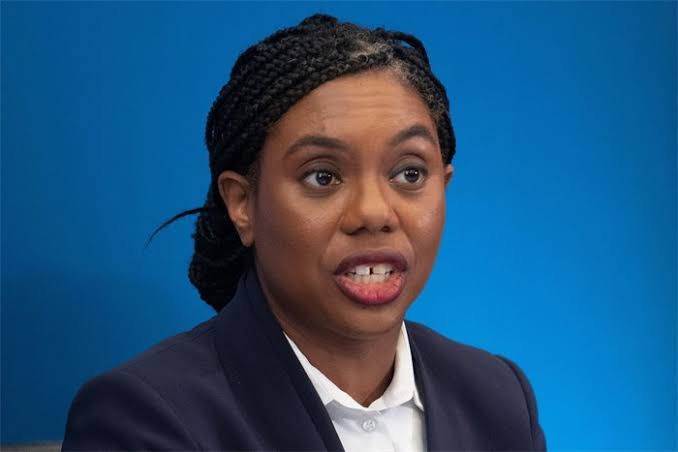
UK politics has taken a major turn as Conservative Leader Kemi Badenoch targets Labour’s Andy Burnham in a series of direct policy speeches. With public debate focusing on the economy, public spending, and national leadership, Badenoch has set out a clear set of political and economic challenges designed to test Burnham’s plans for government.
Instead of relying only on traditional party arguments, Badenoch is focusing heavily on numbers, public debt, and business regulation. Her strategy relies on asking a simple question about Labour’s proposals: how will the government pay for them? This political matchup is quickly becoming one of the main battle lines in British political debate.
Understanding the Rivalry Between Kemi Badenoch and Andy Burnham
Kemi Badenoch leads the Conservative Party with a platform built around free enterprise, reduced regulation, lower taxes, and smaller government spending. She has consistently argued that real economic growth comes from private businesses taking risks rather than state-directed projects.
Andy Burnham, the Mayor of Greater Manchester, has long been one of the most visible figures in the Labour Party. Known for his focus on public services, regional investment, and local transport reform, Burnham has built a strong personal profile among voters across the country.
Because Burnham carries significant popularity, Badenoch views him as a central figure in Labour’s future direction. Challenging his policies early gives the Conservatives a chance to frame the debate over economic management and public finance well ahead of the next national election.
The $0 Secret To Launching Your Entire Online Empire
Why pay hundreds every month for separate software? Build funnels, send emails, and make sales with Systeme.io completely free.
Get Started For $0Free Forever • No Credit Card Needed • Beginner-Friendly
You can read more reporting on political leadership shifts on The Guardian politics section.
The “Nice Guy” Dilemma: How Badenoch Plans to Challenge Burnham’s Appeal
One of the main challenges in opposing Andy Burnham is his public image. Political analysts often point out that Burnham is seen as relatable and easy to like compared to standard party politicians.
Badenoch directly acknowledged this in her speeches, calling him a “nice man”. However, her strategy separates personal charm from economic reality. She argues that being a popular leader is not the same as having a workable economic plan.
Asking the Hard Question: Where Does the Money Come From?
The primary tactic in Badenoch’s approach is highlighting the funding behind proposed policies. Whenever new public spending projects or price caps are proposed, Badenoch repeatedly raises the issue of national debt and borrowing costs.
She points out that Britain’s national debt remains high and that interest payments on public borrowing already take up a huge portion of the budget. By repeatedly asking how Labour intends to finance its spending ideas without raising taxes or increasing debt, Badenoch seeks to put Burnham on the defensive regarding fiscal management.
Moving Beyond Culture Battles to Economic Fundamentals
While earlier political debates often revolved around cultural issues, Badenoch has shifted her main focus toward core economic arguments. Her team emphasizes that voters care most about their bills, job opportunities, and tax rates.
By centering her speeches on inflation, energy prices, and business investment, she aims to build a reputation for practical economic leadership. This shift allows the Conservatives to position themselves as the party of financial discipline.
The Five Strategic Pillars of Badenoch’s Economic Challenge
In her major political speeches, Kemi Badenoch outlined five specific policy actions that she argues are necessary to fix the economy. She has challenged Burnham and the Labour leadership to adopt these principles to avoid economic instability.
1. Cutting the Cost of Energy
Badenoch argues that high energy prices are crushing both households and manufacturing businesses. Her plan focuses on increasing domestic energy production in the UK.
She supports granting new extraction licenses for North Sea gas fields, including major projects like Jackdaw and Rosebank. According to Badenoch, securing local energy sources is the quickest way to bring down energy bills and improve national security.
2. Getting People Working and Reforming Welfare
Welfare spending is another key area where Badenoch seeks to draw a clear line. She points out that the national welfare bill has grown significantly, leaving millions of capable adults out of the workforce.
Her proposal includes reforming benefit rules to encourage work and scrapping heavy employment regulations, such as the Employment Rights Act, which she argues makes businesses hesitant to hire new workers.
3. Cutting Taxes for Local Businesses and Families
To encourage economic activity, Badenoch proposes reducing specific tax burdens that impact local high streets and family enterprises.
Her plan highlights:
- Abolishing business rates for most high-street shops.
- Scrapping family farm taxes and family business taxes.
- Removing stamp duty on family homes.
She insists these cuts can be funded by reducing public sector administration and shrinking government spending.
Send, Spend & Hold Money Worldwide Without Hidden Fees
Transfer money internationally at the real exchange rate and hold 40+ currencies in one account.
Open a Wise AccountMid-market rate • Fast transfers • 40+ currencies
4. Slashing Burdensome Regulations
Building new infrastructure, housing, and commercial spaces in Britain often faces lengthy planning delays. Badenoch argues that red tape is strangling growth across key sectors.
Her strategy calls for stripping away bureaucratic hurdles so private developers can build homes, roads, and energy projects faster without relying on slow state approval processes.
5. Championing Private Business Over Government Intervention
The final pillar directly contrasts Conservative philosophy with Labour’s regional devolution agenda. Badenoch argues that government schemes and regional mayors do not create economic growth on their own.
In her view, politicians should establish low taxes, simple rules, and cheap energy, and then step out of the way so entrepreneurs and businesses can expand.
For more details on her full speech, you can visit Kemi Badenoch’s Official Website.
Business-Led Growth vs. Government-Led Growth
The core ideological battle between Badenoch and Burnham comes down to who drives growth in society. This debate highlights two very different views of how the country should operate.
Burnham’s approach focuses on strong local government, public control of services like transit networks, and regional funding packages managed by elected mayors. He believes local authorities are best placed to decide where investment goes.
Badenoch counters that state-run projects add unnecessary management layers and cost taxpayers more money. She argues that real job creation happens when private companies are given room to innovate, invest, and hire without state interference.
Energy Policy and Climate Red Lines
Energy policy has fast become one of the biggest wedge issues in British politics. The debate centers on how quickly the country should move toward green targets while keeping energy affordable.
Badenoch has taken a firm stance by criticizing strict Net Zero timelines that increase costs for everyday consumers. She emphasizes that switching off traditional energy sources too early forces the nation to import expensive energy from abroad.
The $0 Secret To Launching Your Entire Online Empire
Why pay hundreds every month for separate software? Build funnels, send emails, and make sales with Systeme.io completely free.
Get Started For $0Free Forever • No Credit Card Needed • Beginner-Friendly
By promoting oil and gas drilling alongside new technologies like AI and quantum computing, she aims to appeal to voters who are worried about high monthly utility bills.
Political Scrutiny and Modern Media Campaigns
In political campaigning, policy arguments are only half the battle. How those arguments are delivered through media channels is equally important.
Badenoch has established a regular schedule of press briefings, Q&A sessions, and public speeches to present her ideas directly to the public. This approach allows her to challenge Labour policies in real time while keeping economic issues at the top of the news agenda.
Modern political campaigns also rely on digital media, automated video distribution, and online content to reach younger voters. Tools like YouTube automation and broader advancements in technology and AI are changing how political speeches and news analyses are distributed across the internet.
You can connect with our broader platform updates on our about page or reach out directly through our contact page. Be sure to follow official social media updates on Instagram, Facebook, and X (Twitter).
What to Watch for Next in British Politics
As the political calendar moves forward, the confrontation between Badenoch and Burnham will likely focus on several upcoming milestones:
- Parliamentary Debates: Scrutiny during prime minister’s questions and economic policy updates.
- Budget Announcements: Ongoing debates over public spending cuts, benefit reforms, and tax adjustments.
- Local and Regional Elections: Testing voter support for regional mayor programs versus lower tax proposals.
- Energy License Approvals: Decisions regarding North Sea gas fields and national grid infrastructure.
Frequently Asked Questions (FAQs)
Who is Kemi Badenoch?
Kemi Badenoch is the Leader of the Conservative Party in the UK and Leader of the Opposition. She has served in senior government roles, including Secretary of State for Business and Trade.
Who is Andy Burnham?
Andy Burnham is a prominent Labour Party politician who serves as the Mayor of Greater Manchester. He previously served in Cabinet roles under former Labour administrations.
What is Kemi Badenoch’s main argument against Andy Burnham?
Badenoch argues that Burnham promotes spending plans and government programs without explaining how they will be funded. She stresses that Britain cannot afford higher national debt and rising welfare costs.
What are Kemi Badenoch’s five economic proposals?
Her five core proposals are cutting energy costs through local drilling, reforming welfare to get people into work, cutting business rates and property taxes, slashing planning regulations, and prioritizing private business growth over state programs.
Why is energy policy so important in this debate?
Energy policy directly impacts household utility bills and business costs. Badenoch believes expanding UK gas and oil production is necessary to lower prices immediately, while Labour focuses more heavily on fast-tracked green energy initiatives.
The political strategy set out by Kemi Badenoch shows that the Conservatives are preparing for a focused economic debate against Labour’s most popular figures. By targeting Andy Burnham’s spending proposals and putting forward clear alternatives on taxes, energy, and regulation, Badenoch is setting the groundwork for the political battles ahead. How voters respond to these competing visions of government will shape the direction of UK politics over the coming years.
