
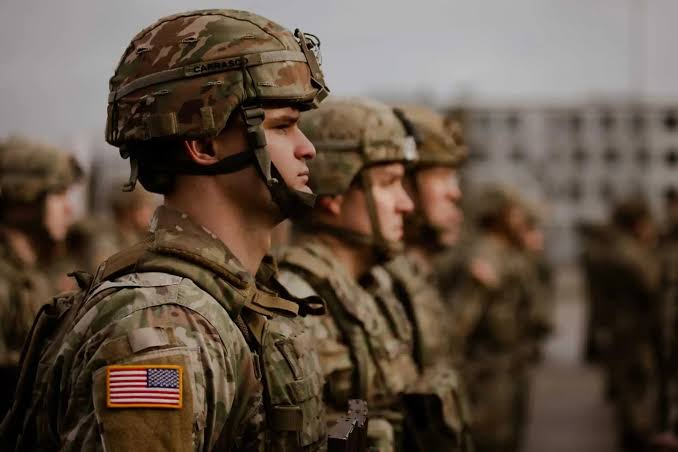
The U.S. Army is making one of the biggest moves in military energy history. In a massive new effort called the Janus Program, the Army and the Defense Innovation Unit are putting up to $2.2 billion toward building, testing, and running nuclear microreactors on military bases across the United States.
Instead of relying solely on traditional power grids or giant diesel generators, the military wants tiny, portable nuclear power plants that can run continuously for years without needing constant fuel deliveries.
This multi-billion-dollar initiative signals a huge shift in how America powers its critical military infrastructure. Here is a clear look at how these microreactors work, which bases are getting them first, and why this project matters so much for the future of energy.
What Are Nuclear Microreactors and Why Does the Military Need Them?
To understand why the Army is investing billions into nuclear energy, it helps to understand what a microreactor actually is.
Traditional nuclear power plants are massive complexes. They take up large pieces of land, take over a decade to build, and supply electricity to entire cities. A nuclear microreactor is the exact opposite in size. It is a tiny, self-contained nuclear power unit built inside a standard shipping container. These microreactors produce between 1 megawatt and 20 megawatts of electricity—enough energy to power thousands of homes or keep a sprawling military base operational during a complete grid shutdown.
The $0 Secret To Launching Your Entire Online Empire
Why pay hundreds every month for separate software? Build funnels, send emails, and make sales with Systeme.io completely free.
Get Started For $0Free Forever • No Credit Card Needed • Beginner-Friendly
Right now, military bases rely heavily on local civilian electricity grids. Under normal conditions, that works fine. But during severe weather, cyberattacks, or physical attacks on public infrastructure, the commercial grid can go dark.
When the main power grid fails, bases currently turn to backup diesel generators. The problem with diesel generators is that they require constant truckloads of fuel. In an emergency, keeping fuel trucks moving to remote or blockaded military bases is difficult and risky.
Nuclear microreactors solve this vulnerability. A single microreactor can run for three to five years without needing fresh nuclear fuel. It provides guaranteed, uninterrupted power to critical systems like radar arrays, communication centers, command posts, and satellite links.
This push for reliable, localized power reflects a larger trend across the world. From the military to commercial tech companies, demand for constant, high-volume energy is skyrocketing. As power demands increase—especially with the rise of AI data centers and tech infrastructure—having independent, off-grid energy sources is quickly becoming a top priority. For more on how cutting-edge tech is changing industries, explore our technology and AI updates.
Inside the Janus Program: How the $2.2 Billion Deal Works
The Army is not writing a single $2.2 billion check to buy reactors off the shelf. Instead, the Janus Program uses a unique financial and operational model designed to protect taxpayers and encourage rapid innovation.
Here is how the funding and ownership structure works:
- Milestone-Based Payments: The $2.2 billion budget is spread out across fiscal years 2027 through 2031. Participating companies receive funding only when they hit specific technical, safety, and operational targets set by the government.
- Contractor Ownership: The U.S. Army will not own or operate these microreactors. Private energy companies will own, build, and run the reactors. The Army simply buys the reliable electricity produced by the units.
- Private Capital Investment: To qualify for federal funding, reactor developers must invest their own private money alongside government funds. This shared risk model ensures private vendors are fully committed to making the technology work long-term.
- Strict Timeline: The Army has set a goal to have at least one fully operational microreactor producing electricity on a U.S. military base by September 30, 2028.
By structuring the contract this way, the military avoids the massive cost overruns that often happen with government construction projects. If a vendor fails to build a safe, working reactor, they do not get paid the full allocation.
This strategic shift matches broader movements within defense planning. Military planners are constantly reevaluating operational priorities and energy resilience, much like recent discussions surrounding Pentagon leadership shifts and strategic goals and ongoing debates about military transparency and record access.
The 5 Companies and 5 Military Bases Selected
To ensure the program does not put all its hopes on a single design, the Army selected five distinct nuclear technology companies and paired each one with a major military installation. According to official announcements from the U.S. Army, these five partnerships represent the frontline of the Janus Program:
- Antares Nuclear, Inc. – Fort Bragg, North Carolina: Antares is working on a factory-built microreactor powered by TRISO nuclear fuel. The company already made headlines by bringing its Mark-0 prototype to initial testing phases, making them a strong contender for early deployment.
- BWXT Advanced Technologies, LLC – Fort Campbell, Kentucky: BWXT is deploying its BANR (BWXT Advanced Nuclear Reactor) design. This reactor produces up to 20 megawatts of electricity, uses high-temperature gas cooling, and is engineered for a four-year refueling cycle.
- General Atomics Electromagnetic Systems – Fort Hood, Texas: General Atomics is building the GA Tactical Energy System (GA-TES). This liquid-metal-cooled microreactor offers a baseline output of 5 megawatts that can scale up to 20 megawatts depending on base needs.
- Radiant Industries, Inc. – Fort Benning, Georgia: Radiant is focused on compact, portable microreactors designed for rapid deployment, bringing flexible power to military bases needing quick setup times.
- Westinghouse Government Services – Fort Drum, New York: Westinghouse brings decades of commercial nuclear power expertise to the table, miniaturizing proven reactor designs to deliver high-reliability power in cold-weather environments.
By testing five different technologies across five bases, the Army is creating a competitive environment. The long-term plan calls for deploying more than 20 microreactors across various Department of Defense installations if these initial sites succeed.
This partnership model between military leadership and private tech firms mirrors modern defense trends, where fast-moving private ventures team up with defense institutions. We see similar dynamics play out in other sectors, such as defense tech startups working with military leadership.
From Project Pele to Real Bases: How We Got Here
The Janus Program did not appear out of nowhere. It builds directly on years of research led by the Department of Defense under a initiative called Project Pele.
Project Pele was a proof-of-concept program. Its primary goal was to answer a single question: Can you build a safe, mobile nuclear reactor that fits into standard transport containers and moves by truck, train, or cargo plane?
Through testing at places like the Idaho National Laboratory, researchers proved that portable microreactors were technically feasible. They developed units using TRISO (Tristructural Isotropic) fuel—a type of nuclear fuel encapsulated in ceramic and carbon layers that withstands extreme heat and prevents meltdowns even if cooling systems fail completely.
Now, the Janus Program takes those experimental concepts out of the laboratory and places them directly on active military bases. Instead of just proving the technology works for a short test run, the Army wants reactors that run continuously for years, supplying baseline electricity to everyday operations.
Send, Spend & Hold Money Worldwide Without Hidden Fees
Transfer money internationally at the real exchange rate and hold 40+ currencies in one account.
Open a Wise AccountMid-market rate • Fast transfers • 40+ currencies
This search for reliable local energy sources highlights a problem facing many communities today. As traditional energy grids face pressure from severe weather and growing demands, local leaders are reconsidering how energy is produced and distributed. For example, local debates in states like Texas over massive energy-hungry data centers show how critical power supply management has become for both military installations and civilian cities.
The Big Challenges: Fuel Supply and Regulations
While $2.2 billion is a massive commitment, turning nuclear microreactors into a standard power source for military bases is not without hurdles. Program managers and private developers face two primary obstacles:
1. The Nuclear Fuel Supply Chain
Many advanced microreactors require High-Assay Low-Enriched Uranium, commonly known as HALEU. HALEU fuel contains between 5% and 20% uranium-235, which allows reactors to produce more power in much smaller packages.
Historically, the commercial supply chain for HALEU was concentrated overseas, primarily in Russia. Because of ongoing international tensions and supply chain risks, the U.S. government is rushing to build up domestic HALEU enrichment facilities through the U.S. Department of Energy. Army officials have acknowledged that fuel availability could slow down the rollout of later microreactors if domestic enrichment production does not ramp up quickly enough.
2. Regulatory Approval and Public Perception
Building any nuclear project requires rigorous safety checks. Even though these microreactors are designed to be meltdown-proof, regulators must inspect every detail of site selection, seismic safety, and environmental impact.
Public perception is another key factor. Neighbors living around Fort Bragg, Fort Campbell, Fort Hood, Fort Benning, and Fort Drum need clear assurance that these installations are entirely safe. The Army and its commercial partners must maintain high transparency regarding environmental protection and safety standards.
What This Means for Civilian Energy and Everyday Tech
The impact of the Janus Program will reach far beyond military bases. Historically, when the military invests heavily in new technology, civilian society reaps the benefits soon after. The internet, GPS navigation, and jet engines all began as military projects before becoming part of daily life.
Microreactors could follow the exact same path. If these five companies prove that compact nuclear units can run safely and affordably on military bases, the commercial market will adopt them quickly. Potential civilian uses include:
- Powering Remote Towns: Rural or island communities that currently rely on expensive, dirty diesel imports could use microreactors for clean, round-the-clock power.
- Disaster Relief: Mobile microreactors could be transported to areas hit by hurricanes or earthquakes to restore emergency power within days.
- Industrial Operations: Mining sites, hydrogen production plants, and heavy manufacturing facilities could generate zero-emission energy directly on-site.
- Tech and Automation Infrastructure: High-tech facilities and data centers could run independently without straining public power grids.
Just as technological tools have unlocked new potential in digital fields like automated business systems and digital content workflows, clean energy hardware could unlock new possibilities for global power infrastructure.
Frequently Asked Questions (FAQs)
What is a nuclear microreactor?
A nuclear microreactor is a small, factory-fabricated nuclear reactor that generates between 1 megawatt and 20 megawatts of electricity. They are small enough to transport on standard trucks or shipping containers and are engineered to operate independently of the main electric grid.
The $0 Secret To Launching Your Entire Online Empire
Why pay hundreds every month for separate software? Build funnels, send emails, and make sales with Systeme.io completely free.
Get Started For $0Free Forever • No Credit Card Needed • Beginner-Friendly
Are these military microreactors safe for surrounding communities?
Yes. Modern microreactors use advanced fuels like TRISO, which encapsulates uranium in heat-resistant ceramic layers. This design prevents meltdowns even under extreme temperature loss or physical damage. Additionally, all sites undergo strict safety, seismic, and environmental evaluations.
When will the first microreactor be operational on a military base?
The U.S. Army has set a goal to have at least one microreactor operational and generating power on a domestic military base by September 30, 2028.
Does the Army own and run these reactors?
No. Under the Janus Program model, private energy companies own, build, and operate the reactors. The Army provides milestone funding and purchases the electricity generated by the units.
Can microreactors help civilian power grids during blackouts?
While these initial microreactors are dedicated to powering military bases, successful commercial deployment could allow power companies to use similar units to back up regional civilian grids during extreme weather or emergencies.
The U.S. Army’s $2.2 billion Janus Program represents a monumental step toward energy independence and grid security. By combining federal support with private sector innovation, the military is laying the groundwork for a new era of compact nuclear energy. As the 2028 operational target approaches, all eyes will be on these five bases to see if microreactors can deliver on their clean, reliable promise.
To learn more about our mission, visit our About Us page. Have thoughts or questions on this topic? Get in touch with our team through our Contact page.
Stay connected with us for real-time updates and trending stories on Instagram, Facebook, and X (formerly Twitter).
