
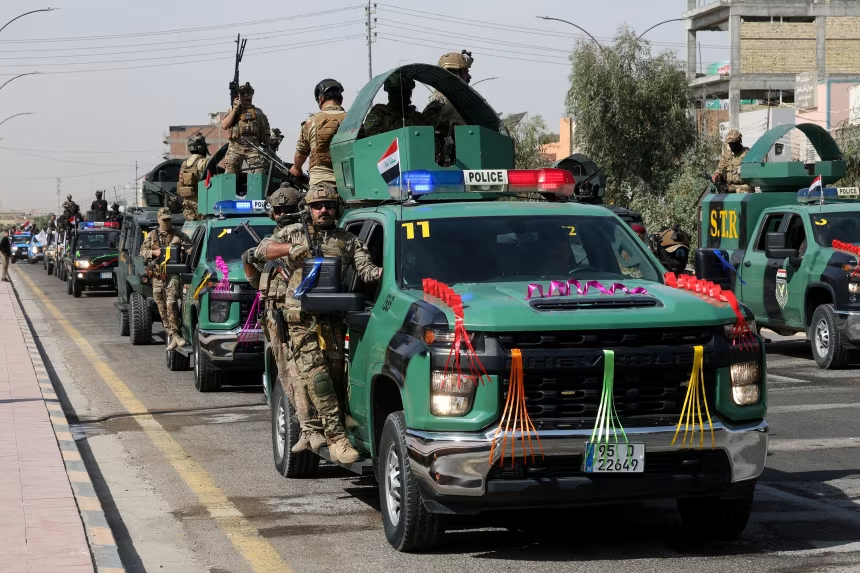
The last American military personnel have packed up their gear, boarded their transport planes, and departed Iraq. After more than two decades of military involvement, thousands of combat missions, and billions of dollars spent, the U.S. military presence in Iraq has officially come to a close.
In the streets of Baghdad, government security vehicles decorated with national flags and colorful ribbons drove in formal parades to mark the occasion. Across the border in Tehran and among political offices in Iraq, Iran and its regional allies are openly celebrating the departure, framing it as a major geopolitical triumph.
At the exact same time, local leaders in northern Iraq, defense experts, and ordinary citizens are asking what happens now. The complete departure leaves behind a fragile security situation, an empowered set of political groups, and big questions about whether terrorist networks could find room to rebuild.
Here is the breakdown of what just happened, why this moment matters so much, and what the future holds for Iraq and the wider Middle East.
How We Got Here: A Brief Timeline of 23 Years in Iraq
To understand why this moment is sending shockwaves across the region, it helps to look back at how we reached this point. The story of American troops in Iraq is not a simple straight line. It is a long journey filled with sharp twists, unexpected returns, and changing goals.
The $0 Secret To Launching Your Entire Online Empire
Why pay hundreds every month for separate software? Build funnels, send emails, and make sales with Systeme.io completely free.
Get Started For $0Free Forever • No Credit Card Needed • Beginner-Friendly
The 2003 Invasion and Initial Withdrawal
It all started back in 2003 when a U.S.-led coalition invaded Iraq and removed Saddam Hussein from power. What followed was nearly a decade of military operations, heavy reconstruction efforts, and intense political restructuring.
By the end of 2011, American forces carried out their first major pullout. Washington believed that Iraqi security forces were finally ready to handle national defense on their own.
The Rise of ISIS and the 2014 Return
That initial departure did not last long. Less than three years later, in 2014, the extremist group known as the Islamic State (ISIS) swept across northern and western Iraq.
They captured major cities like Mosul, causing Iraqi forces to retreat and leaving a massive territory under militant control.
The Iraqi government asked for international assistance. The U.S. returned at the head of a global coalition known as Operation Inherent Resolve.
For years, coalition troops provided air cover, heavy intelligence support, and hands-on training to help Iraqi and Kurdish forces defeat ISIS on the battlefield.
The 2024 Agreement and the 2026 Final Exit
By late 2024, ISIS had been stripped of all the land it once controlled and reduced to hidden networks in remote places. Washington and Baghdad formally agreed on a transition plan to end the coalition mission.
That plan led directly to the full exit completed this week. According to official military statements reported by the Associated Press and PBS, the final troops stationed at the Erbil air base in northern Iraq completed an orderly departure.
Why Iran and Its Allies Are Celebrating Big Time
While American commanders described the departure as a planned and successful transition, Tehran and its regional partners see things very differently. For them, the pullout is a massive political and military victory that alters the balance of power across the entire region.
“A Victory for Full Sovereignty”
Political leaders in Tehran and leaders of armed groups in Iraq have openly cheered the exit. Figures within groups like Kataib Hezbollah publicly declared that driving American troops out of Iraq is the first real step toward complete national independence.
Statements reported by The Media Line highlight how Iranian officials view this as the realization of a long-term goal: removing American military bases from their immediate borderlands.
The Refusal to Disarm
One of the most complex issues following this exit involves local armed militias inside Iraq. During the fight against ISIS, dozens of armed groups formed or expanded. Many of these groups share strong ideological and financial ties with Iran.
Now that American troops are gone, many expected these militias to hand their heavy weapons over to the central Iraqi government. However, as reported by CNN coverage via Local News 8, key militia leaders have refused to lay down their arms.
They argue that demanding their disarmament is an idea backed by foreign powers designed to keep Iraq weak. This refusal sets up a potential power struggle between the Iraqi state and powerful non-state military forces.
Iraq Takes Full Charge: National Sovereignty Days
In response to the exit, the Iraqi government declared a four-day public holiday to celebrate what it calls “Sovereignty Days”. October 1 was officially marked as National Sovereignty Day, giving citizens time off to reflect on the country’s new status.
Send, Spend & Hold Money Worldwide Without Hidden Fees
Transfer money internationally at the real exchange rate and hold 40+ currencies in one account.
Open a Wise AccountMid-market rate • Fast transfers • 40+ currencies
Words from the Prime Minister
Prime Minister Ali al-Zaidi led formal handover ceremonies in Baghdad. In his official address, he emphasized that Iraq’s military and police forces are now fully capable of protecting the country on their own.
He made it clear that while the foreign coalition’s mission is over, the fight against violent extremism is not finished. The Iraqi government plans to maintain basic intelligence sharing and targeted training partnerships with international allies, but foreign combat presence is officially done.
The Reality on the Streets
For many ordinary Iraqis, the feelings around this moment are mixed. On one hand, there is real pride in seeing national security handled entirely by Iraqi forces. People want to see their nation stand strong without relying on outside militaries.
On the other hand, people remember the sudden collapse of security in 2014. Many worry about whether the government can handle internal political pressure and keep the peace without international support.
The Big Security Concerns: Is an ISIS Comeback Possible?
Security analysts and former military commanders have voiced genuine concern about what happens in the aftermath of the U.S. departure. Removing foreign boots on the ground always changes the dynamic in volatile regions.
The Persistence of Sleeper Cells
While ISIS no longer controls cities, towns, or oil fields, the group is far from completely destroyed. Small sleeper cells remain hidden in remote deserts, mountain ranges, and rural valleys across Iraq and Syria.
These hidden groups carry out hit-and-run attacks, plant roadside bombs, and target local officials whenever they spot a weak security gap. As highlighted by reporting from the Indian Express, security experts fear that without American air power and quick-reaction ground forces nearby, ISIS cells might find fresh room to regroup and expand.
The Vulnerability of Northern Iraq and Kurdistan
The anxiety is highest in the northern Kurdish region. For years, Kurdish forces worked closely with American troops stationed in Erbil. The departure of U.S. air defense equipment leaves the region more exposed to drone and missile attacks from hostile groups.
Local officials in Kurdistan expressed clear worry that losing foreign military support makes them vulnerable to pressure from neighboring countries and powerful militias based in central Iraq.
The Broader Impact on Middle Eastern Politics
This military exit is not happening in a vacuum. It represents a major pivot in how global powers interact across the entire Middle East.
The $0 Secret To Launching Your Entire Online Empire
Why pay hundreds every month for separate software? Build funnels, send emails, and make sales with Systeme.io completely free.
Get Started For $0Free Forever • No Credit Card Needed • Beginner-Friendly
Shift in American Strategy
For Washington, completing the Iraq exit fits into a long-term goal of reducing large-scale ground commitments in the Middle East.
U.S. defense strategy has been shifting focus toward global economic and strategic priorities in other parts of the world. However, maintaining stability in the Middle East remains essential for global energy markets and international security.
Iran’s Expanded Regional Footprint
With American forces out of Iraq, Iran consolidates its influence across a continuous geographic corridor stretching from Tehran through Baghdad and Damascus to Beirut.
This reality alters how neighboring nations view regional security. Countries in the Gulf and across the broader region are keeping a close watch on how Iraq manages its internal affairs without an American military safety net.
What Lies Ahead for Iraq?
Moving forward, Iraq faces three huge tests that will determine its stability over the coming years.
1. Strengthening National Institutions
The Iraqi central government must build strong, trustworthy public institutions that represent all ethnic and religious communities equally. Ensuring that everyone feels heard in Baghdad is the best defense against internal conflict.
2. Managing Armed Groups
Bringing all armed groups under strict government command is critical. If militias continue to operate independently and keep heavy weapons, the central government’s authority will remain under constant pressure.
3. Boosting the Economy
Security relies heavily on economic opportunity. Iraq needs to rebuild infrastructure, create jobs for young people, and diversify its economy so that stability can take deep root across every province.
Frequently Asked Questions (FAQs)
Why did U.S. troops leave Iraq in 2026?
The departure was part of a formal agreement signed in 2024 between the U.S. and Iraqi governments. Because the main combat mission against ISIS was complete, both sides agreed to transition from an international military coalition to standard bilateral defense cooperation.
Is ISIS still a active threat in Iraq?
Yes, but in a very different way than in 2014. ISIS no longer holds territory or governs cities, but small sleeper cells operate in rural and mountainous areas, carrying out small attacks when possible.
What role will Iran play in Iraq now?
Iran already holds strong political, economic, and cultural influence in Iraq. With U.S. troops gone, Iranian-aligned political parties and militias will likely have even greater freedom to shape local politics and defense decisions.
How did Iraqi citizens react to the departure?
Reactions are varied. Many citizens feel proud to see their country assume full sovereignty and celebrate the national holiday. Others, particularly in the northern Kurdish region, feel anxious about security vacuums and potential political instability.
Will the U.S. still help Iraq with security?
Yes. While combat forces and permanent bases are gone, the U.S. plans to continue providing targeted intelligence support, training, and military equipment through standard diplomatic channels.
Conclusion
The complete exit of U.S. troops marks the closing chapter of a twenty-three-year military story that reshaped the Middle East. Iraq now enters a new era where its leaders and security forces hold sole responsibility for the nation’s peace, stability, and sovereignty.
Whether this transition leads to lasting independence or creates room for new rivalries remains to be seen. World leaders, regional neighbors, and millions of ordinary Iraqis will be watching closely as this next chapter unfolds.
For more in-depth stories, breaking updates, and easy-to-understand breakdowns of major world news, feel free to visit our About Page to learn more about what we do. Have a perspective or story idea to share? Reach out to us directly through our Contact Page.
You can also stay connected with us on social media for daily updates and conversations:
- Follow us on Instagram
- Join our community on Facebook
- Get real-time updates on X (formerly Twitter)
