
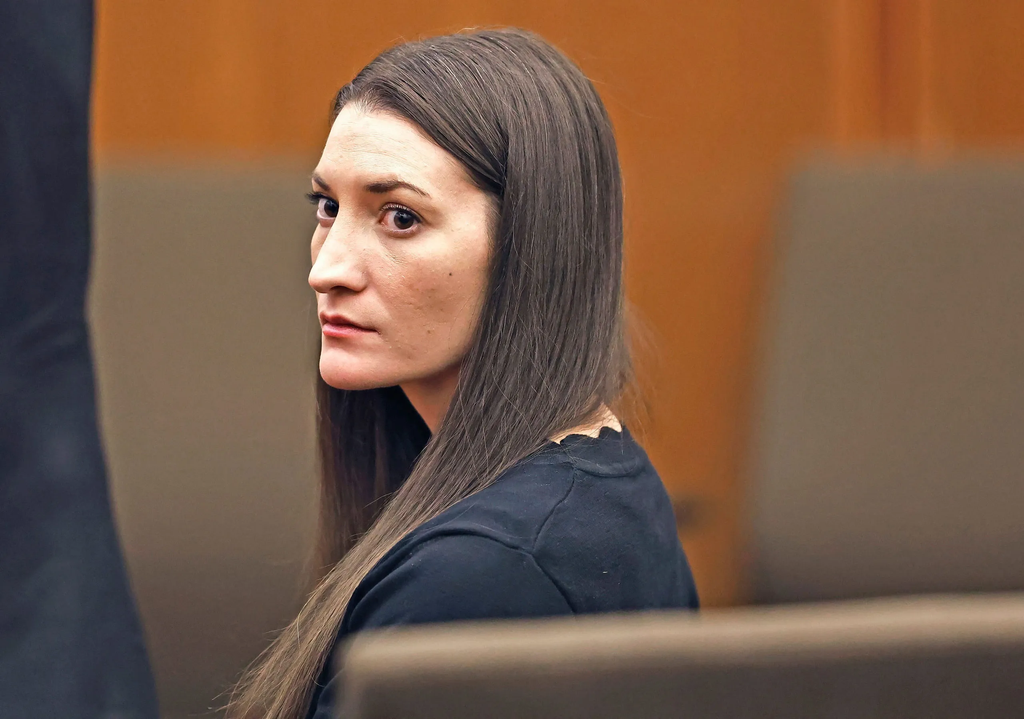
The tragic legal battle surrounding Lindsay Clancy took an unexpected turn in a Plymouth, Massachusetts courtroom. Defense attorney Kevin Reddington stood before the judge and dropped a bombshell argument that left legal observers completely stunned. He argued that prosecutors have actually failed to prove beyond a reasonable doubt that Lindsay Clancy physically killed her three young children.
This new stance represents a dramatic pivot in a high-profile case that previously focused almost entirely on postpartum psychosis and mental health. For months, the primary question seemed to be whether Clancy was legally responsible for the tragic deaths due to severe mental illness. Now, her defense team is challenging the core foundation of the prosecution’s physical evidence itself.
The sudden shift arrived just weeks after the judge declared a mistrial when jurors failed to reach a unanimous verdict. With prosecutors deciding whether to retry Clancy on murder charges, this surprise defense maneuver has completely redefined the trajectory of the court proceedings.
What Happened in Court? The Defense Drops a Bombshell
During the post-mistrial hearing in Plymouth Superior Court, defense attorney Kevin Reddington challenged Judge William Sullivan to look closely at the trial record. He filed a motion asking the court to acquit Clancy, asserting that the state simply did not meet its legal burden of proof.
Reddington argued that investigators rushed to judgment from the moment they arrived at the Duxbury home. He pointed out that there is no recorded audio confession or written admission from Clancy stating that she committed the physical acts. He challenged the courtroom directly, asking where the actual proof was that his client carried out the killings.
The $0 Secret To Launching Your Entire Online Empire
Why pay hundreds every month for separate software? Build funnels, send emails, and make sales with Systeme.io completely free.
Get Started For $0Free Forever • No Credit Card Needed • Beginner-Friendly
To support his point, Reddington brought up several details regarding the physical evidence and the initial investigation timeline. He highlighted Clancy’s severe physical state when emergency responders found her bleeding in the backyard after jumping from a second-story window. He questioned whether her body temperature, physical trauma, and memory loss in the hospital were properly evaluated by police before they reached their conclusions.
The defense attorney argued that the entire case relies heavily on assumption rather than undeniable proof. He suggested that key medical facts and forensic details were skipped over because authorities immediately assumed Clancy was responsible without exploring every single possibility.
Why Legal Analysts Are Shocked by the Sudden Shift
This new argument caught almost everyone off guard because it contrasts sharply with the strategy used throughout the original trial. During the primary trial proceedings, the defense never contested that the children were harmed in the home. Instead, they built a case centered on severe postpartum mental illness.
Before and during the trial, the defense team repeatedly highlighted Clancy’s struggles with intense depression, anxiety, and postpartum psychosis. Medical experts called by the defense testified that she heard voices ordering her to harm her children. Reddington himself had previously filed motions acknowledging the facts of the tragedy while arguing that Clancy was not criminally responsible due to her mental state.
Legal experts following the case closely have expressed amazement at the complete change in direction. Prominent trial analysts pointed out that changing arguments after a mistrial is an exceptionally rare legal move. Typically, attorneys refine their existing arguments for a second jury rather than questioning basic facts that were previously uncontested.
Some legal commentators believe this could be a calculated strategy to put heavy pressure on the district attorney’s office. By raising fundamental doubts about the burden of proof, the defense may be trying to persuade prosecutors to drop first-degree murder charges or agree to a plea resolution that avoids another lengthy trial.
Prosecutors Fire Back: “The Argument Is Laughable”
Prosecutor Shanan Buckingham did not hold back in her response to the defense’s claims. She expressed genuine surprise at the new defense theory and told the judge that the claim was completely unfounded based on the massive volume of evidence already presented.
Buckingham reminded the court that the evidence collected during the investigation was overwhelming. Jurors during the initial trial listened to extensive forensic testimony, including evidence that Clancy’s DNA was recovered from exercise bands found at the scene. Prosecutors also brought forward medical records and recorded statements Clancy made to psychiatric evaluators while receiving treatment in the hospital.
The prosecution maintains that Clancy planned the events of that evening with clear intent. They pointed to evidence showing that she mapped out directions online to a local restaurant and sent her husband out to pick up takeout dinner and medicine at a nearby CVS pharmacy. Prosecutors argued this was a deliberate effort to create a window of time where she would be alone with the children.
Outside the courtroom, Plymouth County District Attorney Timothy Cruz addressed reporters regarding the future of the case. He emphasized that the primary responsibility of his office remains delivering justice for the three young victims: five-year-old Cora, three-year-old Dawson, and eight-month-old Callan. Cruz stated that prosecutors are conducting a full review of the trial record before deciding whether to retry Clancy for first-degree murder, pursue lesser charges, or take another legal path.
Retracing the Tragedy in Duxbury
To understand how the case reached this point, it helps to look back at the events of January 24, 2023. Emergency responders were dispatched to the family home in Duxbury, Massachusetts, after Patrick Clancy returned from running errands and made a desperate 911 call.
Upon arriving at the scene, first responders found Lindsay Clancy lying in the backyard with traumatic injuries resulting from a fall from an upper-story window. Inside the residence, emergency workers discovered the three young children unresponsive in the basement.
Cora and Dawson were pronounced dead shortly after arriving at the hospital, while baby Callan survived on life support for several days before passing away. The tragic loss of three innocent lives sent shockwaves through the local community and touched off nationwide discussions regarding maternal mental health.
Lindsay Clancy survived her injuries but suffered permanent paralysis due to spinal trauma. She was placed under medical and psychiatric care, remaining hospitalized throughout much of the pre-trial process. The tragic nature of the case quickly turned it into one of the most followed court stories in recent history.
Inside the Trial and the Deliberation Deadlock
The original murder trial took place over several emotional weeks in Plymouth Superior Court. The courtroom heard detailed testimony from medical specialists, forensic analysts, emergency personnel, and family members.
Send, Spend & Hold Money Worldwide Without Hidden Fees
Transfer money internationally at the real exchange rate and hold 40+ currencies in one account.
Open a Wise AccountMid-market rate • Fast transfers • 40+ currencies
The core conflict during the trial revolved around Clancy’s mental condition at the time of the incident:
- Defense experts testified that Clancy was experiencing an acute episode of postpartum psychosis, arguing she lost complete touch with reality and could not distinguish right from wrong.
- Prosecution experts argued that while Clancy suffered from depression and anxiety, her actions showed clear advance planning and an understanding that her conduct was wrong.
- The jury deliberated for days, analyzing detailed medical charts, psychiatric evaluations, and witness testimonies.
Deliberations ultimately hit a wall when the jury became hopelessly deadlocked. Reports following the mistrial revealed that eleven out of the twelve jurors favored finding Clancy not guilty by reason of insanity. However, a single holdout juror insisted on a conviction for first-degree murder.
When the jury declared it could not reach a unanimous agreement, Judge Sullivan officially declared a mistrial on September 4, 2026. That decision opened the door for this recent hearing and set off the current debate over what comes next.
What Comes Next for Lindsay Clancy?
The case currently sits in a crucial waiting period while Judge Sullivan considers the defense’s latest motion for a required finding of not guilty. If the judge denies the motion, the ultimate decision rests with the district attorney’s office on how to proceed.
Prosecutors have several potential avenues open to them moving forward:
- Proceed with a brand-new trial on first-degree murder charges with a new panel of jurors.
- Reduce the charges to second-degree murder or manslaughter to seek a resolution without a full trial.
- Reach an agreement that involves long-term psychiatric commitment to a state medical facility instead of state prison.
If Clancy were ever found not guilty by reason of insanity in a future trial, Massachusetts law dictates that she would not simply walk free. Instead, she would be committed to a strict state psychiatric facility, where medical professionals and court judges would regularly review her condition to determine if she remains a danger to herself or society.
For more details on how our team covers breaking news, court updates, and viral cultural stories, take a moment to visit our About Us page.
Frequently Asked Questions (FAQs)
Why did Lindsay Clancy’s lawyer change his argument after the mistrial?
Her defense attorney argues that prosecutors failed to prove the basic facts of the case beyond a reasonable doubt during the first trial. Legal analysts believe this move is designed to challenge the prosecution’s evidence and potentially convince the state not to pursue a second trial.
What was the cause of the mistrial in September 2026?
The judge declared a mistrial after the 12-member jury deadlocked. Reports indicated that 11 jurors believed Clancy was not guilty by reason of insanity, while 1 juror held out for a first-degree murder conviction.
What is postpartum psychosis?
Postpartum psychosis is a rare and severe mental health condition that can affect new mothers. It can cause temporary hallucinations, delusions, severe paranoia, and disorientation, causing individuals to lose touch with reality.
The $0 Secret To Launching Your Entire Online Empire
Why pay hundreds every month for separate software? Build funnels, send emails, and make sales with Systeme.io completely free.
Get Started For $0Free Forever • No Credit Card Needed • Beginner-Friendly
Will there be a second trial for Lindsay Clancy?
Prosecutors have not officially announced their final decision yet. The district attorney’s office is currently reviewing the complete case record to decide whether to retry her on murder charges, offer a plea deal, or seek reduced charges.
What happens if someone is found not guilty by reason of insanity in Massachusetts?
If a defendant is found not guilty by reason of insanity, they are committed to a secure state psychiatric hospital for treatment. The court and medical staff periodically evaluate the person’s mental health to determine if continued commitment is required.
Staying Connected with Real-Time Updates
Court cases involving complex legal strategies and emotional topics can evolve rapidly. As new rulings come down from the judge and prosecutors decide on their next steps, keeping up with clear, straightforward news reporting makes all the difference.
If you ever have questions, feedback, or news tips about ongoing stories, feel free to reach out to our team directly through our Contact Page. We love hearing from our readers and keeping the conversation open.
You can also join our vibrant online community across social media platforms to share your thoughts, discuss major headlines, and stay updated on viral stories in real time:
- Connect with us on Facebook
- Follow our visual updates on Instagram
- Catch fast-breaking news alerts on X (formerly Twitter)
The Lindsay Clancy case serves as a powerful reminder of how complicated the legal system can be when severe mental health crises intersect with criminal law. Whether prosecutors decide to launch a second trial or seek an alternative path to justice, the world will be watching closely to see how this tragic story finally concludes.
