
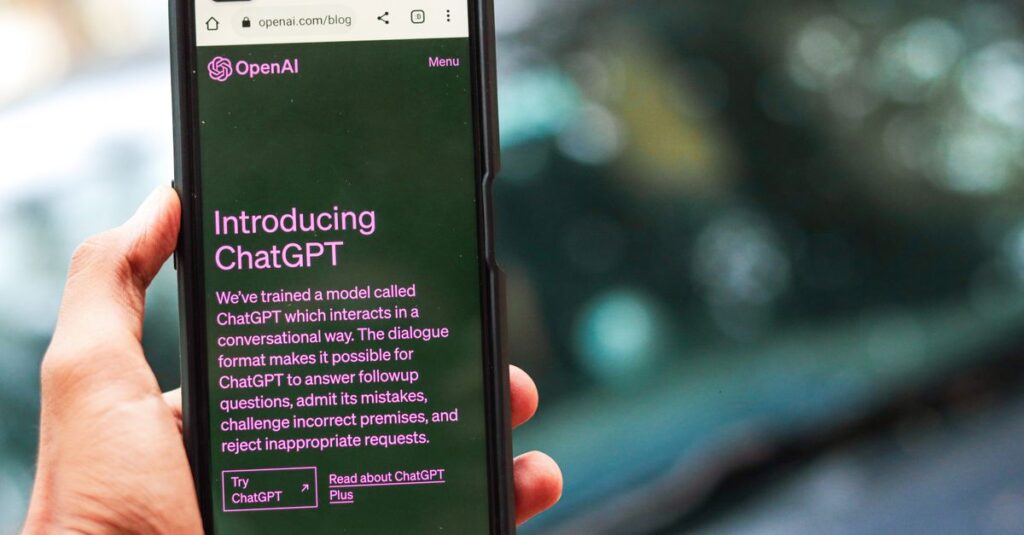
Most of us know what it feels like to talk to a computer or a smartphone. You press a button, ask a question, and then you wait. A few seconds pass. Finally, you get a stiff, flat, and robotic answer. It is useful for setting timers or checking the weather, but it is not exactly a real conversation. You would never confuse it with talking to a real human being.
OpenAI has completely changed the game. Their new voice models bring a totally different experience to the table. We are looking at live conversations that flow naturally, just like chatting with a friend over a cup of coffee.
You no longer have to wait for the machine to process your words slowly. You do not have to listen to a voice that sounds like a GPS navigation system from ten years ago. The new technology listens, understands, and replies in real-time. It can laugh, pause, and even change its tone depending on the mood of the conversation.
This update is a massive step forward for artificial intelligence. It changes how we interact with our devices on a fundamental level. We are moving away from treating computers like search engines and starting to treat them like smart, capable assistants who can hold a real discussion.
The Problem with Older Voice Assistants
To understand why this new release is such a big deal, we need to look at how older voice assistants worked. For years, voice technology relied on a clunky, multi-step process.
The $0 Secret To Launching Your Entire Online Empire
Why pay hundreds every month for separate software? Build funnels, send emails, and make sales with Systeme.io completely free.
Get Started For $0Free Forever • No Credit Card Needed • Beginner-Friendly
First, the machine had to hear your audio and translate it into text. Second, it had to read that text, understand it, and generate a text reply. Third, it had to take that text reply and convert it back into audio so you could hear it.
Every single one of those steps took time. That is why you always experienced an awkward silence after asking a question. It also meant a lot of information was lost along the way. The old systems only read the words you said. They did not hear the emotion in your voice. They did not know if you were whispering, crying, or shouting.
Furthermore, you could not interrupt them. If the assistant started giving you a long, boring answer, you usually had to yell a wake word just to make it stop. It felt rigid and frustrating. People ended up using voice commands only for the most basic tasks.
How the New OpenAI Voice Model Works
OpenAI decided to skip the clunky multi-step process. Their new models process audio directly. The AI hears your voice as sound, not just as text on a screen. If you want to read more about the technical details behind these systems, you can check out the official OpenAI website.
Because it skips the translation steps, the delay is practically gone. The response time is incredibly fast, matching the normal rhythm of a human conversation. You speak, and the AI answers almost instantly.
More importantly, it picks up on all the tiny details of human speech. It understands your tone, your speed, and the background noises around you. It knows when you are telling a joke. It knows when you are asking a serious question.
If you love keeping up with these kinds of massive shifts in software and hardware, you will find plenty of great reading in our Technology & AI section. We regularly cover how these changes impact everyday users.
The Magic of Real-Time Interaction
The most impressive part of this new release is the ability to interrupt. Think about how humans actually talk to each other. We rarely wait in total silence for the other person to finish a long speech. We say things like “Wait, what?” or “Oh, I see,” or we jump in to correct a misunderstanding.
You can now do this with OpenAI’s voice models. If the AI starts explaining something and you already understand the first part, you can just speak over it. You can say, “Skip to the next part,” and the AI will stop instantly and adjust its answer. It feels completely natural.
The AI also uses different voices that sound incredibly human. They breathe, they pause to think, and they can even mimic emotions. If you ask the AI to tell a bedtime story, it might speak in a soft, soothing, and dramatic voice. If you ask it to act like an energetic sports announcer, it will raise its pitch and speak faster.
This level of emotional intelligence in a machine is brand new. It bridges the gap between humans and technology, making the experience much more comfortable and engaging.
Upgrading Your Daily Life
Having a natural conversation with an AI opens up amazing possibilities for your daily routine. It is no longer just about setting alarms. It is about having a smart companion in your pocket.
A Powerful Tool for Learning Languages
Learning a new language is tough, especially if you do not have anyone to practice with. Reading books and using flashcards will only get you so far. You need real conversation to become fluent.
With the new OpenAI voice models, you have a patient, knowledgeable language tutor available 24 hours a day. You can ask the AI to practice Spanish with you. You can talk at your own pace. Because the AI hears your actual voice, it can even help correct your pronunciation on the spot. If you get stuck, you can easily ask it to explain a grammar rule in English before switching back to Spanish.
Hands-Free Help When You Need It
Imagine you are cooking dinner. Your hands are covered in flour, and you realize you forgot the next step in the recipe. You cannot touch your phone. With this new voice model, you can just ask out loud.
Send, Spend & Hold Money Worldwide Without Hidden Fees
Transfer money internationally at the real exchange rate and hold 40+ currencies in one account.
Open a Wise AccountMid-market rate • Fast transfers • 40+ currencies
You can say, “I just added the flour, what comes next?” The AI remembers the context of your recipe and tells you exactly what to do. You can ask it to slow down or repeat the instructions without ever stopping your work. It is like having a helpful chef standing right next to you in the kitchen.
Boosting Your Income and Projects
This technology is not just for fun or daily chores. It is a massive tool for business and content creation. Smart creators are already figuring out how to use these natural voices to get ahead.
Making Automated Content Better
Creating videos can take a lot of time and effort. Many creators rely on automated tools to speed up the process. If you explore the world of YouTube Automation, you know that having a good voiceover is crucial.
In the past, automated channels used robotic text-to-speech voices. Viewers hated them. They sounded fake and boring, which caused people to click away from the video.
Now, you can generate voiceovers that sound 100 percent real. You can instruct the AI to sound excited during the intro of your video and serious during the educational parts. The emotion and natural pauses keep viewers engaged. This dramatically improves the quality of automated content, leading to more views and better channel growth.
Brainstorming and Business Planning
Building a business from scratch is hard work. Sometimes you just need someone to bounce ideas off of. If you are working on a Side Hustle, you can use the AI voice model as a brainstorming partner.
You can talk out loud about your business ideas while driving or walking. The AI can point out flaws in your plan, suggest new marketing angles, or help you outline a project. Because the conversation flows naturally, it feels like a real strategy meeting.
This is also highly beneficial for anyone looking to Make Money Online. You can use the AI to practice sales calls. You can tell the AI to act like a difficult customer. You practice your pitch, and the AI responds with objections. This helps you build confidence before you ever speak to a real client.
Smarter Sales and Copywriting
For those involved in Affiliate Marketing, writing good copy is the key to success. Sometimes, what looks good on paper sounds terrible when spoken out loud.
You can read your sales scripts or email drafts to the AI. Because it understands tone, it can tell you if your message sounds too pushy, too boring, or confusing. You can even have a back-and-forth conversation with the AI to refine your target audience and brainstorm better hooks for your affiliate links.
The $0 Secret To Launching Your Entire Online Empire
Why pay hundreds every month for separate software? Build funnels, send emails, and make sales with Systeme.io completely free.
Get Started For $0Free Forever • No Credit Card Needed • Beginner-Friendly
The Remote Worker’s Best Friend
Work has changed drastically over the last few years. More people are stepping away from traditional offices and traveling the world. The Digital Nomad lifestyle is incredibly popular, but it comes with its own set of challenges.
Language barriers are a common problem when traveling. If you are a remote worker living in a foreign country for a few months, ordering food or talking to landlords can be stressful. The new OpenAI voice models serve as the perfect live translator.
Because there is no lag, you can have the AI listen to a foreign language and immediately translate it back to you in English with the correct tone. You can then speak English, and the AI will translate your words into the local language. This completely removes the friction of living abroad.
Additionally, working from different time zones often means you miss out on real-time meetings. Having an AI that can converse naturally means you can dictate emails, plan your weekly schedule out loud, and organize your thoughts without staring at a screen all day. You can take a walk on the beach, put your headphones in, and handle your administrative tasks through a fluid voice conversation.
Things to Keep in Mind
As amazing as this technology is, it is important to be aware of a few challenges. The first is privacy. When you are having long, natural conversations with an AI, you might accidentally share personal or sensitive information. It is always wise to remember that you are talking to software, not a real confidant. Keep your private data secure and avoid sharing passwords or sensitive financial details during your chats.
Another thing to consider is the impact on human interaction. Because the AI is so agreeable and easy to talk to, some people might prefer it over actual human conversation. It is a great tool, but it should never replace talking to real friends and family.
Finally, there is the issue of trust. The AI sounds so confident and human that it is easy to believe everything it says. However, AI can still make mistakes or provide incorrect information. Always double-check important facts, especially if you are using the AI for serious business research or health-related advice.
Getting to Know Whatsbuzzn
Before we jump into the most common questions people have about this topic, we want to invite you to learn a little more about us. Our goal is to break down complex topics and make them easy to understand. You can read more about our mission and the team behind the site on our About page.
We also love hearing from our readers. If you have any thoughts on AI, or if you just want to suggest a topic for a future article, please do not hesitate to reach out. You can send us a message anytime through our Contact page.
Frequently Asked Questions (FAQs)
Do I need special equipment to use the new OpenAI voice models?
No, you do not need any special hardware. The new voice features are designed to work on the devices you already own. You can use them through the official mobile app on your smartphone or through a standard headset connected to your computer.
Is the new natural voice feature free to use?
OpenAI typically offers different tiers for their products. They often provide limited access to free users, while offering unlimited or higher-quality access to paid subscribers. You should check their official website for the most current pricing and availability details.
Can the AI speak languages other than English?
Yes, the voice models are highly capable in multiple languages. Because the system understands audio natively, it handles different accents and languages much better than older translation tools. It is an excellent resource for bilingual households or frequent travelers.
Will this technology replace human jobs?
This is a common concern. While AI will automate certain tasks, especially in basic customer service, it is better viewed as a tool to enhance human work. Creators, marketers, and business owners can use this AI to speed up their workflow and produce better results, rather than seeing it as a direct replacement for human creativity.
Is it safe for children to use?
Parents should always supervise their children when using AI tools. While the voice models are programmed to be helpful and polite, children might not fully understand that they are talking to a machine. It is important to set boundaries and use parental controls where applicable.
Does the AI sound like a real person?
Yes, the newest models are designed to sound incredibly realistic. They include natural human elements like slight pauses, breathing sounds, and emotional shifts in tone. It is a massive upgrade from the flat, robotic voices of the past.
Conclusion
The release of OpenAI’s new voice models is a major turning point for technology. We are leaving behind the days of stiff, robotic commands and entering an era of natural, live conversations with our devices. This tech eliminates the annoying lag, picks up on emotional tones, and allows for normal human interruptions.
These improvements offer huge benefits for everyone. Language learners get a patient tutor, digital nomads get a live translator, and online business owners get a powerful brainstorming partner. It opens up completely new ways to approach content creation and daily productivity. As we move forward, talking to a computer will no longer feel like a chore. It will feel just as easy and helpful as talking to a smart friend.
