
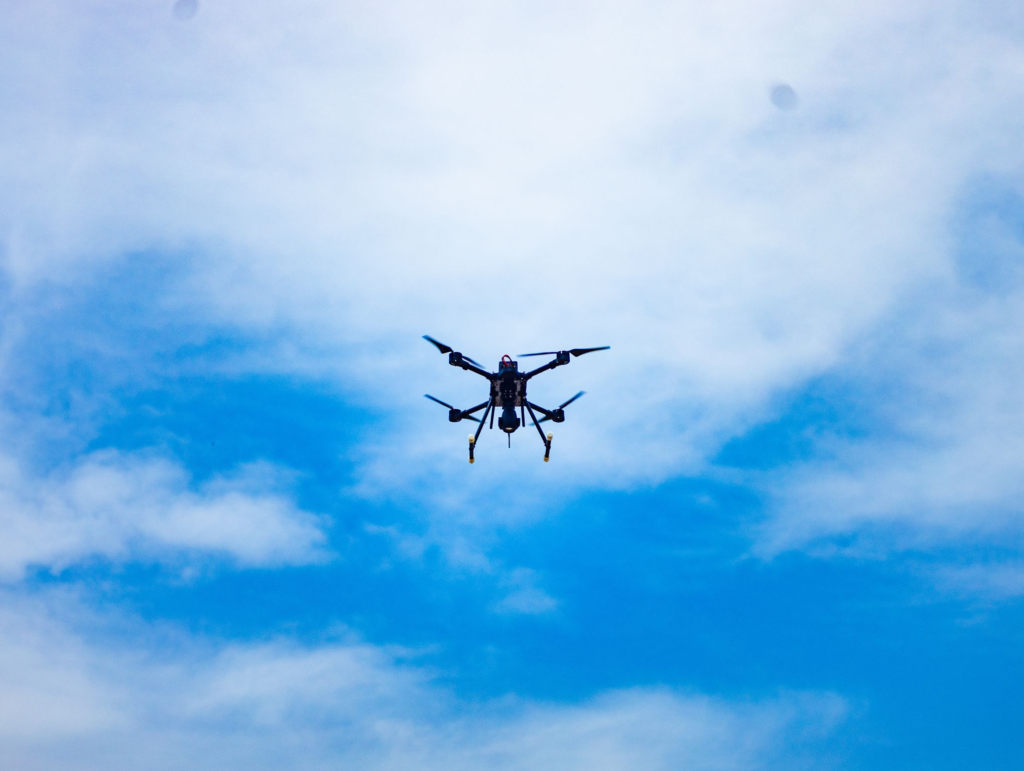
Nigerian defense-technology company Terra Industries has officially closed its seed funding round at $52 million after securing an additional $18 million in capital. This milestone makes it one of the largest early-stage investments ever recorded by an African technology startup. Founded in 2024 by young entrepreneurs Nathan Nwachuku and Maxwell Maduka, the Abuja-headquartered company builds autonomous security systems to guard critical physical infrastructure across the continent.
Instead of building consumer software or payment processing platforms, Terra Industries manufactures physical defense hardware and powers it with artificial intelligence. The startup designs long-range drones, solar-powered sentry towers, and ground vehicles that monitor power plants, oil pipelines, and major mining sites. With this fresh influx of capital, the company is preparing to open its first international office in London while scaling up heavy manufacturing capacity in West Africa.
The $52 Million Funding Journey
From $11.75 Million to Africa’s Largest Seed Round
The journey to this $52 million figure happened in three distinct stages over the course of eight months. Terra Industries first emerged from stealth mode in January 2026 with an initial seed round of $11.75 million. That initial raise caught the attention of global tech investors because hardware funding of that size is extremely rare for a young startup based in West Africa.
Just a month later, in February 2026, the startup secured an additional $22 million bridge round, pushing its total raised capital to $34 million. At that point, company leadership confirmed that Terra’s valuation had crossed into nine-figure territory, meaning it was valued at well over $100 million. The final $18 million extension closed in August 2026, officially capping off the $52 million seed round.
Who Is Backing Terra Industries?
The funding round attracted prominent venture capital firms from Silicon Valley and across the globe. The initial tranche was led by 8VC, a venture firm co-founded by Palantir billionaire Joe Lonsdale. Lux Capital led the follow-up extension, bringing deep experience in hardware, robotics, and defense platforms.
The $0 Secret To Launching Your Entire Online Empire
Why pay hundreds every month for separate software? Build funnels, send emails, and make sales with Systeme.io completely free.
Get Started For $0Free Forever • No Credit Card Needed • Beginner-Friendly
Other key participants in the round include Silent Ventures, Nova Global, Belief Capital, SV Angel, and Valor Equity Partners. The latest $18 million top-up introduced new backing from Norleo Space Investments alongside prominent angel investor Grant Gordon. Industry analysts at financial news outlets like Disrupt Africa and Techpoint Africa have noted that sustained conviction from top-tier venture firms signals growing global confidence in African deep-tech engineering.
What Terra Industries Actually Builds
Hardware Built for Tough Environments
Terra Industries creates physical defense hardware engineered specifically to withstand challenging outdoor environments. Many industrial sites in Africa are located in remote areas where reliable electricity and steady cellular networks are hard to find. The startup’s product line includes vertical take-off and landing (VTOL) drones like the Archer, high-speed interceptor drones, unmanned ground vehicles, and maritime surveillance craft.
One of their most deployed hardware units is the Kallon sentry tower. These solar-powered towers operate continuously without needing connection to a local power grid. Equipped with thermal cameras and long-range sensors, a single tower can track potential intruders or threats up to three kilometers away in total darkness or bad weather.
ArtemisOS: The Brain Behind the Hardware
Hardware alone is only half the story. Every drone, tower, and vehicle built by Terra Industries connects directly to ArtemisOS, the company’s proprietary operating system. ArtemisOS uses artificial intelligence to analyze live video feeds, detect movement, categorize potential security risks, and plan automated patrol routes.
When a sensor detects an unauthorized person or vehicle near a protected boundary, ArtemisOS flags the threat immediately. It can launch an autonomous interceptor drone to investigate before human security guards even notice a problem. Readers who want to understand more about how machine learning transforms physical security can explore our dedicated technology and AI section for deeper insights.
Protecting $11 Billion in Critical Assets
Securing Mines, Power Plants, and Pipelines
Terra Industries is not just building prototypes in a laboratory. Their equipment is already active in real-world environments. According to company data, Terra’s hardware and software currently protect approximately $11 billion worth of critical infrastructure across eight countries in Africa and North America.
Major clients include operators of hydroelectric power dams in northern Nigeria, as well as gold, lithium, and mineral mining sites across West Africa. Oil pipelines and refinery complexes also rely on these autonomous systems to prevent sabotage, illegal tapping, and equipment theft.
Solving the Dependence on Foreign Imports
For decades, African governments and industrial asset owners relied almost entirely on imported security hardware from Western nations or East Asia. Sourcing defense gear from overseas comes with major drawbacks. Import costs are sky-high, replacement parts can take months to arrive, and foreign software systems raise serious data privacy concerns.
Terra Industries changes that equation by manufacturing hardware locally. Over 70 percent of the components used in Terra’s drones and sentry towers are manufactured or sourced directly within Africa. This reduces supply chain delays, cuts maintenance costs for local operators, and ensures sensitive security data stays firmly under local control.
Building Africa’s Biggest Drone Factories
The Abuja Facility (Pax-1)
Terra Industries operates its main manufacturing base out of Abuja, Nigeria. Named Pax-1, this 15,000-square-foot facility handles early airframe production, circuit board assembly, and software testing. It is where the team designs custom propellers, light-weight battery packs, and reinforced hulls capable of enduring extreme heat and dusty terrain.
The Abuja factory also serves as the center for collaboration with national security bodies. Terra signed a formal memorandum of understanding with the Defence Industries Corporation of Nigeria (DICON) to establish joint production channels, helping modernize national defense capabilities with locally built autonomous tools.
Expanding to Ghana (Pax-2)
To satisfy surging demand, Terra Industries is expanding its manufacturing footprint beyond Nigeria. In April 2026, the company announced its second facility, Pax-2, located in Accra, Ghana. Spanning 34,000 square feet, Pax-2 is set to become the largest dedicated drone manufacturing plant on the African continent.
Expected to open its doors in late 2026, the Ghana factory is designed for high-volume automated production. By 2028, Terra plans to manufacture up to 50,000 autonomous aerial and ground units every year at this site. This scaled-up production capacity will allow the company to supply clients across the entire Global South.
Global Ambitions: Opening an Office in London
Operations and AI in Europe
While physical manufacturing remains rooted in Abuja and Accra, Terra Industries is planting its flag in Europe. Part of the new $18 million capital infusion is being used to open the company’s first international office in London, United Kingdom.
CEO Nathan Nwachuku clarified on social media that the London branch will focus on global operations, international business development, and AI engineering. Being present in London gives the company direct access to international financial markets, specialized European software talent, and global defense procurement discussions.
Send, Spend & Hold Money Worldwide Without Hidden Fees
Transfer money internationally at the real exchange rate and hold 40+ currencies in one account.
Open a Wise AccountMid-market rate • Fast transfers • 40+ currencies
Targeting Markets in the Global South
Terra Industries does not plan to limit its operations to West Africa. The startup has outlined concrete expansion plans across Latin America, the Gulf region, and South Asia. Mining companies in Brazil, energy facilities in the Middle East, and remote agricultural operations in India face security challenges similar to those in Nigeria or Ghana.
By tailoring autonomous hardware specifically for emerging markets, Terra is filling a gap that expensive Western defense contractors often ignore. Their goal is to prove that hardware designed for tough environments can outperform fragile high-tech gear built solely for paved, climate-controlled conditions.
Meet the Young Founders Behind Terra Industries
Nathan Nwachuku and Maxwell Maduka
The story behind Terra Industries is even more remarkable when you look at the founders. Nathan Nwachuku and Maxwell Maduka started the company in 2024 while both were in their early twenties. Originally named Terrahaptix, the venture began with a bold vision to replace manual security guarding with automated robotic systems.
Before founding Terra, Nwachuku spent five years working in educational technology. During that time, he realized that economic development across Africa would always be limited if critical energy, transport, and mining infrastructure remained vulnerable to security threats. Maduka brought technical mastery in robotics and embedded systems, allowing the duo to build their initial working prototypes on modest budgets.
A New Wave of Young Tech Entrepreneurs
The success of Terra Industries highlights a massive shift in how young Africans approach technology. For years, software, financial apps, and digital platforms dominated the landscape. Today, young founders are branching into hardware, defense, aerospace, and advanced automation.
This mindset extends to digital business models as well. Modern creators and founders are leveraging automation tools in various fields to scale global businesses from home. If you want to see how creators use smart digital systems to build modern online businesses, check out our guide on YouTube automation to see automation in action.
What This Raise Means for African Tech Funding
Shifting Focus Beyond Fintech
Historically, financial technology startups gathered more than 60 percent of all venture capital entering Africa. Payment gateways, digital banks, and micro-lending apps dominated headline raises for years. Terra’s $52 million seed round proves that global investors are ready to back deep-tech, hardware, and physical infrastructure projects in Africa.
Raising a $52 million seed round in any industry is a major accomplishment. Doing it in defense technology—an industry long considered difficult for early-stage venture capital—shows how much belief investors have in Terra’s execution capacity.
Setting a New Benchmark for Deep Tech
Deep-tech startups require heavy upfront capital for equipment, component inventory, testing labs, and manufacturing space. Unlike pure software companies that can launch with just laptops and cloud servers, hardware companies cannot fake progress.
Terra Industries has proven that African engineering teams can design, test, and ship physical products at scale. Their rapid trajectory gives other deep-tech founders on the continent a clear roadmap for pitching hardware vision to international venture capitalists.
The $0 Secret To Launching Your Entire Online Empire
Why pay hundreds every month for separate software? Build funnels, send emails, and make sales with Systeme.io completely free.
Get Started For $0Free Forever • No Credit Card Needed • Beginner-Friendly
Frequently Asked Questions (FAQs)
What is Terra Industries?
Terra Industries is a Nigerian defense-technology startup founded in 2024. The company builds autonomous security systems—including long-range drones, solar sentry towers, ground vehicles, and AI software—to protect critical infrastructure like power plants, mines, and oil pipelines.
How much total funding did Terra Industries raise in its seed round?
Terra Industries closed its seed round at $52 million. The funding was completed across three stages: an initial $11.75 million round in January 2026, a $22 million bridge round in February 2026, and a final $18 million top-up in August 2026.
Where are Terra Industries’ manufacturing facilities located?
Terra Industries operates its flagship Pax-1 manufacturing facility in Abuja, Nigeria. The company is also opening a second, larger facility named Pax-2 in Accra, Ghana, which will be the largest drone factory in Africa.
What is ArtemisOS?
ArtemisOS is Terra Industries’ proprietary software platform. It uses artificial intelligence to connect all security hardware units, analyze real-time video data, detect potential security threats, and automatically plan response patrols without requiring constant human monitoring.
Who founded Terra Industries?
Terra Industries was founded by Nigerian entrepreneurs Nathan Nwachuku and Maxwell Maduka. Both founders started the company in their early twenties and previously operated under the name Terrahaptix before rebranding to Terra Industries.
Looking Ahead to the Future of Defense Tech
Terra Industries’ $52 million seed round marks a turning point for tech innovation across Africa. By combining local hardware manufacturing with modern artificial intelligence, Nathan Nwachuku and Maxwell Maduka are proving that African engineering can solve critical security challenges on a global scale. As the company opens its new office in London and builds out its mega-factory in Ghana, all eyes will be on how rapidly they can deploy these autonomous tools to secure essential assets worldwide.
To stay updated on tech stories like this, check out our about page to see what we cover, or get in touch through our contact page if you have a story to share. You can also follow our official social channels on Instagram, Facebook, and X to catch live updates on trending tech news.
