
Getting your hair braided is usually a whole-day commitment. Anyone who has sat in a salon chair for six, eight, or even ten hours straight knows the feeling. Your legs go numb, your back hurts, and your scalp feels tight. On the other side of the chair, the hairstylist is doing constant, repetitive hand movements all day long, often leaving them with sore wrists and tired arms.
That long-standing salon experience is about to change forever.
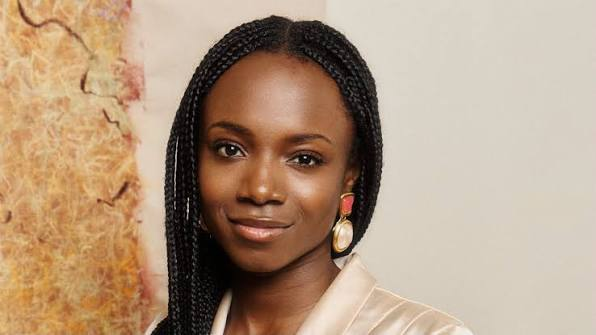
A brilliant Nigerian-American engineer named Yinka Ogunbiyi has created HaloBraid, the world’s very first braid-assist robot. This invention aims to take standard six-hour braiding appointments and speed them up dramatically.
Here at WhatsBuzzn, we love bringing you stories about breakthroughs that change everyday life. This story is a perfect mix of culture, smart engineering, and real-life problem solving.
Let us break down how this technology works, how it came to life, and why it is making waves across both the beauty and tech industries.
Build Funnels, Email Lists & Sell Online With One Free Tool
Create funnels, send emails, and sell online using Systeme.io without paying for multiple tools.
Create Free AccountFree forever • No credit card • Beginner-friendly
The Genius Behind the Innovation: Meet Yinka Ogunbiyi
Behind every big idea is a story, and Yinka Ogunbiyi’s story is inspiring. Yinka is a Nigerian-American biomechanical engineer who comes from a family of engineers. She studied at Harvard University, earning degrees from both the Harvard John A. Paulson School of Engineering and Applied Sciences and Harvard Business School.
She holds a joint MS/MBA, which means she understands both the technical science of building machines and the business skills needed to launch a product into the market. Before building hair technology, Yinka worked on smart home appliances and internet-connected devices.
So how did an engineer working on smart hardware end up building a hair-braiding robot?
The idea actually started during the COVID-19 pandemic lockdown. Salons were closed, and Yinka needed to get her hair done. She decided to try installing her own knotless protective braids at home for the first time. The process took her four long days to finish.
That experience opened her eyes. She realized that while technology had transformed almost every other industry, hair braiding had not seen any real mechanical innovation in thousands of years.
Yinka teamed up with fellow Nigerian and Harvard graduate David Afolabi to fix this problem. Together, they founded HaloBraid with a single mission: use smart engineering to make textured hair care faster, safer, and much more enjoyable for everyone involved.
How Does the Braid Robot Actually Work?
When people hear the phrase “braid robot,” they usually picture a cold steel arm hovering over someone’s head doing all the work alone. But HaloBraid is completely different.
HaloBraid is designed as a “cobot,” which is short for collaborative robot. This means it works right alongside human hairstylists rather than replacing them. The machine handles the repetitive parts of the job, while the human stylist handles the artistic and delicate parts.
Here is how a typical salon session with HaloBraid works:
Step 1: The Human Touch
First, the professional hairstylist parts the hair, sections it carefully, and creates the foundation or anchor knot by hand. This step is super important because human hands ensure the scalp is comfortable, edges are safe, and tension is applied evenly without hurting the client.
Step 2: The Robotic Assist
Once the base of the braid is secure, the stylist attaches the HaloBraid device. The robot then takes over the repetitive weaving action that travels down the main length of the hair. Using smart mechanical design and gentle machine algorithms, the machine weaves the hair quickly, evenly, and without pulling hard on the root.
Step 3: The Custom Finish
After the robot finishes the weaving down the length, the stylist unhooks the machine. The stylist then seals the ends, trims any loose hairs, and styles the client’s hair exactly how they want it.
By taking over the mid-length weaving—which usually takes up 80 percent of the total time in traditional braiding—HaloBraid can cut a multi-hour appointment down to a fraction of the time. The machine can finish braids up to five times faster than traditional hand weaving.
To make sure the machine was safe and gentle, Yinka and David built more than 450 prototypes over 18 months. They tested the device on thousands of individual braids, including on Yinka’s own hair, to refine every movement before bringing it to market.
Solving Big Problems for Stylists and Clients
Hair braiding is a huge global industry, but it comes with real physical and financial challenges. HaloBraid was built to solve specific problems that both clients and salon owners have dealt with for generations.
Saving Time for Clients
For clients, spending an entire Saturday sitting in a chair can be exhausting. Many people love wearing protective styles like knotless braids, but they struggle to fit long salon appointments into their busy schedules.
With a machine handling the heavy lifting, clients can get back hours of their day. What used to take six or eight hours can now be finished in a short, easy visit.
Protecting the Health of Hair Stylists
The physical toll on professional braiders is something that often gets ignored. Braiding requires standing up for hours, holding arms high, and making tight, repetitive hand motions thousands of times every single day.
Because of this constant pressure, many professional braiders develop carpal tunnel syndrome, severe chronic wrist arthritis, and chronic back or shoulder pain early in their careers. Some are forced to stop working much sooner than they planned.
By taking over the repetitive strain, HaloBraid protects the hands and bodies of stylists. It lets them keep doing the work they love without damaging their physical health.
Helping Salon Businesses Grow
From a business viewpoint, time is money. A stylist working by hand can usually only take one or two braiding clients a day.
With HaloBraid assisting them, salons can double or triple the number of clients they see each day without adding extra physical labor. This means salon owners and independent beauty entrepreneurs can earn more money while keeping their work manageable.
In many ways, this shift mirrors what is happening across other industries where automation frees up humans to focus on higher-level creative work. You can read more about how automation is changing modern business models in our section on YouTube Automation and explore smart tools in our section on Technology & AI.
From Harvard Prototype to $7 Million in Seed Funding
Great ideas need support to grow into world-changing businesses, and HaloBraid quickly caught the attention of major investors.
The project first started gaining massive attention when it won the $75,000 top prize at Harvard’s 2025 President’s Innovation Challenge in the Alumni & Affiliates Open Track. That win proved that the technology had serious real-world potential.
Recently, the startup secured $7 million in seed funding. The funding round was led by Seven Seven Six, the venture capital firm founded by Reddit co-founder Alexis Ohanian. Other major venture firms like AlleyCorp and Bling Capital also invested in the company.
Investors recognize that textured hair care is a massive, multi-billion dollar market that has been under-served by traditional technology companies for a long time.
Build Funnels, Email Lists & Sell Online With One Free Tool
Create funnels, send emails, and sell online using Systeme.io without paying for multiple tools.
Create Free AccountFree forever • No credit card • Beginner-friendly
Demand for the braid robot is already sky-high. Even before its official commercial release planned for late 2026, more than 7,000 professional salons have already signed up on the waitlist to get their hands on the device.
Major news outlets, including reports from The Sun Nigeria and Punch Newspaper, have highlighted how this invention bridges top-tier academic engineering with solutions for everyday consumer problems. The United States Mission in Nigeria and the Nigerians in Diaspora Commission have also publicly celebrated Yinka Ogunbiyi’s achievement as a shining example of global African excellence.
The Cultural Impact of Hair Tech
Hair care in Black and African culture is about much more than just looking good. It is tied to history, identity, art, and community bonding. For generations, the salon or braiding shop has been a place where people meet, talk, relax, and share stories.
When technology enters a deeply cultural space, people sometimes worry that the human touch will be lost. But Yinka Ogunbiyi has been clear that HaloBraid was created to protect and uplift the culture, not destroy it.
Because the machine is a collaborative tool, the personal interaction between the stylist and the client remains unchanged. The stylist is still the artist who chooses the parts, shapes the design, handles the edges, and ensures the client feels cared for. The robot simply removes the exhausting, repetitive physical labor.
By blending mechanical engineering with traditional hair culture, Yinka and her team are opening doors for more Black women and African innovators to solve problems within their own communities using high-end technology.
Frequently Asked Questions (FAQs)
Who invented the world’s first braid-assist robot?
The braid-assist robot, called HaloBraid, was invented by Yinka Ogunbiyi, a Nigerian-American biomechanical engineer and Harvard graduate, along with her co-founder David Afolabi.
Will HaloBraid replace human hair braiders in salons?
No. HaloBraid is a collaborative robot designed to work alongside professional stylists. The human stylist starts the braid at the root and finishes the style, while the robot handles the repetitive middle section.
Does the braid-assist robot hurt or pull your hair?
No. HaloBraid uses a gentle, no-pull design backed by machine learning algorithms. It is built to maintain safe tension without causing discomfort or damage to the scalp.
How much time can HaloBraid save during an appointment?
Traditional braiding can take anywhere from six to eight hours. HaloBraid aims to cut down total appointment time significantly, finishing the mid-shaft braiding process up to five times faster.
How much funding has HaloBraid raised so far?
HaloBraid has raised $7 million in seed funding led by Reddit co-founder Alexis Ohanian’s firm Seven Seven Six, alongside AlleyCorp and Bling Capital.
Final Thoughts
The development of HaloBraid is a historic moment for both the beauty industry and the world of robotics. By solving a problem that millions of women and stylists face every day, Yinka Ogunbiyi has shown how technology can make life easier, healthier, and more convenient without losing the human touch.
As HaloBraid prepares for its commercial rollout through salon partnerships, the excitement across the globe continues to grow. It is proof that when innovation meets real-life experience, amazing things happen.
What do you think about having a robot assist with your next hair appointment? Let us know your thoughts on our social media channels! You can follow and join the conversation on our Instagram, check our updates on Facebook, or send us a tweet on X (formerly Twitter).
Got a story tip or feedback for our team? Feel free to reach out directly through our Contact Us page.
