
Mahmood Mamdani is one of the most famous thinkers in the world, but his path to success was far from easy. He was kicked out of his home country by a dictator, spent time locked up in a Southern American jail during the Civil Rights Movement, and survived statelessness in exile. Through all these challenges, he transformed his personal struggles into brilliant ideas that changed how millions of people understand history, racism, and government power.
Many people recognize the Mamdani name today because of his famous books, his leadership at top universities, or his family connections in politics and film. However, the full story behind his rise is full of unpredictable turns, brave decisions, and lifelong commitment to fighting for ordinary people. Knowing his biography gives you a front-row seat to modern world history.
Early Life and Growing Up in Segregated Uganda
Mahmood Mamdani was born on April 23, 1946, in Mumbai, India. His parents were Gujarati Muslims whose family roots were tied to East Africa. When Mahmood was just a small child, his family moved back to East Africa and settled in Kampala, the capital city of Uganda.
Growing up in Kampala during the 1950s meant living under British colonial rule. At that time, life in Uganda was deeply divided by race. Colonial authorities forced people into separate groups, which affected where children went to school, where families lived, and even which parks they could play in. Mahmood first attended a religious madrasa and then an Indian primary school. He grew up speaking Gujarati, Urdu, and Swahili at home and in his neighborhood. He did not start learning English until he reached the sixth grade.
Seeing this institutionalized racism every single day made a deep impression on young Mahmood. He noticed how colonial systems tried to divide local communities and make neighbors turn on each other. These early memories laid the groundwork for the questions he would spend his entire adult life trying to answer.
The $0 Secret To Launching Your Entire Online Empire
Why pay hundreds every month for separate software? Build funnels, send emails, and make sales with Systeme.io completely free.
Get Started For $0Free Forever • No Credit Card Needed • Beginner-Friendly
Heading to America: The Kennedy Airlift and Civil Rights
In 1963, a massive door of opportunity opened for Mahmood. He was selected as one of twenty-three Ugandan students to participate in the historic Kennedy Airlift. This program brought promising young East Africans to North American colleges to get higher education just as African nations were winning their independence.
Mahmood traveled across the ocean to attend the University of Pittsburgh in Pennsylvania, where he studied political science. Arriving in America during the mid-1960s put him right in the middle of the American Civil Rights Movement. He did not stay on the sidelines. In March 1965, he joined hundreds of students on a long bus ride south to Montgomery, Alabama, to march against racial injustice.
During the protests in Alabama, local authorities arrested Mahmood and threw him in jail. When he was permitted to make one phone call, he contacted the Ugandan ambassador in Washington, D.C., asking for help. The ambassador asked him why he was interfering in the internal politics of another country. Mahmood famously replied that civil rights were not just an internal affair, but a freedom fight—and Ugandans had won their own independence only a year earlier. Shortly after, two FBI agents came to question him in prison. They asked if he liked Karl Marx, a thinker Mahmood had never even read at the time. That odd interaction sparked his curious mind to begin reading deeply about global economic systems and political theory.
After graduating from the University of Pittsburgh in 1967, Mahmood earned two master’s degrees from the Fletcher School of Law and Diplomacy at Tufts University. He then went on to earn his Doctorate in Government from Harvard University in 1974. His PhD dissertation focused on political classes in Uganda, setting the stage for his lifelong scholarly mission.
Driven Out by Dictatorship: The Pain of Exile
While working on his doctoral research in 1972, Mahmood returned home to Kampala to teach at Makerere University. But tragedy struck Uganda that same year. The notorious military dictator Idi Amin declared a brutal decree, expelling tens of thousands of South Asian residents from the country and seizing their property and businesses.
Mahmood spoke out publicly against the government, arguing that food shortages in Uganda were caused by bad politics rather than natural disasters. In response, Idi Amin’s regime stripped Mahmood of his Ugandan citizenship. Forced to flee his home, Mahmood spent months in a refugee camp in the United Kingdom.
He refused to let statelessness break his spirit. By 1973, he relocated to Tanzania to teach at the University of Dar es Salaam, which was then a booming hub for anti-colonial thinkers and African freedom movements. He spent years organizing against Idi Amin from abroad. After Amin was overthrown in 1979, Mahmood finally returned home to Kampala. However, political turmoil struck again under President Milton Obote, who canceled his citizenship a second time in the mid-1980s.
These heavy challenges proved that Mahmood was not just an armchair professor writing in a quiet room. He lived through the exact political crises, dictatorships, and human rights battles he analyzed in his academic research.
Groundbreaking Books That Redefined Modern History
Over the decades, Mahmood Mamdani wrote several world-famous books that changed how political leaders, students, and journalists talk about global issues. He has a rare ability to explain complicated political situations in clear terms without losing any of the truth.
Here are five of his most influential books and what they teach us:
- Citizen and Subject (1996): This landmark book explains how European powers ruled African nations by creating a split system. Urban areas were ruled directly as citizens, while rural areas were governed through local chiefs who enforced strict tribal rules. Mahmood showed how this old division still causes political conflict in modern nations today.
- When Victims Become Killers (2001): A deep look into the 1994 Rwandan genocide. Instead of treating the violence as random tribal hatred, Mahmood explained how colonial laws created artificial ethnic identities that led to terrible violence decades later.
- Good Muslim, Bad Muslim (2004): Written after the September 11 attacks, this book challenged the idea that Western nations were in a cultural war against Islam. He showed how modern political movements were directly shaped by Cold War policies funded by major global powers.
- Saviors and Survivors (2009): This book took an honest look at the conflict in Darfur, Sudan. Mahmood cautioned against oversimplified foreign interventions that ignore local history and real political solutions.
- Neither Settler Nor Native (2020): His recent masterpiece examines how modern nation-states build permanent political minorities. He looks at case studies from North America, South Africa, and the Middle East to propose new ways humans can live together as equal citizens.
In our fast-changing world where information spreads rapidly across the internet, understanding these historical truths is essential. Modern creators who explore political history often share these ideas through new media formats. If you want to learn how creators build audiences around informative historical videos, explore our guide on YouTube automation to see how digital storytelling works today. Similarly, digital tools make analyzing big historical datasets easier than ever, which you can read about in our breakdown of modern technology and AI.
Love, Family, and Marriage to Mira Nair
Mahmood Mamdani’s life is not only defined by intense political battles and academic books; it also features a heartwarming personal romance. In 1988, Mahmood married Mira Nair, the internationally acclaimed Indian film director.
Mira Nair is famous worldwide for directing iconic movies like Monsoon Wedding, Mississippi Masala, and The Namesake. The two met while Mira was researching her movie Mississippi Masala, which told the story of Ugandan Asians forced into exile by Idi Amin—the very history Mahmood lived through.
Together, Mahmood and Mira built a vibrant household rooted in art, storytelling, and social justice. They divided their time between New York City, where Mahmood taught as the Herbert Lehman Professor of Government at Columbia University, and Kampala, Uganda, where they maintained a family home and community projects. Mira even set up the Maisha Film Lab in Kampala to train young East African filmmakers, blending her creative gifts with Mahmood’s dedication to East African development.
The Next Generation: Zohran Mamdani’s Political Rise
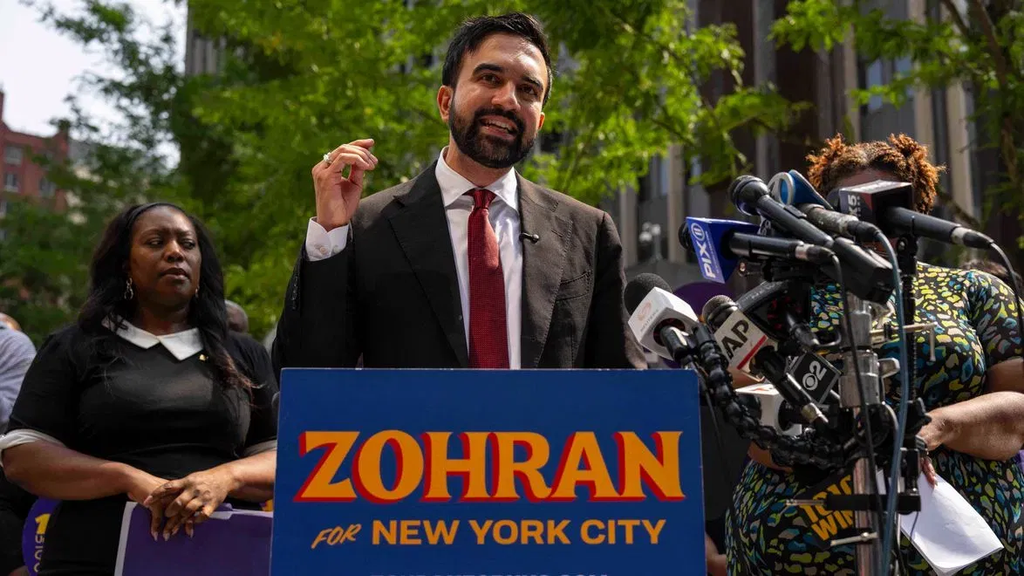
The powerful mixture of Mahmood’s political intellect and Mira’s creative storytelling had a profound effect on their only son, Zohran Kwame Mamdani. Born in Kampala in 1991, Zohran spent his childhood moving between Uganda, South Africa, and New York City.
Send, Spend & Hold Money Worldwide Without Hidden Fees
Transfer money internationally at the real exchange rate and hold 40+ currencies in one account.
Open a Wise AccountMid-market rate • Fast transfers • 40+ currencies
Zohran attended Bowdoin College, worked as a housing counselor helping low-income families avoid eviction in Queens, and even performed as a hip-hop artist under the stage name Young Cardamom. He used rap music to highlight social issues, corruption, and cultural unity in Uganda.
In 2020, Zohran entered official politics and won a seat in the New York State Assembly, representing District 36 in Astoria, Queens. He ran as a democratic socialist focusing on affordable housing, rent freezes, public transport funding, and working-class rights. His campaign videos went viral online because of their humor, warmth, and clear focus on real people.
In 2025, Zohran ran a historic campaign for Mayor of New York City. His campaign connected deeply with diverse working-class communities across the five boroughs. The principles Mahmood Mamdani wrote about in academic textbooks—such as grassroots organizing, standing up against inequality, and treating every resident as an equal citizen—are the exact principles Zohran puts into practice on the streets of New York.
Key Life Lessons From Mahmood Mamdani’s Biography
When you examine Mahmood Mamdani’s life story, several inspiring lessons jump out:
- Hardship can be turned into purpose: Being forced into exile and losing his citizenship could have ended Mahmood’s career. Instead, he used those lived experiences to write books that help millions understand political power.
- Courage matters more than comfort: Mahmood repeatedly spoke truth to powerful leaders, even when it meant getting jailed in Alabama or losing his position in Uganda.
- Education should serve real people: Throughout his time teaching at Makerere University, the University of Cape Town, and Columbia University, Mahmood consistently argued that scholarship should help solve real problems in everyday society.
- Family and community keep you grounded: Through all the global awards and top academic titles, Mahmood remained deeply connected to his roots in Kampala and his family.
Frequently Asked Questions (FAQs)
Who is Mahmood Mamdani?
Mahmood Mamdani is a world-renowned Ugandan academic, author, and political commentator. He serves as the Herbert Lehman Professor of Government at Columbia University and is famous for his research on colonialism, African politics, and postcolonial governance.
Why was Mahmood Mamdani expelled from Uganda in 1972?
In 1972, Ugandan dictator Idi Amin ordered the expulsion of South Asians living in Uganda. Mahmood Mamdani gave a public speech criticizing the regime’s policies, leading the government to revoke his citizenship and force him into exile.
Who is Mahmood Mamdani married to?
Mahmood Mamdani is married to the acclaimed Indian film director Mira Nair, who directed hit movies such as Monsoon Wedding and Mississippi Masala.
What are Mahmood Mamdani’s most famous books?
His most celebrated books include Citizen and Subject, When Victims Become Killers, Good Muslim, Bad Muslim, Saviors and Survivors, and Neither Settler Nor Native.
How is Zohran Mamdani related to Mahmood Mamdani?
Zohran Mamdani is the son of Mahmood Mamdani and filmmaker Mira Nair. Zohran is a New York politician who served in the New York State Assembly and ran for Mayor of New York City.
Where can I learn more about viral culture and news?
You can visit our about page to learn more about our mission, or reach out directly through our contact page if you have stories or questions you want us to cover.
The $0 Secret To Launching Your Entire Online Empire
Why pay hundreds every month for separate software? Build funnels, send emails, and make sales with Systeme.io completely free.
Get Started For $0Free Forever • No Credit Card Needed • Beginner-Friendly
Mahmood Mamdani’s journey proves that ideas can change the world when they are backed by courage and lived experience. From refugee camps to the halls of Harvard and Columbia, his life remains a powerful example of how one person can transform personal adversity into an enduring global legacy.
Stay connected with us for more engaging profiles, breaking updates, and inspiring stories across social media! Join our growing online community on Instagram, follow our updates on Facebook, and share your thoughts with us on X (formerly Twitter).
