
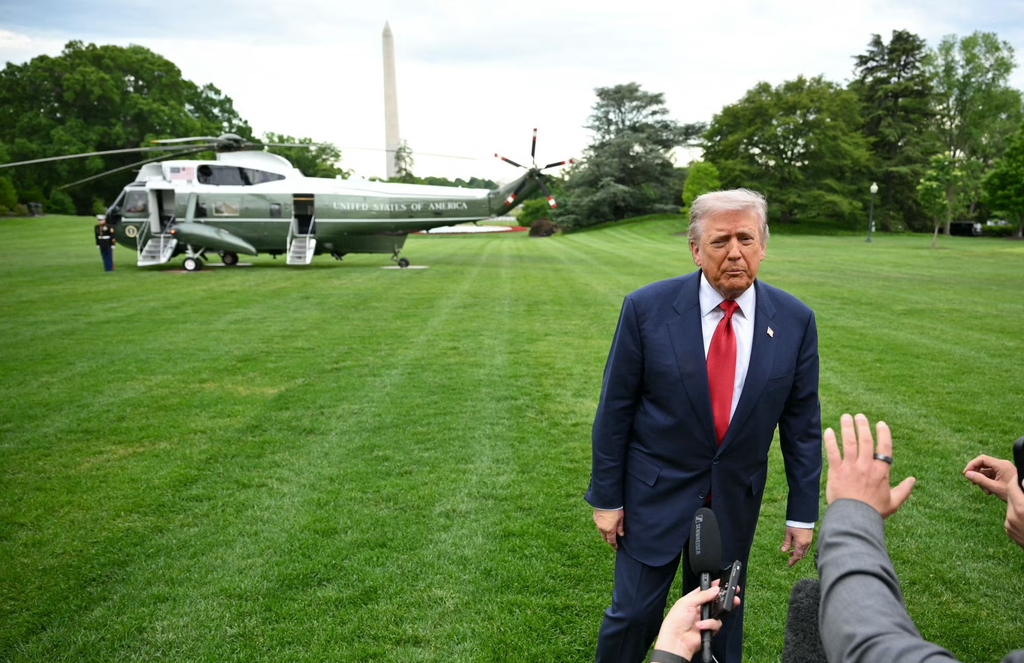
Donald Trump traveled to Port Huron, Michigan, to campaign against Democratic Senate nominee Dr. Abdul El-Sayed, turning an already tense battleground contest into one of the most explosive political face-offs in the country. Speaking before a packed crowd at the McMorran Place hockey arena, Trump rallied for Republican nominee Mike Rogers while launching personal and political attacks against El-Sayed.
The rally took place just days before Michigan voters head to the polls to decide who will fill the open seat left by retiring Democratic Senator Gary Peters. With the control of the United States Senate hanging in the balance, both political parties are pouring major resources into the state.
If you want to share your thoughts on the latest developments or submit a news tip to our team, you can visit our contact page. You can also follow regular election updates and join the community discussion on our social media channels via Facebook, X (formerly Twitter), and Instagram.
What Trump Said About Abdul El-Sayed at the Rally
During his appearance in Port Huron, Trump spent a significant portion of his address targeting El-Sayed. He accused the 41-year-old physician and former Detroit health director of having ties to radical foreign groups, repeatedly claiming without evidence that El-Sayed is associated with the Muslim Brotherhood.
Trump told attendees that electing El-Sayed would lead to open borders and dangerous security risks for the nation. He went so far as to tell the audience that progressive leaders would cancel traditional American holidays like Christmas if they took power. Throughout his speech, Trump also repeatedly mispronounced and altered El-Sayed’s name, referring to him as “Mohammed” and calling him a “jihadist”.
The $0 Secret To Launching Your Entire Online Empire
Why pay hundreds every month for separate software? Build funnels, send emails, and make sales with Systeme.io completely free.
Get Started For $0Free Forever • No Credit Card Needed • Beginner-Friendly
The rhetoric mirrors statements Trump made over recent weeks on the campaign trail and on social media, where he has sought to paint progressive Democratic nominees as extreme cultural threats to the United States. Trump also used the Michigan rally to attack former President Barack Obama, who had visited Detroit just twenty-four hours earlier to headline a large get-out-the-vote rally alongside El-Sayed. Trump referred to Obama as his true opponent and criticized him for supporting El-Sayed’s progressive platform.
For more context on how national reporting covered the rally’s biggest moments, Al Jazeera’s breakdown of the Port Huron rally examines the specific claims made on stage.
How Abdul El-Sayed Responded
Abdul El-Sayed did not wait long to respond to Trump’s accusations. Speaking to supporters at a campaign stop in Grand Rapids, the Democratic candidate pushed back directly against the former president’s words.
El-Sayed called Trump’s attacks a deliberate attempt to distract working-class Michiganders from everyday economic challenges. He argued that political leaders resort to name-calling when they cannot defend their own records on the cost of living, housing, and healthcare.
“They think that by pointing at my name and my faith, you are going to forget that you cannot afford your gas, your groceries, or a visit to the doctor,” El-Sayed told voters. Addressing Trump’s refusal to use his actual name, El-Sayed added that after the election votes are counted, Trump can simply refer to him as “Senator”.
El-Sayed, who was born in Michigan to Egyptian immigrant parents, has firmly denied any association with foreign political movements or extremist organizations, dismissing the allegations as fabricated online rumors. You can read more about his campaign history and background through this AP News profile on the Michigan Senate race debate.
Who Is Mike Rogers, the Republican Candidate?
While Trump commanded the national spotlight during his Michigan visit, the candidate on the Republican ticket is Mike Rogers. Rogers is a former member of the U.S. House of Representatives who previously represented Michigan’s 8th congressional district and served as the chairman of the House Permanent Select Committee on Intelligence.
Rogers has built his campaign around national defense, curbing inflation, boosting domestic manufacturing, and strengthening border security. Throughout the campaign cycle, Rogers has attempted to frame El-Sayed’s policies as too far to the left for a moderate swing state.
During televised debates, Rogers has questioned El-Sayed’s national security views, while El-Sayed has repeatedly criticized Rogers for his past corporate lobbying work and his deep ties to traditional Washington interest groups. Trump’s appearance in Port Huron was intended to energize rural and blue-collar voters to turn out in large numbers for Rogers.
Why the Michigan Senate Race Matters So Much
Michigan is among the most closely contested states in American politics. The current Senate election has drawn hundreds of millions of dollars in spending from outside political action committees, party organizations, and grassroots donors.
The Fight for the Senate Majority
Republicans currently hold a narrow majority in the Senate, making every contested seat critical. Democrats view Michigan as a must-win contest if they hope to maintain enough seats to challenge the legislative agenda in Washington. Republicans haven’t won a U.S. Senate election in Michigan since 1994, which makes the seat a top target for their party strategists.
A Historic Possibility
If Abdul El-Sayed wins the election, he will make history by becoming the first Muslim elected to the United States Senate. El-Sayed initially gained national recognition during his 2018 run for Michigan governor, running on a progressive platform that focused on single-payer healthcare, clean water access, and campaign finance reform.
Michigan’s Unique Voter Demographics
Michigan features an unusually diverse electorate. The state is home to the largest concentration of Arab Americans in the United States, centered primarily in Wayne County and cities like Dearborn. It also includes strong union bases in the automotive corridor around Detroit and Flint, as well as deeply conservative rural counties across the northern and western regions of the state.
Trump’s performance in Michigan has historically relied on driving unprecedented turnout in working-class, rural areas, while Democrats rely on high turnout in Detroit, Grand Rapids, and university towns like Ann Arbor and East Lansing.
The Role of Former President Barack Obama in the Race
The day before Trump spoke in Port Huron, former President Barack Obama headlined an energetic Democratic rally in Detroit. Obama appeared on stage to endorse El-Sayed directly, urging young voters and union households to back the Democratic ticket.
Send, Spend & Hold Money Worldwide Without Hidden Fees
Transfer money internationally at the real exchange rate and hold 40+ currencies in one account.
Open a Wise AccountMid-market rate • Fast transfers • 40+ currencies
Obama emphasized that elections are about tangible improvements to people’s lives rather than personal division. He defended El-Sayed’s public service as a medical professional and former city official who expanded access to eye care and maternal health services in Detroit.
The back-to-back rallies by Obama and Trump underscore how Michigan has become the main battleground of the entire political season, drawing the two biggest figures from both political parties into direct competition.
Key Campaign Issues Dividing the Candidates
Beyond the insults and high-profile campaign appearances, El-Sayed and Rogers offer completely different visions for the state of Michigan:
- Healthcare: El-Sayed supports a universal healthcare model aimed at lowering the cost of prescription drugs and eliminating private insurance overhead. Rogers favors market-driven healthcare policies that reduce federal regulations on private insurance providers.
- The Economy and Jobs: Rogers focuses on lowering corporate tax rates, reducing regulations on energy producers, and incentivizing private capital investment. El-Sayed focuses on raising wages, strengthening labor unions, and supporting federal investments in clean manufacturing.
- Foreign Policy: El-Sayed has taken progressive stances on international affairs, advocating for reduced foreign military aid and calling for stronger accountability regarding overseas conflicts. Rogers presents a traditional hawkish foreign policy, supporting close coordination with international allies and higher defense spending.
To learn more about polling numbers and analytical breakdowns of the candidates’ standing, see the Independent’s analysis of the Michigan campaign attacks.
Frequently Asked Questions
What did Donald Trump say about Abdul El-Sayed in Michigan?
Trump criticized El-Sayed at a rally in Port Huron, claiming without evidence that the Democratic candidate has ties to foreign extremist organizations and the Muslim Brotherhood. Trump also used derogatory terms, repeatedly mispronounced his name, and claimed El-Sayed’s political agenda would harm American values.
Who is Abdul El-Sayed?
Abdul El-Sayed is a physician, public health expert, and progressive political figure in Michigan. He served as the health director for the city of Detroit, ran for governor of Michigan in 2018, and won the Democratic nomination for the U.S. Senate in 2026.
Who is running for the Michigan Senate seat?
The main candidates in the election are Democrat Abdul El-Sayed and Republican Mike Rogers. They are competing to replace retiring Democratic Senator Gary Peters.
Why is the Michigan Senate election so important?
The election will directly affect which political party controls the majority in the U.S. Senate. Because Michigan is a crucial swing state with tight polling margins, both Democrats and Republicans view it as essential to their national political strategies.
Has Donald Trump campaigned for Mike Rogers before?
Trump has formally endorsed Mike Rogers and held campaign rallies across Michigan to boost Republican turnout for Rogers and other conservative candidates on the state ballot.
As election day draws near, Michigan voters find themselves at the center of the political universe. With top party leaders like Donald Trump and Barack Obama making personal visits to rally their bases, the outcome will depend on which side does a better job turning out its voters. Between economic worries, healthcare debates, and deep ideological disagreements, the decision made by Michigan citizens will ripple through national politics for years to come.
The $0 Secret To Launching Your Entire Online Empire
Why pay hundreds every month for separate software? Build funnels, send emails, and make sales with Systeme.io completely free.
Get Started For $0Free Forever • No Credit Card Needed • Beginner-Friendly
