
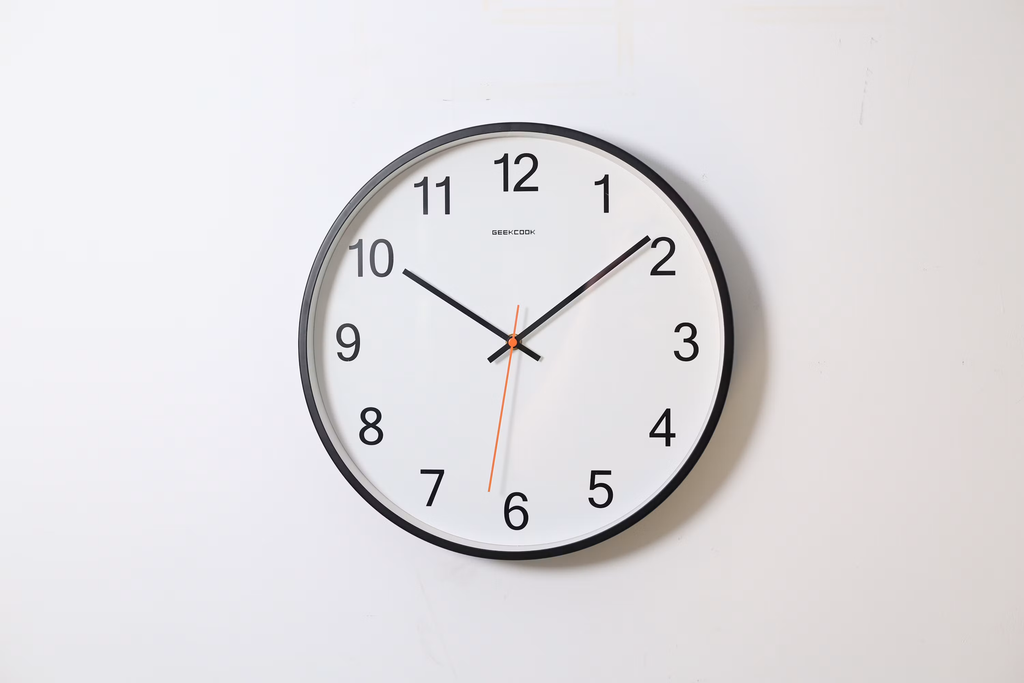
The global countdown has officially changed. International scientists and timekeepers from across the globe have cast a historic vote to scrap the leap second once and for all, bringing an end to a half-century system that has given software engineers, financial systems, and network administrators massive headaches.
Instead of pausing clocks for a single erratic second to let our planet catch its breath, the world will now let atomic time and astronomical time drift apart until they require a brand-new fix: a full “leap hour.”
This is not just an update for laboratory researchers or astronomers watching the stars. It marks one of the biggest structural changes to global civil time since the invention of atomic clocks in the 20th century. Every modern device in your pocket, every transaction processed by your bank, and every airplane in global airspace depends on razor-sharp digital synchronization. By ditching the leap second, the international community is taking a big gamble on digital stability.
Here is what really happened behind closed doors, why the tech world pushed relentlessly for this outcome, and what a future leap hour actually means for life on Earth.
What Actually Happened at the Global Timekeeping Summit?
Representatives and metrology experts from dozens of member nations gathered under the authority of the International Bureau of Weights and Measures (BIPM) and the General Conference on Weights and Measures (CGPM) to resolve a debate that has dragged on for decades.
The $0 Secret To Launching Your Entire Online Empire
Why pay hundreds every month for separate software? Build funnels, send emails, and make sales with Systeme.io completely free.
Get Started For $0Free Forever • No Credit Card Needed • Beginner-Friendly
The vote concluded that the practice of inserting an irregular “leap second” into Coordinated Universal Time (UTC) will officially end. Under the approved framework, UTC will transition toward an uninterrupted, continuous time scale by May 20, 2027—coinciding with World Metrology Day.
For the first time since 1972, global timekeepers agreed to allow the small discrepancy between atomic time (kept by hyper-accurate atomic clocks) and solar time (the natural day-night rotation of the Earth) to widen. The agreement raises the permissible gap between the two from the long-standing limit of 0.9 seconds all the way up to a full hour.
Only when the difference between the Earth’s natural spin and our atomic clocks hits an entire 60 minutes will the international community consider stepping in with a synchronized “leap hour.” Because the daily shift in Earth’s rotation amounts to tiny fractions of a second each year, experts estimate that humanity will not need to add or subtract a leap hour for roughly a thousand to three thousand years.
Why Did We Have Leap Seconds in the First Place?
To understand why this decision is making waves, you have to look at how humans define a single day.
For centuries, time was measured strictly by the position of the Sun. One full turn of our planet equaled 24 hours, or 86,400 seconds. This is known as solar time, or UT1.
In the middle of the 20th century, scientists invented atomic clocks. These ultra-precise machines calculate time by measuring the steady microwave oscillations of cesium atoms. They are so remarkably reliable that they do not gain or lose a second over millions of years.
There was only one problem: planet Earth is not a perfect machine.
Our planet slows down and speeds up due to a host of natural forces. Ocean tides rubbing against continental shelves act like giant brakes. Molten rock churning deep in Earth’s outer core alters angular momentum. Melting polar ice caps and glacial shifts redistribute water across the globe, slightly changing how fast Earth spins on its axis—much like a figure skater pulling in or opening up their arms.
By 1972, atomic time was running slightly faster than the rotating Earth. To keep atomic clocks aligned with solar noon, officials introduced the leap second. Whenever the gap approached one second, the International Earth Rotation and Reference Systems Service (IERS) would decree that a 61st second be inserted at 23:59:59 on June 30 or December 31. Clocks would read:
23:59:59
23:59:60
00:00:00
Since 1972, exactly 27 leap seconds have been added to global time. To human senses, a single second is practically invisible. To computers, however, that extra beat became an absolute nightmare.
The Tech Chaos: Why Big Tech Wanted the Leap Second Dead
Modern computers were never designed to handle an abnormal minute with 61 seconds. Most operating systems, operating kernels, and networking protocols rely on Network Time Protocol (NTP) to coordinate actions across thousands of synchronized machines.
When a leap second occurs, systems that encounter 23:59:60 often do not know how to interpret it. Some systems repeat 23:59:59, while others jump backward to 00:00:00 twice. This tiny confusion triggers what engineers call race conditions, sending database transactions out of chronological order and crashing entire server fleets.
Send, Spend & Hold Money Worldwide Without Hidden Fees
Transfer money internationally at the real exchange rate and hold 40+ currencies in one account.
Open a Wise AccountMid-market rate • Fast transfers • 40+ currencies
Major tech companies experienced brutal outages firsthand during past leap second additions:
- In 2012, a leap second knocked out major platforms, including Reddit, LinkedIn, Yelp, and Qantas Airlines’ computer reservation system, leaving passengers stranded at airports worldwide.
- In 2015, another leap second caused outages across multiple tech providers, prompting high-frequency trading platforms to temporarily halt transactions around the world to prevent corrupted financial books.
- When massive cloud platforms encounter synchronization errors, the fallout can mirror a major UK air traffic control system failure, grounding flights and interrupting global supply chains.
Tech giants like Google, Meta, Microsoft, and Amazon spent years pushing timekeeping regulators to kill the leap second. While companies created clever workarounds—like Google’s “leap smear,” which slightly stretches out milliseconds across a 24-hour window to absorb the extra second—these patches were never universally adopted. Different platforms smeared time differently, meaning two high-end data centers in different countries could still be out of sync.
As global economies rely heavier on massive AI data centers and ultra-low-latency financial trades, the risk of a catastrophic crash from an irregular second became unacceptable.
The Scary New Threat: The Negative Leap Second
While adding a second was already messy for IT teams, a new phenomenon made the situation urgent: the planet began speeding up.
Over the past decade, Earth started rotating at a faster rate than expected. Days began registering slightly shorter than the standard 86,400 seconds. That sudden acceleration raised a panic among computer scientists. If the planet kept spinning ahead of schedule, timekeepers would have to deploy the first-ever “negative leap second.”
Instead of adding a 61st second, clocks would have to jump directly from 23:59:58 straight to 00:00:00, deleting 23:59:59 entirely.
Software code across the world has been written, tested, and stressed on the assumption that time moves continuously forward. Deleting a second from existence had never been tested at a global scale. Engineers warned that wiping a second from live databases could break banking security tokens, disrupt satellite communication arrays, corrupt military tracking coordinates, and bring down automated power grids.
Rather than gamble with a negative leap second, international delegates decided that cutting the system loose was the safest choice for human infrastructure.
How the Leap Hour Fixes the Crisis
Instead of constantly tapping the brakes or hitting the gas every couple of years, the new system chooses continuity.
By locking UTC into a continuous, unbroken timeline, the world guarantees that every single minute will have exactly 60 seconds, and every day will have 86,400 seconds. No unexpected 61-second minutes. No deleted seconds. Just steady, uninterrupted atomic time.
The $0 Secret To Launching Your Entire Online Empire
Why pay hundreds every month for separate software? Build funnels, send emails, and make sales with Systeme.io completely free.
Get Started For $0Free Forever • No Credit Card Needed • Beginner-Friendly
Here is how the shift works in practice:
1. Clocks and the Sun Will Slowly Part Ways
Because atomic clocks will no longer pause for the Earth’s rotation, solar time and atomic time will drift apart. That sounds dramatic, but the rate of drift is minuscule—often less than a second every year or two.
Over a human lifetime, the difference will barely amount to a minute or two. The average person drinking coffee on their morning commute will never notice that high noon is off by a few seconds compared to the exact zenith of the sun.
2. A Massive Runway Before Any Adjustment
Under the newly expanded tolerance, the world will allow that discrepancy to accumulate until it reaches a full hour. When the gap eventually reaches 3,600 seconds, international authorities will coordinate a global “leap hour” adjustment.
Because of the slow pace of Earth’s rotational changes, scientists project that the first leap hour will not be needed for anywhere from 1,000 to 3,000 years. By the time Earth’s rotation drifts an entire hour away from atomic clocks, our distant descendants will have centuries of advanced computing experience to handle a coordinated schedule change—similar to how countries already adjust their clocks for Daylight Saving Time.
What Does This Mean for Your Everyday Life and Tech?
If you are wondering whether you need to adjust your smartwatch or reset your wall clock, the short answer is no. For everyday citizens, the death of the leap second will be almost completely invisible.
Your smartphone, your laptop, and your home gadgets will simply keep humming along without risking sudden crashes caused by irregular time adjustments. Here is how different sectors are affected:
Consumer Electronics
Whether you use Android, Windows, or iOS, operating system developers will no longer have to push delicate timing patches to prevent system lockups. Gadgets from flagship smartphones down to the latest Apple Watch update will receive continuous time signals without irregular pauses.
Banking and Global Commerce
Modern banking runs on automated timestamps. When you swipe a debit card or execute a wire transfer, computer servers record the exact millisecond to prove the order of payments and prevent double-spending. The leap second created endless compliance risks for international banking protocols. With continuous time, digital ledgers remain mathematically consistent across all time zones.
Aviation and Space Exploration
Commercial aviation navigation depends heavily on Global Navigation Satellite Systems (GNSS), such as GPS, Galileo, and GLONASS. Interestingly, GPS has never used leap seconds; it runs on its own continuous atomic scale established in 1980, requiring GPS receivers to calculate an offset to display standard UTC. Ending leap seconds simplifies communication across satellite networks and eliminates errors between orbital tracking systems and air traffic control centers.
Astronomy and Solar Observatories
If there is one group that fought to keep the leap second, it was traditional astronomers. Ground-based optical telescopes are pointed at distant stars based on the physical angle of Earth relative to the heavens. If civil time drifts from the planet’s actual physical position, optical telescope targeting software must rely on dedicated astronomical time conversions (like UT1) rather than everyday UTC. However, modern automated observatories already run complex algorithmic calculations, making the transition manageable for astronomical teams.
Frequently Asked Questions (FAQs)
When will the leap second officially disappear?
The resolution sets the formal transition to continuous Coordinated Universal Time (UTC) for May 20, 2027, which marks World Metrology Day. After this date, no new leap seconds will be added.
Will noon eventually turn into midnight?
In theory, if atomic time were left to run forever without any adjustments, civil noon would eventually drift into night. In practice, however, that would take tens of thousands of years. The new international policy caps that drift at one hour. Once the gap approaches 60 minutes, a leap hour will be scheduled to bring civil clocks back in line with the sun.
How does this affect leap years?
Leap years are completely unaffected by this vote. A leap year adds February 29 every four years because Earth takes roughly 365.24 days to complete a full orbit around the Sun. Leap seconds and leap hours, by contrast, deal only with the 24-hour daily spin of Earth on its own axis. Your calendar will continue to have leap years just as it always has.
Has a negative leap second ever happened?
No. Every leap second added between 1972 and today has been positive, adding an extra second to the day. A negative leap second has never been executed on a global scale, which is why scientists were so anxious to end the system before Earth’s recent acceleration forced them to try one.
How will a leap hour actually be implemented when the time comes?
Because the first leap hour is not expected for at least a thousand years, the exact procedures will be finalized by future generations. It will likely operate similarly to seasonal daylight saving changes, where an hour is cleanly added or subtracted globally across standard international zones.
A New Era for the Clock
The decision to eliminate leap seconds in favor of a distant leap hour proves that when nature and technology clash, practical engineering often wins.
For fifty years, timekeeping was caught in an awkward compromise between the messy rotation of a living planet and the unbending perfection of quantum physics. By choosing continuous atomic time, the global community has chosen stability, security, and peace of mind for the worldwide digital networks that keep our civilization running.
Earth will keep wobbling, spinning, and drifting at its own pace. Clocks will keep ticking without interruption. And humanity can finally cross one of computing’s strangest bugs off its list of global worries.
