
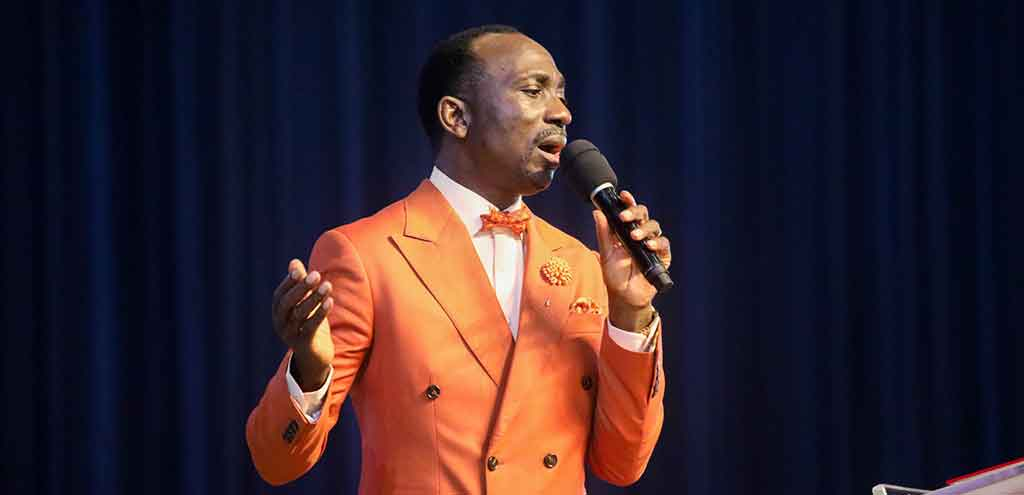
Dr. Paul Enenche, the Senior Pastor of Dunamis International Gospel Centre, has officially called on the Nigerian government to conduct a comprehensive national population census that specifically counts the number of Christians and Muslims across the country.
Speaking during a public address at the Glory Dome in Abuja, the prominent cleric emphasized that the lack of clear, verifiable statistical data regarding religious demographics in Nigeria has created room for endless speculation, political manipulation, and unverified assumptions.
For many decades, Nigeria has struggled with conflicting estimates regarding the actual population size of its two major religious groups. While international bodies like the Pew Research Center frequently release projections estimating that Nigeria’s population is roughly split down the middle—with Muslims making up around 50% and Christians accounting for nearly 48%—local leaders and religious institutions have consistently questioned these numbers.
According to Dr. Enenche, the only way to settle these long-standing debates once and for all is to conduct an open, accurate, and technology-driven headcount that records religious affiliations alongside standard demographic information.
This recent call has reopened a intense national conversation about identity, government transparency, and resource allocation in Africa’s most populous nation. As Nigeria prepares for its next national headcount, the question of whether to include religion on census forms remains one of the most widely debated topics among policymakers, community leaders, and ordinary citizens alike.
The $0 Secret To Launching Your Entire Online Empire
Why pay hundreds every month for separate software? Build funnels, send emails, and make sales with Systeme.io completely free.
Get Started For $0Free Forever • No Credit Card Needed • Beginner-Friendly
Understanding Dr. Paul Enenche’s Stance on Nigeria’s Religious Census
Dr. Paul Enenche’s demand stems from what he describes as a persistent misuse of unverified population figures to influence national policy, public appointments, and political representation. In his message, he noted that without official statistics collected directly from citizens during a census, narrative spin takes over reality. Groups often claim majorities without providing any verifiable data to back up their statements.
The clergyman pointed out that counting citizens by their faith during a national exercise is not about creating division, but about establishing the truth. When a government knows the exact demographics of its nation, it can plan better for infrastructure, education, security, and social services without relying on guesswork.
He urged the National Population Commission (NPC) and federal authorities to be bold enough to capture religious metrics in the upcoming census exercise. In his view, avoiding the topic only prolonged distrust between faith communities, whereas clear statistical facts would eliminate doubt and encourage honest interfaith cooperation.
A Brief History of Religious Data in Nigerian Headcounts
To understand why Dr. Enenche’s proposal generates so much attention, it helps to look back at how Nigeria has handled census exercises over the past several decades. Population headcounts in Nigeria have historically been tied to political power, federal funding allocation, and legislative seat distribution, making every single census exercise highly sensitive.
During the colonial era and early post-independence censuses—such as those conducted in 1963 and 1973—population counts were heavily contested by regional leaders. Disagreements over state population totals led to allegations of deliberate inflation, making census figures a frequent source of national tension.
Why Religion Was Omitted in the 2006 Census
When Nigeria conducted its last major national headcount in 2006, the federal government made a deliberate policy decision to omit questions about religion and ethnicity. The main goal of this exclusion was to keep the census strictly focused on basic socio-economic data and prevent the exercise from degenerating into a political or religious battleground.
While this decision helped reduce immediate friction during the 2006 exercise, it left a massive void in official government statistics. Decades later, researchers, international organizations, and government agencies still rely on outdated estimates or external projections to discuss Nigeria’s religious landscape.
The Consequences of Relying on Unofficial Figures
Because official government figures do not exist for religious breakdown, various interest groups use estimated figures to argue for political advantages. During national elections, political parties often balance their tickets based on regional and religious assumptions rather than solid demographic facts.
This reliance on unconfirmed numbers creates widespread skepticism. When citizens feel that statistical reports are altered or incomplete, public trust in government agencies weakens, making calls like Dr. Enenche’s increasingly popular among people looking for absolute transparency.
Why Advocates Want Religion Included in the Next Headcount
Supporters of Dr. Paul Enenche’s stance believe that including religious options on future census forms will yield several major advantages for the country. Rather than viewing demographic data as a threat, advocates see it as an essential tool for good governance and social fairness.
1. Stopping False Demographics and Propaganda
Unverified figures allow bad actors to spread false narratives about population growth and religious dominance. An accurate census provides clear facts certified by international standards, rendering false claims ineffective.
2. Fair Federal Allocations and Community Support
Governments at all levels need accurate population metrics to build public facilities, deploy security personnel, and distribute economic aid. Knowing where specific population centers exist helps urban planners design tailored social programs for local communities.
3. Strengthening Democratic Representation
In a democratic society, accurate numbers ensure that every citizen is fairly represented in governance. When public officials have access to genuine demographic data, policies can be formulated to protect fundamental rights and maintain peaceful coexistence across all regions.
Concerns and Challenges Surrounding a Religious Headcount
While the arguments for inclusion are strong, opponents and neutral analysts point out several practical challenges that could make counting religion difficult in practice.
The Risk of Politicization
Critics warn that adding religious metrics could turn the census into an emotional contest between communities. If local political leaders believe that higher counts for a specific faith will yield more political influence or bigger budgetary allocations, there is a risk that some individuals might attempt to manipulate counts in their districts.
Send, Spend & Hold Money Worldwide Without Hidden Fees
Transfer money internationally at the real exchange rate and hold 40+ currencies in one account.
Open a Wise AccountMid-market rate • Fast transfers • 40+ currencies
Logistical and Security Constraints
Conducting a reliable nationwide census in remote or security-challenged regions requires massive logistical planning. Enumerators need safe access to every town, village, and settlement across all 774 local government areas to ensure that every citizen is counted properly.
Financial Cost
A modern, trustworthy census requires substantial financial investment. Procuring digital tablets, deploying satellite mapping software, training hundreds of thousands of ad-hoc staff, and setting up verification servers involve significant public spending.
How Modern Technology Can Solve Census Challenges
In past decades, manual paper counting made census exercises vulnerable to errors, missing records, and duplicate submissions. However, modern advancements in digital infrastructure provide effective solutions to these historic problems.
The National Population Commission has already begun integrating digital tools into its planning framework. By using biometric verification devices, real-time GPS tracking, and advanced data analytics, modern enumerators can record data instantly while verifying that each citizen is counted only once.
These technical innovations reflect broader global shifts seen across modern industries, much like the solutions highlighted in recent Technology and AI developments. Automated verification pipelines ensure that data collected on the ground cannot be easily tampered with or altered after submission.
Furthermore, digital communication platforms and modern media systems—including content workflows like those explored in YouTube Automation strategies—help spread public education campaigns rapidly, ensuring citizens understand how census technology works long before enumerators arrive at their doorsteps.
The Role of Media and Public Engagement in National Debates
Public calls by religious and community leaders quickly spread across digital networks, shaping conversations nationwide. Social media has given everyday Nigerians a platform to voice their thoughts on national policy, share news updates, and debate important issues in real time.
To stay updated on breaking political stories, church declarations, and civic developments across Nigeria, citizens can join ongoing discussions on major social channels:
- Connect with live community conversations on WhatsBuzzn Facebook Page.
- Follow quick updates and trending headlines on WhatsBuzzn X (Twitter) Account.
- Watch visual stories and viral highlights on WhatsBuzzn Instagram Profile.
Active public participation ensures that citizens remain informed while holding leadership accountable for clear, transparent governance.
What Needs to Happen Before Nigeria’s Next Headcount
For any future census to be considered successful and trustworthy by all parties, key preparations must be put in place by the government and civic organizations:
The $0 Secret To Launching Your Entire Online Empire
Why pay hundreds every month for separate software? Build funnels, send emails, and make sales with Systeme.io completely free.
Get Started For $0Free Forever • No Credit Card Needed • Beginner-Friendly
- Biometric Integrity: Every entry should be verified using biometric features such as fingerprints and facial recognition to eliminate duplicate entries entirely.
- Independent Auditing: External statistics experts and non-governmental observers should monitor the counting process from start to finish to guarantee transparency.
- Nationwide Public Awareness: Clear public information campaigns must be conducted in multiple local languages so that people understand why demographic questions are being asked.
- Robust Security Guarantees: Security forces must safeguard enumerators and citizens so that counting can proceed smoothly in every corner of the nation.
- Transparent Data Publishing: Raw, anonymized census data should be made available online so that independent researchers can examine and verify the findings.
Frequently Asked Questions (FAQs)
Why did Nigeria exclude religion from the 2006 census?
The government omitted religious and ethnic questions during the 2006 census to prevent political tension and keep public attention focused purely on basic socio-economic development metrics.
Who is Dr. Paul Enenche?
Dr. Paul Enenche is a trained medical doctor turned Christian minister who serves as the Senior Pastor of Dunamis International Gospel Centre, headquartered at the Glory Dome in Abuja, Nigeria.
How often is a country supposed to hold a national census?
According to United Nations standards, countries are encouraged to conduct a full population and housing census once every ten years to maintain accurate demographic records.
Can digital technology stop census fraud?
Yes, modern census devices use satellite GPS tracking, real-time data uploading, and biometric registration to ensure that enumerators visit actual physical locations and that individuals are only counted once.
What are the main benefits of knowing exact religious numbers in a country?
Having precise statistical figures helps eliminate false claims, supports fair resource allocation, improves security planning, and gives government agencies solid facts for long-term policy development.
National headcounts serve as the fundamental foundation for every major decision a government makes. Whether Nigeria chooses to include religious metrics in its next headcount or decides to maintain its current data policy, the primary goal must remain simple: delivering accurate, verifiable, and transparent facts that serve all citizens equally.
To discover more about our editorial vision and explore our full range of stories covering news, lifestyle, and culture, feel free to visit About WhatsBuzzn. If you have feedback, questions, or news tips you would like to share with our editorial team, you can get in touch directly through WhatsBuzzn Contact Page. Truthful data builds strong nations, and staying informed is the first step toward building a brighter future together.
Dr. Paul Enenche’s message on religious agenda and national issues in Nigeria
