
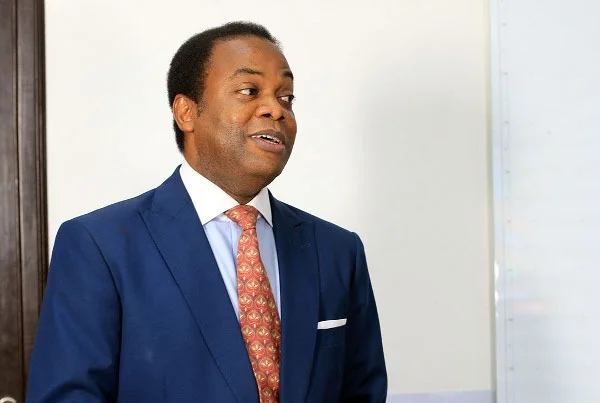
Former Governor of Cross River State, Donald Duke, has raised a major national alarm regarding the current political and economic direction of Nigeria. Speaking during an exclusive interview on ARISE NEWS, the elder statesman stated that the country faces a deep disaster within the next four years if its current course is not urgently reversed. He emphasized that sitting on the sidelines as a passive observer is no longer an option when the nation’s future hangs in the balance.
Duke’s warning comes at a challenging period for millions of Nigerians. Households across the country are dealing with steep living costs, currency pressures, business shutdowns, and widespread security worries.
As a respected leader who served two terms as governor and led major infrastructure and economic projects in Cross River State, his perspective carries significant weight. Understanding his message requires looking closely at what he said, why he spoke out now, and what steps Nigeria needs to take to avoid a deeper crisis.
At WhatsBuzzn, we unpack big national news stories so everyone can understand what is happening behind the headlines. You can learn more about our team and mission on our about page as we continue tracking political and economic trends shaping our world.
What Did Donald Duke Say About Nigeria’s Current Path?
During his live broadcast on ARISE NEWS, Donald Duke made it clear that his return to active frontline politics was driven by the clear urgency of Nigeria’s present condition. He pointed out that remaining a spectator while analyzing problems from afar is no longer enough. In his view, experienced leaders must step forward and contribute directly to solving the country’s core issues.
The $0 Secret To Launching Your Entire Online Empire
Why pay hundreds every month for separate software? Build funnels, send emails, and make sales with Systeme.io completely free.
Get Started For $0Free Forever • No Credit Card Needed • Beginner-Friendly
His most urgent statement during the broadcast focused on a strict four-year timeline. He warned that if Nigeria does not alter its trajectory within another four years, the disaster that is already looming will deepen significantly. This warning highlights a growing concern among political analysts and citizens alike that the window of opportunity to fix structural economic and governance problems is closing rapidly.
To offer a new approach, Duke announced his political alignment with the Peoples Redemption Party (PRP). Rather than sticking to comfortable political alliances, he explained that seeking leadership under the PRP allows him to advocate for genuine reforms, strong economic planning, and accountable governance.
The Broken Economy: High Interest Rates and Stagnant Growth
A central part of Donald Duke’s critique is the current state of the Nigerian economy. He stated plainly that the nation’s economic engine is broken and failing to deliver meaningful growth. Without constant economic expansion, a country cannot create enough jobs, support local industries, or generate the revenue needed to maintain public infrastructure.
Duke specifically raised concerns about national monetary policies, including high interest rates. When interest rates remain extremely high, small and medium enterprises struggle to borrow money from banks. Without affordable credit, local factory owners, farmers, and tech entrepreneurs cannot scale up their operations. This lack of credit stalls business growth, reduces local productivity, and leads to job losses across key sectors.
Major news outlets, including reports carried by Vanguard News, noted Duke’s observation that an economy built on high borrowing costs and low productivity cannot sustain a growing population. When young graduates leave school every year with very few job prospects, economic frustration grows, pushing many into informal survival tactics or despair.
Insecurity as a Symptom of Economic Failure
One of the most insightful arguments Donald Duke presented during his interview is the connection between widespread insecurity and economic decay. In Nigeria, public discussions often treat insecurity as a standalone military problem. However, Duke argued that issues like banditry, kidnapping, Boko Haram, and ISWAP are actually the physical symptoms of a broken economy.
When rural communities suffer from severe poverty, lack of basic amenities, and zero employment opportunities, criminal networks find it easier to recruit vulnerable individuals. While military operations are necessary to maintain order, Duke pointed out that guns and soldiers alone cannot solve security problems if the root cause—poverty and lack of economic opportunity—remains untouched.
Fixing security requires creating real economic pathways for people. When individuals have steady jobs, fair wages, access to farmland, and business opportunities, the appeal of joining violent groups or participating in crime drops dramatically. Restoring security across the geopolitical zones of Nigeria must therefore start with fixing the economy.
More Politics Than Governance: The Problem of Weak Institutions
Donald Duke also directed strong words at how the nation has been governed over the past two decades. He observed that for more than twenty years, government officials have focused overwhelmingly on politics while neglecting actual governance.
There is a big difference between politics and governance:
- Politics focuses on political campaigns, winning elections, controlling party structures, and sharing administrative appointments.
- Governance focuses on delivering public services, building durable roads and power grids, improving schools and hospitals, enforcing law, and protecting public funds.
Duke stressed that when politicians spend four years constantly planning for the next election instead of building lasting institutions, governance suffers. To highlight this point, he referenced recent public scandals where unauthorized offices were established within government buildings like the Federal Secretariat without official institutional approval. He explained that when non-state actors can easily operate unauthorized offices within major government complexes, it demonstrates a complete failure of basic administrative oversight.
Strengthening institutions requires leaders who prioritize administrative discipline, transparency, and civil service performance over political expediency.
A Splintered Opposition: Why Unity Matters
Addressing the upcoming political cycles, Donald Duke shared critical thoughts on Nigeria’s opposition parties. He observed that while various opposition factions share the goal of changing the current government, they remain deeply divided.
Duke explained that a fragmented opposition cannot offer voters a realistic or stable alternative. When opposition leaders allow personal ambitions, ego, and party rivalries to prevent them from building a single coalition, they end up dividing the opposition vote during elections. This division makes it easier for the ruling party to remain in power, even when public dissatisfaction is high.
He expressed his commitment to serving as a voice of reason within political circles. His goal is to encourage different political groups and opposition leaders to step back, put personal ambitions aside, and build a unified national platform focused on saving the country’s economy and democratic institutions.
Send, Spend & Hold Money Worldwide Without Hidden Fees
Transfer money internationally at the real exchange rate and hold 40+ currencies in one account.
Open a Wise AccountMid-market rate • Fast transfers • 40+ currencies
Lessons from Donald Duke’s Past Leadership Record
To understand why Donald Duke’s commentary resonates with many, it helps to examine his track record as Governor of Cross River State from 1999 to 2007. During his two terms in office, he transformed the state’s image and economy through clear planning, urban renewal, and long-term investments.
Key highlights of his governance record include:
- Tourism and Infrastructure: He spearheaded the creation of the Obudu Cattle Ranch development and the Tinapa Business Resort, turning Cross River State into a global destination for business and leisure.
- Urban Development and Cleanliness: Under his administration, Calabar earned the reputation of being the cleanest and safest state capital in Nigeria.
- Fiscal Reserves: In 2005, he set up a state reserve fund to hedge against future economic shocks and drops in central government allocations.
- Data-Driven Administration: He utilized digital mapping and data collection to plan road networks, agricultural programs, and public health delivery across Cross River State.
These past achievements show that when leaders focus on detailed planning and execution, public governance produces visible results. Donald Duke argues that applying this same level of data-driven, practical executive management at the national level is what Nigeria desperately needs today.
In our modern world, adopting modern tools and technology is essential for efficient governance and economic growth. Citizens interested in seeing how technology shapes modern enterprise can read our guides on technology and AI insights.
Practical Action Steps for Everyday Citizens
While national leaders work on policy shifts and political coalitions, everyday citizens must also take practical steps to navigate current economic conditions. Waiting for government changes alone is not enough. Building personal financial resilience helps individuals weather economic uncertainty.
Here are practical actions individuals can take:
- Build Digital and Remote Skills: The global market rewards high-demand digital skills like software development, graphic design, data analysis, and digital marketing. Acquiring these skills allows individuals to earn income beyond local market constraints.
- Explore Alternative Income Streams: Relying on a single salary in an environment with high inflation can be difficult. Many young adults are finding success by creating online brands, engaging in freelance work, or learning new online business models like YouTube automation to build additional income.
- Practice Strict Budgeting: During periods of economic uncertainty, tracking monthly expenses, avoiding unnecessary debt, and prioritizing basic household needs is essential.
- Stay Civically Engaged: Registering to vote, participating in local town hall meetings, and holding local council leaders accountable ensures that governance improves from the grassroots level up.
Stay Connected with WhatsBuzzn
At WhatsBuzzn, we are committed to bringing you clear, accurate, and engaging coverage of political events, economic developments, tech innovations, and pop culture. We break down complex news so you can stay informed without dealing with confusing jargon.
Stay in the loop by connecting with us across our social media platforms:
- Follow us on Instagram for daily news updates and viral stories.
- Like our page on Facebook to join public discussions and community debates.
- Follow our updates on X (formerly Twitter) for real-time coverage of breaking news.
Have questions, suggestions, or news tips? We would love to hear from you! Reach out directly through our contact page.
Frequently Asked Questions (FAQs)
Who is Donald Duke?
Donald Duke is a Nigerian attorney, politician, and executive who served as the Governor of Cross River State from 1999 to 2007. He is widely recognized for his work in transforming Cross River State into a major hub for tourism and commerce through projects like Tinapa and the Obudu Ranch.
The $0 Secret To Launching Your Entire Online Empire
Why pay hundreds every month for separate software? Build funnels, send emails, and make sales with Systeme.io completely free.
Get Started For $0Free Forever • No Credit Card Needed • Beginner-Friendly
What was the main warning Donald Duke gave during his Arise News interview?
Donald Duke warned that Nigeria faces an unmanageable crisis within four years if the government does not urgently address economic stagnation, weak governance, high interest rates, and widespread insecurity.
Which political party is Donald Duke currently affiliated with?
Donald Duke is currently associated with the Peoples Redemption Party (PRP), which he joined to advocate for structural political reform, economic renewal, and sound governance.
Why does Donald Duke describe insecurity as a symptom rather than the primary cause?
Duke argues that insecurity—including banditry, kidnapping, and violent extremism—is largely driven by severe economic hardship, high unemployment, and lack of opportunity. Solving insecurity requires fixing the underlying economy alongside law enforcement efforts.
What did Donald Duke mean by “more politics than governance”?
He meant that elected leaders have spent too much time over the last twenty years focusing on election campaigns, political maneuvering, and party dynamics, while neglecting their duty to build strong public institutions, deliver services, and improve citizens’ lives.
How can Nigeria avoid the disaster Donald Duke warned about?
According to Duke, avoiding disaster requires urgent intervention to rebuild the economy, lower interest rates to encourage business growth, unite opposition parties into a credible platform, strengthen public institutions, and shift focus from pure politics back to genuine governance.
Donald Duke’s four-year warning serves as a clear wake-up call for leaders, political parties, and everyday citizens. Shifting Nigeria’s trajectory will require disciplined economic management, strong public institutions, unified political leadership, and an active citizenry committed to holding leaders accountable at every level of government.
