
For 33 years, almost every big moment at Nvidia revolved around one man in a black leather jacket. On Wednesday, November 18, 2026, that era officially gave way to a very different reality inside the chipmaker’s headquarters in Santa Clara, California.
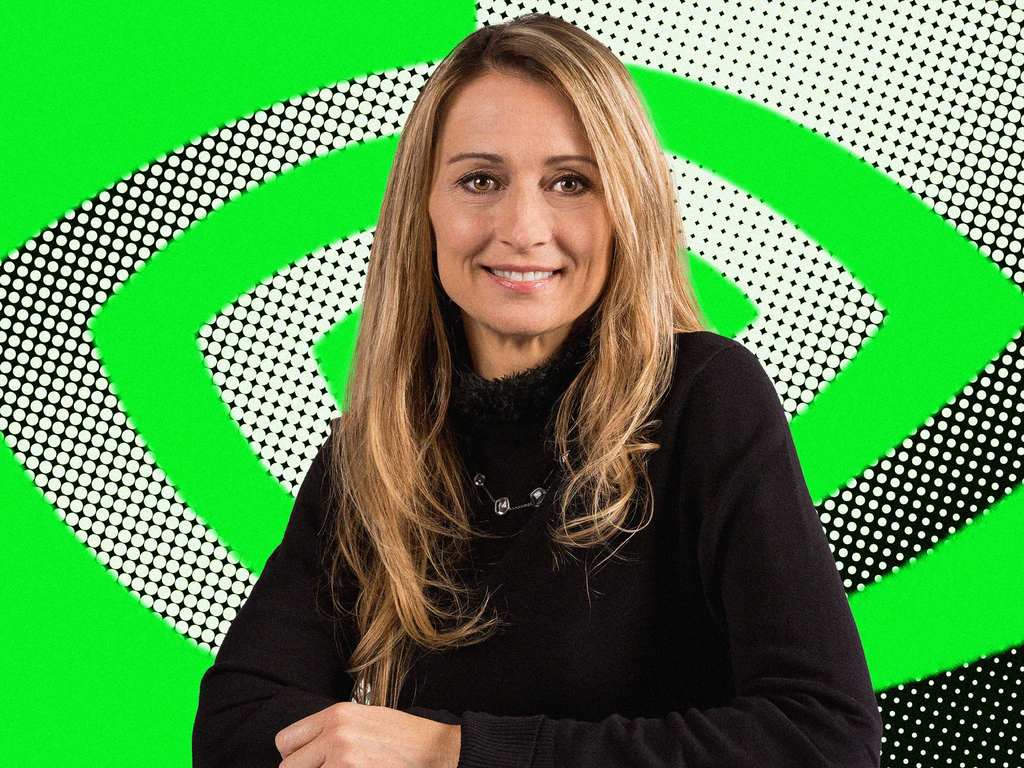
Interim CEO Colette Kress stepped in front of hundreds of anxious employees in person and tens of thousands more watching live on Microsoft Teams. It was Nvidia’s first company-wide all-hands meeting since founder Jensen Huang abruptly resigned following a major personal scandal.
Kress did not waste a single second tiptoeing around the elephant in the room. She opened the hour-long session with a clear three-word message for the entire workforce: “Let’s move forward”.
To back up those words, Kress immediately talked about money, announcing that Nvidia is moving up annual performance reviews from March to December so workers can get pay raises and stock grants months ahead of schedule.
What Happened at Nvidia’s First Post-Jensen Huang All-Hands Meeting?
Nvidia’s November 18 all-hands meeting was a high-stakes effort by interim CEO Colette Kress and newly appointed board chair Harvey Jones to calm employee fears, address compensation concerns, and signal that the company will not bring back former CEO Jensen Huang.
The $0 Secret To Launching Your Entire Online Empire
Why pay hundreds every month for separate software? Build funnels, send emails, and make sales with Systeme.io completely free.
Get Started For $0Free Forever • No Credit Card Needed • Beginner-Friendly
Normally, an all-hands meeting the morning after quarterly earnings is a routine celebration at Nvidia. Under Huang, these town halls were famous for energetic speeches and tight secrecy where details almost never leaked to the press.
This time, the mood was tense, and details quickly spilled out to news outlets like CNBC and Business Standard. Employees were still processing the shock of losing the only chief executive the company had ever known.
Moving Annual Reviews and Pay Raises Up to December
Before the meeting even started, Nvidia staff submitted roughly 700 questions for leadership to answer. According to reports from The Times of India, pay and compensation came up more than any other topic.
That concern makes complete sense when you look at how Nvidia pays its people. Like many Silicon Valley giants, a huge chunk of an Nvidia worker’s total pay comes from company stock grants rather than just base salary.
When Nvidia’s share price dropped sharply after Huang’s departure, many employees watched the value of their pay packages shrink overnight. Rival artificial intelligence labs and chip companies were also circling, hoping to poach frustrated engineers during the chaos.
Kress addressed that worry right in the opening minutes of the call. She told the nearly 49,000 employees that Nvidia is shifting its annual review cycle from March to December.
By pulling the review schedule forward by three months, workers will receive salary hikes and fresh equity awards before the end of the year. Kress urged staff to feel good about the company’s future and stop worrying about their financial stability while leadership handles the transition.
Which Top Executives Joined Colette Kress on Stage?
Kress made sure she did not stand alone in front of the company. She brought out almost the entire senior leadership bench to show employees that Nvidia’s technical and operational brains are still firmly in place.
Alongside Kress and new board chairman Harvey Jones, several veteran leaders spoke directly to staff during the session:
- Chris Malachowsky: One of Nvidia’s original co-founders, whose presence reminded staff that the company’s founding DNA is still inside the building.
- Ian Buck: The executive running Nvidia’s massive hyperscale and high-performance computing division, widely viewed as an internal contender for the permanent CEO role.
- Jonah Alben: Senior vice president of GPU engineering, who oversees the core chip designs powering modern artificial intelligence.
- Dwight Diercks: Senior vice president of software engineering, representing the vital CUDA software ecosystem that keeps developers locked into Nvidia hardware.
- Debora Shoquist and Jeff Fisher: Longtime veterans leading operations and consumer graphics.
Having this group speak together sent an unmistakable signal. Leadership wanted workers to see that Nvidia was built by a deep team of engineers and managers, not just one famous founder.
Why Did Jensen Huang Leave Nvidia in the First Place?
Jensen Huang resigned as Nvidia’s president, CEO, and board member on November 12, 2026, following reports of extramarital affairs, including relationships with two Nvidia employees and a businesswoman alleged to have ties to Chinese intelligence.
To understand why the November 18 all-hands meeting felt so emotional, you have to look at how sudden Huang’s exit was. Just weeks earlier, he was celebrated across the globe as the visionary who turned a video game graphics company into a multi-trillion-dollar artificial intelligence powerhouse.
Everything unraveled in early November after Nvidia’s board of directors released brief, cryptic statements on November 8 and November 10. By Thursday, November 12, Huang stepped down effective immediately.
Reports quickly revealed that the resignation followed allegations of multiple extramarital affairs. Two of those relationships reportedly involved Nvidia employees, raising serious workplace and governance concerns.
Even more alarming to Washington lawmakers and corporate directors was a third reported relationship with Alice Huang, a businesswoman with no family relation to Jensen who is alleged to have connections to Chinese intelligence. Chinese officials have denied any espionage operation.
Send, Spend & Hold Money Worldwide Without Hidden Fees
Transfer money internationally at the real exchange rate and hold 40+ currencies in one account.
Open a Wise AccountMid-market rate • Fast transfers • 40+ currencies
Nvidia’s board did not take any chances with national security or corporate secrets. The company hired the prominent Wall Street law firm Wachtell Lipton to conduct an independent investigation into whether Huang’s personal conduct compromised sensitive technology or government rules.
On top of the internal probe, Huang is scheduled to testify before the United States Congress on December 1, 2026. That looming hearing hangs over the entire semiconductor industry like a storm cloud.
Inside the Growing Rift Between Nvidia’s Board and Its Employees
While Nvidia’s board of directors believes removing Huang was necessary to protect the company, thousands of Nvidia employees and several prominent tech investors want the board to reverse course and reinstate him.
During the all-hands meeting, transparency from the board was the second most requested topic among the 700 employee questions. Many workers feel blindsided by how fast their longtime leader was pushed out and believe the board acted too harshly.
The Petition to Bring Jensen Huang Back
Almost immediately after Huang stepped down, an internal and public campaign erupted to bring him back. According to reporting from CNBC Africa, an online petition calling for Huang’s reinstatement gathered nearly 200,000 signatures within days.
More than 10,000 people signing that petition claimed to be current Nvidia employees. Internal suggestion boxes flooded with over 1,600 comments, with anonymous workers arguing that everyone makes mistakes and that Huang deserves a second chance.
A survey of Nvidia workers on the workplace app Blind showed 88 percent support for keeping Huang at the company. One senior employee reportedly warned directors directly that Nvidia risks losing irreplaceable engineering talent if it refuses to consider bringing its founder back.
High-profile tech leaders jumped into the campaign too. Billionaire entrepreneur Elon Musk, Y Combinator CEO Garry Tan, and Epic Games founder Tim Sweeney all publicly backed the petition supporting Huang.
Huang himself poured fuel on the fire just one day before the all-hands meeting. In a public statement published in The Wall Street Journal, he wrote that he would be honored to return as CEO if the board decided it was best for shareholders, employees, and the country.
Board Chair Harvey Jones Shuts the Door on a Comeback
Despite loud demands from staff and Silicon Valley heavyweights, Nvidia’s board used the November 18 all-hands meeting to slam that door shut.
The $0 Secret To Launching Your Entire Online Empire
Why pay hundreds every month for separate software? Build funnels, send emails, and make sales with Systeme.io completely free.
Get Started For $0Free Forever • No Credit Card Needed • Beginner-Friendly
Newly appointed board chair Harvey Jones—a former CEO and executive chairman of chip software firm Synopsys—addressed employees directly during the session. He made it clear that the board unanimously accepted Huang’s resignation and has zero intention of reinstating him.
Jones also told employees that the board is not looking for a “Jensen Huang clone” to run the company next. Instead, directors want a seasoned leader who can guide Nvidia into its next phase of corporate maturity.
Kress backed up that firm stance both in interviews and in front of the workforce. As reported by Mint, she stated plainly that the board’s decision is final and that everyone’s energy must go toward serving customers and growing the business.
To find a permanent chief executive, the board has hired top executive search firm Heidrick & Struggles. The search committee is evaluating both internal leaders and outside candidates, though Jones emphasized they will not rush the choice just to end the transition quickly.
Wall Street Reaction, Billionaire Pushback, and Nvidia’s Business Numbers
Even though Nvidia posted record-shattering quarterly sales right before the all-hands meeting, its stock price slid again as Wall Street analysts and activist investors debated whether the company can thrive without Jensen Huang.
The financial picture surrounding Nvidia in November 2026 is a study in contradictions. On paper, the underlying business has never looked stronger. In the stock market, however, fear of leadership instability has wiped away hundreds of billions of dollars in value.
Strong Earnings Meet a Nervous Stock Market
On Tuesday, November 17—the afternoon before the all-hands meeting—Kress led her first earnings call as interim CEO. Nvidia delivered third-quarter fiscal 2027 results that crushed Wall Street forecasts.
Quarterly revenue topped $100 billion for the first time in history, reaching $115.8 billion. Even better, Nvidia projected fourth-quarter revenue of $130 billion, excluding any data center sales to China.
During Wednesday’s all-hands meeting, Kress recapped those numbers and praised employees for delivering a “great quarter” despite the leadership upheaval. Executives also shared Nvidia’s ambitious data center roadmap for 2027, including plans for modular equipment capable of deploying eight server racks at once and continued work on its roughly $12.93 billion acquisition of artificial intelligence platform Hugging Face.
Yet investors remained uneasy. Nvidia shares fell another 2.89 percent on Wednesday, November 18, closing at $150.96.
That drop left the stock down roughly 37 percent from its 52-week high and caused Nvidia to lose its spot as the world’s second-most valuable company to Microsoft. Major Wall Street firms like Bernstein and Evercore downgraded the stock or slashed price targets, with Bernstein analyst Stacy Rasgon telling clients his firm preferred to watch from the sidelines until the dust settles.
Bill Ackman, Jeff Bezos, and Donald Trump Weigh In
The drama inside Nvidia has turned into a full-blown spectator sport among billionaires and politicians.
Billionaire hedge fund manager Bill Ackman publicly blasted Nvidia’s board on social media, accusing directors of failing their fiduciary duties and rushing to judgment without proper due diligence. As detailed by Business Insider Africa, Ackman even laid out a playbook for how an activist investor could team up with Huang—who still owns over 3 percent of Nvidia—to gather 15 percent of shareholder votes and force a special meeting to oust the board and bring Huang back.
Other major figures shared sharply different opinions on who should run Nvidia next, according to Moneywise:
- Jeff Bezos: The Amazon founder warned that Nvidia should promote from within if Huang does not return, arguing that the company’s technology and supply chain are far too complicated for an outsider to learn on the fly.
- Donald Trump: The U.S. President said he would not mind seeing Huang return, while also floating former Apple CEO Tim Cook as an intriguing candidate.
- Kevin O’Leary and Scott Bessent: Investor Kevin O’Leary backed an internal promotion, praising Nvidia’s deep bench of executives, while Treasury Secretary Scott Bessent favored bringing in an outside leader.
Meanwhile, traders on prediction market platform Kalshi placed Arm CEO Rene Haas as the early frontrunner at 25 percent odds, followed by Nvidia executive Ian Buck at 17 percent and Jensen Huang at 9 percent.
Who Is Colette Kress and Can She Keep Nvidia Steady?
Colette Kress is Nvidia’s longtime chief financial officer who has served as the company’s financial architect since September 2013 and is now pulling double duty as interim CEO and CFO.
For people outside Wall Street, Kress was never as famous as Jensen Huang. Inside the financial world, however, she is widely respected as one of the sharpest tech executives in America.
Before joining Nvidia in 2013, Kress spent nearly 25 years in senior finance roles at Cisco and Microsoft. Over the past 13 years, she sat right beside Huang on every single quarterly earnings call, translating complex engineering breakthroughs into clear numbers for global investors.
Her leadership style is the exact opposite of Huang’s showmanship. Where Huang was emotional, charismatic, and larger than life, Kress is calm, methodical, and laser-focused on execution.
In her very first email to employees after taking the interim role, Kress thanked staff for their resilience and reminded them that Nvidia’s real strength lies in its people and its essential role in powering the global artificial intelligence revolution. Days later, in a private leadership meeting before the all-hands, she reportedly told managers plainly that “this is a new era for Nvidia”.
By moving up pay raises to December and standing shoulder-to-shoulder with Nvidia’s top engineering veterans, Kress showed she understands both the spreadsheets and the human emotions inside the company. Her biggest challenge over the coming months will be preventing a brain drain of top engineers while keeping customers like Microsoft, Meta, Google, and Amazon confident that Nvidia’s next-generation chips will ship on time.
Frequently Asked Questions (FAQs)
Why did Colette Kress hold an all-hands meeting at Nvidia?
Colette Kress held the November 18, 2026 all-hands meeting to address employees directly for the first time since founder Jensen Huang resigned. Her goal was to calm staff anxiety, announce early pay raises, and explain how leadership will keep the company moving forward during the CEO search.
Are Nvidia employees getting early pay raises in December 2026?
Yes. During the meeting, Kress announced that Nvidia is moving its annual performance review process forward from March to December 2026. This change allows nearly 49,000 employees to receive salary increases and new stock grants several months earlier than usual.
Will Jensen Huang return as CEO of Nvidia?
According to Nvidia’s board of directors, no. Newly appointed board chair Harvey Jones and interim CEO Colette Kress both stated that the board unanimously accepted Huang’s resignation and will not reinstate him, despite online petitions and pressure from activist investors like Bill Ackman.
Who is leading the search for Nvidia’s next permanent CEO?
Nvidia board chair Harvey Jones is overseeing the search process alongside executive recruiting firm Heidrick & Struggles. The board is evaluating both internal Nvidia executives, such as Ian Buck, and outside tech leaders like Arm CEO Rene Haas.
How has Nvidia’s stock performed since Jensen Huang stepped down?
Nvidia’s stock has faced heavy selling pressure since Huang resigned on November 12, 2026. Even after reporting $115.8 billion in quarterly revenue on November 17, shares slipped nearly 3 percent the next day to $150.96, leaving the stock roughly 37 percent below its 52-week peak.
What Lies Ahead for Nvidia After the Jensen Huang Era
Nvidia finds itself walking a tightrope that very few companies in history have ever faced. On one hand, demand for its artificial intelligence chips is so massive that quarterly sales have crossed $100 billion. On the other hand, losing a beloved founder under the shadow of a federal investigation and congressional testimony has created deep emotional cracks inside the building.
Colette Kress made a smart first move by putting real money on the table through December pay raises and bringing Nvidia’s core engineering leaders onto the stage with her. Cash and clarity buy time, and right now, time is exactly what Nvidia needs while Wachtell Lipton finishes its investigation and the board searches for a permanent chief executive.
Still, with Jensen Huang scheduled to testify before Congress on December 1 and billionaire investors openly debating a shareholder battle, the drama at Nvidia is far from over.
