
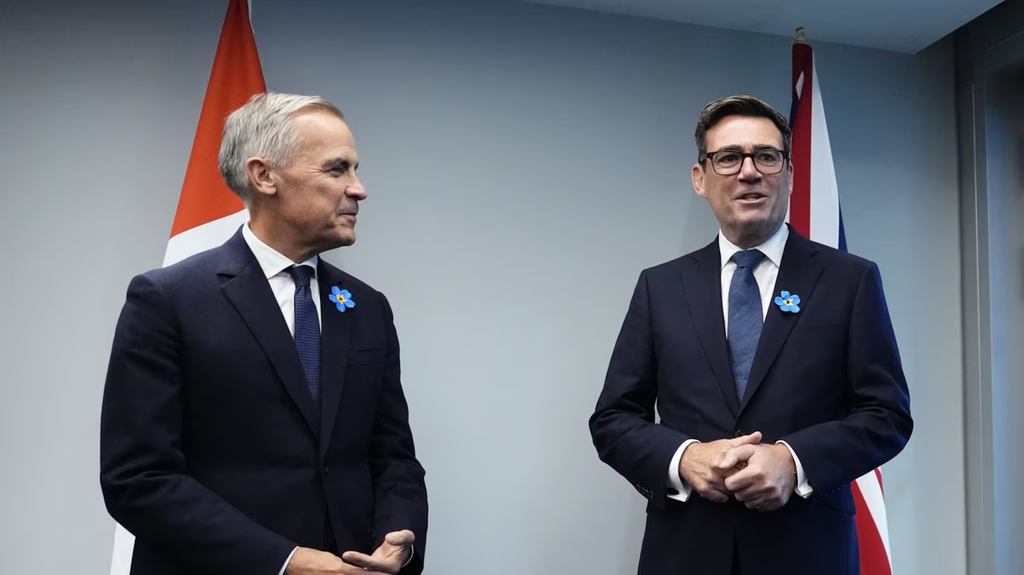
Canadian Prime Minister Mark Carney welcomed European Commission President Ursula von der Leyen and European Council President António Costa to Montreal for the 21st Canada-European Union Summit.
This two-day gathering concluded with a sweeping transatlantic partnership named the Alliance for the Future. The deal links Canadian resources, security, and digital tech with European markets, opening fresh doors for everyday consumers, professionals, and students alike.
The Montreal meetings mark a major pivot in international alliances. With shifting trade patterns and ongoing global uncertainty, Canada is looking east across the Atlantic to secure reliable partners for clean energy, critical minerals, and digital innovation.
Official details and background documents from both delegations are accessible via the Prime Minister of Canada News Office and the European Council Press Room.
The Montreal Gathering: Why This Summit Matters Right Now
The summit brought together top government ministers, global business executives, and international policy leaders in Montreal. While diplomatic meetings happen often, this session had real urgency behind it.
The $0 Secret To Launching Your Entire Online Empire
Why pay hundreds every month for separate software? Build funnels, send emails, and make sales with Systeme.io completely free.
Get Started For $0Free Forever • No Credit Card Needed • Beginner-Friendly
Rising trade disputes, supply chain disruptions, and political shifts have pushed middle powers to seek new alliances. Prime Minister Carney has warned that relying on old trade arrangements carries heavy economic risks. Instead of waiting for economic shocks to hit, Canada is teaming up directly with the European Union—a single market of over 450 million consumers.
The bilateral trade relationship between Canada and the European Union reached roughly $178 billion in goods and services over the previous year. Both sides want to push those numbers higher by removing cross-border bottlenecks and synchronizing digital systems.
Unpacking the “Alliance for the Future”
The central deliverable of the Montreal summit is the Alliance for the Future, a formal agreement designed to connect supply chains and lower trade barriers between Canada and Europe.
Unlike older international pacts centered solely on container shipping and tariffs, this framework tackles modern economic priorities:
- Critical Minerals and Clean Tech: European manufacturers require lithium, nickel, cobalt, and rare earth minerals to build electric vehicles, batteries, and wind turbines. Canada holds vast reserves of these materials. The alliance builds direct corridors to send Canadian resources straight into European industrial networks.
- Supercomputing and Artificial Intelligence: Canadian researchers, tech founders, and artificial intelligence startups gained direct access to Europe’s network of 12 world-class supercomputers. This collaboration allows Canadian AI platforms to run heavy computations alongside European research labs.
- Space and Navigation Cooperation: The partnership formalizes Canada’s integration with the European Union’s Galileo satellite High Accuracy Service. This expands satellite coverage across northern Canada and the Arctic, improving emergency services, environmental monitoring, and shipping routes.
- Defense Industry Collaboration: Canada deepened its ties to European security procurement following its entry into the Security Action for Europe (SAFE) initiative, giving defense suppliers new access to European military equipment projects.
Independent reporting and analysis from international press outlets like Associated Press and CTV News highlight that these joint commitments serve as an economic insurance policy for both sides.
What Does This Mean for Everyday Canadians and Consumers?
High-level diplomatic talk can sometimes feel distant from everyday life, but several items in this Montreal pact bring practical changes:
Cheaper and Faster Money Transfers
Moving money across the ocean has traditionally involved multi-day delays and hefty wire transfer fees. Under the new agreement, the Bank of Canada, Payments Canada, and the Eurosystem plan to connect Canada’s Real-Time Rail directly to Europe’s TARGET Instant Payment Settlement system. When active, everyday consumers, freelancers, and small business owners can transfer money between Canada and Europe in seconds for lower transaction fees.
More Competition and Better Product Prices
Canadian and European competition watchdogs updated their joint enforcement framework. Regulators from both sides will share data to spot anti-competitive practices, illegal price fixing, and supply-chain abuses across borders. More overseas competition in retail, groceries, and telecommunications gives consumers wider choices and checks price gouging.
Access to Advanced Tech and Better Jobs
Access to European supercomputers gives homegrown Canadian software and biotech companies room to expand without having to relocate to foreign markets. This means more competitive salaries and local tech jobs stay right in Canada.
Expanded Opportunities for Students and Young Professionals
A standout section of the Montreal talks focuses on youth mobility and higher education.
Canada officially entered negotiations to broaden participation in Erasmus+, the European Union’s flagship education and training program. Canadian university students, vocational apprentices, and researchers will be eligible for structured study-abroad grants, research fellowships, and hands-on apprenticeships across 27 European countries.
Both governments also launched an updated youth mobility framework. This makes it simpler for young adults to obtain bilateral working holiday permits, intern with international firms, and live abroad with less red tape.
Is Canada Becoming an “Associate Member” of the EU?
During the summit build-up, European Commission President Ursula von der Leyen floated the concept of Canada serving as the first-ever “associate member” of the European Union. That proposal quickly made headlines and raised plenty of eyebrows across the global political landscape.
Full membership in the European Union requires physical location on the European continent. The idea of an “associate membership” was intended to grant special privileges—such as close policy coordination and deep institutional ties—without full political accession.
However, the label stirred pushback:
Send, Spend & Hold Money Worldwide Without Hidden Fees
Transfer money internationally at the real exchange rate and hold 40+ currencies in one account.
Open a Wise AccountMid-market rate • Fast transfers • 40+ currencies
- Several European capitals, including Paris and Berlin, expressed skepticism about creating a hybrid membership category that could complicate existing EU treaties.
- Prime Minister Carney stated clearly that Canada is not seeking formal membership in the EU and that any deep strategic agreement will require an open debate and vote in the Canadian Parliament.
- Canadian political critics noted that nine European nations have still not fully ratified the decade-old Comprehensive Economic and Trade Agreement (CETA), urging Ottawa to resolve current pacts before inventing new diplomatic titles.
As a result, the delegations set aside the “associate member” tag and moved ahead with the Alliance for the Future, delivering the practical cooperation both sides wanted without getting bogged down in institutional labels.
Frequently Asked Questions (FAQs)
What was the Canada-EU Summit in Montreal?
The Canada-EU Summit in Montreal was the 21st bilateral meeting between Canadian leaders and top European Union officials. It focused on trade security, critical mineral supply chains, advanced technology, artificial intelligence, and educational exchanges.
Did Canada join the European Union?
No. Canada cannot join the European Union as a member state due to geographic requirements. Although an “associate member” status was discussed, leaders chose instead to establish a comprehensive bilateral framework named the Alliance for the Future.
What is the Alliance for the Future?
The Alliance for the Future is an economic, technological, and defense partnership signed between Canada and the European Union in October 2026. It links supercomputing resources, improves trade flows, expands youth study programs, and integrates real-time payment rails.
How does this summit affect Canadian students?
Canada is negotiating expanded access to the EU’s Erasmus+ program. This will make it easier and more affordable for Canadian university and college students to study abroad, conduct research, and take on internships across Europe.
When do these new agreements take effect?
Several items, including data sharing on competition law and tech access, begin immediately. More technical integrations—such as connecting instant bank payment systems and formalizing new youth exchange rules—will roll out through 2027 following regulatory reviews.
The Montreal summit shows how world trade is shifting in real time. By strengthening ties across the Atlantic, Canada and the European Union are building stronger economic safety nets to protect their industries, workers, and consumers against global instability.
