
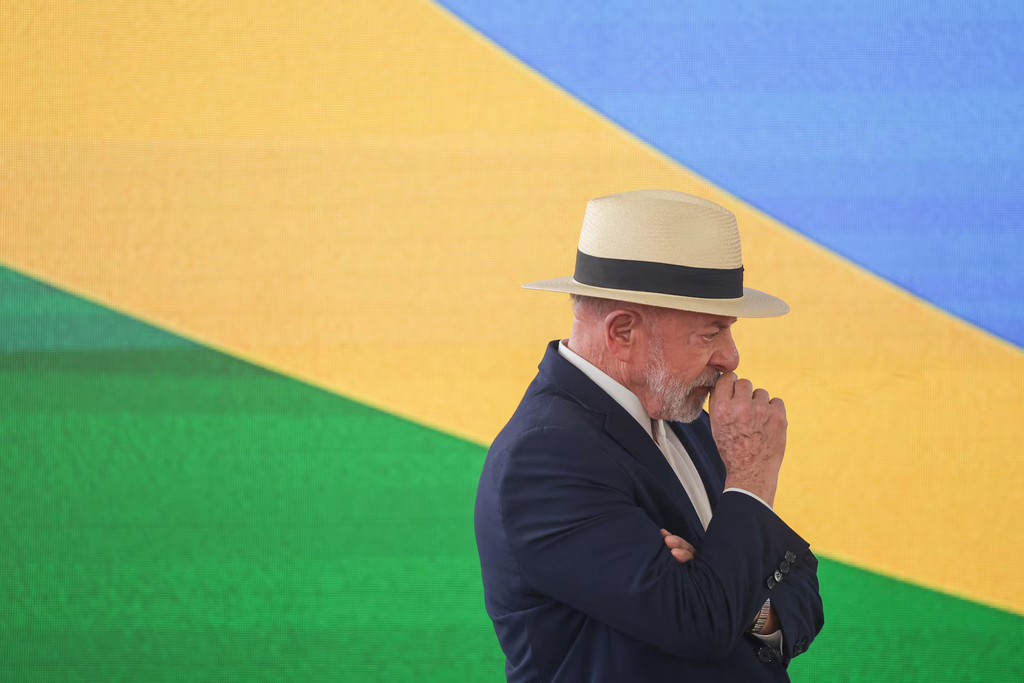
Luiz Inacio Lula da Silva has officially defeated Senator Flavio Bolsonaro in an extraordinary presidential runoff election. The dramatic victory secures an unprecedented fourth term in office for Brazil’s veteran left-wing president.
The contest came down to the absolute wire. After a night of intense vote counting, high drama over voting hours, and surging street rallies, Lula pulled ahead to clinch a decisive win that reshapes the political landscape of South America.
The victory keeps the Workers’ Party leader in power and halts the political comeback of the Bolsonaro political family. But with Flavio Bolsonaro immediately contesting the outcome and refusing to concede, the fallout has only just begun.
The Race That Kept the World on Edge
The showdown between Luiz Inacio Lula da Silva and Flavio Bolsonaro turned out to be one of the most fiercely fought races in modern democratic history. Going into the runoff, public opinion was split down the middle. Datafolha polling leading up to election Sunday showed the candidates locked in a statistical tie, each hovering right around the 50 percent mark among valid votes.
The election atmosphere across Brazil was electric. In major metropolitan hubs like Sao Paulo and Rio de Janeiro, citizens flooded the streets wearing either the vibrant red of Lula’s Workers’ Party or the bright yellow and green jerseys made famous by the Bolsonaro movement.
The $0 Secret To Launching Your Entire Online Empire
Why pay hundreds every month for separate software? Build funnels, send emails, and make sales with Systeme.io completely free.
Get Started For $0Free Forever • No Credit Card Needed • Beginner-Friendly
When the official counting began, early returns saw Flavio Bolsonaro take an initial lead as conservative-leaning states reported their results first. But as the tally moved deeper into the populous northeast and key urban centers, Lula steadily clawed his way back.
According to official figures released by the Superior Electoral Court (TSE), Lula captured 51.79 percent of the vote, tallying over 64.2 million ballots. Flavio Bolsonaro finished with 48.21 percent, bringing in just under 59.8 million votes. That gave Lula a margin of roughly 4.4 million votes.
Why This Runoff Was Pure Political Drama
Every presidential race carries weight, but this election felt different for everyday Brazilians. The stakes were uniquely personal, generational, and ideological.
Lula, who is turning 81, was fighting to defend his legacy and prove that his political movement remains the choice of working-class Brazilians. On the other side stood 45-year-old Flavio Bolsonaro, a conservative senator carrying the banner for his family’s powerful political brand.
The campaign trail featured bruising televised debates, aggressive social media face-offs, and sharply contrasting visions for Brazil’s natural wealth, public welfare programs, and global diplomatic posture.
While Lula doubled down on protecting Brazilian industry, expanding the social safety net, and maintaining regional leadership, Flavio Bolsonaro campaigned heavily on free-market deregulation, law-and-order rhetoric, and aggressive development of Brazil’s massive mineral reserves.
Last-Minute Voting Chaos and Controversy
Election Day was not without major turbulence. As polling stations neared their traditional evening cut-off, severe weather patterns in several regions combined with public transportation bottlenecks created massive lines of eager voters waiting to cast ballots.
In response, Brazilian legal authorities took swift action. A Supreme Court justice issued an order extending voting hours in affected locations across the country. The decision aimed to guarantee that every citizen standing in line could exercise their constitutional right.
However, the timing of the order sparked fierce debate. Because the announcement came just minutes before original closing times, some precincts received the directive after doors had shut, while others remained open for hours into the evening.
That legal move quickly became the focal point of opposition outrage.
Flavio Bolsonaro Rejects the Outcome
Within hours of the election court confirming Lula’s victory, Flavio Bolsonaro addressed his supporters and declared that he would not concede defeat.
Speaking outside his base in Brasilia, the senator called the last-minute extension of voting hours unprecedented and requested a formal annulment of the runoff results. He claimed the late-hour changes threw the integrity of the process into doubt.
This refusal to accept the outcome has sent a ripple of anxiety through the nation’s political institutions. Brazil has worked hard over recent decades to fortify its democratic norms, but the ghost of past post-election unrest hangs heavily in the air.
Government watchdogs, regional election observers, and independent monitors have urged all political camps to respect the democratic process and avoid street confrontations.
Lula’s Message: Unity, Sovereignty, and Moving Forward
Meanwhile, the scene inside Lula’s campaign headquarters in Sao Paulo was pure celebration. Flanked by First Lady Rosangela da Silva and party allies, Lula addressed tens of thousands of cheering supporters packed into Paulista Avenue.
Send, Spend & Hold Money Worldwide Without Hidden Fees
Transfer money internationally at the real exchange rate and hold 40+ currencies in one account.
Open a Wise AccountMid-market rate • Fast transfers • 40+ currencies
In his speech, Lula struck both a defiant and conciliatory tone. He framed his victory as a triumph of democratic resilience over disinformation.
He made it clear that while politics divides people at the ballot box, leadership requires governing for everyone.
Lula reminded the crowd of his humble beginnings, rising from a blue-collar union organizer in the metallurgical strikes of the late 1970s to the highest office in the land. Acknowledging his age, he promised that this historic term would be his most dedicated yet, vowing to pour all his energy into stabilizing the economy and lifting vulnerable citizens out of hardship.
What the Numbers Reveal About Brazil’s Divide
Looking closely at the breakdown of the ballots reveals a nation that remains deeply split.
Lula built his winning coalition by dominating the traditional strongholds of Brazil’s Northeast, while also making critical inroads into key working-class suburban rings in the Southeast. His message focused heavily on lowering the cost of living, protecting worker protections, and defending environmental conservation.
Flavio Bolsonaro, conversely, retained massive loyalty throughout the agribusiness corridors of the Central-West and South. His campaign resonated with corporate executives, small-business entrepreneurs, evangelical communities, and voters who favor strict security measures and aggressive economic liberalization.
The narrow three-point margin underscores a plain reality: whoever sits in the presidential palace in Brasilia will have to navigate a fiercely divided legislature and a skeptical public.
International Reactions Pour In
News of Lula’s fourth-term win quickly flashed across global headlines. Fellow regional heads of state across Latin America, along with leaders in North America and Europe, swiftly sent public congratulations, emphasizing the importance of stability across the hemisphere.
World leaders and international environmental organizations have closely watched Brazil’s political shifts. Lula’s administration has placed climate protection, renewable energy development, and Amazon conservation at the center of Brazil’s foreign policy.
His victory signals that Brazil will continue to play an active, outspoken role in global climate summits and multilateral diplomatic negotiations.
The $0 Secret To Launching Your Entire Online Empire
Why pay hundreds every month for separate software? Build funnels, send emails, and make sales with Systeme.io completely free.
Get Started For $0Free Forever • No Credit Card Needed • Beginner-Friendly
What Happens Next for Brazil?
Now that the votes have been tabulated, the immediate priority turns to the transition period and maintaining order on the ground.
Brazil’s electoral courts are expected to review and dismiss challenges regarding the voting hour extensions, as judicial precedent historically gives electoral officials discretion to ensure disenfranchised citizens can vote.
On the economic front, local markets are bracing for fluctuations. Investors are eagerly watching to see who Lula selects for his top ministerial appointments, particularly regarding finance, infrastructure, and mining portfolios.
The new administration must tackle stubborn inflation, strengthen national infrastructure, create stable jobs, and prove to the almost 60 million people who voted against it that their voices will not be ignored.
Frequently Asked Questions
Who won the 2026 Brazil presidential runoff?
President Luiz Inacio Lula da Silva won reelection, defeating Senator Flavio Bolsonaro with 51.79 percent of the valid votes against Bolsonaro’s 48.21 percent.
Why did Flavio Bolsonaro refuse to concede the election?
Flavio Bolsonaro contested the outcome after the Supreme Court issued a last-minute extension of voting hours on Sunday evening. He claimed the change was irregular and petitioned to have the results annulled.
How many terms has Lula served as president?
This election marks Lula’s fourth term as president of Brazil. He previously served two consecutive terms from 2003 to 2010, returned to office after winning in 2022, and has now secured his reelection.
When will Lula be sworn in for this new term?
Under Brazilian electoral law, the official inauguration ceremony takes place in Brasilia at the start of the new calendar term, following standard certification by the Superior Electoral Court.
The runoff victory of Luiz Inacio Lula da Silva over Flavio Bolsonaro caps off a historic chapter in Brazilian politics. While fireworks illuminate the skies over Sao Paulo and Rio de Janeiro, the tough work of governing a polarized nation lies ahead. How Brazil handles the days ahead will show whether its democratic pillars stand firm against ongoing political storms
