
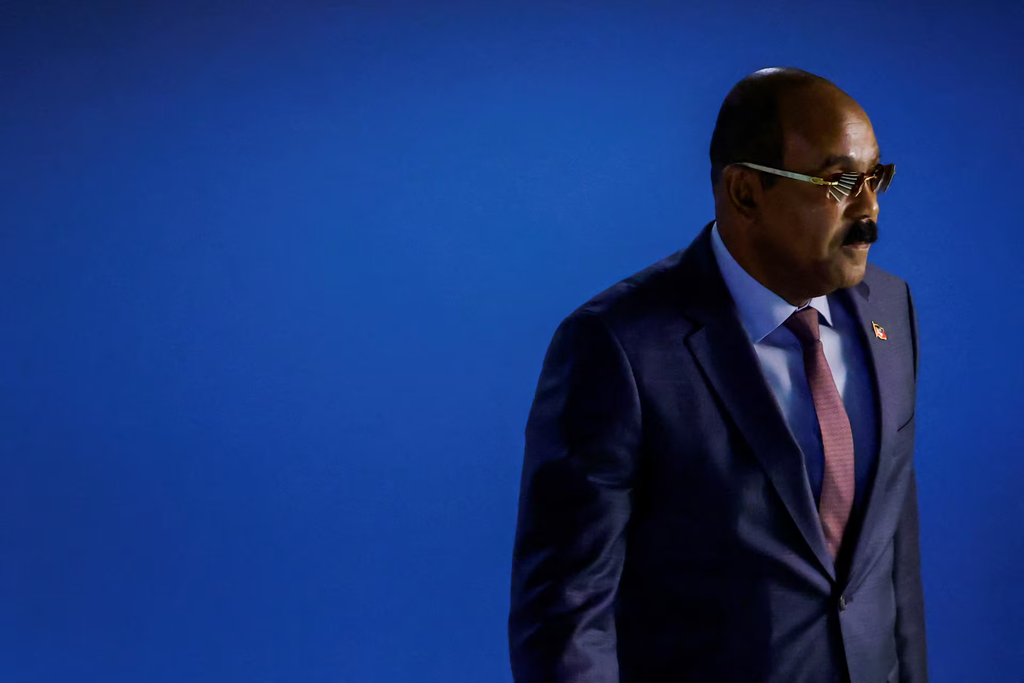
Gaston Browne, the Prime Minister of Antigua and Barbuda, delivered a blunt rebuke to British Conservative leader Kemi Badenoch, stating it is “no wonder” she remains the leader of the opposition rather than the tenant of 10 Downing Street.
The public clash erupted right as King Charles III landed in the Caribbean nation during his high-profile royal tour. When questioned about Badenoch’s firm refusal to entertain slavery reparations or formal national apologies, Browne made it clear that Caribbean nations are not backing down. He used the global media spotlight to reiterate that Antigua and Barbuda remains committed to holding a national referendum to ditch the British monarch and transition into a fully sovereign republic.
This war of words reveals a profound rift between Westminster’s political establishment and Caribbean leaders who demand both financial accountability and constitutional independence.
The Blunt Putdown: What Gaston Browne Actually Said
During an interview with ITV News royal editor Chris Ship, Gaston Browne was asked directly about remarks recently made by Kemi Badenoch regarding historical reparations for the transatlantic slave trade.
Badenoch had publicly argued that Britain should not give any financial compensation for the slave trade, claiming that politicians should focus solely on the future. She went even further by warning that any formal government apology from Downing Street would create open-ended pressure for massive financial payouts.
The $0 Secret To Launching Your Entire Online Empire
Why pay hundreds every month for separate software? Build funnels, send emails, and make sales with Systeme.io completely free.
Get Started For $0Free Forever • No Credit Card Needed • Beginner-Friendly
Browne did not mince his words when reacting to her comments:
“Well, I think she is misguided. And no wonder she is the leader of the opposition and not the Prime Minister. Right? Some of the most heinous crimes ever committed against humanity occurred during the transatlantic slave trade, and to simply brush that away is totally unacceptable.”
When pressed on whether Badenoch ought to reconsider her stance and offer an apology to Caribbean nations, Browne shrugged off the suggestion, noting that her personal views are her own business, but they run directly counter to historical reality and human decency.
The sharp rebuke quickly circulated across international newsrooms, setting a fiery tone for King Charles III’s diplomatic engagements on the twin-island state.
King Charles Touches Down Amid Caribbean Republic Momentum
The political dispute occurred against the backdrop of King Charles III’s extensive autumn Caribbean tour. The journey began in the Bahamas, moved to Guyana, and reached its final stop in Antigua and Barbuda for bilateral sessions tied to the Commonwealth Heads of Government network.
While the British royal family often aims to keep foreign visits focused on cultural unity, environmental conservation, and goodwill projects, historical grievances have become unavoidable. Royal tours across the Caribbean no longer look like the quiet, celebratory visits of the twentieth century. Instead, they serve as focal points for public discussions on colonialism, the royal family’s personal historical investments in human trafficking, and the unfinished business of regional independence.
King Charles has previously acknowledged the personal sorrow he feels regarding the enduring impact of slavery. However, the British monarchy operates strictly under constitutional constraints, meaning any official state apology or financial commitment must come directly from the British government in London.
Meanwhile, public sentiment throughout the region has shifted. Across Antigua, citizens and local officials welcomed the King with standard diplomatic hospitality, but political conversations remained centered on modern nationhood.
For Browne, hosting the British monarch does not conflict with his plan to remove the Crown from the country’s constitution. To the Antiguan government, parting ways with the monarchy is not an act of hostility against Charles III as an individual, but a necessary step toward completing national sovereignty.
Why Antigua and Barbuda Wants to Become a Republic
Antigua and Barbuda gained political independence from Britain back in 1981. Yet, like thirteen other Commonwealth realms outside the United Kingdom, it retained the British monarch as its official head of state.
That arrangement means King Charles III is legally the King of Antigua and Barbuda, represented locally by an appointed Governor-General.
Browne has insisted that this constitutional setup is an outdated relic of empire. Following the passing of Queen Elizabeth II, Browne publicly confirmed his intention to hold a constitutional referendum to officially remove the monarch and replace the Crown with an elected or ceremonial Antiguan head of state.
Several factors drive this push toward republicanism:
1. True Constitutional Independence
For many citizens, having a foreign monarch living thousands of miles away across the Atlantic as the symbolic head of their nation feels inappropriate in the twenty-first century. Becoming a republic means an Antiguan citizen will finally occupy the country’s highest office.
2. The Precedent Set by Barbados
In November 2021, Barbados officially removed Queen Elizabeth II as head of state, swore in Dame Sandra Mason as its first president, and celebrated the transition with widespread regional praise. Barbados demonstrated that leaving the monarchy does not cause instability, nor does it require leaving the wider Commonwealth organization. It showed neighboring island nations that the transition can be smooth, celebratory, and empowering.
Send, Spend & Hold Money Worldwide Without Hidden Fees
Transfer money internationally at the real exchange rate and hold 40+ currencies in one account.
Open a Wise AccountMid-market rate • Fast transfers • 40+ currencies
3. A Growing Caribbean Consensus
Other regional nations, including Jamaica and the Bahamas, have established constitutional reform committees to examine the exact path toward severing ties with the Crown. The regional sentiment is unified: nations want full ownership of their governance systems without lingering colonial symbols.
4. Overcoming the High Legal Bar
Transitioning to a republic in Antigua and Barbuda is not an executive decision that a prime minister can enact with a stroke of a pen. Under the nation’s constitution, changing the head of state requires a national referendum with a demanding threshold. A majority of voting citizens must actively cast their ballots in favor of the change.
Browne acknowledged that the government must conduct an extensive public education campaign before bringing the referendum to a national vote. Many citizens remain focused on everyday economic concerns, such as the cost of living, tourism infrastructure, utility prices, and local job creation. Browne’s administration must demonstrate that constitutional change provides tangible dignity and practical benefits rather than merely procedural updates.
Inside Kemi Badenoch’s Stance on Slavery and Colonial History
To understand why Browne’s remarks carried such weight, one must examine Kemi Badenoch’s political track record and ideological position within British politics.
Since rising to national prominence, Badenoch has consistently pushed back against modern progressive narratives surrounding race, imperialism, and historical guilt. As leader of the Conservative Party, she has positioned herself as a staunch opponent of what she terms cultural pessimism.
Her core arguments regarding reparations and colonial history rest on several specific pillars:
- No Financial Restitution: Badenoch contends that modern British taxpayers should not be held financially responsible for historical actions that took place centuries ago under entirely different legal and moral frameworks.
- The Risk of Legal Precedent: She argues that issuing an official state apology would immediately expose Britain to massive, complex legal claims from former colonies, potentially costing billions of pounds that the British Treasury cannot afford.
- Focusing on the Present: Badenoch frequently states that developing nations and minority communities should focus on trade, free-market economics, governance, and technology rather than looking backward at historical grievances.
- Challenging Cultural Narratives: She has consistently argued that Britain’s historical contributions to the world, including the global abolition movement and the Royal Navy’s West Africa Squadron, are often unfairly overlooked in conversations about empire.
Badenoch’s supporters praise her for speaking plainly and refusing to yield to political correctness. They see her refusal to apologize as a defense of British sovereignty and fiscal reality.
However, critics in both the UK and the Caribbean view her perspective as dismissive and historically shallow. They argue that ignoring the long-term economic extraction suffered by colonized islands prevents meaningful healing and ignores how transatlantic slavery built immense commercial wealth in Britain.
Readers following Kemi Badenoch’s political maneuvers know she rarely shies away from ideological battles. Whether managing internal party politics, driving Conservative leadership reshuffles, or delivering a provocative speech on national welfare, she leans into confrontation.
Yet, Browne’s biting response demonstrated that while aggressive rhetoric may play well with conservative grassroots voters in suburban Britain, it alienates key international partners across the Commonwealth.
The $0 Secret To Launching Your Entire Online Empire
Why pay hundreds every month for separate software? Build funnels, send emails, and make sales with Systeme.io completely free.
Get Started For $0Free Forever • No Credit Card Needed • Beginner-Friendly
What the Reparations Debate Is Really About
Discussions surrounding reparations are often misunderstood. Opponents frequently portray reparations as a demand for direct cash handouts to modern citizens. In reality, the formal position of Caribbean governments is far more comprehensive, structural, and institutional.
The Caribbean Community, known regionally as CARICOM, established a specialized Reparations Commission that outlined a detailed Ten-Point Plan for Reparatory Justice.
This framework does not ask for individual checks in the mail. Instead, it calls for collaborative international development investments designed to repair deep structural disadvantages left behind by centuries of forced labor, resource extraction, and colonial neglect.
The core components of the regional reparations platform include:
- Formal State Apologies: A direct, unqualified acknowledgment from European governments regarding the state-sponsored horrors of the transatlantic slave trade, rather than carefully worded statements of regret.
- Debt Cancellation: Relieving crippling national debts that Caribbean island states accumulated after independence, freeing up local tax revenues to build resilient public infrastructure.
- Healthcare Infrastructure Funding: Investing directly in hospitals, clinics, and chronic disease research centers across the Caribbean, where conditions like diabetes and hypertension trace back in part to inherited generational dietary trauma.
- Educational Investments: Building and funding universities, technical colleges, research laboratories, and cultural literacy programs to expand domestic skills training.
- Technology Transfer and Industrial Support: Helping island economies build domestic manufacturing, digital services, and sustainable agricultural sectors to reduce extreme reliance on seasonal tourism.
- Repatriation Assistance: Providing legal and logistical pathways for individuals of African descent who actively desire to return to and establish roots on the African continent.
When Gaston Browne speaks about reparations, he is pointing to this broader, constructive framework.
From the Caribbean perspective, the transatlantic slave trade was not simply an unfortunate period in history that ended with the abolition acts. It was a massive economic system where human beings were treated as depreciating capital assets, producing fortunes that built British financial institutions, banking houses, railways, and grand estates.
When Britain emancipated enslaved people in 1834, the British government paid twenty million pounds in compensation. Crucially, that compensation was not paid to the newly freed people who had suffered generations of brutal labor; it was paid entirely to the slave owners for the loss of their legal human property.
The British government took out a massive loan to pay those slave owners, a national debt so enormous that British taxpayers only finished paying it off in 2015.
Caribbean leaders like Browne remind the world of this glaring historical contrast: British institutions found the resources to compensate slave owners for their financial inconvenience, but when the descendants of enslaved populations ask for modern healthcare and education support, political leaders in London tell them that the past is the past.
British Politics and the Caribbean Divide
Browne’s remark that it is “no wonder” Badenoch is not Prime Minister highlights the broader division between Britain’s political parties on foreign diplomacy and imperial legacy.
While the Conservative Party under Badenoch maintains a hard line against formal apologies and financial reparations, the current government in Downing Street has taken a noticeably more cautious, diplomatic stance. Labour leadership, including figures managing regional outreach alongside Prime Minister Andy Burnham’s policies, has signaled a willingness to engage in open dialogue with Commonwealth partners.
British government ministers recognize that completely dismissing Commonwealth leaders damages the UK’s soft power on the international stage. Britain relies heavily on Commonwealth goodwill to secure trade agreements, maintain diplomatic alliances at the United Nations, and counter the growing geopolitical influence of global superpowers in the Caribbean basin.
If British politicians treat Caribbean heads of state with condescension, those nations will naturally look elsewhere for development partnerships, infrastructure loans, and bilateral trade. China, for instance, has invested heavily throughout the Caribbean, financing deep-water ports, highway networks, stadiums, and government complexes without attaching political lectures about colonial history.
By insulting regional leadership and shutting down conversations on reparatory justice, politicians risk alienating nations that share deep historical, linguistic, and cultural ties with the UK.
The Monarchy Under Pressure Across Multiple Fronts
King Charles III’s reception in Antigua and Barbuda reflects broader structural questions facing the British royal family both abroad and at home.
The royal household has experienced a whirlwind of constitutional and internal pressures. Ongoing debates surrounding the institution’s historical wealth, alongside tensions surrounding the royal family, have kept the institution under intense public scrutiny.
Even within the borders of the United Kingdom, constitutional certainty is no longer taken for granted. Ongoing debates on the future of the union show that people everywhere are questioning old political configurations.
For the Commonwealth realms, transitioning to a republic is not seen as an attack on King Charles personally. By all accounts, the King has built warm personal friendships with Caribbean prime ministers and has expressed genuine affection for the region throughout his lifetime.
Instead, the change is about modern constitutional coherence. Having a British monarch as the legal head of state in an independent Caribbean democracy creates an awkward contradiction.
When an Antiguan court issues a ruling, when an Antiguan police officer swears an oath, or when a newly elected parliament convenes, the proceedings technically run in the name of the Crown.
Many young Antiguans ask a simple question: why should our national institutions answer symbolically to a hereditary sovereign living in London?
How Antiguan Citizens View the Transition
While political leaders like Gaston Browne push for a republic on the international stage, everyday citizens across Antigua and Barbuda hold diverse perspectives on the issue.
Understanding the local reality is essential for anyone following Caribbean affairs:
- The Generational Divide: Older citizens who grew up during the transition from colonial rule to independence often feel a quiet cultural respect for the royal family, particularly the late Queen Elizabeth II. For these generations, the monarchy is a familiar, stabilizing symbol. In contrast, younger generations, raised on social media and global civic consciousness, view the monarchy as an anachronism that has nothing to do with modern Caribbean identity.
- Economic Priorities vs. Symbolic Change: Many residents are primarily concerned with immediate economic realities. Living on a tourism-dependent island brings real challenges, including utility costs, import inflation, and climate change vulnerabilities. When politicians spend significant energy debating constitutional reform, everyday voters often ask whether becoming a republic will reduce the price of groceries or create better local jobs.
- The Referendum Requirement: Because Antigua and Barbuda requires a national referendum, politicians cannot force the change through a simple parliamentary vote. If the government fails to convince ordinary citizens that republicanism makes a meaningful difference in their day-to-day lives, voters might choose to reject the proposal simply as a protest against the political status quo.
Browne’s government knows this reality well. Winning a referendum requires building broad public trust, ensuring the opposition party supports the transition, and demonstrating that a local president will serve the interests of all citizens impartially.
Frequently Asked Questions
Why did Gaston Browne say ‘no wonder’ Kemi Badenoch is not Prime Minister?
Antigua and Barbuda Prime Minister Gaston Browne made the remark because Kemi Badenoch publicly dismissed calls for slavery reparations and warned against an official UK government apology. Browne felt her refusal to acknowledge historical atrocities was misguided and disconnected from reality, showing why British voters chose to keep her in opposition rather than placing her in Downing Street.
Is Antigua and Barbuda already a republic?
No. Antigua and Barbuda is an independent, sovereign nation, but it is currently a Commonwealth realm. This means King Charles III remains its official head of state, represented locally by an appointed Governor-General.
When will Antigua and Barbuda hold its republic referendum?
Prime Minister Gaston Browne has stated that his government plans to take the republic question to a public referendum once adequate civic education has been conducted. Because amending the constitution requires a popular majority vote, the government must build national consensus before setting a formal polling date.
What is CARICOM’s position on slavery reparations?
CARICOM advocates for a structured Ten-Point Plan for Reparatory Justice. Rather than individual cash payments, the regional body seeks formal state apologies, international debt cancellation, educational funding, and investments in public healthcare and technology infrastructure to repair generational inequalities left by colonial exploitation.
Does becoming a republic mean leaving the Commonwealth?
No. Becoming a republic only means replacing the British monarch with a domestic head of state. A country can remain an active, valued member of the Commonwealth of Nations as a republic, as demonstrated by India, South Africa, Nigeria, and Barbados.
The public clash between Gaston Browne and Kemi Badenoch is more than a brief exchange of political insults. It captures a decisive turning point in relations between Britain and its former colonies.
Caribbean leaders are no longer willing to accommodate political rhetoric that brushes aside historical accountability. By speaking plainly, Browne affirmed that the movement toward complete constitutional independence and reparatory justice will continue regardless of who sits in the UK Parliament.
As King Charles completes his Caribbean journey, the path ahead is clear. The era of quiet deference is over. Caribbean nations are moving forward to write their own constitutions, celebrate their own leaders, and demand the respect their history deserves.
