
Imagine paying full price for a heavy-duty umbrella during a hurricane, only for the store manager to lock it in a back room and refuse to sign the release form. That is the exact nightmare Ukrainian leaders say they are dealing with right now as freezing winter weather settles over their cities.
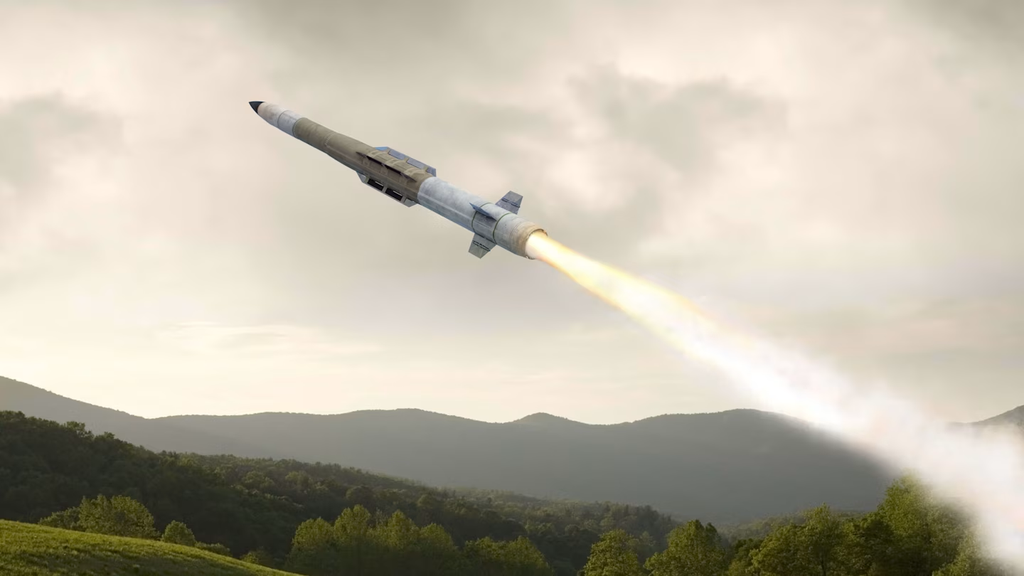
According to a bombshell report published by the Financial Times on November 24, 2026, the Pentagon is holding up the delivery of roughly 60 Patriot air defense interceptor missiles that were already promised to Ukraine. Even more frustrating for officials in Kyiv, America’s European allies have already paid the bill for these weapons, and several of the missiles are physically sitting inside European warehouses waiting to move.
All that is missing is a final sign-off from U.S. Defense Secretary Pete Hegseth. Without his signature, those interceptors cannot cross the border into Ukraine, leaving millions of civilians and critical power stations dangerously exposed to incoming Russian ballistic missiles.
What Exactly Is Happening With the Delayed Patriot Missile Shipments?
To understand why this delay has set off alarm bells across Europe, you have to look at the timeline of missed deliveries. According to reporting from Hromadske and the Financial Times, the 60 stalled interceptors are split between two different types of Patriot missiles.
The biggest concern centers on 40 advanced PAC-3 interceptors that were supposed to reach Ukraine in steady monthly batches throughout the fall and early winter. Eight of those missiles were scheduled for September, ten for October, ten for November, and another twelve for December.
The $0 Secret To Launching Your Entire Online Empire
Why pay hundreds every month for separate software? Build funnels, send emails, and make sales with Systeme.io completely free.
Get Started For $0Free Forever • No Credit Card Needed • Beginner-Friendly
Not a single one of those four shipments has been cleared by the Pentagon. On top of those 40 high-end interceptors, roughly 20 older PAC-2 missiles allocated to Ukraine are also stuck in limbo awaiting final approval from Washington.
Ukrainian President Volodymyr Zelenskyy has been sounding the alarm for weeks over the bottleneck. Speaking publicly on Sunday, November 22, Zelenskyy stressed that it is critical for the United States to authorize the transfer of Patriot missiles that partner nations have already funded.
There is one small bright spot in the middle of the standoff. Deliveries of NASAMS air defense missiles, which had also been sitting on Pete Hegseth’s desk awaiting approval back in late October, have finally received the green light and are now on their way to Ukraine, according to updates shared by Anews.
Still, NASAMS systems are designed to shoot down drones, helicopters, and slower cruise missiles. They cannot stop fast-moving ballistic missiles, which is why the Patriot holdup hurts so badly.
Why Does Washington Have the Final Say Over Missiles Stored in Europe?
A lot of everyday readers understandably get confused when they hear that missiles sitting inside European arsenals are being blocked by an office in Washington. If a European country bought the missiles with its own money, why can it not simply load them onto a truck and drive them to Ukraine?
The answer comes down to strict American defense export laws. Because the Patriot air defense system and its interceptor missiles are designed and built in the United States, every buyer signs an end-user agreement when they purchase them.
Under that rule, no foreign government is allowed to give, sell, or transfer American-made weapons to a third country without formal re-export approval from the U.S. government. Even if Germany, the Netherlands, or another European partner wants to hand over missiles from its own emergency stash—with plans to replace them later—Washington holds the legal veto.
That puts the U.S. Secretary of Defense in the driver’s seat. Until Pete Hegseth puts pen to paper, European allies have their hands tied, and Ukraine’s Patriot launchers stay dangerously short on ammunition.
What Is the Difference Between PAC-3 and PAC-2 Interceptors?
Defense headlines throw around terms like PAC-2 and PAC-3 all the time, so let us break down what they actually mean in plain English.
Think of the older PAC-2 missile as a giant flying shotgun shell. When it gets close to an incoming target, it explodes and sends a cloud of metal fragments flying outward to shred an enemy plane or cruise missile. That works great against slower targets, which is why those 20 delayed PAC-2 missiles are still valuable for protecting Ukrainian airspace.
The PAC-3 interceptor, however, is a completely different beast. Instead of exploding near a target, it uses pinpoint radar guidance to smash directly into an incoming ballistic missile at hypersonic speeds, destroying the warhead through sheer kinetic force.
Right now, the PAC-3 is the only weapon in Ukraine’s entire arsenal that can reliably knock Russian ballistic missiles out of the sky. Without those 40 delayed PAC-3 interceptors, Ukrainian air defense crews are essentially forced to watch ballistic missiles fall on their cities without a way to stop them.
Why Is Ukraine Running Out of Air Defense Right Before Winter?
The timing of this Pentagon delay could hardly be worse for ordinary people living in Ukraine. Winter temperatures are dropping fast, and Russia has spent the past several months hammering Ukraine’s electricity grid, heating plants, and water infrastructure.
Back in mid-October, reports surfaced that Ukraine had nearly exhausted its stockpile of Patriot interceptors. Ukrainian officials told the Financial Times that with launchers running empty, almost every Russian ballistic missile fired at the country has been able to reach its target.
The numbers behind this mismatch are staggering. President Zelenskyy revealed in late October that Ukraine has received an average of only 12 Patriot interceptors per month from the United States throughout 2026—roughly four times fewer than under the previous administration. During one three-month stretch, Kyiv received just 24 Patriot missiles in total.
Send, Spend & Hold Money Worldwide Without Hidden Fees
Transfer money internationally at the real exchange rate and hold 40+ currencies in one account.
Open a Wise AccountMid-market rate • Fast transfers • 40+ currencies
Compare that trickle of defense missiles to what Russia is throwing at Ukraine every week. According to Ukrainian Defense Minister Yevhenii Khmara, Russia fired 153 ballistic missiles at Ukraine in October alone, and Russian factories are currently building a brand-new ballistic missile every five hours.
Even on the very night before the Financial Times report broke, Russia launched 96 attack drones across Ukraine, including 64 high-speed jet-powered drones, striking 13 separate locations despite air defenses knocking down 73 of them, as detailed by RBC-Ukraine.
When air defense crews do not have enough Patriot missiles, they have to make agonizing choices about which city, hospital, or power station gets protected and which one is left exposed. Meanwhile, leaders in Kyiv have been pushing back hard against outside pressure, as we covered when Zelenskyy rejected demands to step down amid growing friction with Washington.
Is Politics Behind the Pentagon Delay or Are Global Stockpiles Really Empty?
Whenever 60 paid-for missiles sit unapproved for months, people naturally ask what is really going on behind closed doors. Right now, two very different explanations are circulating between Kyiv and Washington.
In Kyiv, senior Ukrainian officials suspect the delay is not an accident or a simple paperwork backlog. According to the Financial Times, Ukrainian insiders believe the White House may be using air defense shipments as political leverage to force Ukraine into signing a quick peace deal with Moscow.
Specifically, officials in Kyiv worry that Washington wants to lock in an agreement—one that could require Ukraine to give up territory to Russia—before a newly elected, Democratic-led U.S. Congress takes office in January 2027 following the midterm elections. Zelenskyy himself hinted at political roadblocks back in October when he pointed out that Ukraine had already paid for the weapons and declared that the holdup was not a technical issue.
Anyone following the diplomatic whirlwind this year knows how tense those negotiations have become. From the high-stakes peace talks in Abu Dhabi to reports that Washington floated trading Donbas territory for security guarantees, pressure on Kyiv to settle the war has reached a boiling point. Even after Trump and Putin shook hands at the Shenzhen summit, fighting on the ground has not slowed down.
On the other side of the Atlantic, the White House points to a very different reason: global missile shortages. Earlier this year, Zelenskyy asked President Donald Trump for a massive 300-interceptor “winter package” to shield Ukrainian cities through the cold months.
Trump turned that request down, citing severely strained global stockpiles after the United States burned through huge numbers of air defense interceptors during the conflict with Iran. That Middle East conflict has drained American munitions and sparked fierce debate in Washington, including when the U.S. Senate voted 51 to 48 to keep the Iran campaign going.
The U.S. did approve a massive $2.1 billion sale of 500 brand-new PAC-3 missiles to Ukraine in October. However, as Interfax-Ukraine notes, those are newly manufactured missiles that will not roll off factory lines until the early 2030s. A promise of missiles in 2030 does nothing to stop a ballistic missile heading toward Kyiv tonight.
The $0 Secret To Launching Your Entire Online Empire
Why pay hundreds every month for separate software? Build funnels, send emails, and make sales with Systeme.io completely free.
Get Started For $0Free Forever • No Credit Card Needed • Beginner-Friendly
Why Was Ukraine’s Plan to Build Its Own Patriot Missiles Also Stalled?
It is not just ready-made shipments that are stuck in bureaucratic traffic. A separate, long-term deal that would allow Ukraine to manufacture its own Patriot interceptor missiles on domestic soil has also hit a snag inside the Pentagon.
According to the Financial Times, Defense Secretary Pete Hegseth actually signed off on that licensing arrangement. Instead of moving straight ahead, however, the plan was routed to Under Secretary of Defense for Acquisition Michael Duffey for additional review, effectively putting it on ice.
Zelenskyy has openly acknowledged that even if Washington approves domestic production tomorrow, building specialized missile factories in Ukraine would take several years before the first interceptor rolls off the line. Even so, getting the formal green light right now would allow engineers to start setting up production lines and send an unmistakable message to Moscow that Ukraine will be able to defend itself for decades to come.
What Is the Pentagon Saying About the Holdup?
When pressed by reporters about why 60 paid-for missiles are still waiting on a signature, Pentagon officials offered carefully worded statements that avoided explaining the delay.
A Pentagon spokesperson told the Financial Times that there has been no change to official policy regarding support for Ukraine, while declining to answer specific questions about why the September, October, November, and December shipments remain unapproved.
Another defense official insisted that the department is actively pursuing “multiple parallel lines of effort” to speed up transatlantic industrial cooperation on the Patriot air and missile defense system alongside European partners and Ukraine.
For critics in Washington and Europe, those talking points ring hollow when compared to the reality on the ground. Pete Hegseth has already faced intense political heat at home, with Republicans openly questioning the Pentagon chief’s leadership after the midterms. Leaving paid-for allies’ missiles sitting in storage only adds fuel to the fire.
What Could Happen Next for Ukraine and European Allies?
With December just days away and temperatures plunging across Eastern Europe, pressure on the Pentagon is going to intensify fast. European leaders who already handed over money for these interceptors are unlikely to stay quiet if Russian strikes knock out power and heat for millions of Ukrainians during the dead of winter.
At the same time, Kyiv is trying to diversify its defense partnerships so it is never completely dependent on one signature in Washington. Agreements like the historic 100-year defense and drone alliance between Canada and Ukraine show how hard Ukraine is working to lock in long-term security guarantees with other Western partners.
For the next few months, though, there is no substitute for American Patriot interceptors. If Hegseth signs off on the 60 delayed missiles soon, Ukrainian air defense batteries could receive an immediate lifeline before the worst winter storms hit. If the bottleneck drags into January 2027, the incoming Democratic majority in Congress is almost certain to launch noisy hearings and demand answers from Pentagon leaders.
What Are the Most Frequently Asked Questions About the Pentagon Patriot Missile Delay?
How Many Patriot Missiles Are Currently Delayed by the Pentagon?
Roughly 60 Patriot interceptor missiles allocated to Ukraine are waiting for Pentagon approval. This includes 40 advanced PAC-3 interceptors scheduled between September and December 2026, plus around 20 older PAC-2 interceptors.
Who Paid for the Delayed Patriot Interceptors?
Ukraine’s Western and European allies have already paid for these missiles. In several cases, the interceptors are already sitting in European military stockpiles, waiting for U.S. permission to be transferred.
Why Can’t European Countries Just Send Their Own Patriot Missiles to Ukraine?
Because the Patriot system is manufactured in the United States, American export control laws require Washington to formally approve any transfer or re-export of the missiles to another country, even when European nations own them.
Did the Pentagon Approve Any Other Air Defense Weapons for Ukraine Recently?
Yes. While the Patriot interceptors remain on hold, the Pentagon recently signed off on delayed shipments of NASAMS air defense missiles, which are now on their way to Ukraine to help defend against drones and cruise missiles.
When Will Ukraine Receive the 500 New Patriot Missiles Approved in October?
Those 500 PAC-3 missiles, part of a $2.1 billion sale approved in October 2026, have to be built from scratch and are not expected to be delivered until the early 2030s.
At the end of the day, this story comes down to a simple human reality: air defense missiles only save lives when they are loaded into launchers, not sitting in a warehouse waiting on a signature. As winter closes in on Ukraine and diplomatic battles rage in Washington, the next move by Defense Secretary Pete Hegseth could determine whether Ukrainian cities stay lit and warm or face another brutal season under fire.
