
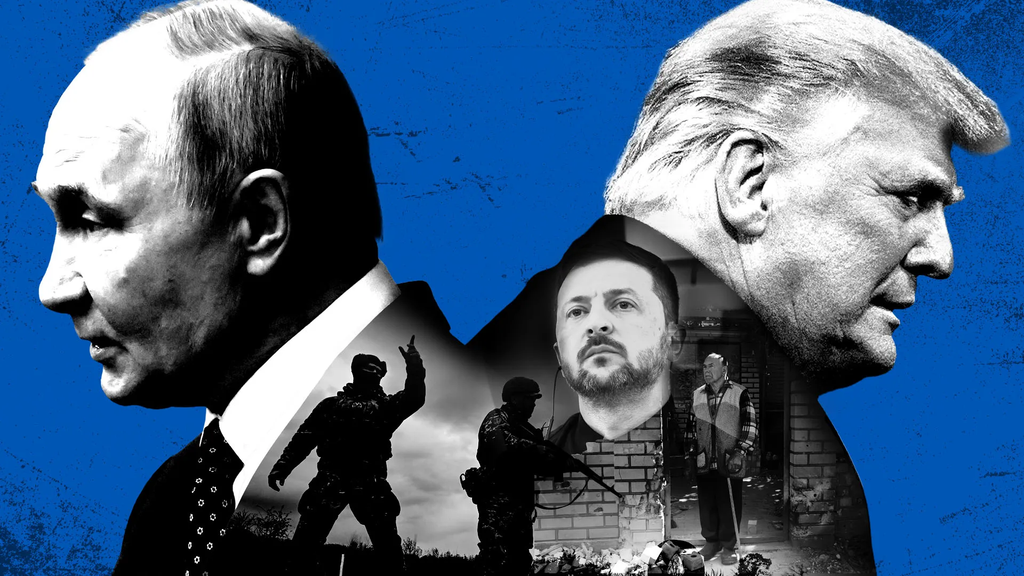
For years, the Russian government has worked hard to keep the true human cost of its war in Ukraine locked behind closed doors. Official updates stopped almost completely back in 2022, leaving families, journalists, and world leaders guessing how many young men were never coming home.
Now, a massive leak from inside Russia’s own state bureaucracy has blown that secrecy wide open. According to a groundbreaking joint investigation by independent Russian news outlets Meduza and Mediazona, more than 700,000 Russian soldiers had died in the war in Ukraine by late September 2026.
That number is hard to wrap your head around. It is larger than the entire population of major cities like Washington, D.C., or Frankfurt, and it represents a level of military loss that Europe has not seen since World War II. Even more striking is how researchers uncovered it: not through guesswork from foreign spy agencies, but through hacked records straight from Russia’s own federal statistics office.
What Did the Leaked Russian Records Actually Reveal?
The story behind these numbers began on November 1, 2026, when two activist hacker groups—the Belarusian Cyber Partisans and Silent Crow—announced they had broken into the servers of Rosstat, Russia’s Federal State Statistics Service. Inside those servers, they found civil death registration files covering the country right up through September 29, 2026.
The hackers shared the massive trove of records with investigative reporters at Meduza and Mediazona, two exiled Russian media teams that have spent years painstakingly tracking Russia’s war dead. When the journalists dug into the files, the scale of the loss jumped off the screen.
The $0 Secret To Launching Your Entire Online Empire
Why pay hundreds every month for separate software? Build funnels, send emails, and make sales with Systeme.io completely free.
Get Started For $0Free Forever • No Credit Card Needed • Beginner-Friendly
The leaked database showed at least 490,000 officially registered Russian military deaths by the end of September 2026. That figure alone is nearly double what many casual observers assumed. Yet as the reporters soon realized, 490,000 was only the floor, not the ceiling.
Because tens of thousands of soldiers are still officially listed as missing in action—and because Russian officials often take a year or more to process death certificates—the leaked files did not capture every soldier killed on the battlefield. Once Meduza and Mediazona accounted for missing troops and paperwork delays, their estimate climbed past 700,000 dead, likely reaching 720,000 or more by fall 2026.
How Did Journalists Prove These Leaked Files Are Real?
Whenever hacked government documents surface during an active war, skepticism is healthy. Propaganda and fake leaks happen all the time. Knowing this, the teams at Meduza and Mediazona spent weeks putting the Rosstat database through strict verification tests before publishing a single number.
The leaked files contained roughly 11.6 million unique death records across Russia. Reporters cross-checked those entries against several independent sources that the Kremlin cannot easily rewrite after the fact.
Why Was It Impossible to Fake This Database?
First, journalists compared the leaked files against their own open-source list of fallen Russian soldiers, which they have built alongside the BBC Russian Service using public obituaries, funeral notices, cemetery photos, and social media posts from grieving relatives. By November 2026, that public list contained over 287,000 confirmed names.
When reporters ran those names through the leaked Rosstat database, 95.1 percent of them matched—including names that Mediazona had verified privately but had not even published online yet. Nobody could fabricate millions of civilian and military death entries that line up with unpublished local funeral notices down to the exact dates and personal details.
Second, the journalists checked the files against Russia’s national Probate Registry, which tracks inheritance cases opened when someone passes away, as well as regional court rulings and Rosstat’s own older public reports. Everything fit together like puzzle pieces. The leak was genuine, giving outsiders the clearest look yet at what the war has actually cost Russia’s military.
Why Is the Real Death Toll Much Higher Than Official Papers Show?
If Russia’s own statistics agency recorded 490,000 military deaths through late September 2026, why do experts say the real death toll is over 700,000? The answer comes down to two major blind spots in official paperwork: missing soldiers and slow bureaucracy.
How Do Missing Soldiers Change the Final Number?
Earlier estimates from Meduza and Mediazona relied heavily on inheritance records from the Probate Registry. For the first few years of the war, that method worked well. However, starting in early 2025, a growing gap opened up between the number of soldiers dying at the front and the number of inheritance cases being opened back home.
In intense, grinding battles—especially amid heavy artillery fire and constant drone strikes—bodies are often left behind in contested gray zones where neither side can safely recover them. Without a body, a soldier is not immediately declared dead. Instead, the military lists them as missing in action.
Until a family goes to court to have a missing relative legally declared dead, Rosstat does not receive a death certificate. By combining the leaked Rosstat files with court records, probate data, and public search notices posted by desperate families looking for missing sons and husbands, Meduza and Mediazona included missing service members in their total count for the first time. Adding those presumed dead pushed the toll over the 700,000 mark.
Why Does Russia Take Over a Year to Register Some Deaths?
The second issue is simple paperwork lag. In a normal peacetime year, most deaths are registered within days or weeks. During a massive war, the system bottlenecks.
Commanders on the front lines sometimes delay reporting losses. Local civil registry offices get backed up, and courts require waiting periods before issuing death declarations for missing troops. As a result, a soldier killed in the summer of 2025 might not show up in Rosstat’s database until late 2026.
To solve this, researchers borrowed mathematical tools used in insurance and public health tracking—known as actuarial and epidemiological modeling. These methods look at how long past deaths took to appear in official registries and use that pattern to calculate how many soldiers have already died whose paperwork is still sitting in a stack on someone’s desk. Even keeping their math deliberately conservative, the analysts concluded that at least 700,000 to 720,000 Russian troops had lost their lives by September 2026.
How Has Moscow Tried to Hide the True Cost of the War?
The leaked database also explains why Russian authorities went to such extreme lengths to lock down public data over the last four years.
Send, Spend & Hold Money Worldwide Without Hidden Fees
Transfer money internationally at the real exchange rate and hold 40+ currencies in one account.
Open a Wise AccountMid-market rate • Fast transfers • 40+ currencies
Back in September 2022, seven months after the full-scale invasion began, Russia’s Defense Ministry announced that 5,937 Russian troops had been killed. That was the last time Moscow gave an official casualty count. Ever since, military losses have been treated as a strict state secret.
Journalists and independent researchers quickly found workarounds, using Rosstat’s monthly and annual mortality tables to spot unusual spikes in deaths among young men. When the Kremlin realized outsiders were reading between the lines of its public health statistics, it shut those doors too.
In July 2024, Rosstat quietly stopped publishing detailed breakdowns of deaths from external causes, which is the category that includes combat fatalities. Then, between May and July 2025, the agency stopped releasing regional and general demographic statistics altogether, hiding overall birth and death rates from the public.
By cutting off public access to demographic numbers, Moscow hoped to prevent citizens from seeing the sheer scale of the losses. The November 2026 hack shattered that strategy, putting the raw numbers right back into the public spotlight.
Who Are the Russian Men Paying the Highest Price on the Front Lines?
Behind every statistic in the leaked database is a person, and the demographic details inside the files paint a sobering picture of who is actually fighting and dying for Russia.
According to reports analyzing the leaked Rosstat records, combat and its immediate aftermath became the single leading cause of death for Russian men between the ages of 18 and 24 in 2025. More young men in that age group died because of the war than from car accidents, illnesses, or any other cause combined.
At the same time, the war is claiming an older generation of men than many people realize. While western armies mostly rely on troops in their late teens and twenties, the average age of named Russian soldiers killed in Ukraine has climbed to around 38.
Data from Mediazona’s named casualty list shows that nearly 30,000 of the identified dead were over 50 years old. As the war dragged into its fourth and fifth years, Russia avoided another unpopular mass draft by offering huge cash signing bonuses and high monthly salaries to volunteers. Many of the men signing those contracts were middle-aged workers from poorer regions looking to pay off debts or support their families.
As regional budgets tightened in 2026 and cash bonuses began to level off, Moscow also leaned heavily on foreign recruits. Separate reporting has identified more than 11,300 foreign citizens from nearly 100 countries who have been killed while fighting in Russian uniform, highlighting just how far the Kremlin has reached to keep its ranks filled.
How Do Russia’s Losses Compare to Ukrainian Casualties?
Whenever numbers this large come out, people naturally ask what the toll looks like on the Ukrainian side. Because Ukraine also treats its military casualty figures as a matter of national security, exact counts are hard to verify, though independent analysts have published serious estimates.
The $0 Secret To Launching Your Entire Online Empire
Why pay hundreds every month for separate software? Build funnels, send emails, and make sales with Systeme.io completely free.
Get Started For $0Free Forever • No Credit Card Needed • Beginner-Friendly
According to reporting by RFE/RL and the New York Times, the Washington-based Center for Strategic and International Studies (CSIS) estimated that roughly 150,000 Ukrainian soldiers had been killed in the war through June 2026, with total permanent losses—meaning both killed and severely wounded—standing near 600,000. Meanwhile, two open-source projects that track public records of Ukrainian casualties, Lostarmour and UALosses, put the number of Ukrainian soldiers killed or missing at well over 200,000.
Military experts point out that while Ukraine’s losses are devastating for a smaller nation, Russia has suffered far heavier fatalities for two main reasons. First, in modern warfare, an attacking army trying to capture fortified towns and trenches almost always takes much higher casualties than a defending army.
Second, Russian commanders have repeatedly used relentless infantry assaults—often sending small waves of soldiers forward on foot or on motorcycles under heavy surveillance—to wear down Ukrainian positions. Combined with the rise of cheap, deadly first-person-view drones that patrol the skies day and night, the front line has become a meat grinder where surviving even a few weeks is a gamble.
What Does This Massive Loss Mean for Peace Talks and the Future of the War?
These revelations arrive at a tense turning point in global diplomacy. Over the past few months, pressure to find an off-ramp to the conflict has intensified across Washington, Beijing, Moscow, and European capitals.
High-level diplomacy has accelerated rapidly, including historic trilateral talks between the United States, Russia, and Ukraine in Abu Dhabi and a major summit in Shenzhen where Donald Trump, Xi Jinping, and Vladimir Putin met face-to-face to discuss global security and trade.
Yet major roadblocks remain on the negotiating table. Ukrainian President Volodymyr Zelenskyy has pushed back hard against proposals that would force Kyiv to give up territory, recently revealing how U.S. officials floated trading Donbas territory for NATO membership. At the same time, Trump has demanded that Ukraine sign a peace deal even while suddenly halting a major Russia sanctions bill in Washington.
Meanwhile, Ukraine has continued striking deep inside Russian territory, including attacks on major Russian oil refineries, and has locked in long-term defense partnerships like its 100-year drone and air-defense deal with Canada.
For Vladimir Putin, the leaked Rosstat figures highlight a quiet crisis at home. Even if the Russian state controls television news and jails critics, losing more than 700,000 men leaves an undeniable mark on families, factories, and local communities across the country. Russia is already dealing with a shrinking workforce and an aging population, and removing hundreds of thousands of working-age men from the economy will hurt the country for decades after the shooting stops.
Frequently Asked Questions About Russia’s War Losses in Ukraine
How Many Russian Soldiers Have Died in Ukraine by Late September 2026?
Independent Russian news outlets Meduza and Mediazona estimate that more than 700,000 Russian troops died in the war in Ukraine by late September 2026, with their statistical modeling suggesting the true figure had likely reached 720,000 or higher. Of that total, at least 490,000 deaths were already officially recorded in leaked government files.
Who Hacked Russia’s Statistics Agency to Get the Death Records?
Two pro-Ukraine activist hacker groups, the Belarusian Cyber Partisans and Silent Crow, breached the website and servers of Rosstat—Russia’s Federal State Statistics Service—and announced the leak on November 1, 2026. They shared the database of 11.6 million death records with investigative journalists for independent verification.
Does the 700,000 Figure Include Wounded Russian Soldiers?
No. The estimate of more than 700,000 covers only soldiers who were killed or who are missing in action and presumed dead. It does not include hundreds of thousands of Russian troops who survived their injuries, many of whom suffered life-changing amputations or severe trauma. When killed and wounded are combined, total Russian casualties are well over one million.
Why Did Russia Stop Publishing Official Death Statistics?
The Russian Defense Ministry stopped giving public casualty updates in September 2022 after admitting to 5,937 deaths. Later, after journalists used public demographic data to calculate excess deaths among young men, Rosstat restricted external-cause death records in July 2024 and completely stopped publishing regional and general mortality statistics in mid-2025 to hide the war’s demographic toll.
How Many Ukrainian Soldiers Have Died in the War So Far?
Ukraine does not release regular official casualty counts, making exact numbers difficult to confirm. However, the Center for Strategic and International Studies estimated that roughly 150,000 Ukrainian combatants had died through June 2026, while open-source trackers monitoring public records put Ukrainian dead and missing at over 200,000.
Where Does This War Go From Here?
Numbers on a screen can sometimes feel distant, especially when they climb into the hundreds of thousands. Yet behind the leaked spreadsheets from Rosstat are hundreds of thousands of empty chairs at dinner tables across Russia and Ukraine, children growing up without fathers, and communities forever changed by a conflict that has dragged on far longer than anyone predicted in February 2022.
With tensions still high enough that figures like Prince Harry have spoken about the threat of wider conflict with Russia, the world is watching closely to see if the latest round of peace talks can finally bring this devastating chapter to a close.
