
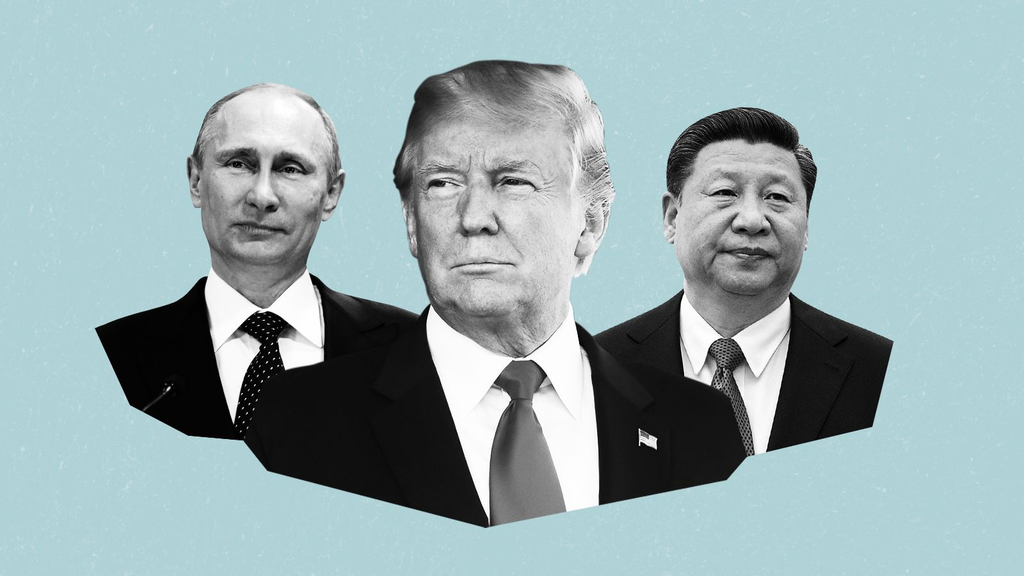
For the first time in modern history, the leaders of the United States, China, and Russia are sitting down together at the same table. On Thursday, November 19, 2026, U.S. President Donald Trump, Chinese President Xi Jinping, and Russian President Vladimir Putin will meet in the southern Chinese tech hub of Shenzhen.
Government officials in Washington, Moscow, and Beijing have all officially confirmed the gathering. The talks will happen on the sidelines of the 2026 Asia-Pacific Economic Cooperation (APEC) Economic Leaders’ Meeting, turning what is usually a regional trade conference into the biggest geopolitical event of the year.
When the three men who control the world’s largest armies, biggest economies, and most powerful nuclear arsenals enter a closed room together, everyone else pays attention. Even if you do not follow international politics every day, the decisions made in Shenzhen this week could directly shape fuel prices, global trade, and world peace heading into 2027.
What Is Happening in Shenzhen on November 19?
On Thursday, November 19, 2026, Chinese President Xi Jinping will host a three-way diplomatic meeting with U.S. President Donald Trump and Russian President Vladimir Putin in Shenzhen, China. The session takes place alongside the annual APEC China 2026 summit, which runs from November 18 to November 19 at the Shenzhen International Exchange Center.
If you want the quick facts at a glance, here is what has been officially confirmed so far:
The $0 Secret To Launching Your Entire Online Empire
Why pay hundreds every month for separate software? Build funnels, send emails, and make sales with Systeme.io completely free.
Get Started For $0Free Forever • No Credit Card Needed • Beginner-Friendly
- Date: Thursday, November 19, 2026.
- Location: Shenzhen, Guangdong Province, China.
- Leaders Attending: U.S. President Donald Trump, Chinese President Xi Jinping, and Russian President Vladimir Putin.
- Occasion: Held on the margins of the 2026 APEC Economic Leaders’ Meeting.
- Historic Significance: This marks the first-ever trilateral (three-way) summit between the sitting presidents of the United States, China, and Russia.
The road to locking in this date moved quickly over the past two weeks. President Trump first told reporters on November 8 that he expected to see both Xi and Putin during his trip to China. By November 13, the White House assistant press secretary confirmed the three-way sit-down was officially on the schedule.
One day later, Kremlin spokesman Dmitry Peskov confirmed that Moscow, Beijing, and Washington had agreed on November 19. Finally, on November 16, China’s Ministry of Foreign Affairs released its own brief statement confirming that Xi will host the session with both Trump and Putin in attendance, though Beijing kept the formal agenda under wraps.
The choice of Shenzhen as the backdrop is no accident. Just four decades ago, Shenzhen was a quiet fishing town right across the border from Hong Kong. Today, it is China’s most dynamic technology and manufacturing powerhouse, home to giant electric vehicle makers, telecom leaders, and artificial intelligence startups. Hosting the world’s top leaders there allows Beijing to show off its economic rise up close.
This gathering also builds on months of intense diplomatic maneuvering. Earlier in 2026, two high-stakes Trump and Xi summits ended with mixed results and promises of future follow-ups. Around the same time, headlines erupted around the globe when Trump invited Putin to the G20 summit in Miami, signaling that the White House was willing to break traditional diplomatic rules to bring rival leaders back to the negotiating table.
Why Is This Three-Way Meeting Such a Big Deal?
Two-way meetings between world leaders happen almost every month. Trump and Xi have met multiple times in 2026, and Xi and Putin have met more than 40 times since 2013. What makes November 19 completely different is that all three leaders are sitting down together at the exact same time.
In international politics, getting Washington, Beijing, and Moscow into a single room is rare because the three nations rarely trust one another enough to negotiate as a trio. Usually, the United States prefers dealing with China and Russia separately so that Beijing and Moscow cannot team up against American interests in the same conversation.
Because of the sheer power sitting at that table, political historians are already comparing the Shenzhen gathering to the famous 1945 Yalta Conference. Near the end of World War II, U.S. President Franklin D. Roosevelt, British Prime Minister Winston Churchill, and Soviet leader Joseph Stalin met in Yalta to redraw borders and decide how the world would be run for decades to come.
Inside Russia, commentators and political figures have welcomed the image of Putin sitting as an equal alongside Trump and Xi. In Saint Petersburg, Russian artist Alexey Sergienko even unveiled a new painting titled “Shenzhen 26” showing the three presidents together ahead of the trip. For Moscow, simply being in that room sends a message that Russia cannot be isolated from global decision-making.
What Will Trump, Xi, and Putin Actually Talk About?
While China’s Foreign Ministry declined to publish an official checklist of topics, statements from the White House and the Kremlin give us a very clear picture of what is on the table. According to Al Jazeera’s coverage of the summit announcement, each country is walking into Shenzhen with very different priorities.
Preventing a New Nuclear Arms Race
At the very top of President Trump’s list is nuclear weapons. Back in February 2026, the New Strategic Arms Reduction Treaty—better known as New START—officially expired. That treaty was the last remaining legal agreement limiting how many long-range nuclear warheads the United States and Russia could deploy.
For the first time in more than 50 years, the world’s two biggest nuclear powers are operating with zero binding limits on their atomic stockpiles. When Russia suggested simply extending the old rules for one more year, Trump turned the offer down. He argued that any modern nuclear deal must include China, which has been rapidly expanding its own nuclear arsenal over the past few years.
According to data tracked by the Stockholm International Peace Research Institute (SIPRI), Russia and the United States still hold roughly 90 percent of the world’s nuclear weapons, while China ranks third and is building fast. Trump believes getting all three nations to agree on new limits is essential for global safety.
Still, White House officials are keeping expectations realistic. One senior U.S. official told reporters that Washington does not expect the three leaders to walk out of Shenzhen with a signed nuclear treaty. Instead, the goal is simply to break the ice and start a conversation that diplomats can build on over the coming months.
The Ongoing War in Iran and Global Energy Prices
The second major issue on Trump’s agenda is the war in Iran. Throughout 2026, military clashes in the Middle East and threats to shipping lanes in the Strait of Hormuz have rattled energy markets and kept oil prices volatile.
Both China and Russia hold significant sway over Tehran. China is the biggest buyer of Iranian oil, while Russia maintains close military and diplomatic ties with Iran’s leadership. Earlier this year, during an explosive summit in Washington, Trump pressed Xi Jinping to cut support for Iran.
Send, Spend & Hold Money Worldwide Without Hidden Fees
Transfer money internationally at the real exchange rate and hold 40+ currencies in one account.
Open a Wise AccountMid-market rate • Fast transfers • 40+ currencies
Now, with tensions in the Iran war continuing to flare despite claims that an end is near, and amid reports that Tehran sent a secret nuclear offer to Washington through Qatar, Trump wants to test whether Beijing and Moscow are ready to help cool down the Middle East before energy disruptions hurt the global economy even further.
What About the War in Ukraine and North Korea?
If you are wondering why Russia’s war in Ukraine is not headline news on the official agenda, the answer comes down to deep disagreement among the three hosts and guests.
Moscow has pushed to include Ukraine in the three-way talks. However, China has resisted putting Ukraine on the trilateral agenda, and a senior U.S. official confirmed that Trump is unlikely to focus on Ukraine during the three-way session because Washington does not view this format as the right setting for it.
Separate diplomatic channels have already been working on that front, including recent rounds where U.S. envoys traveled between Moscow and Kyiv for high-stakes peace talks and heated debates as Russia accused European leaders of blocking a Ukraine settlement.
Meanwhile, U.S. officials noted that developments involving North Korea could come up during the Shenzhen discussions. At the same time, the White House made clear that Trump has no plans to meet North Korean leader Kim Jong Un during this Asia trip.
What Each Leader Wants Out of Shenzhen
To understand how Thursday’s meeting might play out, it helps to look at what each president is hoping to gain back home.
What Donald Trump Wants
President Trump is arriving in Asia from November 16 to November 19 fresh off the U.S. midterm elections, where Democrats flipped control of Congress. With political pushback growing in Washington after the midterm results, Trump is eager to show voters that he can deliver bold, historic foreign policy breakthroughs that traditional politicians would never attempt.
Beyond the three-way meeting with Xi and Putin, Trump has practical goals for his bilateral talks with China. According to analysis from the Council on Foreign Relations, Washington wants to extend the current U.S.-China trade truce, keep vital rare-earth mineral exports flowing to American factories, and finally launch an emergency communication hotline to manage artificial intelligence risks.
What Xi Jinping Wants
As the host of APEC 2026 under the motto “Building an Asia-Pacific Community to Prosper Together,” Xi Jinping wants to project calm, steady global leadership. Hosting both the American and Russian presidents in Shenzhen paints Beijing as the indispensable center of world diplomacy.
Economically, China is balancing huge achievements with real domestic challenges. While China recently smashed global export and trade records and quietly reshaped its holdings of U.S. government debt, Beijing still wants predictable trade ties with the United States so its tech and manufacturing sectors can keep growing.
The $0 Secret To Launching Your Entire Online Empire
Why pay hundreds every month for separate software? Build funnels, send emails, and make sales with Systeme.io completely free.
Get Started For $0Free Forever • No Credit Card Needed • Beginner-Friendly
On nuclear weapons, however, Xi is expected to move very carefully. Foreign policy experts note that Beijing has long refused to cap its nuclear arsenal while it remains smaller than those of the U.S. and Russia, fearing that an early treaty would lock China into a permanently weaker position.
What Vladimir Putin Wants
For Vladimir Putin, the biggest win happens the moment the cameras flash. Since launching its full-scale invasion of Ukraine, Moscow has faced sweeping Western sanctions and diplomatic isolation from Europe and North America.
Standing between Xi and Trump in Shenzhen shatters that isolation overnight. Even though Kremlin aide Yury Ushakov noted that Russia and the U.S. have not scheduled a separate one-on-one meeting between Putin and Trump on the sidelines, the three-way photo opportunity alone gives Putin a powerful propaganda victory at home.
The Surprising Side Stories Surrounding the Trip
Two major side stories are drawing almost as much attention as the summit itself.
First, White House officials confirmed that tech billionaire Elon Musk is traveling with President Trump to China, though he will not sit inside the formal three-way diplomatic meeting. Musk’s presence is notable because his companies—especially Tesla, which operates a massive Gigafactory in Shanghai—have deep business ties in China, while Musk himself has become one of the closest private-sector figures to the Trump administration, even after Trump awarded Musk America’s highest scientific honor.
Second, America’s traditional allies in Europe and Asia are watching Shenzhen with serious anxiety. In a detailed briefing by the Brookings Institution, foreign policy scholars warned that a closed-door meeting between Washington, Beijing, and Moscow sends a chilling message to places like Ukraine and Taiwan. European leaders have repeatedly stressed that no lasting peace in Europe can be decided without Ukraine and Europe in the room.
How Could This Summit Affect Everyday People?
It is easy to look at summits in faraway cities and think they only matter to diplomats in suits. In reality, what happens in Shenzhen on November 19 touches everyday life in three big ways:
- Gas Prices and Cost of Living: If Trump, Xi, and Putin find even small ways to lower the temperature in the Iran conflict and protect oil shipping routes, global crude prices could stabilize. Lower oil prices mean cheaper fuel at the pump and lower shipping costs for groceries and household goods.
- Prices on Phones, Cars, and Electronics: Shenzhen is the beating heart of global hardware supply chains. If Trump and Xi use this week to extend their tariff truce and protect rare-earth mineral trade, companies that build smartphones, laptops, and electric vehicles avoid sudden cost spikes that eventually get passed on to shoppers.
- A Safer World: Nobody wants to live under the shadow of an unchecked nuclear arms race. Even if Thursday’s meeting only produces an agreement to keep talking about nuclear safety and AI military hotlines, regular communication between Washington, Beijing, and Moscow lowers the chance of a catastrophic mistake.
Frequently Asked Questions (FAQs)
When and where are Donald Trump, Xi Jinping, and Vladimir Putin meeting?
Donald Trump, Xi Jinping, and Vladimir Putin are scheduled to meet on Thursday, November 19, 2026, in Shenzhen, China. The three-way summit takes place on the sidelines of the 2026 Asia-Pacific Economic Cooperation (APEC) Economic Leaders’ Meeting.
Have the leaders of the U.S., China, and Russia ever held a three-way summit before?
No. The November 19, 2026 meeting in Shenzhen marks the first-ever trilateral summit bringing together the sitting presidents of the United States, China, and Russia at the same time.
What is the main goal of the Trump, Xi, and Putin meeting in Shenzhen?
According to the White House, President Trump’s main goal is to start a three-way conversation on nuclear arms control following the expiration of the New START treaty in February 2026, as well as to discuss the ongoing war in Iran. U.S. officials say they do not expect a final signed agreement on Thursday, viewing the meeting instead as an opening step.
Will Elon Musk attend the meeting with Trump, Xi, and Putin?
No. While a senior White House official confirmed that Elon Musk is traveling with President Trump to China, Musk will not participate in the three-way diplomatic meeting with Xi Jinping and Vladimir Putin.
Will Trump meet North Korean leader Kim Jong Un during his trip to China?
No. White House officials stated that President Trump is not expected to meet with North Korean leader Kim Jong Un during this November 2026 trip to Asia, though North Korea may still come up during discussions with Xi and Putin.
What Happens Next After Shenzhen?
Nobody expects a single afternoon in Shenzhen to magically erase decades of rivalry between Washington, Beijing, and Moscow. Russia is still fighting in Ukraine, the Middle East remains on edge, and China is still fiercely competing with the United States over trade, chips, and global influence.
Yet simply getting Donald Trump, Xi Jinping, and Vladimir Putin into the same room on November 19 changes the political weather. Over the coming weeks, diplomatic teams from all three nations will decide whether Thursday’s conversation turns into real working-level negotiations on nuclear limits and regional crises, or fades into a dramatic photo opportunity.
