
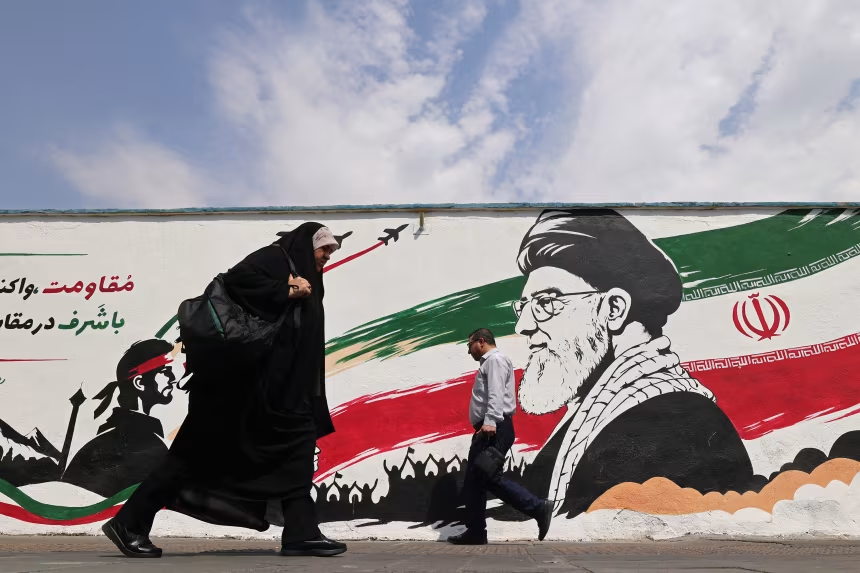
Iran has officially handed the United States a new nuclear proposal through diplomatic backchannels in Qatar. A senior Iranian official confirmed the move directly to Reuters, revealing that while a written blueprint is now on American desks, Tehran will refuse to sit down and talk about it until the White House meets seven strict preconditions.
The diplomatic courier run comes at a tense moment in the region. Behind the scenes, regional power brokers are racing against the clock to stop full-scale fighting from flaring up across the Middle East following the recent US midterm elections. Washington has acknowledged that it is reviewing the document, but early signals from American leadership show that bridging the gap between both sides will be an uphill battle.
If you are trying to make sense of what this surprise package contains, why Qatar is handling the mail, and whether this means peace or more escalation, here is everything you need to know in plain English.
What Just Happened Between Iran, the US, and Qatar?
Diplomatic relations between Washington and Tehran have been officially broken for decades, meaning the two nations rarely speak face-to-face. Whenever tensions reach a boiling point, third-party mediators step into the room to carry messages back and forth.
This week, Qatar served as that bridge. Officials in Doha delivered a formal Iranian proposal covering its disputed nuclear program. An Iranian official speaking anonymously to Reuters confirmed the delivery and stated that Washington is currently reviewing the contents of the offer.
The $0 Secret To Launching Your Entire Online Empire
Why pay hundreds every month for separate software? Build funnels, send emails, and make sales with Systeme.io completely free.
Get Started For $0Free Forever • No Credit Card Needed • Beginner-Friendly
However, Tehran added an immediate hurdle: they will not begin direct or indirect discussions on the contents of the proposal until the United States checks off seven specific demands first.
Rather than an open invitation to negotiate, the proposal acts more like a conditional roadmap. Tehran is essentially saying that the deal exists, but the door to the negotiating room stays locked until Washington makes the first major concessions.
The Seven Preconditions: What Does Tehran Want First?
The proposal itself remains classified, but Iranian leaders have made no secret of what their conditions look like. Speaking during an official visit to Moscow, Mohsen Rezaei, a top Iranian security official, stated plainly that negotiations are completely frozen until Washington acts on Tehran’s demands.
Tehran’s primary preconditions focus heavily on economic relief and military pullbacks:
- Lifting heavy economic sanctions: Iran wants immediate relief from punishing trade, financial, and oil embargoes that have crippled its domestic economy.
- Releasing all frozen assets: Billions of dollars in Iranian funds remain locked in overseas accounts due to international sanctions. Tehran demands access to these funds without restrictions.
- Payment of war reparations: Tehran has asked for financial compensation tied to recent regional strikes and military campaigns carried out by the US and its allies.
- Ending military operations: A complete cessation of air and naval strikes targeting Iranian territory, regional assets, and infrastructure.
- Halting domestic interference: A formal pledge that Washington will cease support for anti-government groups and covert actions inside Iran.
- Lifting maritime blockades: Clearing naval restrictions around southern Iranian trade routes and waters.
- Restoring shipping security guarantees: Iran has explicitly linked the full reopening of commercial shipping routes through the critical Strait of Hormuz to whether the White House meets these terms.
Rezaei summarized the stance clearly: as long as Washington does not execute the conditions, Iran will neither open the Strait of Hormuz nor sit down for talks.
Why Did Iran Choose Qatar as the Messenger?
Whenever high-stakes backchannel diplomacy happens in the Gulf, Qatar is almost always involved. While it might seem odd for a small peninsula to play middleman between military heavyweights, Doha has carved out a unique role as the region’s chief problem-solver.
Qatar maintains working diplomatic and economic ties with Tehran while simultaneously hosting Al Udeid Air Base, the largest American military installation in the Middle East. Because Doha speaks comfortably to both sides, it has repeatedly mediated prisoner swaps, hostage releases, and ceasefire drafts over the years.
By passing the nuclear proposal through Qatari diplomats, Tehran ensures the message arrives through established, private security channels rather than through chaotic public posturing.
How Is Washington Reacting to the Move?
The White House finds itself in a tough spot. Washington has long insisted that Iran’s nuclear capabilities must be the very first topic on the table before any sanctions are lifted or concessions are handed out. Iran is demanding the exact opposite: sanctions relief first, nuclear discussions second.
When questioned by reporters regarding the Iranian proposal, Donald Trump pushed back against Tehran’s leverage, remarking: “They are not doing anything without our approval. It doesn’t make a difference what they’re looking at; they’re not going to have a nuclear weapon.”
American defense officials also remain skeptical. Intelligence agencies and Western allies worry that agreeing to massive preconditions simply to begin a conversation would reward Tehran without guaranteeing any reduction in uranium enrichment. With the US Congress shifting dynamics after the midterm elections, any deal that looks lenient on Tehran faces intense political pushback in Washington.
What Is at Stake Across the Region?
This diplomatic shuffle is not happening in a vacuum. The broader Middle East remains on edge following months of military friction that pulled multiple countries into active combat.
Earlier this year, direct strikes between the US, Israel, and Iran shattered years of shadow warfare. Cross-border combat broke out across Lebanon with Hezbollah, while Houthi forces in Yemen repeatedly targeted energy infrastructure, airports, and maritime shipping lanes across the Red Sea and Saudi Arabia.
The biggest economic choke point in this standoff is the Strait of Hormuz. Roughly one-fifth of the world’s petroleum passes through this narrow waterway. With Tehran explicitly warning that the strait’s commercial stability depends on Washington’s response, the outcome of this proposal directly affects global oil prices, shipping insurance rates, and everyday fuel costs for consumers worldwide.
If diplomacy collapses completely, military commanders on both sides have warned of expanded retaliation. Iran has threatened to broaden its targets, while American air and naval units in the region remain on high alert.
Send, Spend & Hold Money Worldwide Without Hidden Fees
Transfer money internationally at the real exchange rate and hold 40+ currencies in one account.
Open a Wise AccountMid-market rate • Fast transfers • 40+ currencies
The Core Problem: Who Moves First?
The biggest barrier to resolving this dispute is a classic diplomatic stalemate: neither side trusts the other to take the first step.
Iran points to previous diplomatic breakdowns as proof that Washington cannot be trusted to uphold long-term commitments. Tehran’s leaders argue that after facing severe sanctions and military pressure, they need tangible economic guarantees before giving away their nuclear leverage.
Washington views Iran’s list of demands as an attempt to strip away Western leverage before real work even begins. From the American perspective, lifting sanctions, unfreezing billions, and halting military deployments without seeing verifiable dismantling of nuclear centrifuges leaves the West empty-handed.
Unless mediators in Qatar can turn these rigid demands into a step-by-step, mutual compromise, the document is likely to gather dust while military tensions simmer.
Frequently Asked Questions
What did Iran send to the US?
Iran delivered a formal proposal addressing its nuclear program through diplomatic mediators in Qatar. However, Tehran insists that the US must fulfill seven specific preconditions before any talks on the proposal can actually take place.
What are Iran’s seven demands?
The demands outlined by senior Iranian officials include the complete lifting of US economic sanctions, the unfreezing of all Iranian assets held overseas, financial war reparations, a halt to military strikes, and an end to foreign interference in Iranian internal affairs.
Why is Qatar involved in US-Iran diplomacy?
Qatar maintains diplomatic relationships with both Washington and Tehran, making it one of the few trusted middlemen in the Middle East. Doha regularly hosts backchannel communications and assists in delicate negotiations between nations that do not talk directly.
Is a deal likely to happen soon?
A breakthrough is unlikely in the immediate days ahead. Washington insists that nuclear restrictions must be part of any initial conversation, while Iran refuses to negotiate at all until its preconditions are met. Finding a workable middle ground will require extensive back-and-forth diplomacy.
How does this situation affect global oil prices?
Tehran has tied its demands to the security and free flow of shipping through the Strait of Hormuz. Because a massive portion of global crude oil moves through this narrow passage, any disruption or threat of military confrontation instantly drives up energy costs around the world.
The delivery of this proposal proves that backchannels between Washington and Tehran are still open, even when public rhetoric turns fierce. Having an active channel is always better than complete silence, but handing over a list of preconditions is a long way from signing a lasting peace agreement. With the Strait of Hormuz on the line and regional forces on alert, the coming weeks will reveal whether both nations are ready to step back from the edge or double down on confrontation.
The $0 Secret To Launching Your Entire Online Empire
Why pay hundreds every month for separate software? Build funnels, send emails, and make sales with Systeme.io completely free.
Get Started For $0Free Forever • No Credit Card Needed • Beginner-Friendly
