
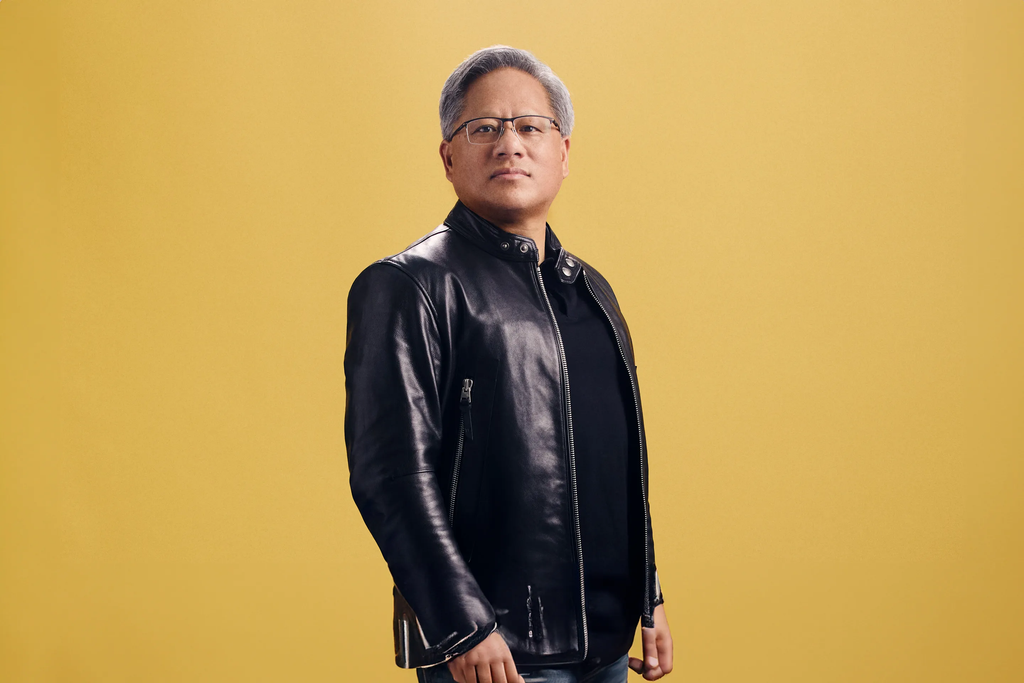
On Thursday, November 12, 2026, the technology world woke up to news that almost nobody saw coming just a few weeks ago. Jensen Huang, the leather-jacket-wearing co-founder who turned Nvidia from a small graphics chip startup into the most important artificial intelligence company on the planet, resigned as chief executive officer, president, and board member effective immediately.
For more than 33 years, Huang was the face, voice, and driving brain behind Nvidia. He started the company in 1993 at a Denny’s restaurant in San Jose, California, and built it into a powerhouse that briefly crossed a $5 trillion valuation in 2025. Now, after a whirlwind week of personal scandals, national security questions, and mounting pressure from lawmakers and investors, his historic run at the top is over.
In an official company announcement, Nvidia confirmed that Chief Financial Officer Colette Kress will step in as interim CEO while the board searches for a permanent replacement. The company also named longtime board member and tech investor Harvey C. Jones as its first-ever chair of the board. If you use AI tools, follow the stock market, or simply care about where global tech is headed, this shakeup affects far more than one Silicon Valley office.
Why Did Jensen Huang Resign as Nvidia CEO?
Nvidia’s official press release did not spell out a specific reason for Huang’s sudden exit, thanking him simply for his “immeasurable contributions” to the company and the wider tech industry. Behind the scenes, however, the resignation capped off nearly two weeks of intense media reports surrounding multiple extramarital affairs and national security concerns.
The crisis began in late October and escalated rapidly in early November 2026. Major outlets, including The New York Times, revealed that Huang—who has been married to his wife, Lori, since 1985—had been involved in an affair with a Chinese businesswoman named Alice Huang. As we previously covered when Jensen Huang admitted his affair with the alleged Chinese spy, the situation quickly went from personal tabloid news to a serious geopolitical headache.
The $0 Secret To Launching Your Entire Online Empire
Why pay hundreds every month for separate software? Build funnels, send emails, and make sales with Systeme.io completely free.
Get Started For $0Free Forever • No Credit Card Needed • Beginner-Friendly
The Alice Huang and Megaspeed Controversy
According to reporting from The Guardian and the Financial Times, Alice Huang (no relation to Jensen) led a Singapore-based data center firm called Megaspeed. Born in rural Hunan, China, she previously worked at China’s state broadcaster before moving into finance and launching AI ventures with her partner, financier Kang Wei.
U.S. intelligence officials reportedly suspected that Alice Huang had been recruited by Beijing and was feeding sensitive information back to Chinese authorities. Because Nvidia’s advanced chips are at the very center of the U.S.-China tech rivalry—and because U.S. export rules strictly limit which AI chips can be sold to China—any close personal tie between Nvidia’s CEO and an alleged foreign intelligence asset set off alarm bells in Washington.
Shipment records analyzed by researchers also drew scrutiny toward Megaspeed’s Malaysian subsidiary, which reportedly imported billions of dollars’ worth of equipment built with Nvidia chips. In February 2026, Singapore barred Alice Huang from re-entering the country amid an investigation into Megaspeed’s operations. Jensen Huang denied knowing that she had any alleged ties to Chinese intelligence, though photographs and videos showed the two dining together at tech events in Taipei in 2024 and 2025.
Workplace Relationships and Boardroom Pressure
If the national security angle was not enough, the final blow came when reports surfaced about workplace relationships inside Nvidia itself. On Sunday, November 8, Huang sent an internal email to employees admitting he had been unfaithful and promising to cooperate fully with an independent board investigation.
Days later, The New York Times reported that Huang had also engaged in an affair with Kimberly Powell, a vice president and subordinate at Nvidia. Following his resignation on Thursday, Reuters reported that a third alleged affair involving another Nvidia employee had also come to light.
For a public company worth trillions of dollars, overlapping personal relationships with subordinates create massive legal and governance risks. Shareholders had already filed a lawsuit accusing Nvidia and Huang of misleading investors about the scandal, while U.S. lawmakers demanded answers. Faced with a plummeting stock price and a growing distraction, the board and Huang parted ways.
Timeline: How the Nvidia Leadership Crisis Unfolded
To understand how fast things fell apart for one of Silicon Valley’s most untouchable executives, look at how quickly events stacked up over just a few days:
- October 29, 2026: Initial media reports surface linking Jensen Huang to a woman suspected by U.S. intelligence of acting as a Chinese asset.
- November 8, 2026: The New York Times publishes detailed allegations regarding U.S. surveillance of Alice Huang. That same day, Jensen Huang emails Nvidia staff admitting to an affair, and Nvidia’s board announces an independent investigation into whether its CEO was targeted by a foreign intelligence effort.
- November 9–10, 2026: Nvidia’s share price drops sharply as shareholders file suit and Democratic senators Elizabeth Warren and Chris Coons urge the White House to preserve all records related to Nvidia chip exports to China.
- November 11, 2026: Reports emerge revealing Huang’s relationship with an Nvidia subordinate, raising immediate questions about corporate policy and board oversight.
- November 12, 2026: Nvidia officially announces that Jensen Huang has resigned as CEO, president, and board director effective immediately, naming CFO Colette Kress as interim CEO.
Who Is Colette Kress, Nvidia’s New Interim CEO?
With Huang suddenly out of the building, all eyes are now on Colette Kress. While she may not have Huang’s rockstar public persona or signature leather jacket, Wall Street knows her very well.
Kress has served as Nvidia’s Executive Vice President and Chief Financial Officer since 2013, meaning she has been right beside Huang throughout the company’s historic rise from a gaming-focused graphics card maker to the undisputed king of AI hardware. Before joining Nvidia, she held senior finance leadership roles at Cisco Systems and Microsoft, giving her deep experience inside massive technology organizations.
What Kress Needs to Do Right Away
Nvidia confirmed that Kress will continue serving as CFO while acting as interim CEO until a permanent leader is chosen. Her first major public test arrives almost immediately: Nvidia is scheduled to report its quarterly financial results on Tuesday, November 17, 2026.
For the first time in company history, investors will dial into an Nvidia earnings call without Jensen Huang at the microphone. Kress’s main job over the next few weeks is simple: calm nervous investors, reassure huge cloud customers that chip deliveries will not slow down, and prove that Nvidia’s product roadmap stays on track. As new board chair Harvey C. Jones noted in the company’s statement, the board expects operations and customer commitments to continue without interruption.
Why Jensen Huang’s Exit Is Such a Big Deal for Tech and AI
In most big companies, when a CEO steps down, there is a clear second-in-command ready to take over. At Nvidia, things worked very differently.
Huang was famous for running an unusually flat management structure where more than 60 executives reported directly to him. He once told Bloomberg that Nvidia was built specifically around how he personally liked to run things. Because he was involved in almost every major engineering, sales, and strategy decision, tech analysts have long warned that Nvidia faced a major “key-person risk” if Huang ever left suddenly.
The AI Industry Depends on Nvidia
To appreciate why markets reacted so nervously, consider how much of modern tech runs on Nvidia hardware. Every major AI lab—including OpenAI, Anthropic, Google, and Meta—relies heavily on Nvidia’s specialized graphics processing units (GPUs) to train and run their smartest models.
Big tech giants spend tens of billions of dollars every year on Nvidia gear. We have seen massive investments across the board, from when Elon Musk dropped $40 billion on Nvidia chips to major partnerships like when Nvidia and Meta formed a $3 billion super-alliance. Even as rivals try to reduce their dependence—such as when Microsoft unveiled its custom chip plan to cut its Nvidia bill or when startups raised billions to challenge Nvidia’s chip monopoly—nobody has matched Nvidia’s combined hardware and software ecosystem yet.
Send, Spend & Hold Money Worldwide Without Hidden Fees
Transfer money internationally at the real exchange rate and hold 40+ currencies in one account.
Open a Wise AccountMid-market rate • Fast transfers • 40+ currencies
Political Fallout in Washington
Huang’s resignation also complicates Nvidia’s relationship with the U.S. government. Over the past year, Huang had built a remarkably close working relationship with President Donald Trump, advising the administration on AI policy and even attending high-profile White House dinners and technology events in September 2026.
Despite the scandal, President Trump publicly defended Huang earlier in the week, calling him an “honorable man” who had done an incredible job. However, congressional leaders on both sides of the aisle have raised concerns about export controls and foreign espionage risks. Huang has already agreed to testify before U.S. Congress, meaning his public scrutiny is far from over.
Who Could Replace Jensen Huang Permanently?
Nvidia’s board says it will evaluate both internal leaders and outside executives to find its next permanent CEO. Because Huang’s two adult children, Madison and Spencer, work at Nvidia in mid-level roles and are widely viewed as too early in their careers for the top job, the board will likely look at seasoned industry heavyweights.
Trump’s Surprise Endorsement of Tim Cook
Shortly after Huang’s resignation became public, President Trump jumped onto Truth Social to float a blockbuster idea: hiring former Apple CEO Tim Cook.
“There is only one man to take his place – TIM COOK of Apple. A Legend replaces a Legend!” Trump wrote. Cook stepped down as Apple’s CEO in September 2026 after 15 years leading the iPhone maker—a transition that saw Apple hand the reins to new CEO John Ternus, as detailed in our breakdown of Apple’s $58 million package for new CEO John Ternus.
While Cook is widely regarded as the greatest supply-chain master in tech history, he is now Apple’s executive chairman and has shown no public sign that he wants to jump back into a grueling full-time CEO role. Still, the mere suggestion shows just how high-profile this job opening is.
Realistic Internal and External Contenders
Beyond celebrity names, Wall Street analysts are watching several practical candidates:
- Internal Engineering Veterans: Executives like Jay Puri (Executive Vice President of Worldwide Field Operations) or senior engineering leaders who understand Nvidia’s CUDA software platform and data center architecture could offer smooth continuity.
- Colette Kress: If Kress delivers a steady quarterly earnings report and keeps customers happy over the coming months, interim CEOs sometimes earn the permanent title.
- Outside Semiconductor Leaders: Experienced chip executives from across Silicon Valley could be recruited if the board wants a fresh start to appease regulators in Washington.
Meanwhile, Huang himself probably will not stay unemployed for long if he wants to work. When someone on X asked Elon Musk whether he would hire Huang, Musk replied, “That would be an honour”. And with a roughly 3.6% ownership stake in Nvidia—worth around $145 billion even after the recent stock dip—Huang remains one of the richest people on Earth.
What Should Everyday Investors and Tech Fans Do Now?
Whenever a giant company loses its founder overnight, headlines can feel overwhelming. If you own Nvidia stock directly, hold it inside a retirement fund, or simply follow AI news, here is some honest, grounded perspective on how to handle the noise.
First, avoid making panic decisions based on breaking headlines. When tech stocks lost $1 trillion in a single day during earlier AI market jitters, investors who sold at the bottom quickly regretted it once the dust settled. Nvidia still owns the best AI chip designs in the world, has billions of dollars in backlogged orders, and employs tens of thousands of brilliant engineers who are still showing up to work every day.
The $0 Secret To Launching Your Entire Online Empire
Why pay hundreds every month for separate software? Build funnels, send emails, and make sales with Systeme.io completely free.
Get Started For $0Free Forever • No Credit Card Needed • Beginner-Friendly
Second, pay close attention to November 17. Quarterly earnings numbers—and how big customers like Microsoft, Meta, and Amazon talk about their AI spending—matter far more to Nvidia’s long-term health than boardroom drama.
Third, watch how Washington responds. If U.S. lawmakers impose stricter rules on global chip sales or launch deeper probes into Nvidia’s overseas partners, that could slow down future growth more than Huang’s absence ever could.
Frequently Asked Questions (FAQs)
Did Jensen Huang really resign from Nvidia?
Yes. On November 12, 2026, Nvidia officially announced that co-founder Jensen Huang resigned as chief executive officer, president, and member of the board of directors, effective immediately.
Why did Jensen Huang step down as CEO?
While Nvidia’s official statement did not give a specific reason, his resignation followed intense media reports and a board investigation into multiple extramarital affairs—including a relationship with Alice Huang, a businesswoman suspected by U.S. intelligence of spying for China, as well as alleged relationships with two Nvidia employees.
Who is the new CEO of Nvidia?
Nvidia appointed its longtime Executive Vice President and Chief Financial Officer, Colette Kress, to serve as interim CEO. The board of directors has launched a formal search considering both internal and external candidates for a permanent CEO.
Does Jensen Huang still own Nvidia stock?
Yes. Even though he no longer holds an executive or board role at Nvidia, Huang still owns roughly 3.6% of the company’s shares (over 870 million shares), keeping his personal net worth around $145 billion to $150 billion.
Will Nvidia stop making AI chips without Jensen Huang?
No. Nvidia’s board emphasized that daily operations, customer orders, and upcoming product launches will continue without interruption under interim CEO Colette Kress and the company’s existing engineering teams.
What Comes Next for the AI Giant
Jensen Huang’s departure marks the end of one of the most extraordinary leadership runs in modern business history. He took a three-person startup from a booth at Denny’s and built the engine powering the global artificial intelligence boom. Yet as powerful as any founder becomes, no single executive is bigger than national security rules, corporate governance, and shareholder trust.
Over the coming months, Nvidia will have to prove that its culture and engineering lead can thrive without the founder who shaped every corner of the company. Whether the board eventually hands the permanent keys to Colette Kress or brings in an outside tech heavyweight, the race to power the future of AI is not slowing down for anyone.
