
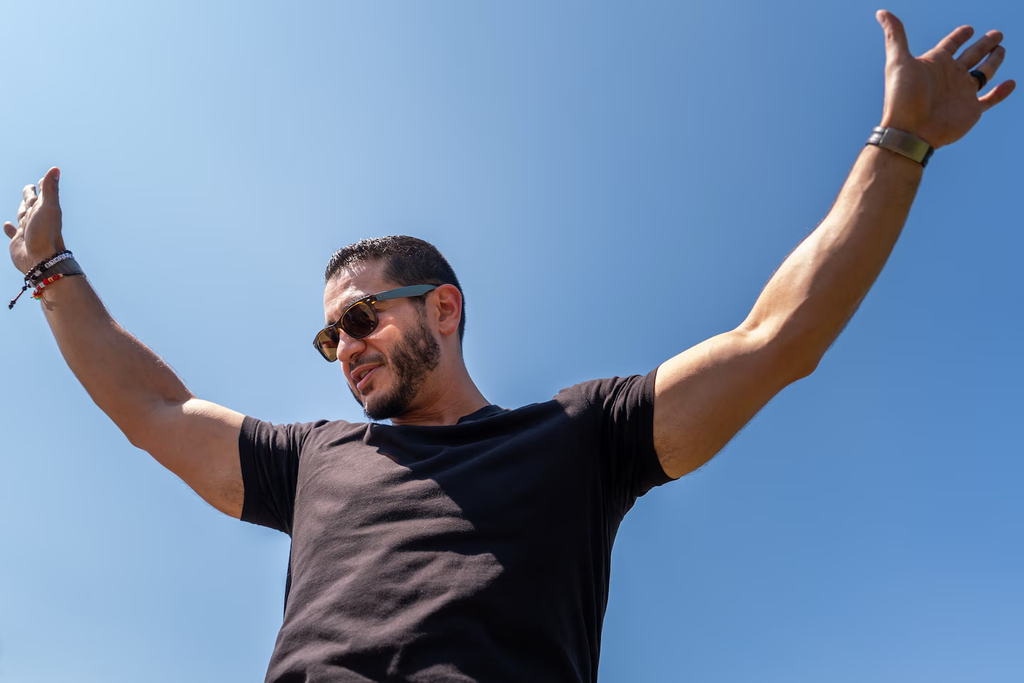
Abdul El-Sayed just made history by winning Michigan’s fiercely contested seat in the United States Senate. When the race was called in the early hours of Wednesday morning, he officially became the first Muslim American ever elected to the upper chamber of the United States Congress. Across the country, and especially in the crowded coffee shops of Dearborn, community centers in Detroit, and living rooms nationwide, Muslim Americans erupted in celebration.
Yet, if you sit down and speak with the people who knocked on doors, rallied their neighbors, and cast their ballots, you quickly discover a surprising truth. The excitement surging through the community is not primarily about his religious background.
For decades, minority communities have seen politicians use their background as a photo opportunity. Voters have watched political candidates wave to them during election season, make empty promises about diversity, and disappear the moment the victory party ends. El-Sayed’s victory feels different because it shatters that tired routine. Muslim voters are not celebrating because a man who shares their prayer routine won a seat in power. They are celebrating because an unapologetic, working-class advocate stood his ground on life-or-death issues, refused corporate money, took every smear thrown at him, and won on substance.
Moving Beyond Symbolic Politics and Empty Tokenism
For generations, immigrant and religious minority groups in the United States have been handed symbolic representation in place of real political influence. People were told to celebrate when someone from their community was appointed to an advisory board or given a podium at a party convention. But when those same communities faced housing crises, sky-high medical bills, workplace discrimination, or foreign policies that devastated their ancestral homelands, those symbolic leaders often stayed quiet.
El-Sayed represents a complete break from that culture. When he took the stage in Detroit to deliver his victory speech, he did not treat his election as a diversity trophy. He framed it as a shared victory for everyday working people who are sick and tired of being ignored by corporate-funded politicians.
The $0 Secret To Launching Your Entire Online Empire
Why pay hundreds every month for separate software? Build funnels, send emails, and make sales with Systeme.io completely free.
Get Started For $0Free Forever • No Credit Card Needed • Beginner-Friendly
For Muslim voters, this shift is revolutionary. Being treated as a serious voting bloc means being courted for your ideas, your labor, and your policies, not merely for your demographic label. In past cycles, both major parties treated Muslim Americans as either a national security problem to be managed or a tiny, fragile minority to be patronized. El-Sayed’s campaign flipped that dynamic entirely. He showed that a Muslim politician does not have to tone down his values or apologize for his heritage to build a winning majority in a vital battleground state.
The Bread-and-Butter Agenda That Actually Won the Race
The primary reason Abdul El-Sayed won Michigan, and the core reason Muslim voters rallied behind him with such fierce energy, comes down to everyday survival. He is an epidemiologist and a medical doctor who previously ran the Detroit Health Department. Long before this Senate run, he was rebuilding public health clinics, providing free eye exams and glasses to public school children, and inspecting municipal water systems for dangerous lead contamination.
When voters spoke to him on the campaign trail, the conversations were not about theological debates. They were about the price of eggs, the soaring cost of prescription insulin, and the impossibility of paying monthly rent.
Healthcare as a Fundamental Human Right
El-Sayed ran on a clear, unwavering promise: every single person in the United States deserves guaranteed, high-quality healthcare regardless of their income or employment status. In Arab and Muslim American households, just like in any working-class household in Detroit, Flint, or Grand Rapids, medical debt is a crushing burden. Families watch elderly parents struggle to afford heart medications while private insurance companies rake in billions in record profits.
Because El-Sayed is a physician who understands the mechanics of medicine, he did not speak in vague talking points. He explained exactly how corporate pharmaceutical monopolies gouge consumers and how universal healthcare would save working families thousands of dollars every year. Voters trusted his medical background far more than the corporate lobbyist talking points pushed by his opponent.
Tackling Corporate Greed and Everyday Expenses
Inflation has hit everyday families hard over the last several years. Instead of offering abstract economic statistics, El-Sayed focused on holding corporate monopolies accountable for price-gouging on groceries, gasoline, and utilities.
During a fiery moment in his victory speech, El-Sayed directly addressed the attacks launched against his background by his Republican rival, Mike Rogers:
“They might have been pointing to my name and my faith, but we all know my name and my faith are not why you cannot afford your gas.”
That single line cut through months of multi-million-dollar smear campaigns. It resonated with Muslim factory workers in Dearborn just as deeply as it resonated with auto workers in Warren and teachers in Lansing. By keeping the conversation laser-focused on living costs, El-Sayed proved that economic justice unites people across cultural and religious divides.
How the Smear Machine Blew Up in Their Faces
The general election race in Michigan was widely expected to be one of the nastiest political battles in recent history. Super PACs aligned with the national Republican Party poured more than one hundred million dollars into attack ads. Many of those ads subtly, and sometimes overtly, tried to paint El-Sayed as dangerous, alien, and out of touch with traditional American values.
Former Congressman Mike Rogers and his conservative allies attempted to turn El-Sayed’s faith into a weapon. They questioned his patriotism and tried to stoke fear among suburban and rural voters. Even inside his own party, conservative-leaning figures tried to sabotage his path. In a stunning move just forty-eight hours before voting began, moderate Democratic Representative Haley Stevens crossed party lines to publicly endorse Republican Mike Rogers after losing the primary to El-Sayed. To understand the deep political shockwaves that move caused across the state, read our breakdown on why Haley Stevens broke ranks to back Mike Rogers.
Yet, the fear-based playbook completely collapsed.
When campaigns spend enormous fortunes telling voters to fear someone because of their background, it only works if voters feel that the other side offers a solution to their daily struggles. Rogers offered corporate tax cuts and cultural grievances, while El-Sayed offered affordable prescriptions, paid family leave, and better public schools. Voters saw right through the smear machine.
Seeing that ugly strategy fail so miserably is another major reason Muslim Americans are celebrating. For twenty-five years following the events of September 11, Muslim communities have lived under the shadow of political dog whistles. El-Sayed’s election proved that weaponizing Islamophobia no longer guarantees an easy victory at the ballot box. Similar grassroots resilience against scapegoating has been visible across the country, much like when Mayor Zohran Mamdani stood firm against Islamophobic attacks in New York.
Building a Broad Coalition Instead of Playing Defense
In modern American history, Muslim political organizing often found itself trapped in a purely defensive crouch. Activist groups spent most of their time issuing press releases condemning hate crimes, defending civil liberties, or trying to prove that Muslims are normal, law-abiding citizens. While that work was necessary, it left little room to lead.
Send, Spend & Hold Money Worldwide Without Hidden Fees
Transfer money internationally at the real exchange rate and hold 40+ currencies in one account.
Open a Wise AccountMid-market rate • Fast transfers • 40+ currencies
El-Sayed flipped that posture upside down. Instead of asking for acceptance, he built a broad multiracial, multi-faith coalition that brought working-class communities together.
Standing Shoulder to Shoulder With Organized Labor
Michigan is the historical heart of the American labor movement. You cannot win a statewide race in Michigan without winning union households. El-Sayed spent months on picket lines, walking side-by-side with members of the United Auto Workers, nurses, sanitation workers, and service employees.
He did not treat union workers as a campaign backdrop. He championed legislation to penalize union-busting corporations, raise the federal minimum wage, and protect pensions. Union members did not care what religion El-Sayed practiced on Friday afternoons; they cared that he was ready to fight for their paychecks and workplace safety on Monday mornings.
Unity Across Diverse Faith Communities
One of the most inspiring aspects of El-Sayed’s campaign was the broad support he earned from people of all faiths. In his victory speech, he gave heartfelt thanks to the diverse communities that opened their doors to him:
“You welcomed me in your homes, your churches, your synagogues.”
He earned endorsements from Black church leaders in Detroit, progressive Jewish leaders in Ann Arbor, Catholic union members in Saginaw, and secular youth organizers across college campuses. By showing up in spaces where Muslim politicians were rarely seen, he showed that shared human values matter far more than demographic differences.
Moral Clarity on Foreign Policy and Human Rights
Another central reason why Muslim voters are ecstatic about El-Sayed is his refusal to stay silent on foreign policy. For decades, establishment politicians from both major parties have followed a strict, unquestioning foreign policy consensus. That consensus often involved unconditional military aid, endless foreign interventions, and a complete disregard for civilian casualties in the Middle East.
Over the past two years, Muslim Americans, Arab Americans, and young voters have felt deeply betrayed by political leaders who ignored their pleas for peace, ceasefires, and international human rights. Many traditional politicians told them to sit down, be quiet, and vote blue no matter who was on the ticket.
El-Sayed refused to play along. He was one of the earliest and most consistent voices calling for an immediate end to foreign wars, demanding an end to unconditional military funding, and insisting that Palestinian human rights must be protected alongside Israeli security.
He spoke with empathy, nuance, and moral backbone. He proved that an elected official can advocate for global justice without being intimidated by powerful lobbying organizations. For a community that has spent decades feeling politically homeless on foreign policy, having an elected Senator who reflects their moral concerns is deeply empowering.
The $0 Secret To Launching Your Entire Online Empire
Why pay hundreds every month for separate software? Build funnels, send emails, and make sales with Systeme.io completely free.
Get Started For $0Free Forever • No Credit Card Needed • Beginner-Friendly
A Warning Shot to Both Political Parties
The outcome in Michigan sends an unmistakable message to party bosses on both sides of the aisle. The political landscape is shifting rapidly, as seen across the country during this midterm cycle where Democrats flipped critical seats in Congress and left Senate Republicans scrambling to explain their losses.
The Lesson for the Democratic Party
The Democratic establishment spent months trying to convince voters that running a progressive Muslim doctor in Michigan was too risky. Party insiders warned that only an ultra-moderate, corporate-backed candidate could keep the seat blue. They worried that his progressive stances on healthcare and foreign policy would alienate moderate voters.
The election results completely shattered that conventional wisdom. El-Sayed won by nearly six percentage points. He generated historic voter turnout in urban centers, held strong numbers in suburban enclaves, and outperformed previous Democratic candidates in rural counties. His victory proves that working-class populism wins when candidates offer a clear, hopeful vision instead of watered-down compromise.
The Lesson for the Republican Party
For the Republican Party, the defeat of Mike Rogers is a harsh reminder of the limits of culture war politics. Spending tens of millions of dollars attempting to scare voters about a candidate’s ethnic name and faith simply did not work.
When families are struggling to keep a roof over their heads, political ads that trade in xenophobia feel completely out of touch. Voters wanted practical solutions for high utility bills and crumbling infrastructure. When the GOP failed to provide those solutions, voters turned to the candidate who did.
Frequently Asked Questions (FAQs)
Who is Abdul El-Sayed?
Abdul El-Sayed is an American physician, epidemiologist, author, and progressive politician. He previously served as the executive director of the Detroit Health Department, where he spearheaded major public health initiatives to protect children and low-income families. In November 2026, he was elected to represent Michigan in the United States Senate.
Did Abdul El-Sayed make history with his election?
He made history by becoming the first Muslim American ever elected to the United States Senate. While several Muslim Americans have served in the United States House of Representatives, the upper chamber of Congress had never had a Muslim member until his victory in Michigan.
Why are Muslim voters celebrating if not just for his faith?
Muslim Americans are celebrating because El-Sayed ran on genuine working-class policies, such as universal healthcare, affordable living costs, clean water, and corporate accountability, rather than relying on empty identity politics. His victory also proved that smear campaigns rooted in Islamophobia can be decisively defeated by focusing on real, tangible issues that affect all everyday families.
What were the key issues that won El-Sayed the Michigan Senate seat?
El-Sayed focused his platform on:
- Expanding universal healthcare access and drastically cutting prescription drug prices.
- Ending corporate price-gouging on food, fuel, and housing.
- Protecting organized labor, defending workers’ right to organize, and raising wages.
- Guaranteeing clean drinking water and upgrading public school infrastructure.
- Pursuing a balanced, humane foreign policy centered on international human rights and peace.
How did the opposition campaign try to defeat him?
Opponents and outside conservative groups spent over one hundred million dollars attempting to portray El-Sayed as too radical and tried to weaponize his Arabic name and Muslim faith to scare moderate voters. His opponent also received a last-minute endorsement from centrist Democrat Haley Stevens, but El-Sayed built a broad coalition of labor, youth, and working-class families to secure a decisive victory.
A New Era of Political Leadership
Abdul El-Sayed’s election to the United States Senate marks an undeniable milestone in American civic life. But the genuine excitement surrounding his win is not about checking an identity box on a demographic census.
It is about an entire community finally seeing that their hopes, their economic struggles, and their moral values can be championed on the biggest stage in the country without compromise. When voters were invited into the movement, they were not asked about where they pray or what language their grandparents spoke. They were asked what their families need to thrive.
By answering that question with integrity, boldness, and a tireless commitment to the working class, El-Sayed proved that real representation is earned through service, not symbolism. That is the real reason people are celebrating today, and that is why his historic victory will echo across American politics for generations to come.
