
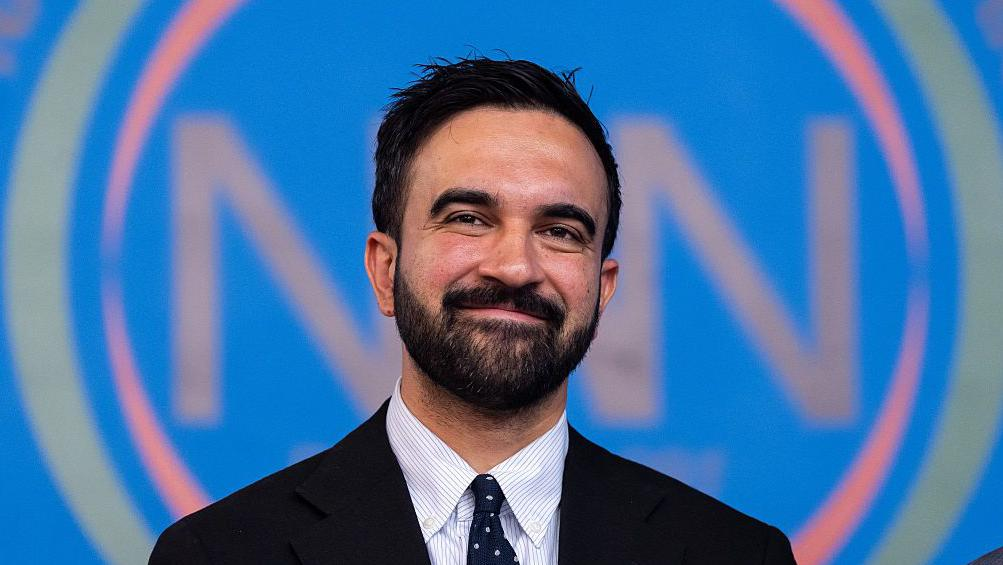
The 25th anniversary of September 11 arrived in New York City with the solemn weight that has marked Ground Zero for a quarter of a century. As family members, first responders, and national leaders gathered in Lower Manhattan to read the names of the 2,977 lives lost in 2001, the ceremony carried extra political noise outside the memorial plaza. At the center of that noise was New York City Mayor Zohran Mamdani.
As the city’s first Muslim mayor, Mamdani faced an intense wave of political criticism, public petitions, and anti-Muslim rhetoric leading up to the commemoration. Opponents called on him to skip the annual ceremony entirely. Yet throughout the weeks of mounting pressure, Mamdani chose a clear path: he refused to engage in political mudslinging and kept the public focus squarely on the victims, their families, and the long-term health of first responders.
Understanding how this situation unfolded offers a powerful look into modern politics, the persistence of prejudice, and what it truly means to lead a diverse city through collective grief.
A Milestone Anniversary Under Intense Public Scrutiny
Twenty-five years after two hijacked planes struck the Twin Towers, the memory of 9/11 remains an open wound for thousands of families. Every September, the city pauses to honor those who died in the towers, at the Pentagon, and in a field near Shanksville, Pennsylvania. The day also honors the thousands of rescue workers, firefighters, police officers, and neighborhood residents who later fell ill from exposure to toxic dust.
The 2026 commemoration was always expected to draw massive global attention due to the 25-year milestone. However, the political atmosphere surrounding City Hall added a heavy layer of tension.
Build Funnels, Email Lists & Sell Online With One Free Tool
Create funnels, send emails, and sell online using Systeme.io without paying for multiple tools.
Create Free AccountFree forever • No credit card • Beginner-friendly
Mamdani was elected mayor after running on a platform centered on working-class New Yorkers, public services, and government accountability. But as a Muslim leader guiding America’s largest metropolis during a milestone 9/11 anniversary, his presence at Ground Zero became a lightning rod for political debate.
The Pressure Campaign and Anti-Muslim Rhetoric
In the months leading up to September, conservative commentators and political opponents launched a coordinated effort to question whether Mamdani should attend the Ground Zero service.
An online petition started circulating in July, eventually collecting over 110,000 signatures. The petition argued that Mamdani’s presence would distract from the solemnity of the occasion. High-profile political figures quickly joined the chorus. Former New York City Mayor Rudy Giuliani publicly attacked Mamdani during television interviews, making direct attempts to link the current mayor’s faith to the extremists who carried out the 2001 attacks.
Other politicians recirculated hostile posts on social media. During Ramadan earlier in the year, conservative lawmakers shared posts comparing city events to the burning towers, using language that framed Muslim public officials as internal threats.
These attacks went beyond standard political disagreement. Civil rights advocates pointed out that the rhetoric relied on long-standing Islamophobic tropes that hold all Muslims collectively responsible for terrorism. By framing a mayor’s religious identity as an inherent offense to 9/11 victims, critics tapped into anti-Muslim bias that has lingered in American political life for decades.
Real Stories Behind the Noise: How Islamophobia Impacted Families
For Mayor Mamdani, the issue of post-9/11 Islamophobia is not an abstract political concept. It is something he experienced growing up in New York City.
Speaking at a public event in the Bronx, Mamdani shared personal memories of how his own family felt the immediate aftermath of the 2001 attacks. He recalled his aunt, who felt forced to stop riding the subway because wearing her hijab made her a target for threats and public harassment. He also recalled advice from older relatives who urged younger family members to downplay their Muslim identity in public to stay safe.
The Lasting Impact on Visible Communities
Researchers and civil rights groups have documented how anti-Muslim sentiment spiked sharply after 9/11 and never fully disappeared. Muslim women who wear traditional head coverings often carry the heaviest burden of public harassment because their faith is immediately visible.
Studies conducted by civil rights organizations show that anti-Muslim hate crimes surged by over 500 percent in the decade following 2001. That history explains why political attacks targeting Muslim leaders resonate so deeply with community members who simply want to live, work, and worship in peace.
Keeping the Focus on Firehouses, First Responders, and Families
Faced with personal attacks and calls to stay away from Ground Zero, Mamdani made a clear choice: he focused on service and quiet presence.
In the weeks leading up to September 11, the mayor spent significant time visiting local firehouses across all five boroughs. Rather than holding large media briefings, he met privately with firefighters, emergency service workers, and families of fallen responders. The goal was simple: listen to their stories, offer city support, and show respect without turning the moment into a media circus.
Participating in Solemn Tributes
On the days surrounding the anniversary, Mamdani joined several non-partisan and interfaith gatherings. He participated in an interfaith peace walk alongside faith leaders representing Christian, Jewish, Muslim, and Buddhist communities across New York.
When asked by reporters about the hostility coming from political opponents, Mamdani repeatedly declined to trade insults. Instead, he kept his public statements centered on the core purpose of the day: honoring stolen futures, remembering individual acts of heroism, and standing alongside New Yorkers who carry lifelong grief.
Action Over Words: Releasing 170,000 Secret 9/11 Health Files
While much of the media coverage focused on political arguments, City Hall took a major policy step just days before the anniversary. Mayor Mamdani announced the public release of more than 170,000 previously confidential city documents related to the health hazards at Ground Zero.
In the immediate aftermath of 9/11, government officials famously assured rescue workers and local residents that the air around Lower Manhattan was safe to breathe. Over the past two decades, however, more than 49,000 first responders and survivors have been diagnosed with serious cancers and respiratory conditions linked to toxic dust exposure.
What the Newly Released Files Show
The newly opened public archive revealed internal communications showing that past city leaders were aware of severe air quality risks long before public warnings were issued.
By releasing these records through an open online portal, City Hall gave toxic exposure survivors and grieving families access to information they had sought for over two decades. Advocate groups for 9/11 responders praised the move as a crucial step toward full transparency and long-overdue justice.
For many New Yorkers, this action spoke louder than any speech. It demonstrated that honoring 9/11 victims means fighting for the living as well as remembering the dead.
Standing Up Against Religious Discrimination and Division
As debates over Mamdani’s attendance continued, numerous civic and religious organizations stepped forward to defend the mayor’s right—and obligation—to attend the Ground Zero commemoration.
The Council on American-Islamic Relations (CAIR-NY) issued a statement pointing out that as the elected leader of New York City, Mamdani has a solemn duty to represent all New Yorkers at official memorial events.
Similarly, Jewish civil rights groups, including the Jewish Council for Public Affairs, spoke out strongly against the petition to exclude him. Leaders from these organizations noted that using coded language to equate Muslim public officials with terrorists is a dangerous form of bigotry that harms the entire city.
New York has always been a city defined by its diversity. Standing together in times of tragedy has been one of its greatest strengths since September 11, 2001. The broad support Mamdani received from diverse community leaders underscored a shared conviction: division has no place at a memorial dedicated to unity and sacrifice.
Media, Information, and Modern Public Discourse
The debate surrounding the 25th anniversary highlights how rapidly news moves across digital channels. From social media posts to online video broadcasts, public opinion is shaped in real time.
For readers who follow how digital publishing and video platforms share critical news stories worldwide, learning more about YouTube automation provides great perspective on how digital content is produced and scaled.
At the same time, online discussions around sensitive events require careful monitoring to stop the spread of false claims and hate speech. Advanced tools in technology and AI play an increasingly vital role in tracking digital trends, identifying misinformation, and ensuring verified facts reach the public quickly.
Frequently Asked Questions
Why did some critics demand Mayor Zohran Mamdani skip the 9/11 memorial?
Critics and political opponents cited past political statements, his progressive endorsements, and his Muslim faith, arguing that his presence would cause division or distract from the solemn focus on victims.
How did Mayor Mamdani handle the criticism surrounding his attendance?
Mamdani chose not to respond with harsh political attacks. He focused on visiting firehouses, attending interfaith prayer gatherings, releasing thousands of official health risk documents, and keeping his public comments centered on 9/11 victims and their families.
Build Funnels, Email Lists & Sell Online With One Free Tool
Create funnels, send emails, and sell online using Systeme.io without paying for multiple tools.
Create Free AccountFree forever • No credit card • Beginner-friendly
What was the significance of releasing the 170,000 government documents?
The documents showed that city officials in 2001 were aware of toxic air hazards at Ground Zero while publicly assuring the public the air was safe. Releasing these files provided transparency and long-sought answers for responders and survivors battling chronic health conditions.
Did civil rights groups support the mayor’s presence at Ground Zero?
Yes, major civil rights organizations—including CAIR-NY and the Jewish Council for Public Affairs—defended his right and duty to attend, condemning attempts to exclude him as Islamophobic bigotry.
Navigating political attacks while honoring a city’s deepest tragedy requires discipline and purpose. By putting firefighters, grieving families, and health transparency first, Mayor Mamdani showed that leadership during difficult times is about serving people rather than fighting political battles. New York City’s resilience has always come from its ability to stand together through pain, rejecting division in favor of shared dignity and truth.
To learn more about our team and what drives our reporting, visit our about page. Have thoughts or feedback to share? We would love to hear from you through our contact page. You can also join the conversation and follow our daily updates on Instagram, Facebook, and X.
Mayor Mamdani Speaks at 9/11 Interfaith Service
This video provides direct coverage of Mayor Zohran Mamdani addressing the interfaith memorial gathering, offering first-hand context on his message of unity and remembrance during the 25th anniversary of 9/11.
