
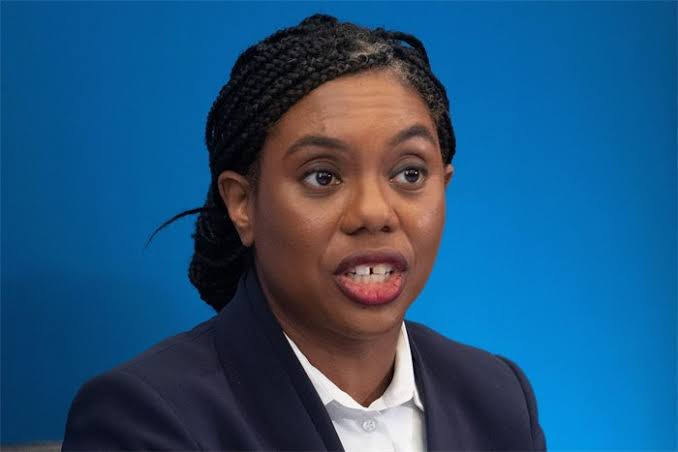
British Conservative Party leader Kemi Badenoch has drawn a hard line in the sand, declaring that the United Kingdom should not issue a formal apology for its historical role in the transatlantic slave trade.
Speaking out as pressure mounts from international leaders and rival politicians, Badenoch dismissed renewed calls for a national apology as a “navel-gazing distraction”. She warned that saying sorry today is simply a strategic move by campaigners to open the door to massive financial reparations.
Her blunt remarks have reignited one of the most emotional, divisive, and politically charged debates in modern British history. With Commonwealth leaders actively demanding accountability and British politicians split over how to address the past, the clash over who owes what to whom has reached a boiling point.
Here is a clear, complete breakdown of what Badenoch said, why the controversy is happening right now, and what both sides are really fighting over.
What Did Kemi Badenoch Actually Say?
Badenoch made her position unmistakably clear during broadcast interviews and public statements on social media, directly challenging the growing push for Britain to offer a formal state apology.
The $0 Secret To Launching Your Entire Online Empire
Why pay hundreds every month for separate software? Build funnels, send emails, and make sales with Systeme.io completely free.
Get Started For $0Free Forever • No Credit Card Needed • Beginner-Friendly
Her core argument comes down to a simple warning: an apology will never be just words. In her view, offering an official apology serves as a direct legal and political stepping stone toward demands for billions of pounds in payouts.
She told the BBC’s Sunday with Laura Kuenssberg that an apology is treated as “a lever to wedge open the door to ask for cash”.
Badenoch also stressed that modern British citizens should not be forced to carry the financial burden of historical horrors that took place hundreds of years ago.
“There is no reason British taxpayers today should be held financially responsible for things that happened generations before any of us were born,” Badenoch declared.
She also reminded the public that former Prime Minister Tony Blair already addressed Britain’s historical guilt nearly two decades ago. Back in 2006, Blair expressed deep sorrow and regret for Britain’s involvement in human trafficking and chattel slavery.
According to Badenoch, rehashing that statement adds nothing positive to the present. She argued that repeating apologies solves zero modern problems while distracting leaders from urgent economic challenges at home.
Why Is the Slave Trade Debate Exploding Right Now?
To understand why Badenoch spoke up so forcefully, you have to look at what has been brewing inside British politics and across the Commonwealth over the past several weeks.
The controversy caught fresh fire after senior UK political figures, including Greater Manchester Mayor Andy Burnham, suggested that Britain should consider offering a formal state apology.
While Burnham and members of the governing Labour party made it clear they do not support writing direct reparation cheques, their openness to an official apology broke standard protocol. That opened a massive political opening that Conservative critics immediately jumped on.
At the same time, Caribbean nations have coordinated their strongest push in generations. Through the Caribbean Community (CARICOM), a coalition of regional governments has been demanding both formal apologies and a structured plan for reparatory justice.
Protests greeted high-level UK officials and the Royal Family during visits abroad, with crowds carrying banners demanding reparative action.
When Commonwealth leaders gather, the topic of Britain’s colonial legacy now dominates private meetings and public news conferences. For leaders in the Caribbean and parts of Africa, the issue is not ancient history; it is a live economic reality.
For Badenoch, however, this trend is dangerous. She explicitly warned that if Commonwealth meetings remain focused on presenting Britain with demands for cash, British leaders must begin asking whether participating in those summits is worth the effort.
The Conservative Argument: Looking Forward, Not Backwards
Badenoch’s position is not an isolated talking point. It represents a deeply held perspective shared by many Conservatives, historians, and ordinary citizens across the UK.
Their argument rests on several key pillars that explain why they believe digging up centuries-old guilt does far more harm than good.
Send, Spend & Hold Money Worldwide Without Hidden Fees
Transfer money internationally at the real exchange rate and hold 40+ currencies in one account.
Open a Wise AccountMid-market rate • Fast transfers • 40+ currencies
1. Modern Taxpayers Did Not Cause Slavery
The central moral point made by opponents of apologies and reparations is the issue of personal responsibility.
Nobody alive in Britain today owned enslaved human beings, ran slave ships, or cast votes in colonial parliaments. Millions of British citizens today are the children or grandchildren of post-war immigrants from Asia, Africa, and the Caribbean, while working-class British families often descend from industrial labourers who lived in severe poverty.
From this viewpoint, forcing working families who are currently dealing with high energy bills, taxes, and housing costs to fund historical restitution is fundamentally unfair.
2. Britain’s Pioneering Role in Abolition
Another major point highlighted by Badenoch is Britain’s historical record in ending the transatlantic trade.
While British merchants undoubtedly transported millions of enslaved Africans across the Atlantic during the 17th and 18th centuries, Britain was also among the very first global powers to outlaw the practice.
In 1807, the British Parliament passed the Abolition of the Slave Trade Act. After that, the Royal Navy deployed its West Africa Squadron, spending decades and risking British sailors’ lives patrolling the oceans to intercept slave ships from other nations and free captive people.
In 1833, Britain outlawed slavery across almost the entire British Empire through the Slavery Abolition Act. British taxpayers took on enormous national debt to pay off plantation claims and enforce that ban—a debt so massive that it was not completely paid off until 2015.
Advocates of Badenoch’s view argue that Britain did more than almost any other country to wipe out slavery worldwide, and that this achievement deserves recognition alongside the wrongs.
3. Slavery Was a Global Tragedy, Not a Unilateral British Invention
Badenoch also addressed the wider historical picture on social media, pointing out that human bondage existed on every populated continent long before European ships arrived.
She noted that African rulers, tribal chiefs, and merchants actively captured and sold prisoners of war to European traders along the coastline.
The $0 Secret To Launching Your Entire Online Empire
Why pay hundreds every month for separate software? Build funnels, send emails, and make sales with Systeme.io completely free.
Get Started For $0Free Forever • No Credit Card Needed • Beginner-Friendly
Her argument is that singling out Britain as the sole evil actor ignores the complex reality of world history. If apologies and reparations are demanded, she asked, should Caribbean nations also demand formal apologies from the descendants of African monarchs who organized the slave raids?
For Badenoch, cherry-picking history to fit modern political agendas creates a distorted picture that keeps nations stuck in resentment.
The Other Side: Why Caribbean Nations and Campaigners Refuse to Back Down
To understand why this issue will not go away quietly, you have to look at the reasoning used by Caribbean governments, historians, and human rights advocates.
Their position is not simply about wanting a polite speech. For them, the transatlantic slave trade created structural damage that still affects their economies, health systems, and living standards today.
Generational Wealth vs. Generational Poverty
Campaigners argue that Britain’s industrial revolution, banking sector, and stately homes were built largely on the immense wealth generated by sugar, tobacco, and cotton plantations powered by unpaid, brutalized human labour.
Cities like Liverpool, Bristol, and London grew into financial capitals off the profits of the triangular trade.
Meanwhile, colonies were left stripped of resources, burdened with monoculture agriculture, and starved of investments in schools, hospitals, and infrastructure. When Britain abolished slavery in 1833, the British government paid £20 million in compensation—not to the freed people who had suffered generations of torture, but to the wealthy slave owners for their lost “property”.
The formerly enslaved received zero money, zero land, and zero support. They were forced into mandatory indentured apprenticeships to keep working the same fields.
Campaigners point out that generational wealth was created for British aristocrats, while generational poverty was handed down to Caribbean families.
What Does “Reparations” Actually Mean?
A common misunderstanding is that reparations only mean mailing direct cash transfers to individuals.
While some activists have argued for financial compensation, the official position of CARICOM’s Reparations Commission focuses on structural justice.
Their ten-point plan asks for:
- Formal state apologies from former colonial powers.
- Debt cancellation to give struggling island nations fiscal breathing room.
- Direct investments in Caribbean healthcare institutions to combat widespread inherited health crises, like severe rates of type-2 diabetes and hypertension.
- Educational development and literacy programs.
- Technology transfers to help build modern green economies.
- Support for cultural institutions, museums, and historical research.
From the Caribbean perspective, these measures are not about punishing modern British workers; they are about repairing a damaged foundation that was never given a fair chance to heal.
Tony Blair’s 2006 Statement: An Apology or Just Regret?
A major point of friction in this debate is whether Britain has already apologized.
Badenoch pointed out that Tony Blair already expressed Britain’s sorrow. But what did Blair actually say?
In November 2006, marking the upcoming bicentenary of the 1807 abolition act, Tony Blair wrote an article expressing “deep sorrow” for Britain’s role in the slave trade. He described the trade as “profoundly shameful” and recognized the immense suffering it caused.
However, Blair intentionally stopped short of using the word “apology” or saying “we apologize on behalf of the British state.”
British government legal advisors have long advised prime ministers and monarchs to avoid the specific word “apology.” Under international law, a formal legal apology from a sovereign state can be interpreted as an admission of liability, potentially opening the door to legal claims in international courts.
Because Blair expressed “regret” rather than issuing a formal state apology, international leaders argue that Britain has never officially confronted its past on the record.
For Badenoch, this difference is just legal hair-splitting. She maintains that everyone knows slavery was abhorrent, Britain expressed its shame long ago, and constantly demanding a slightly different combination of words is a waste of diplomatic time.
How Other European Nations Have Handled the Past
Britain is not the only European nation wrestling with its colonial history. Several other nations have taken very different paths in recent years:
- The Netherlands: In December 2022, Dutch Prime Minister Mark Rutte issued a formal government apology for the Netherlands’ role in the slave trade, calling slavery a “crime against humanity.” In 2023, Dutch King Willem-Alexander followed up with a royal apology, asking for forgiveness. The Dutch government also set up a 200-million-euro educational fund to address the legacy of slavery.
- Belgium: King Philippe expressed his “deepest regrets” to the Democratic Republic of Congo for the atrocities committed during Belgian colonial rule under King Leopold II, though Belgium stopped short of an official government apology.
- Germany: Germany formally acknowledged committing genocide in Namibia against the Herero and Nama people during colonial rule, offering an official apology and pledging over 1 billion euros for local community development projects over 30 years.
These moves put Britain under an intense spotlight. Critics of the UK argue that Britain looks stubborn and outdated compared to its European neighbors.
On the other hand, defenders of Badenoch’s stance argue that opening the door to state apologies in Europe has only led to ever-increasing demands, proving her point that one concession leads straight to another.
The Political Stakes for Kemi Badenoch and the Conservative Party
This debate is not just about history; it is about the future direction of British politics.
As leader of the Conservative Party, Badenoch has consistently positioned herself as a politician who refuses to bow to identity politics or progressive cultural trends.
Born in Britain and raised in Nigeria, Badenoch brings a personal background that makes her perspective distinctive in Westminster. She frequently draws on her direct experience of growing up in West Africa to push back against Western political narratives on race, empire, and victimhood.
By taking a firm, uncompromising stance against an apology, she accomplishes two big political goals:
- Uniting the Conservative Base: Conservative voters generally view apologies for British history with frustration, seeing them as symptoms of national self-loathing. Badenoch’s stance reassures her base that she will vigorously defend British pride and heritage.
- Putting Labour in a Tight Spot: The governing Labour party finds itself caught in the middle. Labour leaders want to maintain warm diplomatic ties with Commonwealth partners and show cultural sensitivity, but they also know that voters in key working-class constituencies have zero appetite for spending state funds on historical reparations.
Every time Badenoch talks about the issue, she forces her opponents to choose between disappointing Commonwealth allies or alienating British voters.
Frequently Asked Questions
Why did Kemi Badenoch reject an apology for the slave trade?
Badenoch argued that an official apology is a “navel-gazing distraction” that solves no current problems. She warned that an apology is primarily used as a tactical tool to demand financial reparations from modern British taxpayers, who played no role in historical events that took place centuries ago.
Has Britain ever formally apologised for slavery?
Britain has expressed deep regret, but has never issued a full, formal state apology. In 2006, Prime Minister Tony Blair expressed “deep sorrow and regret” for Britain’s role. King Charles III and previous prime ministers have spoken about their personal sadness regarding the suffering caused by slavery, but legal caution has prevented the British government from issuing a formal state apology.
What are Caribbean countries asking for from the UK?
Through the CARICOM Reparations Commission, Caribbean nations are calling for reparatory justice. While this includes calls for an official apology, it also focuses on debt relief, public health funding, educational investments, cultural preservation, and institutional support rather than simple cash handouts to individuals.
Did Britain pay money to abolish the slave trade?
Yes. When the British Parliament passed the Slavery Abolition Act in 1833, the government paid £20 million to compensate former slave owners for the loss of their legal “property”. This sum represented roughly 40 percent of the national budget at the time and required loans that British taxpayers did not finish paying off until 2015. The enslaved people themselves received no compensation.
What is the Commonwealth’s role in this argument?
The Commonwealth brings together 56 independent countries, many of which are former colonies of the British Empire. In recent summits, member states in the Caribbean and Africa have made colonial legacy and reparations top talking points, making the issue a central diplomatic challenge for Britain.
The debate over Britain’s role in the slave trade is not going to vanish anytime soon. As international summits approach and economic realities bite across both the UK and the Caribbean, arguments over history, responsibility, and justice will remain front and centre.
Whether you view Badenoch’s comments as common-sense pragmatism or a stubborn refusal to face historical reality, one thing is certain: the conversation about how nations should handle the sins of their ancestors is far from settled.
