
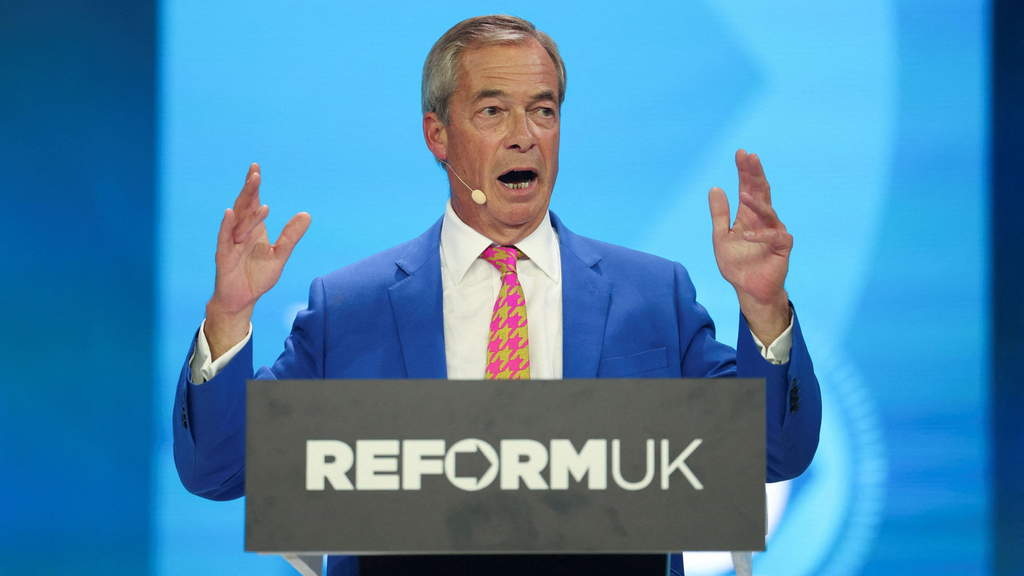
When political rhetoric crosses the line from sharp debate into blatant personal attacks, the fallout is rarely contained. British politics erupted into another firestorm after Raheem Kassam, a former senior aide to Nigel Farage during his UKIP days, took to social media to launch a vicious personal attack against Conservative Party leader Kemi Badenoch, calling her a “Nigerian scammer.”
While senior figures inside Reform UK danced around the controversy in public television studios, behind closed doors Nigel Farage made his displeasure known, privately rebuking his long-time ally over the derogatory slur.
The incident highlights the deep tensions simmering within the British right, the fine line between controversial rhetoric and outright racial abuse, and the ongoing struggle Farage faces as he tries to steer Reform UK into mainstream electability.
The Jibe That Sparked an Outcry
The controversy began when Raheem Kassam posted a series of aggressive statements targeting Conservative leader Kemi Badenoch on X (formerly Twitter). Badenoch, who spent part of her childhood in Nigeria before returning to the UK as a teenager, has long been a polarising figure in British conservative circles.
In his post, Kassam wrote:
The $0 Secret To Launching Your Entire Online Empire
Why pay hundreds every month for separate software? Build funnels, send emails, and make sales with Systeme.io completely free.
Get Started For $0Free Forever • No Credit Card Needed • Beginner-Friendly
“How are people still falling for this Nigerian scammer? Don’t give her your credit card number and bank account details!”
Kassam did not stop there. He followed up by writing:
“So Kemi, tell us the truth. Are you a walking gaffe or an illegal immigrant?”
He also pointedly spelled out her full birth name, Olukemi Olufunto Adegoke Badenoch. The comment immediately drew outrage from political observers, MPs across party lines, and members of the public, who condemned the language as relying on an old, overtly xenophobic trope directed at West Africans.
Badenoch has consistently defined herself as a staunch British patriot with clear social views, frequently clashing with political opponents on topics ranging from state spending to cultural policy, as seen during debates on how Kemi Badenoch claims Britain is addicted to welfare. However, branding the leader of His Majesty’s Opposition as an online fraudster purely on the basis of her heritage ignited a fierce national backlash.
Public Deflection vs. Private Rebukes
While the post stirred widespread fury online, journalists immediately sought answers from Reform UK’s top figures. Rather than issuing a direct condemnation, key Reform MPs initially downplayed the jibe.
Reform MP Danny Kruger appeared on The Daily T podcast and brushed off Kassam’s statement as mere noise, referring to the attack as “a bit of rumbustious debate online” and insisting he had “nothing to say to that.” Similarly, prominent Reform figure Robert Jenrick refused to call the remarks racist during a tense interview on LBC, urging host Lewis Goodall to invite Kassam on air instead of pressing him.
The crisis reached a boiling point when Nigel Farage appeared live on BBC Breakfast. In an uncomfortable exchange with presenter Sally Nugent, Farage repeatedly dodged direct questions about whether the label “Nigerian scammer” was inherently racist.
Instead of a swift denunciation, Farage attempted to split hairs:
- He argued that Kassam is “based in America” and not an official Reform spokesperson.
- He claimed that Kassam is “of Indian heritage,” deflecting on whether people of minority backgrounds can be racially abusive.
- He separated the words, claiming that “scammer” simply refers to someone who does not tell the truth, while stating that mentioning Nigeria is just referencing where Badenoch grew up.
Publicly, Farage conceded only that the comment was “over the top,” while maintaining it was not “intentionally racist.”
Behind the scenes, however, the mood was distinctly different. Sources close to the Reform leader confirmed that Farage privately rebuked Kassam over the post. Party insiders recognised that an unprovoked racial trope aimed at a high-profile Black female politician creates an unnecessary distraction, undermining months of effort to shake off accusations of fringe extremism.
The Complicated History Between Farage and Kassam
To understand why this spat carries so much weight, one must understand the long-standing relationship between Nigel Farage and Raheem Kassam.
Kassam served as Farage’s chief adviser during the peak of UKIP’s political influence in the mid-2010s. Known for his aggressive digital media tactics and ties to the American alt-right and Breitbart News, Kassam played a pivotal role in shaping UKIP’s populist communication strategy leading up to the 2016 Brexit referendum.
Over the years, the two men have maintained close ties, often appearing at the same events in the United States and within international conservative networks. Yet Kassam’s unfiltered online style has repeatedly clashed with Farage’s broader political ambitions.
Whenever Farage attempts to build a disciplined political machine capable of winning Westminster parliamentary seats, unguided attacks from former advisers drag the party back into accusations of bigotry.
Send, Spend & Hold Money Worldwide Without Hidden Fees
Transfer money internationally at the real exchange rate and hold 40+ currencies in one account.
Open a Wise AccountMid-market rate • Fast transfers • 40+ currencies
Recent polling has shown that public perception remains a fragile asset for Reform. When political messaging veers off course, voter fatigue sets in quickly, a pattern reflected when Nigel Farage hits record low popularity. For Farage, having an associate fire off racially charged jibes at a moment when the party needs disciplined discipline was a major strategic misstep.
Why the “Nigerian Scammer” Tropes Cut Deep
The label “Nigerian scammer” is not just everyday political mudslinging; it carries decades of negative stereotypes that affect millions of law-abiding people in the global diaspora.
For decades, advance-fee fraud—often dubbed “419 scams”—was commonly associated with email spam operations originating in West Africa. However, weaponising that stereotype against an elected British member of parliament and opposition leader touches on sensitive historical nerves.
Nigeria is Africa’s largest democracy and a cultural powerhouse whose citizens make substantial contributions globally, whether in medicine, technology, finance, or literature. Nigerian professionals form a vital pillar of the UK workforce, including thousands of doctors and nurses working across the National Health Service.
Using criminal caricatures to attack someone of Nigerian ancestry reduces an entire nation and its diaspora to a single derogatory meme. When major political figures fail to condemn such slurs cleanly, it sends an uncomfortable message to immigrant communities across Britain.
The High-Stakes Battle for the British Right
Beyond the personal insult, the row highlights a fierce, existential civil war playing out between the Conservative Party and Reform UK.
Following the defeat of the Tories in recent elections, Kemi Badenoch took the helm of the Conservative Party with a mission to unite fractious factions and present a hard-hitting challenge to Labour. At the same time, Reform UK has sought to replace the Conservatives as the primary opposition force on the right.
The rivalry is ruthless. Badenoch has repeatedly taken aim at Labour policy, warning in major economic addresses about budget credibility, as shown in reports where Kemi Badenoch warns Labour’s upcoming budget is built on fictional cuts. She has also made concerted efforts to check Reform UK’s momentum by appealing directly to traditional conservative voters.
Because both parties are fishing in the same voter pool, the rhetoric between their supporters has turned increasingly toxic:
- Electoral Cannibalisation: Reform UK wants to absorb disaffected Tory voters, while Conservatives insist Reform is an undisciplined protest group incapable of governing.
- Personalised Attacks: As policy arguments overlap, figures in the online political sphere have increasingly resorted to personal smears to delegitimise their rivals.
- Discipline vs. Viral Outrage: While modern populist movements thrive on viral social media provocation, traditional electoral success requires broad appeal among suburban moderates.
Farage knows that winning parliamentary elections requires winning over moderate conservative voters who are repelled by blatant xenophobia. His private rebuke to Kassam reflects a growing awareness that internet shock tactics can quickly become an electoral liability.
The $0 Secret To Launching Your Entire Online Empire
Why pay hundreds every month for separate software? Build funnels, send emails, and make sales with Systeme.io completely free.
Get Started For $0Free Forever • No Credit Card Needed • Beginner-Friendly
Reform UK’s Ongoing Vetting Headache
This incident is far from the first time Nigel Farage has had to deal with unforced errors from within his orbit. Reform UK has faced repeated scrutiny over candidate vetting and extreme social media posts by party activists and candidates.
During election cycles, multiple candidates were dropped or reprimanded after old remarks surfaced. Even as Reform secures significant media airtime, unscripted controversies have often overshadowed policy rollouts.
When party events fall flat or candidates make embarrassing blunders, critics argue that the party remains reliant on charisma rather than robust operational discipline. Past missteps, such as the widely mocked occasion when Nigel Farage was booed off guard after forgetting what city he was in, have demonstrated that optics matter immensely in British politics.
By privately rebuking Kassam while publicly attempting to explain away the jibe, Farage tried to have it both ways: avoiding a public fight with his radical online base while attempting to limit the reputational damage behind the scenes. However, as the BBC Breakfast grilling proved, political interviewers are rarely willing to let ambiguous answers slide.
What This Means for the Future of UK Political Discourse
The clash over Kassam’s remarks reflects a deeper shift in how political battles are fought in the modern era. Social media platforms reward shock value, outrage, and aggressive personal insults over substantive policy debates.
When senior influencers and advisers adopt the language of anonymous internet trolls, they lower the standard of public discourse. For political parties seeking to earn the trust of the electorate, allowing such remarks to go unpunished risks alienating middle-of-the-road voters.
As the political landscape continues to evolve, party leaders will face sharper tests of their leadership. Calling out unacceptable rhetoric, even when it comes from loyal allies or former advisers, is essential for any political movement that claims to represent the nation as a whole.
Frequently Asked Questions (FAQs)
What exactly did Raheem Kassam say about Kemi Badenoch?
Raheem Kassam published posts on X calling Kemi Badenoch a “Nigerian scammer” and warning users not to give her credit card details. He also questioned whether she was an “illegal immigrant” and deliberately referred to her by her full birth name.
Did Nigel Farage condemn the comments in public?
In his television appearances, including on BBC Breakfast, Farage stopped short of calling the remarks racist. He described the jibe as “over the top,” argued that “scammer” simply meant someone who doesn’t tell the truth, and pointed to Kassam’s Indian heritage. However, reports confirmed that Farage privately rebuked Kassam over the incident.
How did Reform UK MPs react to the slur?
Both Danny Kruger and Robert Jenrick refused to directly condemn the comments as racist during media interviews. Kruger described the posts as “rumbustious online debate,” while Jenrick deflected questions and suggested interviewers speak to Kassam directly.
What is Kemi Badenoch’s background?
Kemi Badenoch is the leader of the UK Conservative Party. She was born in London to Nigerian parents, spent much of her childhood and early teenage years living in Lagos, Nigeria, and returned to the UK at the age of 16.
Why is the term “Nigerian scammer” considered racist?
The term relies on a sweeping national and racial stereotype that associates people of Nigerian origin with financial fraud. Applying this stereotype to a senior politician reduces an individual’s identity and professional standing to an ethnic slur.
The controversy surrounding Raheem Kassam’s jibe against Kemi Badenoch serves as a stark reminder of the perils of unrestrained online politics. While Nigel Farage may have delivered a private rebuke to his former adviser behind closed doors, his public reluctance to call out the slur cleanly left him exposed to intense criticism. In modern politics, the words leaders choose to defend—or decline to condemn—ultimately reveal the standards they are willing to accept.
