
Imagine buying a brand new, multimillion-dollar car, driving it until the tank runs empty, and then abandoning it in the middle of the highway forever. It sounds completely insane, but that is exactly how humanity has treated spacecraft for the past sixty years.
When a satellite runs out of fuel or suffers a minor mechanical glitch hundreds of miles above Earth, operators cannot just call a tow truck. The satellite simply dies, turning into a multi-ton chunk of dangerous space junk hurtling around our planet at twenty-seven thousand kilometers per hour.
A Chinese robotics startup called Sinxbot is stepping up with a massive plan to change this reality once and for all.
Known formally as Anhui Xianyin Weilai Technology, Sinxbot has officially closed three consecutive fundraising rounds—Angel, Pre-A, and Series A—pulling in several hundred million yuan, which translates to tens of millions of US dollars. The funding spree took place in just four months between May and September 2026, catching the attention of major global tech giants, venture capital firms, and aerospace observers worldwide as reported by SpaceNews.
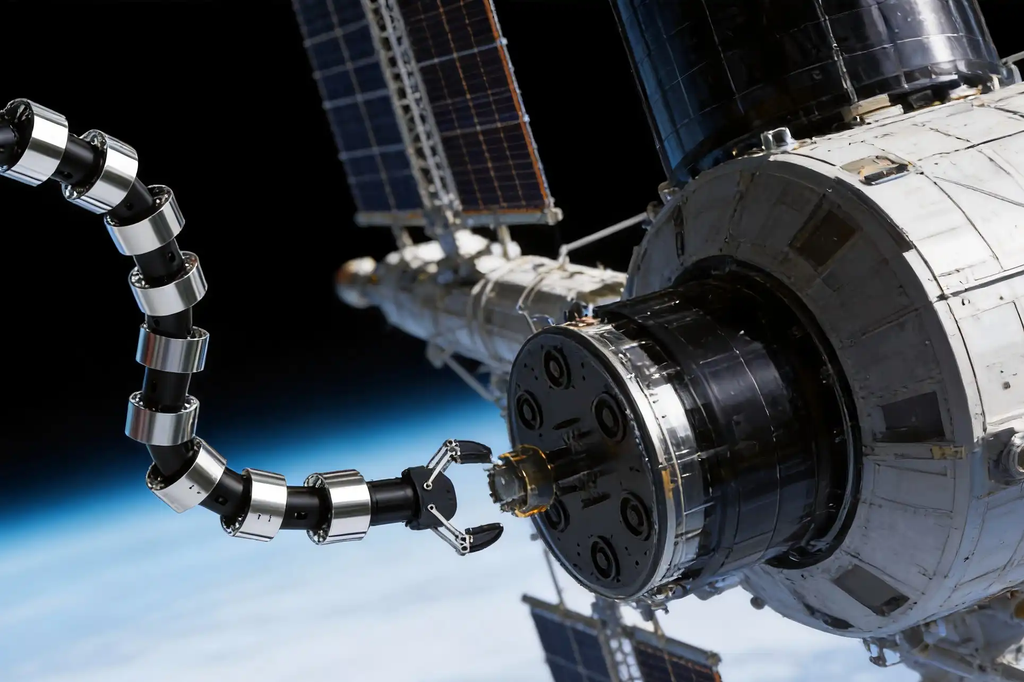
Instead of letting expensive hardware turn into hazardous orbital trash, Sinxbot wants to build smart, flexible robotic spacecraft that can pull up to aging satellites, pump fresh fuel into their tanks, make repairs, and drag dead machines safely down to burn up in Earth’s atmosphere.
The $0 Secret To Launching Your Entire Online Empire
Why pay hundreds every month for separate software? Build funnels, send emails, and make sales with Systeme.io completely free.
Get Started For $0Free Forever • No Credit Card Needed • Beginner-Friendly
The Audacious Rise of Sinxbot: From University Labs to Orbit
Sinxbot was founded in September 2025 in Anhui province, China. While the company itself is relatively new, the science running through its veins has been in development for over two decades.
The startup emerged straight out of the Jianghuai Frontier Technology Collaborative Innovation Center and the research laboratories of Tsinghua University, one of China’s top scientific institutions. The core team is guided by Professor Liang Bin, a veteran roboticist who has spent more than twenty years researching space robotics, flexible structures, and orbital manipulation. The team also pools talent from the Harbin Institute of Technology, an academic powerhouse that has contributed heavily to China’s major lunar and planetary exploration programs.
For years, space researchers at these universities have worked on high-stakes national space projects, testing robotic arms in simulated microgravity and designing computer systems capable of guiding complex maneuvers in vacuum conditions. Sinxbot was created to take those university breakthroughs off the chalkboard and turn them into a profitable, commercial reality.
The speed at which the startup raised capital shows how desperate the aerospace market is for this exact technology. In less than half a year, Sinxbot went from early-stage concept funding to securing backing from some of the biggest corporate names in Asia.
Why Satellites Die: The Trillion-Dollar Problem in the Sky
To understand why investors are throwing tens of millions of dollars at Sinxbot, you have to look at the hidden bottleneck of modern space travel: fuel and wear.
Right now, thousands of active satellites orbit the planet. They beam down your maps, predict storms, secure national borders, and keep global financial systems synchronized. In fact, modern life depends on these networks more than most people realize, with companies like SpaceX launching massive constellations to provide global coverage, as seen when Elon Musk blasted ultra-fast satellites into space to change connectivity.
Yet, every single one of those machines has an expiration date stamped on its hull.
Satellites do not need fuel to float in space, but they do need fuel to keep their balance. Gravity from the moon, solar radiation pressure, and thin traces of upper atmosphere constantly pull satellites out of alignment. To stay in place and point their antennas toward Earth, satellites fire tiny chemical or electric thrusters.
Once those fuel tanks run dry, the satellite loses the ability to hold its orbit. It might have perfectly functional computers, working solar panels, and spotless cameras, but without fuel, it becomes completely useless.
Building and launching a major communications satellite can cost between two hundred million and five hundred million dollars. Throwing that entire investment away just because an internal gas tank is empty is an enormous financial waste. If an orbital servicing vehicle could pull up and pump a few hundred kilograms of propellant into the tank, the satellite could easily keep operating for another five, ten, or even fifteen years. That single refill saves the operator hundreds of millions of dollars in replacement costs.
The Space Junk Trap: Avoiding Orbital Disaster
Fuel is only half the crisis. The other half is what happens when those dead satellites stay in orbit.
Low Earth orbit is turning into an orbital junkyard. Thousands of spent rocket stages, defunct satellites, broken fragments from old collisions, and abandoned hardware are flying around Earth at speeds ten times faster than a rifle bullet. Even a tiny metal bolt moving at orbital velocity can hit an active satellite with the explosive force of an artillery shell.
Scientists have warned for decades about the Kessler Syndrome. This is a nightmare scenario where space debris becomes so dense that a single collision triggers a chain reaction of cascading smash-ups, creating a cloud of shrapnel that destroys everything in orbit and blocks human access to space for generations.
International regulations now push satellite operators to dispose of their machines at the end of their operational lives. In low orbits, this means dropping down so atmospheric friction burns the satellite to ash. In higher orbits, it means moving into a designated “graveyard orbit” far away from active traffic.
The trouble is that many older satellites simply run out of power or break down before they can make that final deorbit maneuver. That is where Sinxbot’s cleanup services come in. By sending a robotic hunter to grab an uncooperative satellite and steer it into a controlled atmospheric plunge, Sinxbot can clean up dead hardware before it collides with something valuable.
Send, Spend & Hold Money Worldwide Without Hidden Fees
Transfer money internationally at the real exchange rate and hold 40+ currencies in one account.
Open a Wise AccountMid-market rate • Fast transfers • 40+ currencies
How Cable-Driven Flexible Robots Work in Zero Gravity
Most people picture industrial robots as rigid, heavy, metal arms like the ones welding car frames on an assembly line. While those heavy arms work well on solid factory floors, they present serious problems in space.
First, rigid arms are heavy. Every single extra pound launched into orbit costs thousands of dollars in rocket propellant. Second, rigid arms cause massive recoil. Newton’s third law of motion dictates that for every action, there is an equal and opposite reaction. If a rigid metal arm swings aggressively to grab a tumbling satellite, the recoil pushes the host spacecraft backward, throwing its orientation off completely.
Sinxbot solves this challenge by developing cable-driven flexible robotic arms, often called hyper-redundant arms.
Think of Sinxbot’s robotic arm less like a human elbow and more like an elephant trunk or an octopus tentacle. It consists of multiple flexible segments controlled by internal cables and tension wires. By tightening and loosening specific cables, the robotic arm can bend smoothly in virtually any direction.
This design brings three massive advantages:
- Lightweight Strength: Cable systems eliminate heavy motors at every individual joint, making the arm significantly lighter and cheaper to launch.
- Extreme Dexterity: The flexible joints can curl around odd shapes, sneak into tight satellite crevices, and grasp irregular surfaces without needing a standard docking ring.
- Shock Absorption: When the arm makes contact with a drifting target, the cables naturally absorb mechanical shock, preventing damage to both the servicing craft and the target satellite.
Operating these arms requires advanced computing. Because it takes time for radio signals to travel between Earth and orbit, ground operators cannot control every tiny finger movement in real time with a joystick. Sinxbot uses intelligent edge computing onboard the spacecraft. The servicing robot perceives its surroundings using optical sensors and LiDAR, plans its grasping path locally, and completes delicate docking maneuvers autonomously while syncing flight data back to mission control on Earth.
Big Money Bets: Alibaba, China Mobile, and the Backers Behind the Deal
The investor roster for Sinxbot’s funding rounds reads like a directory of China’s most powerful corporate and venture institutions.
Early backing was kicked off by BlueRun Ventures, GL Ventures, and Binfu Capital. At the same time, strategic robotics firms like Agibot and renewable energy giant Trina Solar stepped in as industrial partners. As the rounds progressed through Pre-A under Hua Ying Capital, the Series A round brought in two massive heavyweights: tech giant Alibaba and the China Mobile Industry Chain Fund.
Why are an e-commerce titan and a telecommunications carrier investing in space robotics?
The answer comes down to critical infrastructure. Telecommunications companies like China Mobile rely heavily on orbital relay networks, and the future of global 6G connectivity will blend ground towers with massive satellite constellations. Keeping those constellations healthy, refueled, and free from collision risks is a strategic necessity for telecoms.
The $0 Secret To Launching Your Entire Online Empire
Why pay hundreds every month for separate software? Build funnels, send emails, and make sales with Systeme.io completely free.
Get Started For $0Free Forever • No Credit Card Needed • Beginner-Friendly
Meanwhile, enterprise tech giants like Alibaba are investing heavily in the industrial internet and edge computing. Orbit is becoming the next cloud edge. Servicing, maintaining, and processing data on orbital platforms represents the next technological horizon, much like how private tech investments have driven cutting-edge projects across other frontier sectors, from major defense tech startup launches to commercial lunar resource initiatives where ambitious ventures race to harvest moon materials.
The Three Core Missions of Sinxbot
Sinxbot has laid out three clear commercial services it plans to sell to satellite operators and space agencies:
1. In-Orbit Refueling and Life Extension
Instead of building a brand-new satellite every time fuel runs low, operators will be able to book a refueling visit. Sinxbot’s servicing craft will rendezvous with the target satellite, latch onto it using its flexible arm, connect to its propellant lines, and pump in fresh fuel. For satellites that lack standard fueling ports, Sinxbot is designing mechanical “jetpack” modules that clamp onto the client satellite and provide external thrust to keep it flying for extra years.
2. Active Deorbiting and Space Cleanup
When a satellite reaches the true end of its mechanical life, or if an onboard computer dies unexpectedly, Sinxbot will act as an orbital tugboat. The robotic arm will capture the dead satellite, stabilize any dangerous tumbling, and fire its own engines to pull the satellite into a downward trajectory that guarantees a safe burnup over open ocean regions.
3. In-Orbit Inspection, Diagnostics, and Repair
Satellites often encounter mechanical troubles shortly after launch, such as a solar panel that fails to unfurl or a communications dish stuck halfway open. In the past, this meant the entire mission was written off as a failure, much like when engineers faced massive challenges during complex missions to save drifting space telescopes. With flexible robotic arms, Sinxbot can inspect the stuck mechanism with high-resolution cameras and use gentle physical force to nudge stuck panels into place.
The Global Space Servicing Race: East Meets West
China is not the only player looking to build orbital repair shops. An intense commercial and geopolitical race is currently taking place across the aerospace world.
In the United States, Northrop Grumman has already pioneered commercial life-extension with its Mission Extension Vehicles (MEVs), which successfully docked with operational communications satellites in geosynchronous orbit to take over their station-keeping propulsion. Other American startups, like Orbit Fab, are actively launching orbital fuel depots and designing universal fueling ports so future spacecraft can fill their tanks like cars at a highway rest stop.
Meanwhile, in Japan and Europe, companies like Astroscale and ClearSpace have won government backing to demonstrate space junk capture technology.
Sinxbot’s rapid funding indicates that China has no intention of being left behind in this emerging market. Over the past few years, Chinese aerospace programs have demonstrated stunning engineering speed, from ambitious deep-space projects where Chinese scientists map historic routes to Jupiter to bold timelines where China plans to bring Martian soil samples to Earth.
By empowering private startups like Sinxbot, China is building a dual-track ecosystem where state aerospace agencies handle deep exploration while nimble commercial companies develop affordable, scalable industrial services in low and medium Earth orbit.
What Lies Ahead: The 2027 In-Orbit Demonstration
Securing tens of millions of dollars is a massive milestone, but the true test for Sinxbot will take place in the cold vacuum of space.
The company has formally set a target for 2027 to conduct its first full-scale space rendezvous and autonomous docking demonstration. During this mission, Sinxbot plans to launch a prototype craft equipped with its cable-driven flexible robotic arm. The vehicle will track a target in orbit, approach it safely, capture it, and test fuel transfer mechanisms alongside precision steering.
If the 2027 flight test succeeds, it will open the door to commercial contracts with commercial constellation operators and state agencies around the world. The transition from pure ground simulation to operational orbital flights is notoriously difficult, but with twenty years of academic engineering behind it and deep commercial pockets supporting it, Sinxbot is positioned to move quickly.
Frequently Asked Questions
What is Sinxbot?
Sinxbot, formally known as Anhui Xianyin Weilai Technology, is a Chinese commercial space robotics startup incubated out of Tsinghua University. The company builds cable-driven flexible robotic arms and servicing spacecraft designed to refuel satellites, fix broken components in orbit, and drag dead satellites down to burn safely in Earth’s atmosphere.
How much money did Sinxbot raise?
Between May and September 2026, Sinxbot raised several hundred million yuan across three funding rounds (Angel, Pre-A, and Series A), which equals tens of millions of US dollars. Major investors include Alibaba, China Mobile Industry Chain Fund, BlueRun Ventures, GL Ventures, Binfu Capital, Hua Ying Capital, Agibot, and Trina Solar.
Why do satellites need to be refueled in space?
Satellites need fuel to fire small thrusters that counteract gravitational pulls and keep their solar panels and communication antennas aimed correctly at Earth. When their fuel tanks empty, satellites can no longer maintain their orbit or pointing direction, forcing operators to retire otherwise working machines worth hundreds of millions of dollars.
What makes cable-driven robotic arms special?
Traditional robotic arms use rigid metal links and heavy motors at each joint, making them heavy to launch and prone to creating violent recoil when moving in zero gravity. Cable-driven arms use flexible segments controlled by tension wires, working like an elephant trunk. They are lighter, absorb docking impacts smoothly, and can bend around obstacles with ease.
How does deorbiting help clean up space junk?
Deorbiting involves slowing down a dead satellite or changing its flight path so that Earth’s gravity pulls it into the upper atmosphere. The extreme friction with atmospheric air heats the satellite to thousands of degrees, completely burning up the metal and electronics and permanently removing collision risks from busy orbital lanes.
When will Sinxbot launch its first mission?
Sinxbot plans to conduct its first in-orbit space rendezvous and docking demonstration in 2027 to prove its flexible robotic arm and autonomous capture systems in actual microgravity conditions.
The concept of orbital mechanics is shifting rapidly. The era of launching single-use satellites that end up as floating trash is steadily coming to an end. Startups like Sinxbot are laying the foundation for a permanent circular economy in orbit, where machines are refueled, repaired, upgraded, and safely retired when their journey is done.
As space becomes crowded with mega-constellations and commercial space stations, orbital service stations and tow trucks will not just be a luxury. They will be the backbone that keeps our high-tech world spinning safely.
