
A 74-year-old retired American schoolteacher named Stephen Hubbard is on a plane heading home after spending more than four brutal years in Russian detention.
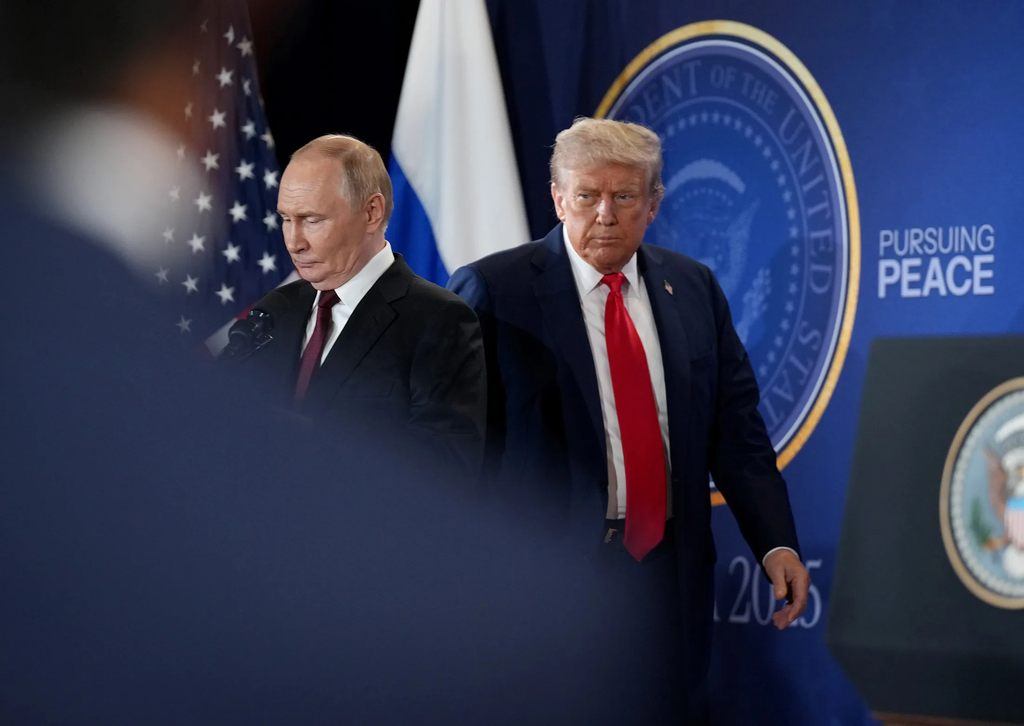
Russian President Vladimir Putin agreed to release him immediately following a direct personal appeal from United States President Donald Trump.
The announcement landed like an earthquake across global newsrooms. Unlike almost every other high-profile prisoner release between Washington and Moscow in recent memory, the United States did not trade a single Russian spy, arms merchant, or convicted cyber criminal to get Hubbard out.
Hubbard was escorted directly to Pulkovo Airport in Saint Petersburg while Trump’s special envoy, Steve Witkoff, sat inside the historic Constantine Palace thanking Putin in person.
The sudden move comes at a moment when tensions over the war in Ukraine are running red-hot. While Hubbard’s family is breathing an enormous sigh of relief, foreign policy experts, lawmakers on Capitol Hill, and allied governments are scrambling to figure out what just happened behind closed doors.
The $0 Secret To Launching Your Entire Online Empire
Why pay hundreds every month for separate software? Build funnels, send emails, and make sales with Systeme.io completely free.
Get Started For $0Free Forever • No Credit Card Needed • Beginner-Friendly
Here is the full breakdown of who Stephen Hubbard is, how this unexpected deal was struck, what Trump promised along the way, and what this massive development means for the future of international relations.
Who Is Stephen Hubbard and How Did He End Up in Russia?
To understand why this release is such a big deal, you have to look at the man at the center of the story. Stephen Hubbard is not an undercover spy, a military officer, or a high-ranking diplomat. He is a 74-year-old grandfather and retired English teacher from Big Rapids, Michigan.
Decades ago, Hubbard served in the United States Air Force and the National Guard before going on to earn a master’s degree in English. He spent twenty-five years living in Japan, teaching English to local students and building a quiet life overseas. After retiring, he lived briefly in Cyprus before relocating to Ukraine in 2014.
Hubbard settled in Izyum, a peaceful town in eastern Ukraine, alongside his Ukrainian partner. By all accounts from his family and neighbors, he lived a remarkably quiet and modest existence. According to his sister, Patricia Hubbard Fox, he survived on a small monthly pension of roughly $300. He rarely traveled, spoke basic Russian, and mostly kept to himself as he adjusted to retirement in eastern Europe.
That quiet life shattered in February 2022 when the Russian military crossed the border into Ukraine. Within weeks, Russian forces swept into Izyum, cutting off communications and leaving thousands of residents trapped in an active war zone.
In April 2022, Russian soldiers detained Hubbard. For months, his family back in the United States had no idea if he was even alive. It was only when disturbing videos surfaced online—showing an elderly, disheveled Hubbard with his hands bound while being interrogated—that his relatives realized he was in Russian military custody.
The Dubious Mercenary Charges and a Secret Moscow Trial
Russian authorities did not treat Hubbard like an innocent civilian bystander. Instead, state prosecutors leveled severe criminal charges against him, accusing him of acting as a foreign mercenary fighting on behalf of Kyiv.
Russian prosecutors claimed that Hubbard had signed a formal contract with a Ukrainian territorial defense unit in Izyum. They alleged that he received military combat training, was issued weapons and live ammunition, and was promised a monthly paycheck of around $1,000 to shoot at Russian troops.
Hubbard’s family and legal team fiercely rejected those claims from day one. His sister pointed out the obvious absurdity of the charges: Hubbard was in his seventies, suffered from physical ailments, and had no interest in entering a trench war. His United States-based attorney, Martin De Luca, repeatedly clarified that Hubbard never signed any military contract, never held a combat role, and was taken directly from his home by Russian soldiers.
Despite the lack of public evidence, Russian authorities pushed forward. In October 2024, Hubbard was forced to stand trial behind closed doors at the Moscow City Court. Russian state media claimed that Hubbard entered a guilty plea, though legal observers noted that confessions under Russian military custody are frequently made under extreme physical duress.
The court sentenced the elderly American to six years and ten months in a maximum-security penal colony. The United States State Department officially designated Hubbard as “wrongfully detained” in early 2025, which mobilized government resources and opened dedicated diplomatic channels to seek his freedom.
Years of Isolation in the Russian Penal System
Serving time in a Russian penal colony is a horrific ordeal for anyone, let alone an elderly man in failing health. During his four years of captivity, Hubbard was shuffled between at least five separate detention facilities across the Russian Federation.
For extensive stretches, Russian officials denied United States diplomats any consular access to him. His family spent months at a time wondering whether he was getting his medication or if he was even surviving the freezing winters.
It was not until the spring of 2025 that his lawyers discovered he had been transferred to a remote facility in the Mordovia region, an area infamous for hosting some of the harshest labor camps dating back to the Soviet era.
Reports from human rights advocates and international reporting from outlets like CBS News highlighted that Hubbard’s physical health had deteriorated significantly. Observers feared that without urgent medical intervention, the retired teacher would not survive to complete his sentence.
Send, Spend & Hold Money Worldwide Without Hidden Fees
Transfer money internationally at the real exchange rate and hold 40+ currencies in one account.
Open a Wise AccountMid-market rate • Fast transfers • 40+ currencies
The Constantine Palace Summit: How Steve Witkoff Closed the Deal
The breakthrough did not happen through traditional bureaucratic channels. It unfolded during high-level meetings between senior Trump administration officials and the Russian leadership.
President Donald Trump sent his trusted special envoy, real estate developer and diplomatic negotiator Steve Witkoff, directly to Saint Petersburg for confidential discussions. You can read our earlier reporting on how US envoys arrive in Moscow for high-stakes Ukraine peace talks to see how these backchannel visits were originally arranged.
Inside the Constantine Palace in Saint Petersburg, Witkoff sat face-to-face with Russian President Vladimir Putin. During the televised portion of the meeting, Putin announced that he had authorized the immediate release of Stephen Hubbard as a direct gesture of goodwill toward President Trump.
Witkoff did not hold back his appreciation. Speaking directly to Putin in front of rolling cameras, Witkoff praised the Russian leader in terms rarely heard from American officials:
“I want to thank you very much. The president sends his thanks, our whole nation sends its thanks because of Stephen Hubbard. Because of you, he is going home to his family. You are a humanitarian, sir, and I salute that.”
While Witkoff delivered those remarks, Russian security officers were already escorting Hubbard to Pulkovo Airport. Plans were immediately set in motion to fly Hubbard back to American soil, with an initial stop scheduled in Texas for comprehensive medical evaluations.
Trump’s Secret Phone Call: “No Swap Necessary”
Shortly after the news broke, President Donald Trump took to Truth Social to share his victory with the public. Trump explained that the release was finalized following a direct telephone call he held with Putin last week.
Trump emphasized that the deal did not involve trading any Russian prisoners held in American custody.
“The United States, out of respect for President Trump, was not required to give anything in return—an unprecedented situation for Russia,” Trump posted. “There was no swap necessary for this release. Welcome home, Stephen, it is great to have you back.”
Hubbard’s son, Joseph Coleman, publicly expressed his family’s profound gratitude to both the American administration and the Russian leadership for ending the multi-year nightmare. Coleman noted that the family never stopped praying and that they appreciated the humanitarian step taken to bring his father home alive.
The $0 Secret To Launching Your Entire Online Empire
Why pay hundreds every month for separate software? Build funnels, send emails, and make sales with Systeme.io completely free.
Get Started For $0Free Forever • No Credit Card Needed • Beginner-Friendly
For those tracking American political moves, this outcome fits into a wider pattern of Trump relying on personal diplomacy to cut deals. For more background on these unexpected diplomatic meetings, check out how Trump envoys head to Kyiv for high-stakes peace talks following a Kremlin meeting with Putin.
Was It Truly Free? The Hidden Concessions on the Table
While President Trump declared that the United States gave up zero prisoners in exchange for Hubbard, foreign policy analysts argue that nothing in international diplomacy comes without a cost.
Trump himself openly acknowledged that the release was connected to recent economic decisions made by the White House. Over the past few weeks, the Trump administration moved to ease several trade tariffs and pause specific economic sanctions aimed at Moscow. Trump bluntly stated that if he had not paused those measures, ongoing negotiations with the Kremlin would have ground to a complete halt.
This development follows heated debates in Congress, including the drama where Trump blew up the massive Russia sanctions bill pushed by Republican Senator Lindsey Graham. It also comes right after earlier controversies where Trump signed massive Russia sanctions, only to soften his stance during backchannel peace discussions.
By releasing an elderly American detainee unilaterally, Putin gives Trump an undeniable domestic political victory. In exchange, Putin strengthens his line of communication with the White House, weakens the Western sanctions coalition, and increases pressure on European leaders to rethink their economic restrictions on Russia.
Comparing the Hubbard Release to Past Prisoner Swaps
To grasp how unusual Hubbard’s release is, consider the history of recent prisoner exchanges between Washington and Moscow:
The Brittney Griner and Viktor Bout Exchange
In December 2022, the Biden administration secured the release of WNBA superstar Brittney Griner, who had been detained at a Moscow airport with vape cartridges containing cannabis oil. To bring Griner home, Washington agreed to release Viktor Bout, an infamous Russian arms dealer nicknamed the “Merchant of Death,” who was serving a twenty-five-year federal sentence in the United States.
The Historic Multi-Nation Prisoner Swap
In August 2024, the United States, Germany, and several European allies pulled off a massive twenty-four-person swap. That deal freed Wall Street Journal reporter Evan Gershkovich and former Marine Paul Whelan, but required Germany to release Vadim Krasikov, a convicted Russian FSB assassin serving a life sentence in Berlin.
The Humanitarian Release of Robert Gilman
More recently, in August 2026, Russia freed former United States Marine Robert Gilman on humanitarian grounds. Gilman had been jailed since 2022 and arrived back on American soil severely malnourished on a specialized medical evacuation flight. That release was also executed without a direct one-for-one prisoner exchange, signaling that Moscow was increasingly willing to use humanitarian pardons as strategic diplomatic carrots.
The Hubbard release marks the second time in recent months that an American has walked out of a Russian prison without the United States handing over a convicted Russian national.
The Rising Tensions Between Washington and Kyiv
The timing of Hubbard’s release could not be more sensitive. The negotiations between Steve Witkoff and Vladimir Putin occurred right as relations between the Trump administration and Ukrainian President Volodymyr Zelenskyy hit historic lows.
In the days leading up to his arrival in Saint Petersburg, Witkoff attended a high-stakes summit in Norway alongside President Zelenskyy, Finnish President Alexander Stubb, and Norwegian Prime Minister Jonas Gahr Støre. The goal of that summit was to repair frayed ties between Washington and Kyiv.
Those ties have been severely tested by several recent clashes:
- Accusations that the United States scaled back vital satellite intelligence sharing with Ukrainian military units.
- Disputes regarding operational limits placed on satellite communications, reminiscent of questions surrounding why Elon Musk’s satellite system cut off Ukraine.
- Public declarations where Trump told Zelenskyy to step down and make painful territorial concessions to end the war.
- Escalating political arguments as Russia accuses Europe of blocking peace talks while Trump pushes for a settlement.
Ukrainian officials are watching the warm interactions between Witkoff and Putin with growing anxiety. They worry that unilateral gestures like Hubbard’s release are designed to convince the American public that Moscow is a reasonable negotiating partner, ultimately clearing the path for an enforced settlement that forces Ukraine to surrender occupied territory.
What Happens to Stephen Hubbard Now?
Following his arrival at Pulkovo Airport in Saint Petersburg, Hubbard was placed in the care of American medical specialists and diplomatic staff. His flight path was set for the United States, where he will undergo an extensive debriefing and receive urgent care at a military hospital in Texas.
Government programs like the Department of Defense’s “PISA” (Post-Isolation Support Activities) help returning wrongful detainees readjust to freedom. Medical teams will evaluate his nutritional deficiencies, treat any chronic illnesses that worsened in custody, and provide psychological counseling to help him transition back to normal life.
After four years of being locked in freezing prison cells, isolated from his loved ones, and subjected to closed-door military interrogations, Stephen Hubbard will finally be able to sit down with his children, grandchildren, and sister on American soil.
What This Move Tells Us About the Future of the War
Stephen Hubbard’s release is not an isolated humanitarian event. It is a calculated opening chess move in a rapidly shifting global landscape.
By freeing Hubbard without demanding a spy in return, Vladimir Putin has demonstrated that direct dialogue with President Trump yields real, tangible results. For Trump, the release provides ironclad proof to his supporters that his unconventional “dealmaker” style can bring Americans home without sacrificing national security assets.
However, the broader implications remain uncertain. While an American grandfather gets his life back, the underlying war that caused his capture continues to tear through eastern Europe. Whether this breakthrough leads to genuine ceasefire negotiations or merely serves as a temporary diplomatic photo-op will depend on the decisions made in Washington, Moscow, and European capitals in the coming weeks.
Frequently Asked Questions (FAQs)
Who is Stephen Hubbard?
Stephen Hubbard is a 74-year-old American citizen and retired English teacher from Big Rapids, Michigan. He lived in Ukraine starting in 2014 and was captured by Russian troops in April 2022 during the invasion of Izyum.
Why did Russia arrest Stephen Hubbard?
Russian military prosecutors claimed Hubbard signed a contract to serve as a foreign mercenary for the Ukrainian territorial defense forces for $1,000 a month. Hubbard, his family, and United States officials rejected these claims, calling him an innocent civilian retiree who was wrongfully detained.
Did the United States trade a Russian prisoner for Stephen Hubbard?
No. President Donald Trump and Russian President Vladimir Putin both confirmed that Hubbard was released unilaterally without a prisoner exchange. No Russian prisoners held in American custody were traded.
What concessions did President Trump make?
While no prisoners were swapped, President Trump acknowledged that the release followed his administration’s decision to pause specific tariffs and ease certain economic sanctions on Russia, keeping backchannel peace negotiations alive.
Where is Stephen Hubbard now?
After being escorted to Pulkovo Airport in Saint Petersburg, Hubbard boarded an American aircraft bound for the United States, where he will receive comprehensive medical treatment at a specialized facility in Texas before reuniting with his family.
What was Steve Witkoff’s role in the release?
Steve Witkoff, serving as President Trump’s special diplomatic envoy, met directly with Vladimir Putin at the Constantine Palace in Saint Petersburg to finalize the agreement, secure Hubbard’s transfer, and deliver Trump’s personal appreciation to the Russian leader.
The sudden liberation of Stephen Hubbard proves that even during the most volatile geopolitical conflicts, backchannel diplomacy can alter the trajectory of human lives in an instant. For an elderly veteran and retired teacher who spent four years caught in the gears of an international war, the long journey into the cold is finally over.
