
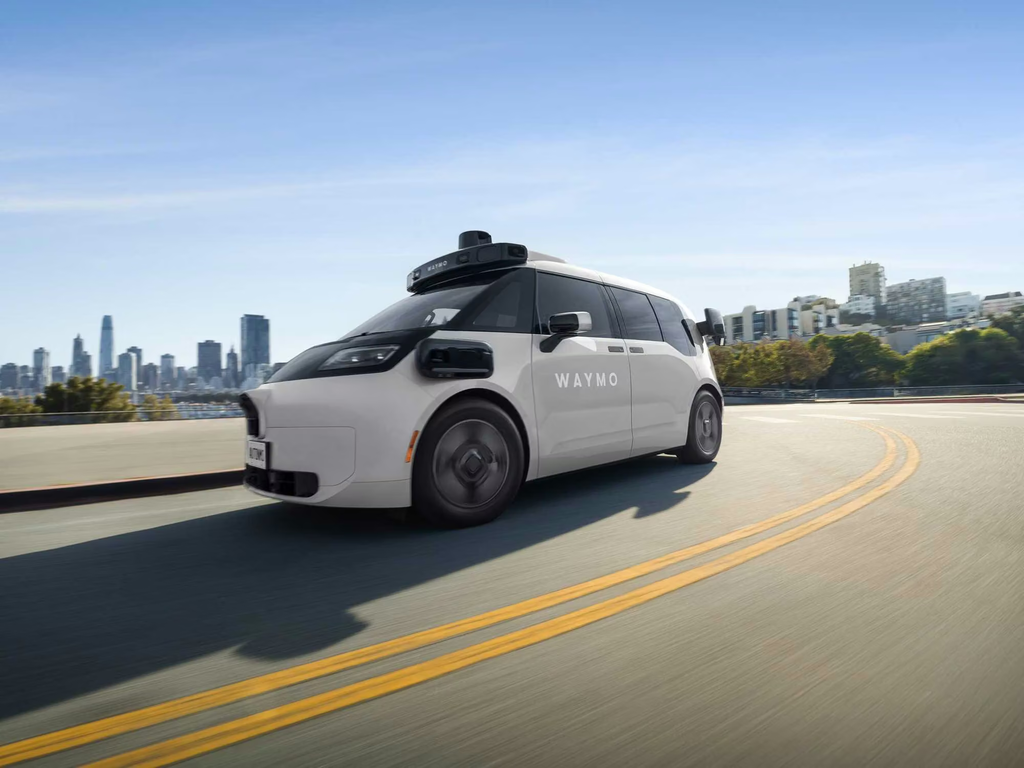
Autonomous cars are no longer just an American science fiction experiment. Self-driving giant Waymo has officially confirmed that its fleet of driverless robotaxis is heading north of the border, landing squarely on the busy streets of Toronto. The Alphabet-backed company has set an ambitious target to launch fully commercial, passenger-ready rides across Canada’s largest city by 2028.
Before anyone can pull out a smartphone, summon an empty Jaguar SUV, and slide into the backseat without a human in the front, there is serious groundwork to do. In fact, if you live, work, or commute anywhere near downtown Toronto, you are going to see these sensor-packed vehicles cruising around your neighborhood much sooner than 2028. Testing begins immediately, starting with street-by-street mapping and manual drives to teach the system how Canada moves.
This expansion marks a historic milestone. It is Waymo’s first-ever commercial market push into Canada, following massive rollouts in American hubs like Phoenix, San Francisco, Los Angeles, and Austin. However, trading the sunny desert highways of Arizona for the crowded, construction-heavy, snow-blasted streets of Ontario is easily the company’s toughest real-world test yet.
Here is everything happening behind the scenes, why Toronto was picked as the testbed, how the 2028 rollout will work, and what it means for everyday commuters, drivers, and transit riders.
What Just Happened? The Official 2028 Announcement
Waymo made its Canadian ambitions public after quietly finalizing a binding commercial framework to launch autonomous ride-hailing services in Toronto. Company leadership confirmed that the long-term goal is to carry regular, paying passengers in fully autonomous vehicles by 2028.
The $0 Secret To Launching Your Entire Online Empire
Why pay hundreds every month for separate software? Build funnels, send emails, and make sales with Systeme.io completely free.
Get Started For $0Free Forever • No Credit Card Needed • Beginner-Friendly
According to the official Waymo blog, expanding into Canada represents an essential step forward in the company’s global journey. Tekedra Mawakana, co-CEO of Waymo, highlighted Toronto’s reputation as an innovative, dense, and forward-looking city that makes an ideal home for autonomous transit.
To get the program off the ground, the company has launched a dedicated Waymo in Canada portal where local residents can track progress, learn about the safety technology, and sign up for updates as testing milestones approach.
The announcement does not mean driverless taxis will start picking up passengers at Union Station tomorrow morning. Instead, it kicks off a phased, multi-year deployment designed to satisfy provincial regulators, map millions of data points, and prove that artificial intelligence can handle unpredictable Canadian road conditions safely.
The Master Plan: What the Testing Phase Looks Like
Autonomous driving does not happen by flipping a switch. You cannot drop a self-driving car into a new country and expect its computer brain to navigate seamlessly on day one. Toronto has its own unique road signs, lane markings, transit quirks, and traffic habits that software must learn from scratch.
Because of that, the rollout is split into clear, methodical stages.
Phase 1: High-Definition Mapping and Manual Drives
Over the coming days and weeks, you will see white, electric Jaguar I-PACE vehicles sporting rooftop spinning pods driving through Toronto. During this initial phase, human safety drivers will sit behind the wheel at all times.
These vehicles are not giving rides to the public yet. Their job is data collection. As they drive through various neighborhoods, their specialized cameras, radar, and LiDAR sensors scan every single detail of the physical environment. They record curbs, lane widths, traffic lights, crosswalks, bridge clearances, and permanent obstacles.
This information creates a highly detailed, 3D digital map of Toronto. When an autonomous car operates on its own, it compares what its sensors see in real time against this pre-built 3D map. If a construction cone suddenly appears or a delivery truck blocks a lane, the car’s computer immediately knows what has changed and calculates how to navigate around it.
Phase 2: Autonomous Validation With Safety Drivers
Once the baseline digital map is built and verified, the cars will begin driving in autonomous mode, but human test drivers will remain behind the wheel. The human driver’s sole duty during this phase is oversight. They watch the road closely, keep their hands ready, and take control instantly if the computer encounters a scenario it cannot process with complete certainty.
During this stage, engineers evaluate how smoothly the software responds to Toronto drivers who merge aggressively, pedestrians who step off the curb unexpectedly, and cyclists who filter through tight lanes.
Phase 3: Closed Testing and Employee Rides
Before opening the doors to regular paying customers, Waymo traditionally launches a closed rider program. Local employees, select partners, and vetted community testers get access to a mobile app that lets them hail driverless rides within a restricted geographical zone.
This phase allows the team to iron out booking software, monitor ride comfort, refine pick-up and drop-off spots, and gather rider feedback before opening the floodgates to the general public.
Phase 4: Public Commercial Launch in 2028
Assuming safety benchmarks and regulatory approvals are met, 2028 is the target year when the service opens up to everyday riders. You will be able to download the app, request a ride, hop into an empty vehicle, tap “Start Ride” on the passenger screen, and let the vehicle navigate you to your destination without anyone sitting in the front seat.
Why Toronto? Behind Waymo’s Canadian Strategy
Choosing Toronto as the first Canadian launch city was no accident. The decision comes down to market size, existing business ties, and a supportive regional ecosystem for vehicle innovation.
A Dense, Transit-Hungry Population
Toronto is the fourth largest city in North America. It is a dense, bustling metropolis where millions of people move around daily using a mix of subways, streetcars, buses, bikes, walking, and ride-hailing services.
Send, Spend & Hold Money Worldwide Without Hidden Fees
Transfer money internationally at the real exchange rate and hold 40+ currencies in one account.
Open a Wise AccountMid-market rate • Fast transfers • 40+ currencies
Cities with high population density and active nightlife make the most economic sense for robotaxi operations. When trips are frequent, short, and concentrated in specific corridors, autonomous fleets can operate at higher efficiency and lower wait times.
Canada’s steady economic activity and ongoing infrastructure investments make major cities prime targets for tech expansion. Significant business developments and capital projects highlighted across the country, such as those discussed at the Canada Investment Summit 2026, show how global technology firms view the Canadian market as an attractive ground for long-term investments.
Existing Deep Ties to Canadian Industry
Waymo is not arriving in Canada as a complete stranger. The company already holds deep commercial and financial connections to Canadian institutions:
- Canada Pension Plan Investment Board (CPPIB): One of Canada’s largest public pension funds has been a significant investor in Waymo for years, providing steady institutional backing for its autonomous driving mission.
- Magna International: The Ontario-based automotive supplier giant is an established manufacturing and integration partner for autonomous vehicle hardware, creating local industrial relevance for the technology.
- Element Fleet Management: Headquartered right in Toronto, Element Fleet Management has signed on as Waymo’s primary fleet management partner to handle day-to-day operations on the ground.
The Local Muscle: How Element Fleet Management Powers the Operation
Running a fleet of self-driving taxis involves far more than writing clever software code. At the end of the day, these are physical vehicles that need routine maintenance, detailing, tire replacements, electrical checks, software updates, and safe places to recharge overnight.
Rather than trying to build physical vehicle depots and hiring maintenance crews entirely on its own, Waymo partnered directly with Element Fleet Management. Element is one of the largest commercial fleet managers in the world, with its corporate headquarters located right in Toronto.
Under this partnership, Element will manage end-to-end operational logistics. That includes:
- Providing secure depot facilities across the Greater Toronto Area where vehicles are parked, inspected, and charged.
- Overseeing regular mechanical servicing, wheel alignments, brake inspections, and sensor cleanings.
- Managing emergency response operations if a vehicle gets a flat tire, encounters a minor mechanical issue, or requires roadside assistance.
- Supporting local job creation. Waymo and Element expect this partnership to create hundreds of specialized local jobs over time, ranging from fleet maintenance technicians and validation drivers to customer support representatives and depot managers.
The Real Test: Can Self-Driving Cars Survive a Canadian Winter?
Let’s address the elephant in the room: winter.
Operating an autonomous taxi in Phoenix, Arizona, where the sun shines almost every day and roads are bone dry, is relatively straightforward. Operating an autonomous taxi in Toronto in the middle of January is an entirely different beast.
Canadian winters throw every possible driving obstacle at you:
- Heavy Snowfall: Falling snow can reflect laser pulses from LiDAR sensors and confuse optical cameras, making it look like the vehicle is surrounded by solid barriers when it is simply driving through a snow squall.
- Ice and Slush: Freezing slush gets kicked up by passing semi-trucks, coating camera lenses and sensors in gray road grime within minutes.
- Invisible Road Markings: After a heavy storm, painted lane lines, turn arrows, and crosswalks completely disappear under packed snow.
- Erratic Human Drivers: Black ice causes unpredictable braking distances, meaning the self-driving car must calculate larger defensive safety cushions around other vehicles.
Waymo is well aware of these challenges. Over the years, the company has run cold-weather testing in upstate New York, Michigan, and northern California to train its sensors to filter out snowflakes and detect slippery road surfaces.
The $0 Secret To Launching Your Entire Online Empire
Why pay hundreds every month for separate software? Build funnels, send emails, and make sales with Systeme.io completely free.
Get Started For $0Free Forever • No Credit Card Needed • Beginner-Friendly
The vehicles are equipped with built-in sensor heaters, specialized wiper systems, and compressed-air cleaning nozzles designed to blast away salt, frost, and dirt while driving. Furthermore, because Waymo’s vehicles rely heavily on their pre-mapped 3D models, they do not need visible lane paint to know where the lane is. The car knows exactly where the curb and road center lie based on millimeter-accurate spatial maps.
Even so, testing these systems in real Toronto winter traffic will be the ultimate trial. If Waymo can successfully operate through a slushy February rush hour on the Gardiner Expressway, it can operate virtually anywhere on Earth.
Conquering Toronto’s Unique Urban Chaos
Snow is not the only challenge waiting on Toronto streets. Anyone who drives in the city knows that local traffic has its own chaotic personality.
The Streetcar Rule
Toronto operates North America’s largest streetcar network. By law, when a streetcar stops and opens its doors, all traffic traveling in the same direction must stop at least two meters behind the rear doors to let passengers step safely onto the road.
Human drivers regularly struggle with this law, leading to dangerous encounters. Waymo’s software will have to identify streetcar brake lights, recognize flashing boarding signals, predict passenger movement, and halt safely behind the vehicle every single time.
Bike Lanes and Pedestrian Corridors
From Bloor Street to Richmond and Adelaide, Toronto has invested heavily in separated and painted bike lanes. Cyclists, e-bike delivery couriers, and electric scooter riders move quickly and sometimes make unpredictable turns.
Waymo’s system uses 360-degree LiDAR and long-range radar to track objects moving at different speeds from hundreds of meters away. The computer never gets distracted by a text message, never forgets to check its blind spot, and will wait patiently before turning across an active bike lane.
Potholes and Non-Stop Construction
Toronto is famous for two seasons: winter and construction. Road closures, temporary orange pylons, lane diversions, and utility trenches pop up overnight.
Waymo’s autonomous system handles construction by continuously comparing real-time sensor data against its baseline map. When the car sees orange construction barrels redirecting traffic, it dynamically shifts its path into the open lane, following the same flow that safe human drivers use.
The Safety Question: Are Robotaxis Really Safer Than Humans?
Safety remains the single biggest talking point whenever driverless cars enter a new city. It is natural for people to feel skeptical about sharing the road with a vehicle that has an empty driver’s seat.
However, the hard data collected across hundreds of millions of commercial miles tells a compelling story.
Waymo’s autonomous system has now logged more than 450 million fully autonomous kilometers in complex urban environments. According to independent safety studies and real-world insurance data collected across active markets, Waymo vehicles are involved in approximately 85% to 95% fewer injury-causing crashes compared to average human drivers in the same cities.
Consider the primary causes of serious traffic accidents every day:
- Texting or looking at mobile phones while driving.
- Driving under the influence of alcohol or drugs.
- Speeding excessively to beat a red light.
- Falling asleep or driving while fatigued after a long shift.
- Road rage and aggressive tailgating.
A self-driving computer does not drink, does not get sleepy, does not send text messages, and does not lose its temper in a gridlock jam. It maintains a full 360-degree field of vision at all times, monitoring pedestrian crossings, oncoming traffic, and rear blind spots simultaneously.
While self-driving cars are not completely immune to minor fender benders or unexpected sensor blips, their fundamental design eliminates the reckless human behaviors responsible for the vast majority of road fatalities.
Navigating Ontario’s Regulations and Municipal Rules
Waymo cannot simply show up and start charging fares without formal government approval. Operating commercial autonomous vehicles requires close coordination across municipal and provincial levels.
Ontario has had an Automated Vehicle Pilot Program in place for several years. This provincial framework allows companies to test automated vehicles under controlled conditions with licensed safety drivers.
In fact, autonomous vehicles are already operating on Toronto streets in specific commercial sectors. California-based startup Gatik has been running autonomous middle-mile box trucks to deliver groceries for Loblaw across the Greater Toronto Area, proving that the province’s regulatory pathway is practical and functioning.
However, moving from freight delivery to public ride-hailing requires additional layers of oversight:
- Provincial Permits: Waymo must secure specialized permits from Ontario’s Ministry of Transportation to progress from testing with safety drivers to fully driverless passenger service.
- City Licensing: The City of Toronto sets strict bylaws for taxi brokers, private transportation companies like Uber and Lyft, vehicle inspections, and accessibility standards.
- Emergency Responder Training: Waymo conducts extensive workshops with local police, firefighters, and paramedics. Emergency personnel learn how to interact with the vehicle, how to direct it safely to the curb during an incident, and how to manually disable high-voltage electrical systems if necessary.
The Economic Impact: How Will This Affect Uber, Taxis, and Jobs?
Whenever automation arrives in a major sector, it raises important economic questions. How will traditional ride-hailing drivers, taxi operators, and the local workforce be affected?
The ride-hailing market in Canada has experienced significant shifts over the past few years, mirroring broader discussions around the future of mobility and business competition. In other regions, sudden shifts in the gig economy have caused major public debates, such as when market changes sparked discussions around Uber operations in emerging markets.
In North America, robotaxis are not expected to wipe out human drivers overnight. Instead, the transition is happening gradually:
Hybrid Ride-Hailing Platforms
In cities like Phoenix and Austin, Waymo does not only operate its own standalone app. It also partners directly with ride-hailing giants like Uber. When an Uber user requests a ride within an autonomous service zone, the app often gives them the option to choose a driverless car or a human driver.
This hybrid approach allows autonomous vehicles to absorb peak demand during late-night rushes or severe driver shortages, while human drivers handle longer suburban routes, complex luggage runs, and areas outside the mapped perimeter.
Changing Nature of Transportation Jobs
While autonomous driving will naturally change the demand for traditional gig driving over the next decade, it also shifts labor demand into technical support and operations.
Autonomous fleets require high-skilled maintenance technicians, remote vehicle assistance operators, customer care representatives, charging infrastructure specialists, and mapping experts. The partnership with Element Fleet Management indicates that hundreds of steady, local operational jobs will be anchored right in Ontario to support the fleet.
The Technology Backbone: Powering the Autonomous Shift
The rollout of autonomous fleets like Waymo is part of a much larger global transition toward artificial intelligence and high-performance computing. Behind every autonomous vehicle lies a complex digital infrastructure.
Self-driving vehicles generate massive streams of data every second. Processing this sensor information, running real-time neural networks, and training machine learning models on billions of simulated miles requires incredible cloud computing power.
This growing reliance on computing power has triggered a global wave of investment into digital infrastructure. Across the world, governments and technology giants are dedicating tens of billions of dollars toward high-capacity hardware, as seen in how nations are investing heavily to power the global AI revolution.
At the same time, expanding digital technology at this scale has sparked conversations around community impact and energy consumption. Many communities and financial analysts are carefully monitoring the infrastructure needed to support these technologies, which is why investors are paying attention to the pushback around data centers. Autonomous vehicles represent the physical face of this broader computing wave, proving that artificial intelligence is moving out of server rooms and directly onto neighborhood streets.
How to Spot a Waymo Vehicle in Toronto
If you want to keep an eye out for these self-driving vehicles as testing gets underway, they are remarkably easy to identify:
- The Vehicle Model: Waymo currently uses all-white, fully electric Jaguar I-PACE crossover SUVs.
- The Roof Pod: Sitting atop the roof is a distinct, aerodynamic black pod housing a spinning LiDAR dome and high-resolution cameras that provide a 360-degree view.
- Bumper and Fender Sensors: You will notice small, smooth sensor nodules integrated directly into the front bumper, rear quarters, and side mirrors.
- Exterior Displays: Waymo vehicles feature clear digital displays on the roof and dashboard that show rider initials, welcoming passengers and identifying the car when it pulls up to the curb.
During this early stage, you will always see a human sitting in the driver’s seat. They may not be touching the steering wheel during autonomous test runs, but they will be monitoring every move the car makes.
Frequently Asked Questions
Can I book a ride in a Waymo robotaxi in Toronto right now?
No. The service is currently in its initial testing and mapping phase. Vehicles on Toronto streets are operated by trained safety personnel to gather data and build digital maps. Passenger rides for the public are targeted for 2028.
Will there be a driver in the car when the service officially launches?
When the commercial service launches in 2028, there will be no human driver in the front seat. The car will be fully autonomous. Riders will sit in the back or front passenger seats, and the vehicle will steer, accelerate, and brake on its own.
How much will a Waymo ride cost compared to Uber or a standard taxi?
In cities where Waymo already operates commercially, pricing is generally competitive with standard UberX or Lyft rides. Sometimes it is slightly cheaper because you do not have to pay a tip to a driver, while other times dynamic demand pricing applies during peak hours. Official Canadian pricing will be confirmed closer to the 2028 launch.
What happens if a Waymo vehicle gets stuck or confused in traffic?
Waymo has a remote operations support team monitoring the fleet. If a vehicle encounters an unexpected situation it cannot solve on its own, such as an unannounced police detour or confusing hand signals from a road worker, the car comes to a safe stop. Remote technicians can view the vehicle’s sensor cameras and give the computer routing guidance to navigate around the obstacle.
How does the car handle heavy snow and iced-over road sensors?
Waymo’s vehicles are equipped with internal sensor heaters and high-pressure cleaning nozzles that clear away snow, salt, and slush while driving. If weather conditions deteriorate to the point where visibility becomes dangerously low or roads are completely blocked by severe blizzards, the fleet operations team temporarily holds or pauses service until plows clear the streets, just like any safe transportation provider.
Can emergency vehicles easily pass or stop a robotaxi?
Yes. The vehicle’s sensor suite detects emergency vehicle sirens and flashing emergency lights from significant distances. The software is programmed to yield right-of-way, pull over to the side of the road, and wait for emergency vehicles to pass safely.
The Road Ahead for Canadian Commuters
The road to 2028 will move quickly. Over the next two years, Toronto will serve as an international proving ground, demonstrating whether autonomous vehicle technology can master one of North America’s most demanding urban climates.
From navigating Queen Street’s crowded streetcar tracks to surviving freezing rain on the Don Valley Parkway, the data collected on these streets will shape the future of urban mobility across Canada. While self-driving cars may have once felt like a novelty confined to tech conferences and desert highways, they are now pulling up to our neighborhood intersections.
