
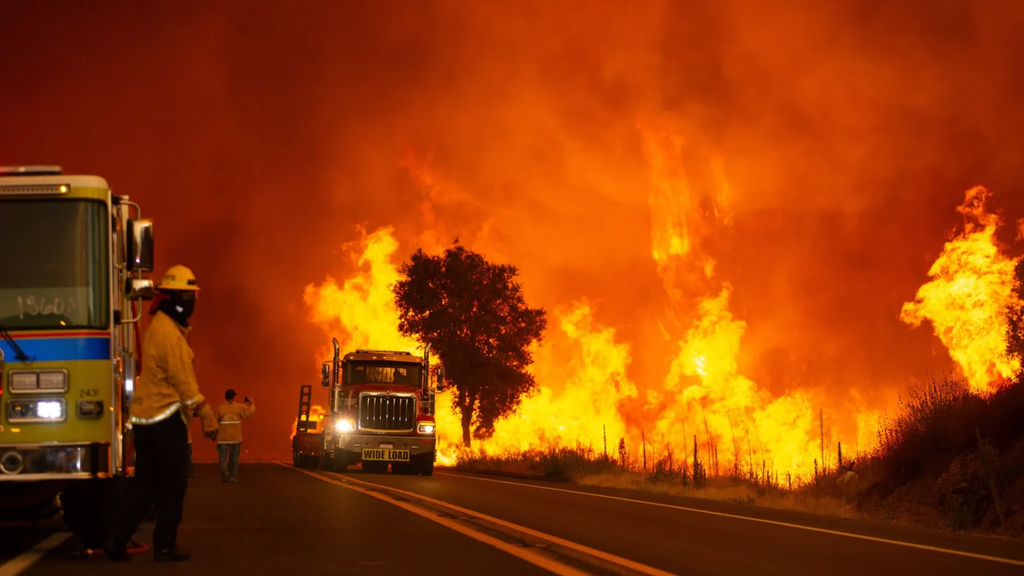
Thick orange smoke filled the sky over southern Orange County as the Norte Fire erupted with terrifying speed. Within just a few hours, a small brush fire transformed into a 570-acre monster that threatened entire neighborhoods, forced roughly 16,000 people to flee their homes, and left several properties reduced to ash.
Flames pushed hard by fierce, dry winds ripped through dry hillsides between San Clemente and San Juan Capistrano. Sirens echoed non-stop as police cruisers moved down residential streets with loudspeakers, urging families to leave everything behind and evacuate immediately.
For thousands of local families, an ordinary Friday turned into a fight to save their lives and their homes. With temperatures climbing into the upper eighties and dry desert air sweeping toward the Pacific coast, conditions were ripe for a disaster. Ground crews and water-dropping aircraft rushed to the front lines, doing everything possible to stop the blaze before it wiped out entire subdivisions.
How the Norte Fire Started and Exploded Across the Hills
The blaze began late Friday morning near the intersection of Portico Del Norte and Eminencia Del Norte in San Clemente, just inland from the Interstate 5 corridor. It started out as a relatively small patch of burning brush along the hillside.
Within minutes, hot gusts of wind caught the embers and pushed the flames up steep canyon slopes. Fire behavior analysts often point out that fire travels uphill significantly faster than downhill because the rising heat naturally pre-heats the brush above it. That exact scenario played out in San Clemente, turning a localized brush fire into a racing inferno.
The $0 Secret To Launching Your Entire Online Empire
Why pay hundreds every month for separate software? Build funnels, send emails, and make sales with Systeme.io completely free.
Get Started For $0Free Forever • No Credit Card Needed • Beginner-Friendly
According to incident reports from CAL FIRE, the fire expanded from 10 acres to 50 acres almost immediately. By mid-afternoon, emergency managers recorded that it had exploded past 250 acres. Before night fell, the total burned area reached 570 acres.
The fire quickly crossed jurisdictional lines, pushing straight from San Clemente into neighboring San Juan Capistrano. The dry scrub that covers these coastal foothills acted like gasoline. Southern California had experienced weeks of dry weather, leaving coastal sage and chaparral parched. Similar conditions have fueled other crises across the state, such as the fast-moving California coastal wildfire that triggered massive evacuations. When dry vegetation meets sudden wind gusts, firefighters face an uphill battle from minute one.
Panic and Chaos: 16,000 Residents Ordered to Evacuate
As the flames crested the hills above San Juan Capistrano, emergency officials had no choice but to issue mandatory Level 3 “Go Now” evacuation orders. These orders covered around 6,000 homes across multiple zones in both San Clemente and San Juan Capistrano.
For the residents living in those zones, there was no time to deliberate. People grabbed their pets, medication, laptops, and important documents before rushing to their cars. Streets quickly filled with bumper-to-bumper traffic as thousands tried to reach safety at the exact same time.
Local authorities acted fast to set up emergency shelters to house displaced families:
- The San Juan Capistrano Community Center opened its doors on Camino del Avion to welcome evacuees and their animals.
- The San Clemente Community Center on Calle Seville provided food, cots, and clean drinking water for residents who had nowhere else to turn.
Neighborhoods along Via La Mirada took the brunt of the fire’s initial attack. Thick smoke made breathing painful, and falling ash rained down across driveways and roofs. Local law enforcement officers went door-to-door, banging on front doors to ensure that older adults and families with young children made it out safely.
While evacuation orders began lifting for certain zones once crews established early containment, specific roads like Via La Mirada remained closed to public traffic. Officials kept those restrictions in place so heavy machinery, fire engines, and utility crews could clear downed lines and extinguish lingering hot spots.
On the Front Lines: Firefighters Face Blistering Heat and Rough Terrain
More than several hundred firefighters from the Orange County Fire Authority, CAL FIRE, and neighboring municipal departments rushed into the canyon to halt the fire’s progress.
The battle was brutal. Temperatures across Orange County soared well above normal seasonal averages. The physical toll of hiking up steep hills while carrying heavy hoses and wearing thick protective turnouts caused severe exhaustion among crews. Two firefighters had to be transported to local hospitals after suffering heat-related injuries while battling the blaze.
From the sky, an army of aircraft worked relentlessly before sunset. Heavy air tankers dropped long lines of bright pink fire retardant along the ridges to create artificial firebreaks. Meanwhile, water-dropping helicopters made continuous trips between nearby reservoirs and the fire line, dumping thousands of gallons of water directly onto burning roofs and tree lines.
Battling fires across steep canyons presents unique dangers that ground crews know all too well. California firefighters frequently face treacherous terrain, like the conditions documented during the Timber Fire in Big Sur where crews fought steep hills and dry winds. Aerial firefighting operations also carry immense risk, a harsh reality seen during tragic events like the fatal helicopter crash during the Yosemite Dome Fire.
Thanks to the non-stop efforts of both air and ground teams, containment crept from 0% up to 5%, eventually climbing toward 25% and higher as winds died down overnight.
Homes Lost, Scars Left: The Extent of the Damage
Despite the aggressive response from fire crews, the Norte Fire left a painful mark on the community. Officials confirmed that at least six homes in the San Juan Capistrano area were damaged or completely destroyed by the flames.
Aerial footage captured heartbreaking scenes along Via La Mirada, where multi-story homes were reduced to blackened foundations and smoldering debris. For the families who lost their houses, decades of personal memories, family photographs, and cherished possessions vanished in a matter of minutes.
Recognizing the severity of the threat to South Orange County, the State of California secured a Fire Management Assistance Grant through FEMA. This federal grant helps ensure that local agencies receive financial support to cover the massive costs of emergency response, firefighting personnel, and disaster suppression equipment.
Send, Spend & Hold Money Worldwide Without Hidden Fees
Transfer money internationally at the real exchange rate and hold 40+ currencies in one account.
Open a Wise AccountMid-market rate • Fast transfers • 40+ currencies
Disasters like this also bring up broader conversations about infrastructure, land management, and insurance. California has repeatedly faced legal and regulatory battles regarding fire accountability, as highlighted in deep dives into why California leaders face intense scrutiny over wildfire liability.
When extreme weather patterns collide with dry land, the entire state feels the strain. California has increasingly faced chaotic climate shifts, from historic droughts to sudden wet years, echoing emergencies like the historic weather swings that forced statewide emergency declarations. For homeowners in high-risk zones, finding affordable property insurance and maintaining structural protection has become an urgent everyday challenge.
Power Shutoffs and Dangerous Air: How the Region Was Impacted
The danger of the Norte Fire was not limited to the burn scar alone. Because high winds and dry conditions created severe fire hazards across Southern California, the National Weather Service issued widespread Red Flag Warnings.
To prevent downed power lines from sparking additional blazes, utility companies took drastic preventive measures. Southern California Edison initiated Public Safety Power Shutoffs, cutting electricity to over 100,000 customers across parts of Orange, Los Angeles, Riverside, and San Bernardino counties.
While these proactive shutoffs are designed to prevent catastrophic fires, they created extra hardship for families dealing with high heat and smoke. Without electricity, many residents could not run air conditioning or home air purifiers, making it difficult to escape the heavy smoke hanging over the valleys.
Air quality monitors registered dangerous spikes in particulate matter (PM2.5) across South Orange County and parts of northern San Diego County. Smoke plumes drifted across Interstate 5 and out over the Pacific coastline. Health officials advised vulnerable groups—including children, seniors, and anyone with asthma or respiratory conditions—to remain indoors with windows tightly sealed.
How to Protect Your Home and Family Before Fire Strikes
Wildfires move faster than most people realize. When an evacuation order drops, you often have only three to five minutes to get out. Taking action ahead of time is the best way to safeguard your family and reduce the chances of your home catching fire.
Create Defensible Space Around Your Property
Fire embers can travel over a mile ahead of the actual flame front. If your yard is full of dry leaves, pine needles, or dead brush, a stray ember can land and ignite your house before the main fire even reaches your street.
- Zone 0 (0 to 5 feet from the home): Keep this area completely free of anything combustible. Clear away dead leaves, dry mulch, firewood stacks, and wooden patio furniture. Use gravel, concrete, or stone pavers next to exterior walls.
- Zone 1 (5 to 30 feet from the home): Keep grass cut short and well-watered. Prune tree branches so they sit at least 10 feet away from your roof and chimney. Remove any dead plants or dried bushes.
- Zone 2 (30 to 100 feet from the home): Thin out dense clusters of trees and shrubs so fire cannot easily jump from plant to plant. Remove low-hanging branches to eliminate “ladder fuels” that allow ground fires to climb into treetops.
Build a Wildfire Go-Bag
Every household member should have a pre-packed emergency bag ready to grab at a moment’s notice. A simple way to remember what to pack is the “Six P’s” checklist:
- People and Pets: Have carriers, leashes, pet food, and bowls ready near the door.
- Prescriptions and Medical Needs: Pack at least a seven-day supply of essential medications, glasses, and basic first aid items.
- Papers and Documents: Keep physical copies or a secure USB drive containing birth certificates, insurance policies, passports, and property deeds.
- Personal Computer and Electronics: Grab portable laptops, hard drives, phone chargers, and backup power banks.
- Pictures and Sentimental Items: Focus on irreplaceable heirlooms, photo albums, or keepsakes that insurance can never replace.
- Plastic and Cash: ATMs and card readers often fail during regional power outages, so keep emergency cash alongside your debit and credit cards.
Protect Your Lungs from Wildfire Smoke
Even if your house is miles away from the fire line, heavy smoke can trigger headaches, sinus irritation, and severe breathing problems.
The $0 Secret To Launching Your Entire Online Empire
Why pay hundreds every month for separate software? Build funnels, send emails, and make sales with Systeme.io completely free.
Get Started For $0Free Forever • No Credit Card Needed • Beginner-Friendly
- Keep all doors and windows closed whenever you smell smoke or see haze.
- Set your home heating, ventilation, and air conditioning system to “recirculate” mode so it stops pulling smoky air from outside.
- Run high-efficiency particulate air (HEPA) purifiers inside your main living areas and bedrooms.
- If you must step outside to pack your vehicle or check your property, wear a certified N95 or KN95 mask rather than a loose cloth bandana.
Frequently Asked Questions About the Norte Fire
Where did the Norte Fire start?
The fire originated near Portico Del Norte and Eminencia Del Norte in the city of San Clemente, located in southern Orange County, California. It quickly burned across hilly terrain and crossed into neighboring San Juan Capistrano.
How big did the fire get?
The Norte Fire burned approximately 570 acres before firefighters halted its forward spread and established containment lines.
Were any injuries or fatalities reported?
Fortunately, no civilian deaths were reported. However, two firefighters sustained heat-related injuries while battling the steep terrain and high temperatures, requiring medical treatment at local hospitals.
Why did the fire spread so quickly?
The fire was pushed by dry winds, low relative humidity, and temperatures well above seasonal averages. The hilly terrain of coastal Orange County is covered in thick, dry chaparral that had dried out over weeks of warm weather, allowing embers to ignite spot fires ahead of the main fire line.
How many homes were damaged or destroyed?
Fire officials confirmed that at least six homes in the San Juan Capistrano area suffered major damage or were completely destroyed by the flames.
What should residents do after an evacuation order is lifted?
When returning home after a fire, proceed with extreme caution. Watch for downed power lines, smoldering tree roots, and ash pits. Inspect your roof and yard for any hidden embers, check that your gas and water lines are intact, and avoid drinking tap water until local authorities confirm it is safe.
The Norte Fire serves as another stark reminder of how rapidly coastal California brush fires can threaten suburban communities. When warm desert winds blow toward the ocean, conditions can turn hazardous in an instant. Staying alert, signing up for county emergency alerts, maintaining clean defensible space around your home, and having a family evacuation plan ready are practical steps that make all the difference.
