
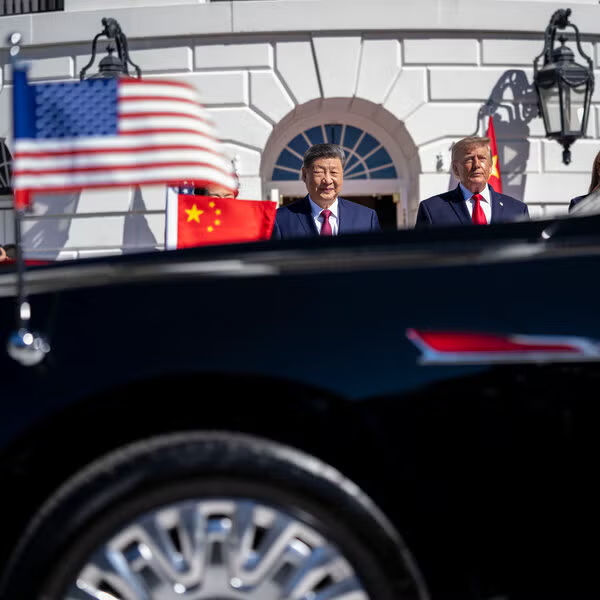
During a high-stakes three-day state visit to Washington, President Donald Trump delivered a blunt ultimatum to Chinese President Xi Jinping: stop supporting Iran immediately or face severe consequences. The direct demand came during a private 90-minute meeting in the Oval Office, where Trump made it crystal clear that Chinese military assistance, intelligence sharing, and oil purchases keeping Tehran afloat are completely unacceptable to the United States.
The tense confrontation was revealed by U.S. Ambassador to China David Perdue in interviews with CNBC and Fox News. According to Ambassador Perdue, Washington warned Beijing weeks prior that any direct or indirect backing of Tehran would not be tolerated. During their face-to-face discussions, Trump personally reiterated that line to President Xi, framing China’s relationship with Iran as a major friction point in U.S.-China relations.
Reports indicate that Chinese companies have supplied Iran with shoulder-fired air-defense missile systems, high-resolution satellite imagery, and critical financial lifelines through dark-fleet oil shipments. With American military forces engaged in continuous regional exchanges and maritime security under constant threat, Washington views Beijing’s role not as neutral trade, but as active assistance to an enemy combatant.
This confrontation highlights the deep geopolitical rift between the world’s two largest powers. Understanding how this showdown unfolded, what was said behind closed doors, and how it impacts global oil markets requires examining the full scope of this diplomatic clash.
What Happened Behind Closed Doors at the White House
The official schedule for President Xi Jinping’s visit was filled with diplomatic grandstanding, red-carpet welcomes, and tours of historical landmarks. Behind the scenes, the atmosphere inside the Oval Office was far more intense. During a private 90-minute bilateral session, Trump brought up the issue of Iranian support directly with the Chinese delegation.
The $0 Secret To Launching Your Entire Online Empire
Why pay hundreds every month for separate software? Build funnels, send emails, and make sales with Systeme.io completely free.
Get Started For $0Free Forever • No Credit Card Needed • Beginner-Friendly
According to Ambassador Perdue, the conversation was candid and unvarnished. The United States presented evidence showing that Chinese entities had provided high-resolution satellite mapping to Iranian military networks. U.S. officials believe this intelligence was used to track American troop movements and naval vessels across the Middle East.
Trump also pressed Xi on military hardware transfers, specifically pointing to reports that Iran received hundreds of shoulder-fired anti-aircraft missile launchers from Chinese suppliers. On the financial side, Trump demanded an immediate end to China’s purchase of discounted Iranian crude oil, which Tehran uses to fund its military operations and bypass strict Western banking sanctions.
The meeting took place alongside other major diplomatic events, including a lavish dinner covered in our report on who showed up to Donald Trump’s White House state dinner for Xi Jinping. While public statements emphasized cooperation on trade extensions and economic stability, the private dialogue focused heavily on national security and global conflict zones.
For more background on the buildup to this summit, you can read about how Trump and Xi Jinping met in Washington for high-stakes talks. The administration made sure Beijing understood that trade negotiations and military aggression could not be treated as entirely separate topics.
Why Trump Is Cracking Down on China’s Ties with Iran
The timing of Trump’s demand is linked directly to escalating hostilities in the Middle East. Over the past seven months, U.S. naval forces and regional bases have faced repeated drone, missile, and artillery attacks from Iranian forces and allied militia groups. American strategic analysts argue that Iran’s ability to sustain this conflict depends almost entirely on external support systems.
Capitol Hill lawmakers have increased pressure on the administration to take a firmer stance against countries backing Tehran. Democratic Senator Jeanne Shaheen publicly called on the President to confront Xi during the Washington summit, citing intelligence reports that Chinese satellite companies provided crucial targeting data used in a missile strike against a military outpost in Jordan.
Beyond satellite data, economic ties remain a primary driver of the conflict. China remains the largest buyer of Iranian crude oil, utilizing complex barter systems and ship-to-ship transfers in international waters to avoid traditional banking channels. This trade provides Tehran with billions of dollars in liquid revenue every month.
The physical conflict has extended to key shipping channels, as detailed in our analysis of how the US and Iran traded air attacks in the Strait of Hormuz. The administration views Chinese oil purchases as the primary economic fuel keeping those regional military operations running.
Washington has signaled that it will no longer overlook these trade routes. As noted in our article on how Trump stands firm on the Iran war with no regrets, the White House is preparing broader secondary sanctions against foreign ports, refineries, and shipping firms that continue handling Iranian crude.
The Conflicting Reports: Did Beijing Actually Agree to Stop?
In the hours following the summit, two completely different narratives emerged regarding what China actually agreed to do. On one side, U.S. diplomats claimed a clear breakthrough. On the other, Iranian officials insisted that Beijing reassured them nothing would change.
Ambassador Perdue told reporters that Washington received explicit assurances from the Chinese delegation on Thursday evening. He stated that U.S. tracking teams had already observed initial movements on the ground, suggesting Beijing was taking steps to curtail restricted supply lines.
However, senior Iranian diplomatic sources speaking to Reuters offered a contrasting account. According to Iranian officials, Chinese diplomats quietly reassured Tehran after the summit that economic, political, and military relations between China and Iran would remain intact regardless of U.S. pressure.
This double-sided messaging reflects Beijing’s delicate balancing act. China relies heavily on cheap, reliable energy imports from the Persian Gulf to run its massive manufacturing sector. At the same time, Chinese leadership wants to avoid triggering a full-scale trade war or severe financial sanctions from Washington.
Beijing’s broader strategic goals are discussed in our report on how Xi Jinping is challenging US power in the Middle East. China has consistently attempted to position itself as an alternative superpower and mediator in the region, offering diplomatic cover to nations opposing American policy.
Simultaneously, international payment systems are shifting. You can read about how Saudi Arabia walked away from China’s anti-dollar payment system, demonstrating that Beijing’s broader economic strategy in the Middle East faces headwinds even as it attempts to maintain ties with Tehran.
Send, Spend & Hold Money Worldwide Without Hidden Fees
Transfer money internationally at the real exchange rate and hold 40+ currencies in one account.
Open a Wise AccountMid-market rate • Fast transfers • 40+ currencies
What This Means for Global Oil Prices and Daily Expenses
The global economy is closely tied to stability in the Persian Gulf. Any major disruption to oil production, shipping routes, or diplomatic relations in the Middle East quickly impacts fuel prices at gas stations and increases shipping costs worldwide.
If China bows to U.S. pressure and cuts off its purchases of Iranian oil, Tehran will lose its largest customer. To survive, Iran might take aggressive action in maritime choke points like the Strait of Hormuz, attempting to block tanker traffic and drive global crude prices higher as leverage against Western powers.
Conversely, if China ignores U.S. demands and continues importing Iranian crude, the Trump administration may impose secondary sanctions on Chinese financial institutions and state-owned energy companies. That move could trigger fresh tariffs, retaliatory trade measures, and broader market instability across Asia and the West.
The military friction on the water has already produced visible spikes in energy markets, as shown in our coverage of when the US struck three Iranian oil tankers. Commercial shipping companies have seen insurance premiums skyrocket for vessels moving through the region, adding costs to international freight.
Understanding these economic consequences requires looking at how diplomatic efforts affect fuel supplies. Our detailed breakdown on how Iran set its terms to reopen the Strait of Hormuz shows how quickly energy security can deteriorate when regional negotiations collapse.
Everyday consumers feel these macroeconomic shifts through higher transportation costs, rising grocery bills, and general inflation. When energy prices rise, businesses pass those operational costs directly onto customers, making geopolitical summit outcomes relevant to household budgets everywhere.
High Stakes, Trade Deals, and “Super Intelligence”
While foreign policy and military tensions dominated the private dialogue, the state visit also covered economic policy, trade agreements, and emerging technologies. Both nations are trying to prevent their ongoing trade friction from causing wider economic harm.
During the visit, the two sides agreed to extend an existing pause on retaliatory tariffs until January 10. This extension gives negotiators additional time to address persistent trade imbalances, agricultural purchases, and manufacturing supply chains.
The leaders also discussed artificial intelligence policy. In public statements on social media, Trump referred to AI as “Super Intelligence,” noting that both Washington and Beijing share a common interest in keeping advanced technology competitive yet stable. President Xi emphasized that AI development must remain under human control and serve global welfare.
Beyond formal meetings, the visit included symbolic gestures aimed at showcasing cultural history and national power. Trump took President Xi on a guided tour of the National Archives in Washington, where they viewed original copies of the U.S. Constitution, Declaration of Independence, and Bill of Rights.
The $0 Secret To Launching Your Entire Online Empire
Why pay hundreds every month for separate software? Build funnels, send emails, and make sales with Systeme.io completely free.
Get Started For $0Free Forever • No Credit Card Needed • Beginner-Friendly
During the tour, the two leaders exchanged comments on the comparative age of their civilizations. Trump pointed out that the United States is celebrating its 250th anniversary, while President Xi noted that Chinese history spans over 6,000 years.
You can read more about the dramatic arrival and airport gestures during the visit in our coverage of what Trump did at the airport for Xi Jinping.
Domestically, the administration’s foreign policy approach continues to generate debate in Congress. For an inside look at how lawmakers are responding, read our story on why the Senate blocked a War Powers Resolution regarding Trump’s Iran strategy.
Frequently Asked Questions (FAQs)
Why did Donald Trump ask Xi Jinping to stop supporting Iran?
President Trump asked President Xi to end support for Iran because U.S. intelligence identified Chinese entities providing shoulder-fired air-defense systems, satellite tracking data, and financial support to Tehran. Washington considers this assistance a direct threat to American military personnel and regional stability in the Middle East.
Did China actually agree to stop helping Tehran?
U.S. Ambassador David Perdue stated that Washington received firm commitments from Beijing and has already observed initial movements indicating compliance. However, senior Iranian officials reported that Chinese diplomats privately assured Tehran that economic, political, and military ties would remain unchanged despite American pressure.
How does Chinese support affect the U.S.-Iran conflict?
China is the primary buyer of Iranian crude oil, purchasing it through dark-fleet tankers and non-dollar settlement systems. This revenue allows Tehran to fund its military operations, pay regional proxy groups, and withstand Western economic sanctions.
What does this diplomatic tension mean for global oil prices?
If China stops buying Iranian crude or if the U.S. enforces strict naval blockades against non-compliant tankers, global oil supplies could tighten significantly. Disruptions in the Persian Gulf historically lead to higher global crude prices, which drives up gas prices and transportation costs worldwide.
Where can I read more about global policy and news analysis?
You can find more detailed coverage and background on our About Us page or reach out to our team directly through our Contact Us page.
The diplomatic standoff between Washington, Beijing, and Tehran highlights how closely trade, energy markets, and national security are interconnected. While public statements focused on trade pauses and historical tours, the private confrontation over Iranian support reveals that deep tensions remain between the world’s major powers. As both nations prepare for upcoming international summits, the global community will be watching closely to see whether Beijing honors its commitments or continues backing Tehran behind the scenes.
For live updates, breaking news breakdowns, and engaging stories on global events, follow our official social channels on Instagram, Facebook, and X (formerly Twitter).
