
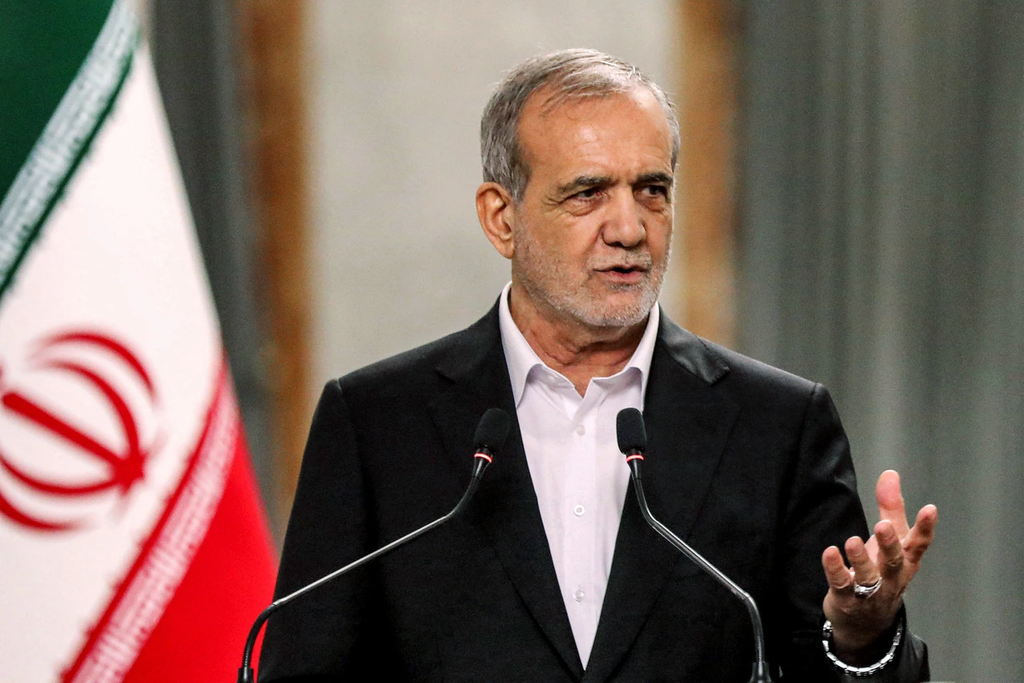
Iranian President Masoud Pezeshkian is stepping onto American soil this week for the 81st United Nations General Assembly in New York City. His arrival comes at a moment when relations between Washington and Tehran are at their lowest point in decades. The two nations have been locked in a bitter seven-month military conflict, making this visit one of the most unusual diplomatic events in recent history. Hosting the leader of a country actively fighting against American military forces is almost unheard of, yet Pezeshkian will take the stage at the UN podium to speak directly to the world.
While Pezeshkian has been granted entry to the United States, his movement will be strictly controlled. The US government has imposed severe restrictions on the entire Iranian delegation. For the duration of his stay, Pezeshkian and his team will be confined to a tight radius in Midtown Manhattan. They will move only between John F. Kennedy International Airport, the Millennium Hilton hotel where they are staying, and the UN headquarters located just down the block.
There will be no casual walks through Central Park, no dinner reservations at upscale Manhattan restaurants, and no shopping trips on Fifth Avenue. Under strict regulations set by the US State Department, any deviation from this designated path requires special permission. The United States has even denied visas to several members of Pezeshkian’s accompanying media team, highlighting the deep friction surrounding this high-stakes visit.
The Legal Agreement Behind a Hostile Visit
Many people wonder why the United States is allowing the president of a rival nation to enter American territory during an active conflict. The answer lies in international law and a long-standing treaty signed nearly eight decades ago. Under the 1947 UN Headquarters Agreement, the host country is legally obligated to grant foreign diplomats and leaders access to the UN building in New York, regardless of political tensions or open hostilities.
This legal duty creates a strange dynamic on the streets of Manhattan. While American politicians frequently criticize Tehran’s policies, international legal scholars confirm that Washington has little choice but to allow the Iranian delegation into the country for official UN business. The United States can restrict where foreign representatives go once they step outside the UN compound, but it cannot flatly ban them from attending the General Assembly without violating its host agreement.
The $0 Secret To Launching Your Entire Online Empire
Why pay hundreds every month for separate software? Build funnels, send emails, and make sales with Systeme.io completely free.
Get Started For $0Free Forever • No Credit Card Needed • Beginner-Friendly
This is not the first time New York has played host to world leaders locked in harsh standoffs with the host nation. During the height of the Cold War, Soviet leaders regularly used the UN General Assembly to launch fiery speeches against Washington. In 1980, while American hostages were being held captive in Tehran, an Iranian delegation still attended UN sessions to denounce foreign interference. The UN headquarters remains a rare neutral zone where fierce enemies share the same hallway.
Pezeshkian’s Strategy at the UN Podium
President Pezeshkian enters this high-stakes environment with a specific mission. Widely viewed as a political moderate who has previously called for greater engagement with Western nations, he faces immense pressure back home and abroad. During his scheduled address, he plans to argue that Iran is the victim of unprovoked foreign aggression and that its recent military actions have been carried out purely in self-defense.
His speech will directly address the major flashpoints of the past year. Last year, Pezeshkian addressed the UN just months after a intense 12-day bombing campaign by US and Israeli forces targeted Iranian nuclear sites. At the time, he denied that Tehran had any interest in manufacturing nuclear weapons and called the air strikes a betrayal of international diplomacy. This year, his focus expands to economic blockades, military escalation, and the ongoing naval blockades affecting critical global trade routes.
Beyond his main speech at the UN hall, Pezeshkian is attempting to conduct quiet diplomacy behind closed doors. Reports indicate that his staff has reached out to foreign policy analysts, think tanks, and academic groups across the US and Europe. By engaging with influential policy experts, Tehran hopes to shape public perception and persuade international observers that diplomacy remains a viable path forward.
The Global Consequences of the Conflict
The conflict between the United States and Iran extends far beyond diplomatic arguments in New York. It directly affects the daily lives of millions of people across the globe. One of the biggest friction points remains the disruption of major maritime shipping corridors. Recent attacks on cargo vessels in the Red Sea and restricted transit through the Strait of Hormuz have pushed global trade networks to their limits.
Because the Strait of Hormuz serves as the primary gateway for a massive portion of the world’s daily petroleum supply, any hint of conflict instantly ripples through energy markets. When shipping lanes are threatened or blocked, the price of crude oil spikes overnight. That increase travels straight to local gas stations, driving up transportation costs for groceries, consumer electronics, and basic household goods worldwide.
Modern conflict relies just as heavily on digital channels and media platforms as it does on conventional forces. Governments and independent observers use advanced tracking systems, satellite imagery, and real-time communication channels to monitor naval movements and military operations. If you are interested in how modern technology and automated digital systems shape global news delivery, take a look at our insights on technology and AI to see how modern tools process live updates during international crises.
Will Trump and Pezeshkian Actually Meet?
The most talked-about question among diplomats in New York is whether US President Donald Trump will hold a face-to-face meeting with Pezeshkian. Trump has sent mixed signals regarding the possibility. In public statements, he mentioned that he is open to sitting down with the Iranian leader, hinting that direct talks could help resolve the ongoing military standoff.
At the same time, Trump maintains an unyielding public stance. He warned that Tehran must change its behavior immediately or face severe consequences, including further economic isolation or targeted military action. The contrast between potential diplomacy and harsh threats leaves world leaders guessing about what might happen during the week.
Behind the scenes, several neutral nations are attempting to broker communication. Countries like Qatar, France, and Pakistan have historically passed private messages between Washington and Tehran to prevent total breakdown in communication. However, senior UN officials, including Secretary-General António Guterres, have voiced caution. Guterres noted that while the UN General Assembly provides a physical meeting space, complex peace negotiations require structured, long-term dialogue that is unlikely to be completed during a brief diplomatic gathering in New York.
Tensions Outside the Diplomatic Zone
While Pezeshkian prepares his speech, Iranian military officials back in Tehran continue to issue stern warnings. High-ranking spokespersons for the Islamic Revolutionary Guard Corps have warned that any new aggression against Iranian targets will be met with immediate escalation. Military officials stated publicly that they possess advanced weaponry and target lists that have not yet been deployed in the current conflict.
This dual strategy—offering diplomatic discussions in New York while issuing military threats from Tehran—reflects the complex reality of Iranian domestic politics. Moderate figures like Pezeshkian must show the world that they are willing to talk, while hardline military factions ensure that the country maintains a strong defense posture.
This delicate balance creates immense pressure for the Iranian delegation inside their hotel. Bound by travel restrictions and under constant surveillance by US security agencies, Pezeshkian’s team must carefully weigh every public statement. A single misstep could destroy potential diplomatic openings or trigger renewed military strikes back home.
How Digital Media Shapes the War Narrative
In today’s media environment, war and diplomacy play out on screens long before official declarations are signed. Both sides use video platforms, social media networks, and online news outlets to broadcast their positions to a global audience. The rapid spread of viral video clips, live streams, and independent analysis has transformed how the public consumes news during international events.
Content creators and news organizations use automated distribution networks to deliver breaking updates within seconds of a major speech or military incident. This shift has changed political strategy, as world leaders must now consider how their actions will be dissected online in real time. To understand how video distribution platforms and automated media strategies operate behind the scenes, read our breakdown of YouTube automation to see how digital media networks manage high-traffic news trends.
Send, Spend & Hold Money Worldwide Without Hidden Fees
Transfer money internationally at the real exchange rate and hold 40+ currencies in one account.
Open a Wise AccountMid-market rate • Fast transfers • 40+ currencies
As Pezeshkian steps up to the UN podium on Wednesday, millions of viewers across the globe will watch the broadcast on their phones and computers. Every posture, pause, and phrase will be analyzed by news anchors, digital creators, and everyday citizens seeking clues about where this global standoff is headed next.
Frequently Asked Questions (FAQs)
Why is the Iranian president allowed into the US during an active war?
The United States is bound by the 1947 United Nations Headquarters Agreement. As the host nation for the UN, the US is legally required to permit leaders and diplomats from member countries to attend official UN meetings in New York City, regardless of ongoing conflict or diplomatic strains.
What specific travel rules must the Iranian delegation follow in New York?
The US State Department restricts the Iranian delegation’s movement to a strict route. They are only permitted to travel between John F. Kennedy International Airport, their designated hotel (the Millennium Hilton), and the United Nations headquarters. They cannot visit tourist sites, shop at retail stores, or travel outside this narrow corridor without explicit approval from US authorities.
Is Donald Trump going to meet with Masoud Pezeshkian?
While President Trump stated that he is open to a meeting with Pezeshkian during the UN gathering, no official meeting has been confirmed. Third-party nations like Qatar are attempting to facilitate communication, but significant diplomatic hurdles remain.
What is President Pezeshkian hoping to achieve during his visit?
Pezeshkian aims to present Iran’s side of the story directly to world leaders. He plans to frame Iran’s military actions as self-defense, criticize US sanctions, and meet with policy analysts to build international support and relieve diplomatic pressure on his country.
How does this diplomatic conflict affect oil prices?
Tensions involving Iran directly impact global energy markets because Iran borders the Strait of Hormuz, a critical bottleneck for world oil transportation. Threats to shipping lanes in this region raise supply concerns, driving up crude oil prices and increasing fuel costs worldwide.
Final Thoughts and Community Conversation
The arrival of President Masoud Pezeshkian in New York highlights the unique role of the United Nations as a place where political rivals meet face to face, even during times of war. While strict travel limits keep the Iranian delegation contained within a few blocks of Midtown Manhattan, the speeches and discussions taking place inside the UN building will reverberate far beyond New York City.
Whether this visit opens the door to genuine negotiation or leads to further military escalation remains to be seen. As world leaders gather to address global security, energy stability, and international law, the world continues to watch closely.
We would love to hear your perspective on this situation. Do you think direct diplomacy between rival nations can prevent further conflict, or are the divisions too deep to bridge? Share your thoughts with us on social media or reach out to our editorial team directly.
To learn more about our publication and our mission to deliver clear, unbiased reporting on world events, visit our about page. If you have feedback, news tips, or questions regarding our coverage, feel free to drop us a message on our contact page.
The $0 Secret To Launching Your Entire Online Empire
Why pay hundreds every month for separate software? Build funnels, send emails, and make sales with Systeme.io completely free.
Get Started For $0Free Forever • No Credit Card Needed • Beginner-Friendly
Join the conversation and stay connected with our community across social media:
