
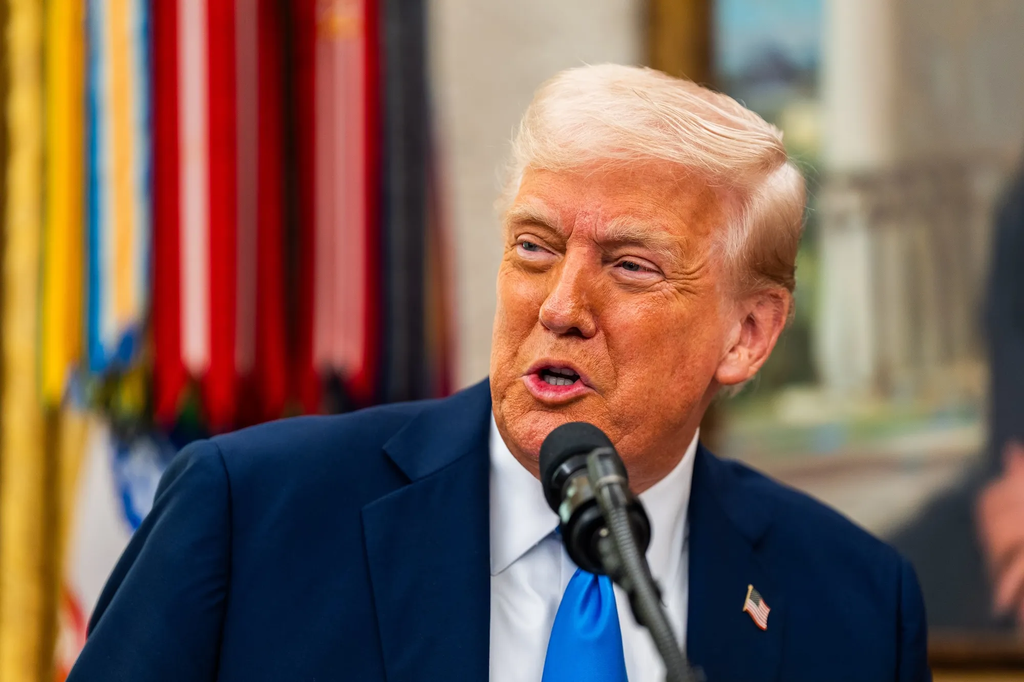
Major American television news networks have completely pulled their shared camera crews from covering President Donald Trump. In an unprecedented move, ABC, CBS, NBC, Fox News, and CNN jointly decided to stop providing shared television pool footage for presidential events. The decision came right after the White House blocked CNN from carrying out its scheduled duty to film the president, following an official ban against CNN, MS NOW, and Politico.
This blackout leaves television screens across the nation without traditional, independent video footage of presidential events, including travel to the United Nations General Assembly in New York. Instead of filling in for CNN, the other major networks stood side-by-side with their rival. Fox News bureau chief Bryan Boughton, who currently serves as the chair of the television pool consortium, formally notified members that no replacement pool would be put in place.
The standoff has quickly turned into one of the most significant press freedom battles in recent American history. On the same day the networks pulled their cameras, CNN, MS NOW, and Politico filed a federal lawsuit against the Trump administration in Washington, D.C. They argue that revoking press credentials based on editorial coverage violates the First Amendment. Here is a clear breakdown of how this media feud erupted, how the White House pool system works, and what it means for everyday news viewers.
What Triggered the White House TV Pool Boycott?
The conflict began on Friday when President Donald Trump announced that journalists from CNN, MS NOW, and Politico would no longer be allowed on White House grounds. The administration accused the three outlets of reporting false stories and displaying biased coverage. On Saturday, Secret Service officers turned away reporters from those organizations as they arrived for work, officially confiscating their hard-pass press credentials.
The situation hit a breaking point on Monday morning. CNN was scheduled to handle the official rotating duty for the White House television press pool. That assignment required CNN to send a camera crew to capture video of presidential events and share that raw footage with every other major broadcast network.
The $0 Secret To Launching Your Entire Online Empire
Why pay hundreds every month for separate software? Build funnels, send emails, and make sales with Systeme.io completely free.
Get Started For $0Free Forever • No Credit Card Needed • Beginner-Friendly
When the White House refused to let CNN’s technical crew enter the grounds to film a ribbon-cutting ceremony and the president’s departure for New York, the White House expected another network to step in. Instead, the networks made a unified decision. ABC, CBS, NBC, and Fox News refused to take CNN’s place. In a joint public statement, the five major networks stated that the public has a vital interest in receiving accurate, independent information about its government, adding that no administration should restrict a news organization simply because it objects to its reporting.
Understanding the White House Press Pool System
To understand why this decision is such a big deal, it helps to know how news coverage at the White House actually works behind the scenes. In normal circumstances, hundreds of journalists cannot fit inside small rooms like the Oval Office, onto Air Force One, or into tight event spaces. Space limitations make it physically impossible for every single TV station, newspaper, and radio show to bring their own equipment.
To solve this problem, news organizations created a rotating system called the press pool. Under this long-standing agreement, a small, rotating group of journalists acts on behalf of the entire press corps. One television network brings a camera crew, films the president’s movements, and immediately shares that live video feed with every other competing network.
Because of this shared arrangement, when you turn on the news and see video of the president walking across the South Lawn or speaking at a podium, every major network is usually showing the exact same shared video feed. By refusing to send a replacement camera crew, the TV pool effectively shut off that shared video pipeline. Without that pool feed, individual channels do not have traditional multi-network video footage of the president’s public appearances.
Why Fox News Joining the Boycott Is a Game Changer
One of the most surprising aspects of this media standoff is the role of Fox News. Traditionally viewed as more favorable toward conservative policy positions, Fox News is currently leading the White House television pool committee. Bryan Boughton, the Washington bureau chief for Fox News, serves as the current TV pool chair.
When the White House blocked CNN from fulfilling its pool duties, Boughton sent a clear memo to all member networks confirming that the pool would stop covering presidential events designated for pool access. He explicitly stated that no replacement pool would be brought in to take CNN’s spot.
This united front demonstrates that network executives view the ban not as a simple political argument, but as an operational threat to broadcast journalism. If an administration can choose which network is allowed to cover the president on any given day, the entire shared pool system breaks down. By standing together, the major networks sent a firm message that they will not allow the government to dictate which outlets get to operate the camera.
The Legal Battle: First Amendment Rights in Federal Court
Alongside the broadcast boycott, a massive legal battle is now unfolding in federal court. CNN, MS NOW, and Politico jointly filed a lawsuit against President Donald Trump and several key administration officials in the U.S. District Court for the District of Columbia.
The lawsuit argues that the White House violated both First Amendment protections for a free press and Fifth Amendment guarantees of due process. The news organizations claim that taking away long-standing press credentials without notice, hearing, or clear guidelines constitutes unlawful viewpoint discrimination. In simple terms, they argue that the government cannot punish media outlets simply because it dislikes their news coverage.
The plaintiffs are represented by prominent First Amendment attorney Theodore J. Boutrous Jr., who previously fought similar credential revocations. The outlets have asked the court for an expedited temporary restraining order that would immediately restore press passes to their journalists while the broader legal case moves forward.
How the White House Responded to the Boycott
President Trump and senior White House officials have firmly defended their decision to restrict access for the three media outlets. In posts published on social media, Trump rejected claims that his administration is attacking press freedom, writing that he cherishes a free press but will not tolerate what he views as unfair or misleading reporting.
During public remarks, administration representatives argued that White House press credentials are a privilege rather than an absolute right. Vice President JD Vance defended the action by stating that the administration is not banning media outlets from reporting, but is choosing not to offer special, close-up access to organizations that it believes produce propaganda.
To bypass the traditional TV pool, the White House began promoting its own video feed online, sometimes referred to by critics as an official in-house feed. While the White House continues to stream its own footage of presidential speeches, major news networks historically rely on independent camera operators rather than government-controlled broadcasts to ensure objective reporting.
Print and Photo Outlets Join the Protest
The movement to resist the media ban extends beyond television broadcasts. Major print and wire news organizations have also implemented protest measures in solidarity with the banned journalists.
The Washington Post announced that it would temporarily withhold its White House photography from publication, refusing to distribute images taken during presidential events until late at night. Other major newsrooms, including print and photo journalists from major wire services, expressed similar concerns regarding how press access is being managed.
Send, Spend & Hold Money Worldwide Without Hidden Fees
Transfer money internationally at the real exchange rate and hold 40+ currencies in one account.
Open a Wise AccountMid-market rate • Fast transfers • 40+ currencies
While print reporters and radio journalists continue to file written summaries and audio reports detailing the president’s daily schedule, the visual side of White House reporting remains severely impacted. The combined action of TV networks, photojournalists, and print organizations represents one of the largest collective press actions seen in Washington in decades.
How Modern Media Production Is Evolving
This conflict highlights how drastically media distribution and content creation have changed over recent years. In the past, television networks held absolute control over video distribution. Today, digital platforms, livestreaming, and independent video workflows have changed how news travels to the public.
For creators looking to understand modern digital distribution and video workflows, exploring YouTube automation strategies offers valuable insight into how media channels manage content publishing at scale. Furthermore, as artificial intelligence and automated camera systems become more common in official communications, understanding current trends in technology and AI developments helps explain how government agencies and private outlets manage digital feeds today.
Whether analyzing major broadcast networks or independent digital channels, the underlying principle remains the same: audiences value independent, reliable information. When access to raw video is restricted, the entire media ecosystem has to adapt quickly.
What This Standoff Means for Everyday News Viewers
For the average person watching evening news broadcasts, this standoff directly changes what appears on screen. Without an official TV pool camera crew accompanying the president, major channels are left with limited options for showing live footage of presidential trips and ceremonies.
Viewers can expect to see several key changes in daily news coverage:
Reduced Live Multi-Angle Footage
Broadcasts will feature fewer close-up video shots from inside small presidential meetings, arrivals, and behind-the-scenes moments where only pool cameras were previously permitted.
Increased Reliance on Written and Audio Reports
Because print and radio journalists are still attending certain events, news channels will rely more heavily on verbal descriptions, quotes, and on-screen text rather than full video clips.
Government-Provided Video vs Independent Footage
Networks will have to decide whether to air government-produced video streams or skip visual coverage altogether. Using government-filtered footage raises questions about independent reporting standards.
Fast-Moving Legal Precedents
The outcome of the federal lawsuit could set long-lasting legal rules regarding whether future presidential administrations can selectively grant or revoke press access based on news coverage.
The $0 Secret To Launching Your Entire Online Empire
Why pay hundreds every month for separate software? Build funnels, send emails, and make sales with Systeme.io completely free.
Get Started For $0Free Forever • No Credit Card Needed • Beginner-Friendly
As the legal case progresses through federal court, both the administration and news executives appear prepared for a lengthy fight over constitutional boundaries and press freedom.
Learn More About Press Coverage and Media Trends
Staying informed about political news, media policies, and global events requires clear, factual reporting without complicated jargon. To learn more about our mission to bring you straightforward breakdowns of current events, visit our About page to see how we cover trending global news.
If you have questions about this story, want to submit a news tip, or wish to share your thoughts on White House press coverage, feel free to reach out directly through our Contact page.
You can also join the conversation and follow real-time updates on our official social media channels:
- Follow our latest posts on Instagram
- Connect with our community on Facebook
- Join the discussion on X (formerly Twitter)
Frequently Asked Questions (FAQs)
Why did US TV networks stop covering White House presidential pool events?
Major TV networks suspended their shared presidential pool coverage after the White House blocked CNN from fulfilling its scheduled duty as the rotating camera crew. The networks decided not to replace CNN, choosing to stand in solidarity after CNN, MS NOW, and Politico were banned from White House grounds.
Which news outlets were banned from the White House?
The Trump administration restricted White House access for journalists from CNN, MS NOW, and Politico, revoking their hard-pass credentials over claims of false and biased reporting.
Which networks participate in the White House TV pool?
The television pool consortium consists of five major networks: ABC, CBS, CNN, Fox News, and NBC. They take turns sending a camera crew to cover restricted presidential events and share the raw video feed with all members.
What is a White House press pool?
A press pool is a small group of reporters, photographers, and camera operators chosen to cover presidential events where space is limited. The pool journalists gather information, photos, and video, then immediately share that material with the entire press corps.
Are news networks suing the White House over the ban?
Yes. CNN, MS NOW, and Politico filed a joint federal lawsuit in Washington, D.C., arguing that the White House ban violates First Amendment free press protections and Fifth Amendment due process rights.
Can people still watch footage of the president’s events?
While shared network TV cameras are absent from pool events, the White House continues to produce and stream its own official video feeds online. Additionally, print, radio, and non-pool journalists continue to report on public presidential activities.
The decision by major television networks to suspend shared pool coverage marks an historic moment in American press relations. As the legal battle unfolds in court, the outcome will likely shape how journalists cover the White House for years to come. Standard video coverage may remain limited until the court rules on the request to restore press credentials. Keeping an eye on these developments helps explain how independent journalism protects public access to official government information.
